Quick wins for a faster PC:
Repair Windows errors before they cause bigger problemsFix Now →Scan for outdated or missing drivers - takes under a minuteDriver Scan →Clear out junk files and repair common Windows errorsFree Scan →Usually, no. Mixing synthetic and mineral (conventional) engine oil is generally safe when both oils match the viscosity grade and performance specification required by your vehicle. The main trade-off is that conventional oil can dilute some of synthetic oil’s performance advantages. If this is an emergency top-off, use a suitable oil rather than continuing to drive with the level too low.
Why synthetic and mineral oils can be mixed
Both oils are made from base oils and additive packages. Synthetic-blend oil—also called semi-synthetic—is already a mixture of synthetic and conventional oil, so the two base-oil types are not inherently incompatible. Mobil says its Mobil 1 oils are compatible with conventional, semi-synthetic and other synthetic motor oils if mixing is necessary, while noting that dilution reduces the synthetic oil’s performance.
There is no published failure rate or percentage in the available evidence that quantifies engine damage from mixing these oil types. The practical concern is whether the resulting oil still meets the engine’s requirements, not whether one oil is labeled synthetic and the other mineral.
What matters most: viscosity and the required specification
Check the owner’s manual or the oil-cap/service information for the required viscosity grade, such as 5W-30, and the required quality standard or manufacturer approval. A suitable oil of the right base-oil type but wrong viscosity or specification may be a poorer choice than an oil of a different base-oil type that meets the stated requirements.
What’s actually slowing this PC down?
Pick the symptom - the matching free tool is one click away.
#1 Best Overall
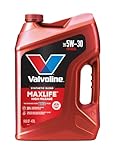
- Formulated for engines with 75,000 miles or more, Valvoline MaxLife High Mileage synthetic blend is formulated with seal conditioners to help prevent oil leaks and reduce oil consumption
- Delivers 20% better wear protection and 15% better sludge defense than industry standards to help prevent engine breakdown
- Extra detergents safeguard against friction, corrosion and deposits to keep high-mileage engines clean
- Advanced friction-fighting additives help maximize performance and improve fuel efficiency
- Provides performance benefits for high mileage, new and re-built engines alike
- Viscosity: Match the grade specified for the engine and operating conditions.
- Performance standard or approval: Match the API rating or other standard and any manufacturer approval required by the manual.
- Oil level: If the engine is low, top it up with oil that meets those requirements instead of driving with insufficient oil.
AAA, Firestone Complete Auto Care and AMSOIL give the same broad qualification: mixing is generally not harmful when both oils have the correct viscosity and meet the vehicle manufacturer’s specifications. The owner’s manual remains the deciding source for a particular vehicle.
What mixing changes—and what it does not establish
Adding conventional oil to synthetic oil dilutes the synthetic oil’s performance characteristics. The mixture may not deliver all the benefits associated with using the specified full-synthetic product by itself. The evidence does not establish a universal percentage of lost performance, so a precise figure would be misleading.
Rank #2

- 6X better wear protection on critical engine parts than industry standards**
- 1.3X better sludge protection than industry standards*
- 3X Stronger against viscosity breakdown than leading full synthetic^
- Protection for 10,000 miles between oil changes
- Meets or exceeds the following specifications: API SP/SN PLUS/SN | ILSAC GF-6 | GM dexos1 Gen 3 | Meets Ford WSS-M2C947-B1 | Meets Ford WSS-M2C962-A1 |
A one-time mix does not automatically mean the oil has gelled or that the engine has been damaged. The sources reviewed describe the oils as compatible, but they do not provide a laboratory result or a quantified guarantee for every oil formulation and engine. Avoid treating compatibility as permission to ignore the vehicle’s viscosity, specification or service interval.
When you should be especially careful
Engines that require full synthetic or a specific approval
Some turbocharged, direct-injection and European engines require a particular oil specification or approval; conventional oil may not meet it. In those engines, do not substitute based only on viscosity or the word “synthetic.” Read the manual and use oil carrying the required approval. If you cannot find a compliant oil during an urgent top-off, contact the vehicle manufacturer or a qualified service professional for model-specific advice.
Do these 3 things before closing this tab:
1Fix the driver behind crashes, sound loss and screen glitches2Repair Windows errors before they cause bigger problems3Scan for outdated or missing drivers - takes under a minuteRank #3

- 3X Stronger than the leading full synthetic*
- 10X Better high stress performance**
- 20,000 miles between oil changes***
- Viscosity breakdown as measured in Kurt Orbahn test on 5W-30 grade
- As measured in Seq IX test under high load/torque conditions vs. API SQ test limits
Mazda rotary engines
Mobil’s FAQ identifies Mazda rotary engines as an exception to its general compatibility and warranty discussion, noting that older rotary applications prohibit synthetic oil. Because the advice is engine- and model-specific, check the manual for the exact rotary engine before adding synthetic oil.
Other markets and motorcycle engines
The guidance here is based mainly on US-focused sources. It does not establish requirements for every market’s standards, such as ACEA or JASO, or for motorcycle engines with wet clutches. Follow the specifications in the manual for your particular vehicle and use case.
Rank #4

- 3X Stronger than the leading full synthetic*
- 10X Better high stress performance**
- 20,000 miles between oil changes***
- Viscosity breakdown as measured in Kurt Orbahn test on 5W-30 grade
- As measured in Seq IX test under high load/torque conditions vs. API SQ test limits
What to do after a top-off or accidental mix
- Check the level and the manual. Confirm the engine-oil level using the vehicle’s recommended method, then identify the required viscosity and specification.
- Use a compliant oil for the top-off. If the engine is low, add oil that meets the manual’s requirements. If you have already added a different base-oil type, do not panic; verify that the oil used was otherwise suitable.
- Resume the normal service schedule unless the manufacturer says otherwise. AAA and Firestone indicate that mixing does not itself require an immediate oil change when the oils meet specifications. AMSOIL, a synthetic-oil maker, recommends changing at the earliest convenience after a conventional-oil top-off and does not support extended drain intervals for mixed oils.
- Do not extend the interval to preserve a synthetic-oil claim. Follow the vehicle’s normal interval or the manufacturer’s more specific instruction. With mixed oils, AMSOIL specifically advises against using an extended drain interval.
Can you mix brands or switch oil types?
Changing from synthetic to conventional oil, or from conventional to synthetic, is generally safe in itself when the oil used meets the engine’s required viscosity and specification. The same qualification applies to mixing brands: the evidence supports compatibility as a general practice, but brand names do not replace the manual’s requirements.
For warranty questions, Mobil says its Mobil 1 does not void a new-car warranty when an API-certified oil is recommended, while naming Mazda rotary engines as an exception. This is Mobil’s stated position, not a substitute for the warranty terms or oil requirements that apply to your vehicle. Keep service records and use oil that meets the manufacturer’s stated specification.
Quick Recap
Best Value

- Designed for vehicles with 75,000 miles or more, Valvoline MaxLife Full Synthetic High Mileage Motor Oil helps maximize engine life and performance for the many miles still ahead
- Formulated with seal conditioners to help prevent oil leaks, reduce oil consumption, and improve fuel economy
- Delivers 50% stronger wear protection than industry standards for superior defense against friction and wear
- Provides 20% stronger sludge defense than industry standards to protect against harmful buildup and deposits
- Offers 2.5X better heat protection than industry standards to safeguard engines in extreme conditions
How to avoid a repeat guess
- Keep a small amount of the exact viscosity and specification your vehicle requires for top-offs.
- If your manual permits conventional oil, a synthetic blend is a ready-made mixture of conventional and synthetic oil.
- Before switching products or extending an oil-change interval, confirm the required specification and service schedule in the manual.
Product prices and availability are accurate as of the date/time indicated and are subject to change. Any price and availability information displayed on Amazon at the time of purchase will apply.