Jeremy Clarkson was effectively fired from Top Gear after the BBC decided not to renew his contract on March 25, 2015. The decision followed an internal investigation into a March 4 incident at the Simonstone Hall Hotel in North Yorkshire. The BBC concluded that Clarkson had subjected producer Oisin Tymon to an unprovoked physical and verbal attack.
The argument was widely reported to have started because the hotel could not provide the hot meal Clarkson wanted, which is why the episode became known as “Steakgate.” But the missing steak was not the BBC’s official reason for ending the relationship. The decisive issue was the roughly 30-second physical attack, the injury to Tymon, sustained verbal abuse, and threats to sack him.
| # | Preview | Product | Price | |
|---|---|---|---|---|
| 1 |

|
Moonwalk: A Memoir | $23.38 | Buy on Amazon |
| 2 |

|
Friends, Lovers, and the Big Terrible Thing: A Memoir | $10.26 | Buy on Amazon |
| 3 |
|
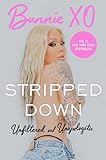
Stripped Down: Unfiltered and Unapologetic – A Modern-Day Memoir from the Trailer Parks of Vegas... | $16.05 | Buy on Amazon |
| 4 |

|
Intimate Audrey: An Authorized Biography | $15.96 | Buy on Amazon |
| 5 |

|
The Book of Sheen: A Memoir | $16.61 | Buy on Amazon |
The short answer
On March 4, 2015, after a day of Top Gear filming, Jeremy Clarkson and producer Oisin Tymon became involved in a confrontation at the Simonstone Hall Hotel in North Yorkshire. According to the BBC’s published investigation summary, Clarkson struck Tymon during an unprovoked physical attack lasting about 30 seconds.
Tymon did not retaliate. He suffered a swollen and bleeding lip, later attended a nearby A&E department, and was subjected to further verbal abuse inside the hotel. The BBC said Clarkson threatened to sack him and that the abuse was loud enough for other hotel occupants to hear.
Do these 3 things before closing this tab:
1Repair Windows errors before they cause bigger problems2Scan for outdated or missing drivers - takes under a minute3Clear out junk files and repair common Windows errors#1 Best Overall
Clarkson reported the incident to BBC management on March 9, after attempting to apologize to Tymon by text, email, and in person. The BBC suspended him on March 10 while it investigated. On March 25, director-general Tony Hall announced that Clarkson’s existing contract, which was due to expire at the end of March, would not be renewed.
So “fired” is fair as a description of the practical outcome. The technically precise wording is contract not renewed, rather than dismissal in the middle of an active contract.
What happened at the hotel?
The day began with a Top Gear studio recording in Surrey. Clarkson, Tymon, the other presenters, and the production team then traveled to North Yorkshire for location work. The confrontation took place at the Simonstone Hall Hotel on March 4.
The official BBC account provides the most reliable sequence:
Recommended Free Tools
- Clarkson and Tymon became involved in a verbal confrontation.
- Clarkson physically attacked Tymon for approximately 30 seconds.
- The BBC found that the attack was unprovoked and that Tymon did not fight back.
- Tymon sustained swelling and bleeding to his lip and later went to A&E.
- Clarkson continued to abuse him verbally, including threatening to sack him.
- The abuse continued inside the hotel and was heard by other occupants.
- Clarkson made several attempts to apologize.
- He reported the incident to BBC management on March 9.
- The BBC suspended him the following day pending an investigation.
The BBC investigation was led by Ken MacQuarrie, then a senior BBC executive associated with BBC Scotland. Its summary said that neither Clarkson nor the witnesses disputed that Tymon had been the victim of a physical and verbal attack. It also described Tymon as shocked and distressed and said he believed he had lost his job.
The summary deliberately uses the word struck rather than specifying an exact number or location of blows. News reports commonly described the incident as Clarkson punching or attacking Tymon, but the official wording is safer and more precise: Clarkson struck him during a physical attack that lasted about 30 seconds.
Was the fight really about a steak?
That is the part of the story that became famous, but it is also the part most often oversimplified.
Contemporary reports said the hotel kitchen had closed after filming and could not provide the hot food Clarkson wanted. Some described the requested meal as a steak or sirloin steak, with cold food or soup available instead. Witness accounts reported by the media said Clarkson became angry about the lack of a hot meal and directed threats at Tymon.
Free tools Windows power users keep installed
One-click scans. No signup required.
However, the BBC’s formal investigation summary does not identify a steak, alcohol, a particular menu, or a precise opening line as part of its findings. The most accurate description is therefore:
The confrontation was widely reported to have started over the lack of a hot meal, but the BBC ended Clarkson’s Top Gear contract because of the physical attack and sustained verbal abuse that followed.
Several details repeated in later retellings should not be presented as established fact unless they are clearly attributed to a particular report or allegation. These include claims that Clarkson was drunk, that Tymon told him to have his wife or mother cook the steak, the use of a specific racial insult, or that the argument lasted an exact number of minutes such as 20. The BBC summary describes sustained verbal abuse but does not give a precise duration for the verbal confrontation.
The steak explains the reported trigger. It does not explain the BBC’s employment decision by itself.
Why did the BBC end Clarkson’s contract?
Tony Hall said he had personally met Clarkson and Tymon, reviewed MacQuarrie’s findings, and concluded that the incident had “crossed a line”. His reasoning was not based on a criminal conviction. It was an employment, editorial, and workplace-governance decision.
The BBC’s position was straightforward: a major presenter could not be allowed to physically attack a colleague, subject him to prolonged verbal abuse, and threaten his employment without serious consequences. Hall also emphasized that the BBC could not apply one set of standards to ordinary staff and another to a star simply because that star was popular or commercially valuable.
The factors that made the incident decisive were:
- Physical violence: the BBC found that Clarkson struck a production employee.
- Verbal abuse: the physical attack was accompanied by sustained and serious abuse.
- Threats to Tymon’s job: Clarkson threatened to sack the producer while the confrontation was taking place.
- Workplace responsibility: Tymon was carrying out his role on the production and was not a random member of the public.
- Existing scrutiny: Top Gear and Clarkson were already under pressure because of earlier controversies.
The last point is important context rather than the BBC’s stated immediate reason. The formal published reason was the March 2015 attack and abuse.
Was Clarkson fired for racism or for assault?
The most accurate answer is that Clarkson was removed from Top Gear because of the physical and verbal attack on Oisin Tymon.
What’s actually slowing this PC down?
Pick the symptom - the matching free tool is one click away.
Earlier offensive-language controversies, including a BBC final warning, formed part of the background. They help explain why the BBC was already examining the programme’s culture and why another serious incident carried greater consequences. But the BBC did not announce that it was ending Clarkson’s contract specifically because of racism.
That distinction corrects two common versions of the story:
- He was not removed merely because a hotel failed to serve him steak.
- He was not formally removed because the BBC issued a standalone finding that he was racist.
The employment decision concerned violence and sustained abuse. The earlier controversies were relevant context.
The controversies that preceded the hotel incident
The Burma special and the “slope” remark
In a 2014 Top Gear special filmed in Burma and Thailand, Clarkson said “there is a slope on it” as an Asian man crossed a bridge. Ofcom found that “slope” was an offensive and pejorative term for a person of East Asian descent and ruled that the reference required investigation under broadcasting rules concerning offensive and discriminatory material. The ruling is available in Ofcom’s bulletin.
The BBC apologized and said the word had been intended as a play on the bridge’s slope and construction. Ofcom’s decision was a broadcasting-standards ruling about offensive language and context; it should not be rewritten as a criminal or legal finding that Clarkson had been determined to be racist.
The leaked nursery-rhyme outtake
Later in 2014, unaired footage appeared to show Clarkson using or apparently mumbling a racist slur while reciting “Eeny, meeny, miny, moe.” Clarkson disputed what he had said, but the BBC gave him a final warning, as reported by The Guardian.
The BBC also ordered a broader review of Top Gear’s culture and working practices. The review examined whether staff felt afraid to challenge offensive material and whether the relationship between programme management and BBC executives had deteriorated. That review made the programme’s workplace culture a live issue before the hotel confrontation occurred.
The Patagonia controversy
In late 2014, the Top Gear crew encountered hostility in Argentina after vehicle registration plates were interpreted as references to the Falklands War. The BBC’s internal review concluded that the plates had not been deliberately selected or substituted for that purpose. The relevant BBC Trust review is useful because it shows the controversy was investigated, but it should not be portrayed as another formal reason Clarkson was fired.
Outdated Drivers Are Slowing You Down
One free scan finds every outdated or missing driver and matches the right update for your exact hardware.Free scan · exact hardware matchPC Slower Than It Used to Be?
A free scan shows the junk files, broken settings and background clutter dragging Windows down - then fixes them in one click.Free scan · Windows 10 & 11Taken together, these episodes created a difficult environment for the BBC. They do not change the immediate cause of the March 2015 decision, but they help explain why the broadcaster was unwilling to treat the hotel attack as another minor Clarkson controversy.
Fired versus contract not renewed
In ordinary language, Clarkson was fired or sacked from Top Gear. In formal employment terms, the BBC announced that it would allow his existing contract to expire and would not renew it.
Precise wording: Clarkson’s Top Gear contract was not renewed.
Practical result: He could no longer present the BBC programme and his relationship with the show ended.
Quick wins for a faster PC:
Clear out junk files and repair common Windows errorsFree Scan →Scan for outdated or missing drivers - takes under a minuteDriver Scan →This distinction does not mean the BBC took no action. Clarkson was suspended on March 10, investigated, and then excluded from the next contract. The BBC Trust’s records also clarify that the decision was not a blanket ban on Clarkson working on every BBC programme. It was principally the decision not to renew his Top Gear contract.
That is why both descriptions appear in coverage: “fired” communicates the result readers care about, while “contract not renewed” describes the legal and contractual mechanism more accurately.
Rank #4
Did Clarkson report himself?
Yes. The BBC investigation summary says Clarkson reported the incident to BBC management on March 9. It also records that he tried to apologize to Tymon by text, email, and in person.
This detail is often lost in the steak-focused retelling. The BBC’s published account does not say that the broadcaster first learned of the incident through a complaint from Tymon. It says Clarkson reported it himself after the event.
Was Clarkson prosecuted or convicted?
No. There was no criminal prosecution or conviction.
Tymon said he did not want to press charges. North Yorkshire Police later announced that it would take no further action after completing its inquiries and interviewing witnesses, as reported by ITV News.
That outcome should be described carefully. It does not mean Clarkson was acquitted, cleared by a court, or found innocent after a trial. There was no criminal trial. It means the police investigation ended without further action.
Nor does the absence of criminal proceedings invalidate the BBC’s employment decision. An employer does not need to wait for, or obtain, a criminal conviction before deciding that an employee’s conduct breaches workplace standards.
The Tool Desk
Outbyte Driver Updater FREEFix the driver behind crashes, sound loss and screen glitchesFind Drivers →Outbyte PC Repair FREEClear out junk files and repair common Windows errorsFree Scan →What happened in the civil case?
In February 2016, Oisin Tymon settled a civil claim against Clarkson and the BBC involving personal injury and racial-discrimination allegations. Clarkson issued an apology saying that the incident was not Tymon’s fault and that the abuse Tymon received afterward was unwarranted.
The settlement amount was not officially disclosed. It was widely reported as being understood to exceed £100,000, with Clarkson and the BBC contributing. Because the claim settled, the settlement should not be described as a court finding that every allegation had been proved. A settlement resolves a civil dispute; it is not the same as a judgment after a full trial.
The settlement and apology are nevertheless significant because they provide a later acknowledgment of responsibility and show that the consequences continued beyond the BBC’s internal employment decision.
Independent reader supportYour contribution helps us test, update, and keep practical guides available for everyone.What happened to Top Gear and the other presenters?
Clarkson’s departure ended the established Clarkson–Richard Hammond–James May era of Top Gear, but it did not end the BBC franchise.
Best Value
Hammond and May were not fired alongside Clarkson. They did not return to the BBC’s new version of the programme after Clarkson’s contract ended, making a separate contractual and career decision. The BBC rebuilt the show with a new presenting lineup, initially led by Chris Evans and later including Matt LeBlanc and other hosts. The new lineup was announced through TopGear.com and a subsequent BBC Studios announcement.
It is therefore inaccurate to say that “Top Gear ended because Clarkson was fired.” More precisely, the original trio’s BBC era ended, while the BBC continued the franchise with new presenters.
What did Clarkson do next?
Amazon reunited Clarkson, Hammond, and May for a new motoring series. The programme was eventually named The Grand Tour, and Amazon announced its first episode for November 18, 2016. The name was announced in May 2016, followed by the premiere announcement in September 2016.
The trio’s final Grand Tour episode, The Grand Tour: One for the Road, was released on September 13, 2024, according to Amazon. That is the principal later outcome for the three presenters, but it is separate from why the BBC ended Clarkson’s Top Gear contract.
Verified timeline
| Date | What happened |
|---|---|
| March 2014 | Ofcom ruled that the “slope” reference in the Burma special was offensive and discriminatory in context. |
| May 2014 | Clarkson received a BBC final warning after the leaked nursery-rhyme outtake controversy. |
| October–December 2014 | The Patagonia registration-plate controversy was reviewed; the BBC found no evidence the plates had been deliberately chosen as a Falklands reference. |
| March 4, 2015 | The BBC says Clarkson physically and verbally attacked producer Oisin Tymon at the Simonstone Hall Hotel in North Yorkshire. |
| March 9, 2015 | Clarkson reported the incident to BBC management after attempting to apologize. |
| March 10, 2015 | The BBC suspended Clarkson pending an investigation. |
| March 25, 2015 | The BBC announced that Clarkson’s contract would not be renewed. |
| March 27, 2015 | Tymon said he did not want to press criminal charges. |
| April 7, 2015 | North Yorkshire Police announced no further action. |
| February 24, 2016 | The civil claim was settled and Clarkson apologized. |
| November 18, 2016 | The Grand Tour premiered on Amazon Prime Video. |
| September 13, 2024 | The trio’s final Grand Tour episode was released. |
The key distinctions in one place
- Not just a steak: the missing hot meal was the reported trigger, not the formal reason for the BBC’s decision.
- Not simply a punch: the BBC found a physical attack accompanied by sustained verbal abuse and threats to sack Tymon.
- Not a racism dismissal: earlier language controversies mattered as context, but the BBC cited the March 2015 attack as the immediate reason.
- Not a mid-contract firing: the BBC did not renew Clarkson’s contract when it expired.
- Not a criminal acquittal: police took no further action, but no court tried or cleared Clarkson.
- Not a mass firing: Hammond and May were not fired; they simply did not return to the BBC version of Top Gear.
Frequently Asked Questions
Was Jeremy Clarkson fired because of a steak?
No. The lack of a hot meal, often reported as a steak, was the alleged trigger for the confrontation. The BBC ended Clarkson’s Top Gear relationship because its investigation found that he had physically attacked and sustainedly verbally abused producer Oisin Tymon.
Was Jeremy Clarkson convicted of assaulting Oisin Tymon?
No. Tymon did not want to press charges, and North Yorkshire Police later took no further action. There was no criminal trial or conviction. The BBC’s employment decision was separate from the criminal process.
Were Richard Hammond and James May fired too?
No. Clarkson’s contract was not renewed. Hammond and May did not return to the BBC’s relaunched Top Gear, but they were not fired alongside him and later reunited with Clarkson on The Grand Tour.
Did the BBC ban Clarkson from all future BBC work?
No blanket ban was established. The formal decision concerned the non-renewal of his Top Gear contract. In practical terms, however, he did not return as the programme’s presenter.
Quick wins for a faster PC:
Scan for outdated or missing drivers - takes under a minuteDriver Scan →Repair Windows errors before they cause bigger problemsFix Now →Fix the driver behind crashes, sound loss and screen glitchesFind Drivers →The Bottom Line
Jeremy Clarkson was not removed from Top Gear because a hotel failed to serve him steak. During a confrontation that was widely reported to have begun over the missing hot meal, he struck producer Oisin Tymon and subjected him to sustained verbal abuse and threats. The BBC’s investigation found that the attack was unprovoked, and the broadcaster decided on March 25, 2015, not to renew Clarkson’s contract. His previous controversies made the decision more consequential, but the published reason was the physical and verbal attack.
Quick Recap
Product prices and availability are accurate as of the date/time indicated and are subject to change. Any price and availability information displayed on Amazon at the time of purchase will apply.