Do these 3 things before closing this tab:
1Fix the driver behind crashes, sound loss and screen glitches2Clear out junk files and repair common Windows errors3Scan for outdated or missing drivers - takes under a minuteThe fifth-generation Toyota 4Runner is reliable because Toyota kept its core hardware mature and predictable: a naturally aspirated 4.0-liter V6, a long-running five-speed automatic, body-on-frame construction, and incremental updates from 2010 through 2024 in the United States. That gives the platform a forgiving mechanical baseline—but not immunity from corrosion, neglected fluids, recalls, cooling-system leaks, or age-related wear.
Short answer: The fifth-generation Toyota 4Runner is so reliable because Toyota kept its core hardware mature, naturally aspirated, body-on-frame, and relatively predictable to service for the entire U.S. production run from 2010 through 2024. The 4.0-liter V6, five-speed electronically controlled automatic transmission, proven four-wheel-drive systems, and incremental rather than clean-sheet updates gave owners a forgiving mechanical baseline.
That does not make every fifth-gen 4Runner bulletproof or maintenance-free. The truck’s actual condition still depends on corrosion, service history, recalls, previous accidents, off-road use, modifications, and whether the owner followed the correct model-year maintenance guide. The most defensible description is not “nothing ever breaks.” It is durable, familiar, and predictable when properly maintained.
Why the fifth-generation 4Runner has such a strong reliability reputation
1. A mature, naturally aspirated powertrain
Every fifth-generation U.S. 4Runner centers on a 4.0-liter naturally aspirated V6 and a five-speed electronically controlled automatic transmission. Depending on the year and trim, buyers could choose rear-wheel drive, part-time four-wheel drive, or a full-time multi-mode four-wheel-drive system.
That combination is important because it is a mature design with fewer of the major powertrain variables found in many newer SUVs. There is no turbocharger in this fifth-generation engine application, and the platform was not repeatedly redesigned around hybrid hardware, continuously variable transmissions, or a much more complicated transmission family. A naturally aspirated engine and long-running automatic transmission can be easier for technicians to understand and diagnose over time. That is an engineering inference, not proof that simplicity alone guarantees reliability.
The practical benefit is predictability. A well-maintained 4Runner powertrain is familiar to Toyota specialists, independent repair shops, and owners who keep their own vehicles. Parts, service procedures, and common wear points are also easier to recognize than they would be on a brand-new architecture with limited long-term history.
2. Body-on-frame construction and truck-oriented hardware
The fifth-generation 4Runner is a body-on-frame SUV rather than a car-based crossover. Toyota’s own historical material emphasizes its frame, chassis rigidity, and continued truck-oriented identity. That construction helps the 4Runner carry equipment, tow, and absorb the demands of rough roads and trails.
A separate frame is not automatically a guarantee of a long life. It is a design trade-off:
- Advantages: A robust frame and chassis are well suited to towing, cargo, uneven terrain, and repeated load changes.
- Costs: The truck is heavy, fuel economy is not a strength, and the frame, crossmembers, suspension mounts, brake lines, fuel lines, skid plates, and other underbody components are exposed to mud, road salt, water, impacts, and corrosion.
In other words, rugged construction can make the truck durable under demanding use while also creating more underbody hardware that must be inspected. A 4Runner with a healthy frame may be an excellent long-term vehicle. A 4Runner with serious structural corrosion may be unsafe or financially unwise regardless of how smoothly its engine runs.
3. Toyota refined the platform instead of replacing it every few years
The fifth generation remained in production for fourteen U.S. model years, from 2010 through 2024. Toyota added equipment and made updates over that period, but it retained the established core architecture rather than replacing the entire vehicle with a clean-sheet design every few years.
That continuity gives the platform a large real-world service history. Technicians have had years to see how the engine, transmission, transfer case, differentials, suspension, wiring, and frame age in different environments. It also means that later fifth-gen vehicles are not simply identical to early ones. Toyota identifies the 2020 model year as a significant multimedia and safety-equipment update point while still classifying those vehicles within the fifth generation.
The Tool Desk
Outbyte Driver Updater FREEFix the driver behind crashes, sound loss and screen glitchesFind Drivers →Outbyte PC Repair FREEClear out junk files and repair common Windows errorsFree Scan →The result is a useful buyer trade-off: early models may have fewer convenience and driver-assistance systems to age, while later models offer newer infotainment and safety equipment. The right choice depends on condition, year, trim, drivetrain, and records—not on a blanket claim that one model year is perfect.
What the longevity evidence really says
The 4Runner’s reputation is supported by more than owner anecdotes. iSeeCars’ current reliability analysis rates the 2010–2024 generation strongly compared with the prior 4Runner generations included in its study and estimates a high average usable lifespan. Its separate longevity research also places the 4Runner among vehicles with an unusually strong predicted chance of reaching 250,000 miles.
Rank #2

- 【Diagnose Check Engine Light in Seconds – No Mechanic Needed】The FOXWELL NT301 OBD2 scanner instantly reads & clears engine fault codes (DTCs) with one click. Simply plug into the 16-pin DLC port, turn ignition on, and get accurate results within seconds—No prior car knowledge required. Save hundreds on dealership fees by knowing exactly what’s wrong before you visit a shop. The #1 choice car scanner for DIYers and car owners who want to take control of their vehicle’s health
- 【Clear & Reset CEL with Confidence】Unlike cheap code readers that just erase codes temporarily, NT301 works like all professional vehicle code readers: It clears the check engine light only after you’ve fixed the underlying issue. If the problem isn’t fully repaired, the fault code will reappear. So you’ll never get a false pass. Use the foxwell scanner to verify your repair work and drive with peace of mind
- 【Sm-og Check Helper – Know Your Pass/Fail Status Before the Test】With dedicated one-click I/M readiness hotkeys and a simple Red-Yellow-Green LED indicator, you’ll instantly know if your vehicle is ready for annual testing. Built-in speaker provides clear audio feedback. No guesswork—just confidence before you head to the test center. One less thing to worry about when inspection day comes
- 【Advanced OBDII Modes – O- 2 Sensor & EVAP Testing】NT301 go beyond basic code reading with enhanced OBD2 modes. Run an EVAP system check to assess fuel tank condition, and use the O- 2 sensor test to optimize air-fuel ratio, boosting fuel economy, cutting em- issions, and saving you money at the pump. The code reader for cars and trucks is like having a mini em-issions lab in your glove box
- 【Live Data Graphing – Spot Engine Issues in Real Time】View and log live sensor data in easy-to-read graphs with this OBD2 scanner diagnostic tool. Monitor ox- ygen sensors, fuel trims, coolant temperature, RPM, and more to spot suspicious values instantly. This obd scanner gives you professional-grade insight without the pro price tag—a feature you won’t find on basic $20 car code readers
Those are population-level findings, not a promise for an individual truck. A statistical survival estimate cannot inspect the frame of the 2012 4Runner sitting in front of you. It does not account for a vehicle that spent winters in a heavily salted region, was submerged in mud, received a poorly engineered lift kit, suffered a collision, or missed years of fluid changes.
Think of the numbers this way: the platform gives a properly selected and maintained vehicle a strong starting probability of a long life. They do not turn a neglected example into a good purchase.
The maintenance behavior behind the reputation
Toyota publishes model-year-specific owner manuals and warranty-maintenance guides for the 4Runner. Those documents are the primary authority for service intervals, inspection points, fluid requirements, operating instructions, warranty limitations, and special-operating-condition recommendations.
Start in Toyota’s official owner documentation area, select the vehicle’s exact model year and model, and use the corresponding owner manual and maintenance guide. Do not assume that an interval printed for a 2010 model applies identically to a 2024 model, or that the maintenance schedule for a two-wheel-drive vehicle is the same as one with a different four-wheel-drive system.
A reliable fifth-gen ownership routine has five parts:
- Follow the correct guide. Use the year-specific Toyota maintenance schedule rather than a generic internet chart.
- Maintain fluids by specification and condition. Keep engine oil, coolant, brake fluid, differential fluid, transfer-case fluid, and any other required fluids at the correct level and service status. Transmission service or inspection should also follow the applicable Toyota documentation and the vehicle’s operating conditions.
- Inspect four-wheel-drive and driveline hardware. Four-wheel-drive components are not maintenance-free simply because they are durable. Check operation, seals, driveshafts, differentials, transfer-case areas, and related connections.
- Repair small problems early. A small leak, warning light, coolant residue, or corroded fastener is cheaper to investigate before it becomes an overheating event, driveline failure, or structural repair.
- Keep records. A dated record of mileage, fluids, filters, brakes, tires, recalls, and major repairs gives the next technician or buyer evidence that the vehicle was maintained rather than merely driven.
A practical maintenance overview
| Area | What to verify | Why it matters |
|---|---|---|
| Engine and cooling system | Correct oil service, coolant level and condition, leak checks, and evidence of overheating | A durable engine can still be damaged by low oil, lost coolant, or prolonged overheating |
| Brakes and tires | Pad and rotor condition, brake-line condition, tire age, tread, pressure, and even wear | Wear items affect safety and can reveal alignment, suspension, or corrosion problems |
| Four-wheel drive | Correct operation of the selected system, transfer-case and differential service, and leaks | Neglect can leave an off-road system unreliable exactly when it is needed |
| Suspension and steering | Control-arm bushings, shocks, wheel bearings, steering play, alignment, and damaged mounts | Age and trail use can require substantial chassis work even when the engine is healthy |
| Underbody | Frame, crossmembers, mounts, fuel and brake lines, skid-plate attachment points, and lower radiator-support areas | Corrosion and impact damage can change the vehicle’s safety and financial value |
The weak spots that can undermine a “reliable” 4Runner
Corrosion is often more important than mileage
On a used fifth-gen 4Runner, underbody condition deserves first-order attention, particularly in road-salt regions, coastal environments, or areas where vehicles regularly operate on wet and muddy trails.
Inspect the frame from multiple angles, not just the visible outer surface. A proper inspection should include:
- Frame rails and crossmembers
- Suspension and body mounts
- Brake and fuel lines
- Steering and suspension mounting points
- Skid-plate attachment points and trapped-mud areas
- The lower radiator-support area
- Fasteners that may be too weakened to remove safely
Light surface rust is not automatically a reason to reject a vehicle. Perforation, flaking that compromises thickness, weakened mounts, damaged crossmembers, or hidden structural corrosion is a different matter. Have a qualified technician inspect questionable corrosion from underneath before negotiating a price.
Cooling-system leaks deserve early attention
A Toyota technical bulletin available through NHTSA includes water-pump leak inspection and diagnostic tips for applications that include the 4Runner. That bulletin does not establish that every fifth-generation 4Runner has a defective water pump. It does establish a sensible inspection point.
Look for coolant residue, a low coolant level, unexplained coolant loss, overheating history, belt-area noise, or evidence that cooling-system components have already been replaced. Ask for documentation if the seller says a leak was repaired. A cooling-system problem caught early may be manageable; one ignored until the engine overheats can create much more serious damage.
Outdated Drivers Are Slowing You Down
One free scan finds every outdated or missing driver and matches the right update for your exact hardware.Free scan · exact hardware matchPC Slower Than It Used to Be?
A free scan shows the junk files, broken settings and background clutter dragging Windows down - then fixes them in one click.Free scan · Windows 10 & 11Rank #3

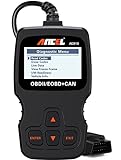
- Multi-Functions - Practical Multi-Functions OBD2 code reader features built-in OBD2 DTC lookup library, which help you to determine the cause of the engine light, read code, erase code, view freeze frame, I/M ready, vehicle information, data flow, real-time curve, get vehicle speed information, calculate load value, engine coolant temperature, get engine speed.
- Wide Capability - Supports 9 protocols compatible with most 1996 US-Based, 2000 EU-Based and Asian cars, and newer OBD II & CAN domestic or import vehicles. Supports 6 languages - English,German, Dutch, Spanish, French, Italian.
- 2.8" LCD Display - Designed with a clear display 2.8" Large LCD screen - white backlight and contrast adjustment. No need any battery or charger, OBD reader gets the power directly from your vehicle through the OBDII Data Link Connector.
- Compact Design - Car diagnostic scanner is equipped with a 2.5 feet long cable and made of a very thick flexible insulator.There are 6 buttons on OBD2 Scanner:scroll up/down,enter/exit and buttons that quick query VIN vehicle number& the DTC fault code.
- ABS / Airbag codes NOT Supported - It is able to read and clear check engine information which is part of OBDII system, but it cannot work with non-OBDII systems, including ABS / Airbag / Oil Service Light, etc.
Chassis and driveline wear are normal age questions
A long-lived engine does not mean the rest of the truck remains new. Independent repair reporting identifies cooling, braking, suspension, steering, electrical, and driveline systems as areas that can develop maintenance needs with age and use.
On a used example, check for uneven tire wear, wandering or pulling, steering play, worn control-arm bushings, tired shocks, noisy wheel bearings, damaged driveshafts or boots, differential and transfer-case leaks, brake vibration, and evidence of hard off-road impacts. A truck that has been used on trails may be mechanically sound, but it should be inspected with more skepticism than a stock vehicle that spent its life on pavement.
Electrical faults also deserve a closer look on modified trucks. Auxiliary lighting, winches, compressors, aftermarket stereos, trailer wiring, remote-start equipment, and poorly routed wiring can introduce problems that are not caused by Toyota’s original design.
Recalls are separate from reliability
A vehicle can have a durable engine and still have an open safety recall. Reliability and safety-campaign status must be checked separately for every used 4Runner.
What’s actually slowing this PC down?
Pick the symptom - the matching free tool is one click away.
Known fifth-generation recall populations include certain 2010–2016 4Runners affected by the Takata air-bag recall and certain 2018–2019 4Runners included in a Denso fuel-pump recall filing. The word certain matters: those campaigns do not mean every vehicle in those model-year ranges has the same open recall.
Before buying, enter the vehicle identification number into the NHTSA recall lookup and Toyota’s recall system. Confirm whether each applicable remedy was completed, not merely whether a campaign once existed. The NHTSA system also provides access to model-year information, complaints, investigations, and manufacturer communications, but a VIN-specific result is the relevant starting point for a particular truck.
How to inspect a fifth-gen 4Runner before buying
The most reliable model can become a bad purchase when the individual vehicle is neglected. Use this sequence to separate platform reputation from vehicle condition.
1. Run the VIN before spending time on the truck
Check open recalls and completed remedies. Also request service records, title information, accident history, and details of any flood, salvage, or insurance claim. A clean-looking body does not prove a clean history.
Quick wins for a faster PC:
Repair Windows errors before they cause bigger problemsFix Now →Fix the driver behind crashes, sound loss and screen glitchesFind Drivers →Clear out junk files and repair common Windows errorsFree Scan →2. Inspect the truck cold
Whenever possible, see the vehicle before it has been warmed up. Watch for warning lights that fail to illuminate during the initial key-on check, listen for abnormal belt-area or driveline noises, observe the exhaust, and look for oil or coolant residue. Verify that the temperature gauge behaves normally during the drive.
3. Put it on a lift
This is where many expensive problems become visible. Inspect the frame, crossmembers, mounts, lines, suspension, steering, driveshafts, differentials, transfer case, skid-plate mounts, and lower radiator-support area. Look for fresh undercoating or heavy paint that may be hiding corrosion, and ask why recently replaced parts were needed.
Rank #4
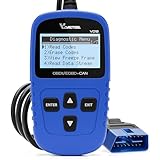
- 【A MUST-HAVE SCANNER TOOL FOR DIYERS】 - VDIAGTOOL VD10 car code reader is an incredibly useful, handheld obd2 scanner for each car owner or hobbyist, even for those with little to no experience when it comes to vehicle mechanics! Similar to a fixd car diagnostic tool, using this car diagnostic scanner is extremely easy. All you have to do is attach it to your car OBDII port and you can diagnose car problems in seconds! Read Codes (DTCs); Clear Codes; Live Data; View Freeze Frame; I/M Readiness; Vehicle Information.
- 【KEEP ENGINE IN GOOD STATUS】 - VDIAGTOOL check engine code reader brings a fast access to scan, read the car fault code, show its definition on the screen instantly, troubleshooting to find the root causes of problems, erase the engine fault code and turn off the MIL (Malfunction Indicator Light). Similar to a fixd car diagnostic tool, this car code reader helps ensure your engine stays in top condition.
- 【READ/CLEAR CODES & DTC LOOKUP】- No search online & saving your time, this vehicle car code reader retrieves generic (P0, P2, P3, and U0), manufacturer specific (P1, P3, and U1) codes, pending codes and displays DTC definitions based on the built-in database(more than 3000 codes) on the TFT screen, find out the root causes and clear the codes after fixed.
- 【ENHANCED OBD2 SCANNER WITH LIVE DATA & RETRIEVE FREEZE FRAME】 - This diagnostic scan tool for accurate diagnosis enables you to retrieve data from vehicle sensors, such as Engine RPM, Intake air temperature, Short/Long term fuel, Misfire data and etc. The freeze frame is stored in the PCM together with the diagnostic trouble code (DTC) related to the fault. Comparable to a fixd car diagnostic tool, the VD10 car code reader car scanner can be a valuable & practical diagnostic aid and also greatly help when diagnosing intermittent problems.
- 【I/M READINESS for THE S-nn-0-g CHECK】- OBDII vehicle may not pass the annual inspection unless the required monitors since reset are complete. So you should at least read the readiness monitors and make sure they are ready. This car obd2 scanner diagnostic tool is equipped with I/M readiness function to check the operations of the e-m-issi0n system on OBD2 compliant vehicles, run I/M monitor readiness test, checking if the pass vehicle s-m-0-g inspection.
4. Test the drivetrain correctly
Confirm which four-wheel-drive system the particular trim uses and operate it according to the owner manual. Check engagement, warning indicators, unusual vibration, and driveline noises. Do not casually engage a part-time four-wheel-drive mode on a high-traction surface unless the manual specifically permits that operation.
5. Assess ordinary wear
Check brake thickness, rotor condition, tire age, tread depth, uneven wear, alignment, wheel-bearing noise, steering response, suspension movement, and shock condition. These may not be catastrophic failures, but a collection of neglected wear items can turn a seemingly affordable 4Runner into an expensive one.
Free tools Windows power users keep installed
One-click scans. No signup required.
6. Scan for diagnostic trouble codes
A basic code reader can add useful information during a pre-purchase inspection. An OBD2 scanner for Toyota 4Runner can read many generic emissions and check-engine codes, show whether readiness monitors have been reset, and identify issues that are not obvious on a short drive.
It is only a first-pass tool. A generic scanner does not access every Toyota-specific module, prove that a truck is mechanically healthy, evaluate frame corrosion, verify recall completion, or replace a professional inspection. Do not clear codes merely to turn off a warning light before a buyer or technician has documented the results.
7. Judge modifications as part of the mechanical condition
Lift kits, oversized tires, aftermarket bumpers, roof loads, winches, towing equipment, and off-road accessories can be useful, but they can also add weight and stress to steering, wheel bearings, axles, brakes, suspension components, and the transmission. Ask which parts were installed, who installed them, whether alignment was performed, and whether the original parts are available.
A stock, well-documented truck is not automatically better than a modified one. The key questions are whether the modifications were engineered and installed well, whether the vehicle was used within its limits, and whether the owner maintained the resulting wear points.
Which fifth-gen model year is best?
There is no universally best year without first defining the buyer’s priorities. The condition of a rust-free, documented older truck can be more important than the model year of a neglected newer one.
- Earlier 2010–2013 examples: Focus on frame and underbody corrosion, service history, accident history, cooling-system evidence, and overall condition. Fewer newer convenience systems may mean fewer aging electronics, but age-related wear is more likely.
- Middle-generation examples: Evaluate drivetrain operation, fluid-service records, chassis wear, and modifications carefully. A documented example can be preferable to a newer truck that missed maintenance.
- 2020–2024 examples: These benefit from newer multimedia and safety equipment, with 2020 serving as the major update point identified by Toyota. They still need a VIN recall check, underbody inspection, and proof of maintenance; newer does not mean immune to neglect.
Trim and drivetrain matter too. A rear-wheel-drive truck, a part-time four-wheel-drive truck, and a full-time multi-mode four-wheel-drive truck have different operating and inspection considerations. Match the maintenance documentation to the exact vehicle rather than relying on a general fifth-gen checklist.
Be careful with generic repair manuals
An online listing for a Haynes or Chilton manual is not automatically a complete reference for the 2010–2024 fifth-generation 4Runner. Haynes’ current catalog includes coverage for older 4Runner generations, so verify the exact model years and generation before buying a manual. An older-generation book should not be treated as a full fifth-generation service reference simply because the cover says Toyota 4Runner.
For service intervals, operating instructions, fluid specifications, and model-specific equipment, Toyota’s year-specific owner manual and warranty-maintenance guide remain the safer starting points. For complicated diagnostics, structural corrosion, air-bag systems, and four-wheel-drive faults, use a qualified technician with Toyota-capable diagnostic equipment.
Recommended Free Tools
What a Toyota mechanic’s honest explanation sounds like
The fifth-gen 4Runner is reliable because Toyota kept the core hardware mature and did not make the platform depend on an unusually complicated powertrain. Its frame, drivetrain, and engine can tolerate substantial use, but the truck still demands inspection and maintenance. Its reputation is strongest when “reliable” means predictable to service and capable of high mileage—not when it means maintenance-free.
Best Value
Sale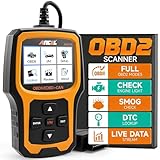 ANCEL AD410 Enhanced OBD2 Scanner, Vehicle Code Reader for Check Engine Light, Automotive OBD II Scanner Fault Diagnosis, OBDII Scan Tool for All OBDII Cars 1996+, Black/Yellow
- Understand Your Check Engine Light – The ANCEL AD410 OBD2 scanner helps everyday drivers quickly read and clear engine-related fault codes, view code definitions, and understand why the check engine light is on before visiting a repair shop. With 42,000+ built-in DTC lookups, this car code reader helps reduce guesswork and makes basic vehicle diagnostics easier for beginners and DIY users
- Full OBD2 Diagnostics Made Simple – More than a basic engine code reader, this OBD2 scanner diagnostic tool supports key OBDII functions including reading/clearing codes, live data, freeze frame, I/M readiness, O2 sensor test, EVAP test, vehicle information, and MIL status. It helps you check your car’s condition, verify repairs after the issue is fixed, and communicate with mechanics more confidently
- Live Date & Real-time Vehicle Insights – View real-time engine data such as RPM, coolant temperature, fuel trim, oxygen sensor readings, and other available OBD2 parameters directly on the screen. These live data readings help you better understand how your vehicle is running, spot abnormal patterns, and make more informed repair decisions instead of relying only on a warning light
- Smog Check Readiness At A Glance – Use the I/M readiness function before a smog check or emissions inspection to see whether your vehicle’s monitors are ready. This OBD2 code scanner helps you confirm if recent repairs have brought the system back to a ready state, reducing the chance of failed inspections, retests, wasted trips, and unnecessary inspection fees
- Works With Most OBD2 Vehicles – Compatible with most 1996 and newer U.S.-based OBD2 cars, SUVs, and light trucks, as well as many 2000 and newer EU/Asian OBD2 vehicles. Supports major OBDII protocols including CAN, ISO9141, KWP2000, J1850 VPW, and J1850 PWM. This automotive diagnostic scanner is designed for wide vehicle coverage; please check compatibility with your vehicle before purchase
That is the important distinction behind the badge. Toyota’s specifications and generation history explain the design continuity. Toyota’s owner documentation explains how to maintain it. Longevity analysis shows that many examples survive to unusually high mileage. Repair and safety records show why individual condition, corrosion, cooling-system care, wear items, and recalls still matter.
Owner tools that can make reliability easier to manage
Two inexpensive ownership habits are more useful than buying a random “miracle” reliability product. First, keep a 4Runner maintenance log book or digital equivalent with the VIN, date, mileage, fluid type, part numbers, repair shop, recall work, and next due item. Records help prevent skipped services and make a future inspection more credible.
Second, keep a basic code reader available for preliminary checks. Use it to record information, not to erase evidence. For actual repairs, use the year-specific service information and a technician who can access Toyota-specific systems.
When replacement work is needed, compare the exact part number and specification before purchasing. For filters, fluids, belts, brake components, and drivetrain-service items, sourcing genuine Toyota 4Runner parts or an appropriately specified equivalent is more important than choosing the cheapest listing. The correct part depends on model year, engine, trim, and drivetrain.
Bottom line: predictable beats bulletproof
The fifth-generation Toyota 4Runner earned its reputation through continuity, conservative engineering, body-on-frame strength, and a mature naturally aspirated V6 and automatic-transmission combination. Toyota refined the platform incrementally over fourteen U.S. model years, and independent longevity analysis supports the view that many properly maintained examples can reach very high mileage.
But the real secret is not immunity from failure. It is predictability. The major systems are familiar, maintenance requirements are documented, and many expensive problems can be found through a careful inspection before purchase or before a small symptom becomes a major failure.
Check the frame. Verify the VIN-specific recalls. Follow the correct model-year maintenance guide. Inspect the cooling system, four-wheel-drive hardware, suspension, steering, brakes, and modifications. Preserve the records. Do those things, and the 4Runner’s famous reliability reputation has a much better chance of becoming your ownership experience rather than just a slogan.
Quick wins for a faster PC:
Fix the driver behind crashes, sound loss and screen glitchesFind Drivers →Repair Windows errors before they cause bigger problemsFix Now →Scan for outdated or missing drivers - takes under a minuteDriver Scan →Frequently Asked Questions
Will every fifth-generation 4Runner reach 250,000 miles?
No. Longevity studies describe population-level survival, not a guarantee for an individual truck. A 4Runner with severe corrosion, poor maintenance, accident damage, or abusive modifications may not reach 250,000 miles.
Which fifth-generation 4Runner model year is the most reliable?
There is no universally best year. Earlier models can be good values if they are rust-free and documented, while 2020–2024 models offer newer multimedia and safety equipment. Condition, drivetrain, maintenance, recalls, and modifications matter more than a simple year ranking.
Is the fifth-gen 4Runner maintenance-free?
No. Engine oil, coolant, brakes, differentials, transfer-case components, suspension, steering, four-wheel-drive hardware, and the frame all require the inspections and services specified for the vehicle’s model year and operating conditions.
How do I check recalls on a used fifth-gen 4Runner?
Run the VIN through NHTSA’s recall lookup and Toyota’s recall system, then confirm that every applicable remedy was completed. Do not assume that a recall affecting one model-year population applies to every vehicle in that range.
Recommended Free Tools
The Bottom Line
The fifth-gen 4Runner is reliable because it is mature, mechanically predictable, and built around proven truck hardware—not because it is maintenance-free. A rust-free, properly serviced, recall-verified example can be an exceptional high-mileage SUV; a neglected or structurally corroded one can still be an expensive and unsafe purchase.
Quick Recap
Product prices and availability are accurate as of the date/time indicated and are subject to change. Any price and availability information displayed on Amazon at the time of purchase will apply.