Quick wins for a faster PC:
Repair Windows errors before they cause bigger problemsFix Now →Fix the driver behind crashes, sound loss and screen glitchesFind Drivers →A hybrid can use more fuel when temperatures fall, trips become shorter, speeds rise, tires lose pressure, cargo creates drag, or maintenance is overdue. First prove that the change is real with several fill-to-fill measurements. Then check conditions you can control—tire pressure, driving style, route, load and service history—before paying for diagnosis. A warning light, unusual noise, braking resistance or a persistent unexplained decline calls for the owner’s manual and a qualified technician because general fuel-economy advice cannot identify a model-specific battery, brake, sensor or cooling fault.
What a fuel-economy drop usually means
Fuel economy is the result of the whole trip, not just the powertrain. A hybrid may spend more time running its engine to warm the cabin, move through thicker winter air, overcome low tire pressure, or cover a route with more hills and high-speed driving. Changes that look like a mechanical problem can therefore be normal responses to weather or use.
As an Amazon Associate I earn from qualifying purchases.
Hybrids also differ. The U.S. Department of Energy’s often-cited cold-weather figure applies to conventional hybrids, whose larger batteries and hybrid controls are affected by low temperatures. It is not a universal forecast for mild hybrids or plug-in hybrids. Plug-in operation, charge level and electric-only driving add variables that must be evaluated for the particular vehicle.
Before changing parts, separate a genuine trend from a misleading dashboard number. The display may be reset, rounded or calculated over a different distance than the fuel receipts. Several tank-to-tank measurements under comparable conditions are more useful than one unusually poor trip.
#1 Best Overall

- NOTE: It requires a compatible third-party app and is designed primarily for standard OBD-II diagnostics. It is not a full-system scanner. Advanced or vehicle-specific functions depend on your vehicle and the app. Please check compatible apps and supported functions before purchase.
- STANDARD OBD-II FUNCTIONS – read & clear trouble codes for check engine light, view freeze frame data, I/M readiness, and live sensor data to help monitor vehicle health and diagnose check engine problems.
- VEHICLE COMPATIBILITY – Works with most 1996+ cars and light trucks in the US for standard OBD-II diagnostics functions. Support for EVs & PHEVs is app-dependent; please use Apps developed for EVs such as Car Scanner ELM OBD2 to check compatibility or contact Veepeak.
- EASY BLUETOOTH CONNECTION: Supports Bluetooth LE for iOS & Android (not WiFi): please connect from within the app after setting the correct connection type. Also supports classic Bluetooth mode for Android. Android head units may not be supported.
- APP COMPATIBILITY: Compatible with generic Apps including Car Scanner ELM OBD2, Torque (for Android), OBD Fusion, as well as vehicle-specific Apps like BimmerCode*, BimmerLink*, OBD JScan, Dr. Prius, OBDocker, etc. Note: some Apps or in-App features require separate purchase from third party developers. NOT compatible with Carly, MHD, xHP, ProTool, bootmod3, etc.
Cold weather is the largest common seasonal effect
The U.S. Department of Energy’s Fact of the Week 1164, published December 14, 2020, reports that conventional hybrid vehicles can experience a decrease in fuel economy of around 30% in cold temperatures. The result came from controlled laboratory testing; the agency warns that actual results vary with vehicle, driving conditions and other factors. Treat 30% as a reference for the test conditions, not as a promise that every hybrid will lose exactly that amount.
Winter often combines several influences. A cold battery and powertrain may require more engine operation before the vehicle reaches its efficient operating range. Cabin heat draws energy, short errands end before the car warms fully, winter tires can add rolling resistance, and snow, slush or congestion can slow traffic. The DOE statistic describes the overall cold-temperature effect; it does not provide a universal percentage for each of those individual contributors.
How to tell a seasonal change from a fault
- Compare a cold-season tank with other cold-season tanks on similar routes rather than with a summer highway trip.
- Record the number of cold starts and the average trip length. A week of very short errands is not comparable with a month of longer commutes.
- Note heating, defrost and seat-heater use, along with winter tires, roof equipment and weather-related traffic.
- Look for warning lights, unusual noises or a change that remains after temperatures and trip patterns return to normal.
Do not disable the hybrid’s temperature-management controls or attempt a battery repair based only on winter mileage. Use the vehicle manual for cold-weather operation and obtain model-specific service information if symptoms persist.
Speed, acceleration and route can overwhelm the hybrid advantage
Hybrid systems recover some braking energy and can shut the engine off at stops, but they cannot eliminate the energy required to push a vehicle through air or climb a hill. The DOE’s general guidance says fuel economy tends to decrease rapidly above 50 mph. Higher speed, rapid acceleration and hard braking all increase consumption, especially when repeated on a short trip.
In 2022 guidance for gasoline vehicles, the DOE cited potential losses of up to 40% in stop-and-go traffic and up to 30% at highway speeds from aggressive driving. Those are broad estimates, not a hybrid-specific prediction or a result guaranteed for your car. Use them to understand the direction of the effect: abrupt inputs waste energy that a smoother drive could avoid.
Rank #2

- OBD2 SCANNER & BATTERY TESTER IN ONE – The INNOVA 5210 OBD2 scanner not only reads and clears check engine light and ABS codes (coverage may vary) but also functions as a car battery tester to check alternator health and prevent unexpected breakdowns.
- LIVE DATA & REAL-TIME DIAGNOSTICS – Get instant access to OBD2 live data, including RPM, engine temperature, fuel trims, and oxygen sensor readings. The drive cycle readiness feature helps pass smog tests and emissions inspections with ease.
- ENGINE CODE READER – This automotive diagnostic tool works with most US, Asian, and European vehicles from 1996 and newer, including Toyota, Ford, Honda, Chevrolet, Nissan, Dodge, and more. Read and erase ABS (coverage may vary) and engine trouble codes with pinpoint accuracy. Please use Innova's Coverage Checker to verify coverage.
- OIL RESET & SMOG CHECK READINESS – The built-in oil light reset feature allows DIYers and mechanics to properly reset maintenance lights after an oil change. Check I/M readiness status to ensure your car is ready for an emissions test.
- NO SUBSCRIPTIONS – VERIFIED FIXES WITH FREE APP – Unlike other OBD2 code readers, the INNOVA 5210 provides verified fixes based on real-world repairs from ASE-certified mechanics. Trusted by 4M users, the RepairSolutions2 app on iPhone & Android gives you step-by-step repair guidance, suggested parts, and cost estimates—no extra fees or hidden subscriptions!
Driving habits that usually help
- Accelerate smoothly and allow the hybrid system to choose when to run the engine. Gentle inputs give it more opportunity to use electric assistance.
- Look farther ahead so you can lift off early instead of alternating between hard acceleration and hard braking.
- Keep highway speed moderate and legal. A small speed reduction can reduce aerodynamic demand substantially.
- Choose a route with fewer severe climbs, queues and repeated cold starts when the time difference is reasonable.
- Do not shift into neutral, switch off safety systems or override the vehicle’s controls to chase a display number. Follow the manual.
Air-conditioning and heating should be recorded when comparing trips. They can change the engine’s workload, and their effect depends on ambient temperature, vehicle design and how long they are used.
Short trips and idling are especially inefficient
A cold-start trip of a few minutes gives the engine little time to reach its efficient temperature. Several separate errands can therefore use more fuel than one combined trip of the same total distance. Traffic lights, drive-through queues and waiting with the engine on add another avoidable load.
Do these 3 things before closing this tab:
1Fix the driver behind crashes, sound loss and screen glitches2Clear out junk files and repair common Windows errors3Scan for outdated or missing drivers - takes under a minuteThe DOE’s May 23, 2022 fact sheet states that idling an engine for as little as 10 seconds can use more fuel than stopping and restarting. The agency notes that actual idle fuel use varies with the vehicle, ambient conditions, heating and other accessories. Hybrid stop-start operation is designed to shut the engine off when appropriate; avoid unnecessary idling when it is safe, and do not try to force the system to restart or remain off contrary to the manual.
Check tire pressure the right way
Under-inflated tires increase rolling resistance. Measure pressure when the tires are cold and compare the reading with the specification on the driver’s door placard or in the owner’s manual. Do not use the maximum pressure molded into the tire sidewall as the vehicle’s normal setting; that number is a tire limit, not the carmaker’s recommended operating pressure.
The DOE’s 2021 consumer guidance estimates that correct inflation improves fuel economy by 0.6% on average and by up to 3% in some cases. These are general estimates, not a guarantee for a particular hybrid, tire or driving pattern. A digital pressure gauge can make the check repeatable; it cannot identify a puncture, misalignment, uneven wear or a dragging brake.
Rank #3
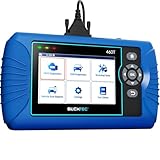
- [All System Diagnostics, Professional-Level Scanner] - BLCKTEC 460T is the ultimate OBD2 diagnostic tool for home mechanics and professionals. It supports all 10 OBD2 modes, reads and clears Engine/Transmission/ABS/SRS codes, performs All-System Diagnostics, offers workshop reset tools, and provides real-time live data. It helps you pinpoint issues, assess your car's condition, and prepare for SMOG checks with ease. NOTE: Function availability depends on your vehicle. Before you buy, be sure to use the Compatibility Checker on BLCKTEC website or contact our customer support to verify that the features you need are supported for your vehicle’s specific year, make, and model.
- [12+ Most Popular Reset Functions] - BLCKTEC 460T OBD2 scanner offers 12+ dealer-level service functions, including Oil Maintenance Reset, ABS Bleeding, EPB Reset, SAS(Steering Angle Sensor) Recalibration, DPF(Diesel Particulate Filter) Reset, Throttle Body Relearn, Battery Reset/Initialization, TPMS Relearn, Transmission Reset, Fluid Change Reset, Maintenance Reset and more, enabling you to perform workshop services like a pro. NOTE: Function availability depends on your vehicle. Be sure to use the Compatibility Checker on BLCKTEC website to verify that the features you need are supported for your vehicle.
- [Real-Time OBD2 and OEM Live Data, Freeze Frame Data] - BLCKTEC 460T helps diagnose vehicle issues when warning lights like Check Engine Light or ABS/SRS Light appear. It offers detailed DTC info, ECU Freeze Frame Data, and real-time OBD2 and advanced OEM live data, including Engine, Transmission, ABS, SRS, and more, making it easy to diagnose and resolve vehicle problems. You can view, graph, record, replay, and overlay up to four live data streams in a single graph for better analysis.
- [AutoVIN, AutoReLink, AutoScan, 3X Faster] - Equipped with AutoVIN technology, 460T automatically retrieves the VIN to save you time. Its AutoScan and AutoReLink features scan all of the vehicle's ECUs and detect any fault codes immediately after you plug the scanner into the vehicle's OBD2 port - no button presses required. Additionally, it regathers DTC and I/M readiness information every 30 seconds, simplifying monitor tests. 460T's advanced technology makes it 3X faster than other products.
- [Get RepairSolutions2, the #1 Auto Repair App for Free] - When paired with RepairSolutions2(RS2) App, 460T becomes even more powerful. RS2's Verified Fix Database built by master technicians, provides the parts needed for the repair. Additionally, RS2 gives you access to OEM warranty info, maintenance schedules, TSB, and dealership recall info, making car care easier than ever. RS2 is free with no subscription fees and it stores your car scan reports in the cloud, allowing you to access, share, or print them anytime and anywhere.
What to inspect while checking tires
- Measure all four tires and the spare if the vehicle has one, before driving or after the car has been parked long enough to cool.
- Look for a slow leak, a nail, sidewall damage, uneven tread wear or a tire that repeatedly loses pressure.
- Confirm that replacement tires have the size and type specified for the vehicle. Different compounds and tread designs can change rolling resistance and handling.
- Have alignment, suspension or brake drag checked if pressure is correct but the car pulls, vibrates, wears tires unevenly or feels reluctant to roll.
Remove weight and aerodynamic drag
Every additional kilogram must be accelerated and carried up hills. Roof boxes, bicycles and crossbars also disturb airflow, with the greatest effect at highway speed. Remove tools, sports equipment, seasonal supplies and other items that do not need to stay in the car.
The Tool Desk
Outbyte Driver Updater FREEFix the driver behind crashes, sound loss and screen glitchesFind Drivers →Outbyte PC Repair FREEClear out junk files and repair common Windows errorsFree Scan →When you need a cargo carrier, the DOE notes that rear-mounted solutions have less fuel-economy effect than roof-mounted cargo in the examples it cites. The exact penalty depends on the vehicle, carrier shape, load and speed. Secure all equipment as directed by its manufacturer and remove the carrier itself when it is not needed.
Maintenance: follow the manual, not outdated fuel-saving myths
Use the manufacturer’s maintenance schedule and the recommended oil grade. The DOE estimates that using the recommended oil grade can improve fuel economy by 1%–2% in general consumer testing. That range is not a prediction for every hybrid, and a different viscosity should not be substituted unless the manufacturer permits it for the operating temperature.
The DOE also says repairing a noticeably out-of-tune vehicle or one that has failed an emissions test can improve mileage by an average of about 4%. Results depend on the fault, the repair and workmanship. A check-engine light, rough running, hard starting or failed inspection should be diagnosed rather than treated with a generic tune-up.
The air-filter misconception
On a modern computer-controlled, fuel-injected gasoline vehicle, replacing a clogged air filter may improve acceleration but does not normally improve fuel economy, according to the DOE. Replace the filter when the maintenance schedule or inspection calls for it, but do not expect that part alone to reverse a mileage decline.
Rank #4
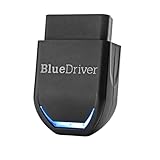
- [Diagnose Like a Pro] BlueDriver Pro Next-Gen is a professional OBD2 scanner and diagnostic tool that helps you scan, understand, and clear vehicle trouble codes with confidence. Turn your phone into a powerful car diagnostic scanner—no guesswork, no unnecessary repairs.
- [Read and Clear More Codes Than Ever] Read and clear more codes than basic car code readers. Access enhanced diagnostics for Check Engine, ABS, SRS, Airbag, TPMS, Transmission, and more on supported vehicles, including expanded coverage on newer model years.
- [Verified Fixes and Real-Time Data] Get unlimited, technician-verified repair reports matched to your VIN, with definitions, causes, and confirmed fixes. Monitor live vehicle data as you drive, view freeze frames, check smog readiness, and analyze Mode 6 test results.
- [Expanded Make & Model Coverage] Optimized for today’s vehicles with strong support for GM, Ford, Stellantis (RAM, Jeep, Chrysler), Toyota, Honda, Nissan, Mazda, Subaru, Hyundai, Mercedes-Benz, BMW, and VW. Enhanced communication on select 2024+ Nissan and Mazda models (see compatibility chart).
- [Gas Vehicles 1996+ & Select Light-Duty Trucks] Works with all gas-powered vehicles made in 1996 or newer, plus select light-duty trucks and diesels, including F-250, RAM 2500, Silverado, and Sierra. Built for daily drivers, family vehicles, and real-world truck use.
Hybrid-specific service decisions
A lower miles-per-gallon figure by itself is not evidence that the high-voltage battery needs replacement. Battery condition, cooling, regenerative braking, engine controls and brake systems vary by make, model and model year. The supplied general guidance does not establish a universal test, interval or warning code for any of them. Follow the exact manual and use technicians trained for the vehicle’s high-voltage system.
Confirm the drop with a repeatable measurement
Dashboard estimates are useful for spotting a trend, but fill-to-fill calculations provide a stronger baseline. Use the same calculation method each time: distance driven divided by fuel added. If the car reports fuel economy in litres per 100 kilometres, keep the units consistent rather than comparing unlike displays.
- At a normal fill, record the odometer reading or trip distance and the amount of fuel added. Filling to the same level reduces variation.
- At the next fill, record the same information and calculate the tank’s distance divided by fuel consumed.
- Repeat for several tanks. One tank can be distorted by an automatic pump shutoff, a different fill level, unusual traffic or a temperature swing.
- For each period, note ambient temperature, city/highway mix, route, trip length, average speed, traffic, heating or air-conditioning, tire pressure, cargo and maintenance work.
- Compare periods with similar conditions before deciding that a mechanical fault exists.
This log is a practical way to control variables; it is not a laboratory test. Certification or window-sticker figures are standardized estimates and will differ from real-world driving. Neither a label value nor a dashboard estimate guarantees the result of every trip.
A troubleshooting sequence that starts with low-cost checks
Work from external conditions toward vehicle diagnosis. The sequence below avoids replacing expensive hybrid components before simpler explanations have been checked.
- Establish the baseline. Use several fill-to-fill measurements and write down the conditions for each one. Confirm that the apparent decline is not a reset display or a single abnormal tank.
- Compare weather and trip pattern. Check for colder temperatures, more short journeys, extra warm-up time, winter tires, snow, rain, traffic or a different route.
- Review speed and inputs. Look for faster highway travel, more rapid acceleration, hard braking, hills, towing or heavier traffic. Smooth the inputs for a comparable trial.
- Inspect load and drag. Empty unnecessary cargo, remove roof accessories and verify that any required carrier is installed correctly.
- Measure cold tire pressure. Set each tire to the door-placard or manual value. Recheck for leaks and inspect tread, alignment symptoms and brake drag.
- Review scheduled maintenance. Check the service record, oil grade, emissions or check-engine history and any manufacturer-specified work that is overdue. Do not invent an interval or replace a hybrid battery solely because fuel economy fell.
- Escalate when evidence points beyond routine checks. If the decline continues under similar conditions, or the car shows a warning light, unusual noise, rough running, braking resistance or changed hybrid behavior, stop guessing and arrange qualified diagnosis.
How to make a fair comparison between two periods
Hold as many variables steady as possible. The following checklist is more informative than comparing two arbitrary dashboard readings.
Best Value
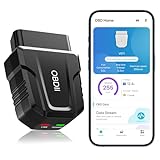
- 【Comprehensive Performance Testing】V011 OBD2 Scanner provides a complete diagnostic solution, giving you a thorough understanding of your vehicle's condition. It supports a variety of performance tests, support 9 protocols,👍automotive fault clearing,including fast reading of DTCs, access to electronic emission readiness, turning off CEL or MIL, resetting monitors, reading live data and retrieving the vehicle's VIN, freeze frame, sensor data, data streaming, diagnostic reports, onboard monitoring, live data streaming, and more. With these features, you can monitor your car's performance in real time and discover potential problems before they become major issues.
- 【Convenience and Savings for All Users】Designed with user-friendliness in mind, the V011 OBD2 Scanner is perfect for both novices and seasoned car enthusiasts. The intuitive app helps you interpret the check engine light, and suggests possible fixes. This can help you avoid unnecessary trips to the repair shop and prevent you from being overcharged for repairs. The product also includes helpful how-to guides and video tutorials, empowering you to clear the check engine light yourself and save significantly on repair bills.The fault code can only be cleared after the car is repaired. ⚠️ Notice:lf the car is not repaired,the fault code can only be cleared by the computer in the 4s shop.
- 【Intuitive Data Visualization】Understanding car diagnostics has never been easier. The V011 OBD2 Scanner displays detected data in clear, easy-to-read charts. Whether it's engine coolant temperature, engine speed, vehicle speed, or control module voltage, the visual representation helps you quickly grasp your car’s status. Even beginners can compare these readings against normal values to determine if their car needs any repairs.
- 【Broad Compatibility】The newly upgraded V011 OBD2 Scanner supports over 96% of car makes and models, making it one of the most versatile diagnostic tools on the market. It is compatible with a wide range of brands including Toyota, Honda, Chevrolet, Ford, Mercedes-Benz, Jeep, BMW, Porsche, Subaru, Nissan, Cadillac, Volkswagen, and Lexus, covering vehicles from 1996 to the present. This ensures that almost any vehicle owner can benefit from its extensive features. The device also supports multiple languages, including English, German, Spanish, Finnish, French, Italian, Dutch, Portuguese, and Chinese, ensuring accessibility for a global audience.
- 【Advanced Bluetooth 5.4 Connectivity】Say goodbye to the hassle of traditional wired connections. The V011 OBD2 Scanner features an upgraded Bluetooth 5.4 system, providing faster and more reliable connections. This seamless connectivity ensures you can start diagnosing your vehicle without any delays.Tips: 1. The car must be started (power on and ignition), 2. The mobile phone Bluetooth is turned on. Note that Apple phones only need to turn on Bluetooth, do not connect Bluetooth in the phone settings to turn on OBD Home, the APP will automatically connect (this product is only suitable for OBD home)
| Comparison factor | What to keep similar | Why it matters |
|---|---|---|
| Temperature and season | Similar ambient range and weather | Cold operation, battery temperature and cabin heating can change engine runtime. |
| Route and traffic | Same roads, hills and congestion pattern | Stops, climbs and detours alter energy demand. |
| Trip length and starts | Similar average distance and number of cold starts | Very short trips spend a larger share of time warming the vehicle. |
| Speed and acceleration | Comparable highway speed and smoothness | High speed and abrupt inputs increase aerodynamic and drivetrain losses. |
| Climate control | Similar heating, defrost and air-conditioning use | Accessories can change engine and electrical loads. |
| Load and accessories | Same passengers, cargo and roof equipment | Mass affects acceleration; external equipment adds drag. |
| Tires | Correct cold pressure and comparable tire type | Pressure and rolling resistance affect the energy needed to move. |
| Maintenance state | Same oil grade and no unresolved faults | Service condition can mask the effect of driving changes. |
When a professional inspection is warranted
Arrange model-specific help when a lower result remains after the basic checks, especially if it is accompanied by a warning light or a noticeable change in operation. Relevant symptoms include rough running, repeated engine operation when conditions have not changed, unusual electrical or mechanical noise, a burning smell, reduced acceleration, a brake that feels hot or resists movement, pulling, vibration or visible fluid leakage.
Bring the technician your fuel log, tire-pressure readings, recent service records and the conditions under which the decline appeared. Ask for diagnosis based on the exact make, model, model year and powertrain. General fuel-economy figures cannot determine whether the cause is a battery, battery-cooling issue, sensor, engine-control problem, alignment fault or brake drag, and replacing parts without a confirmed fault can be costly and ineffective.
If a high-voltage warning, damaged cable or collision-related battery concern is present, follow the safety instructions in the owner’s manual and use an appropriately qualified service facility. Do not open or probe high-voltage components yourself.
Recommended Free Tools
Quick reference: cause, check and response
| Possible influence | Evidence-backed check | Practical response |
|---|---|---|
| Cold temperature | Compare similar seasonal tanks and record heating and trip length | Expect variation; combine errands and reassess when conditions normalize. |
| Speed or aggressive inputs | Review speed, acceleration and braking pattern | Use smoother acceleration, earlier lift-off and moderate legal speeds. |
| Low tire pressure | Measure cold pressure against the door placard or manual | Inflate to specification and investigate repeated loss. |
| Load or roof drag | Check the trunk, roof and hitch for unnecessary equipment | Remove unused items and prefer lower-drag carrying arrangements when suitable. |
| Maintenance condition | Review oil grade, service schedule and warning history | Complete manufacturer-specified service and diagnose faults; do not rely on an air-filter swap as a mileage cure. |
| Unexplained persistent decline | Look for warning lights, noise, braking resistance or altered behavior | Use the manual and a qualified technician for vehicle-specific testing. |
What improvement is realistic?
There is no single percentage that applies to every hybrid. The DOE’s figures provide scale: around 30% for conventional hybrids in controlled cold-temperature testing; 0.6% on average and up to 3% in some cases from correct tire inflation; 1%–2% from the recommended oil grade; and about 4% on average for repairing a noticeably out-of-tune vehicle or one that failed an emissions test. The aggressive-driving estimates of up to 40% in stop-and-go traffic and up to 30% at highway speeds are general gasoline-vehicle guidance, not a promise for a hybrid.
Actual improvement depends on what changed and whether the car was already operating correctly. Correcting a tire that is only slightly below specification may produce an effect too small to distinguish from normal tank-to-tank variation, while eliminating a major roof load or resolving a genuine fault can matter more. Measure the result over comparable trips rather than expecting an instant, guaranteed number.
Quick Recap
Product prices and availability are accurate as of the date/time indicated and are subject to change. Any price and availability information displayed on Amazon at the time of purchase will apply.




