Quick wins for a faster PC:
Fix the driver behind crashes, sound loss and screen glitchesFind Drivers →Repair Windows errors before they cause bigger problemsFix Now →Scan for outdated or missing drivers - takes under a minuteDriver Scan →Replace windshield wiper blades as soon as the rubber is cracked, split, torn, rough, or otherwise damaged. Replace them after cleaning when they still streak, smear, chatter, squeak, skip, or leave parts of the windshield uncleared. Inspect both blades regularly, particularly after winter storms, spring rain, and periods of intense summer heat.
There is no single replacement interval that suits every driver. Six-month inspections and annual replacement are manufacturer maintenance recommendations, not guarantees of service life. Your vehicle owner’s manual, the blade’s actual condition, local weather, and how often you use the wipers should determine the decision.
As an Amazon Associate I earn from qualifying purchases.
When should I replace my windshield wiper blades?
Replace a blade immediately when you find damaged rubber. Cracks, splits, tears, missing sections, hardened or rough rubber, and a rounded or uneven wiping edge mean the blade can no longer maintain reliable contact with the glass. Tesla owner documentation states, “If damaged, replace the blade immediately to prevent damage to the glass and improve visibility.”
Replacement is also appropriate when wiping remains poor after you clean the windshield and the blade. Persistent streaking, smearing, squeaking, chattering, skipping, or uncleared areas indicate a worn blade, a contact problem, or another fault that needs attention. Do not assume every streak means the rubber itself has failed: wax, sap, road film, dirt, and other residue can produce the same symptom.
#1 Best Overall
![Rain-X 810363 Repellency Water Repellent Wiper Blades, 22' Windshield Wipers (Pack of 2), All Weather Streak-Free for Enhanced Visibility w/Water Repellency Formula [Amazon Exclusive]](https://m.media-amazon.com/images/I/41UWFE9f1HL._SL160_.jpg)
- Patented Rain Repellent Technology: Repellency blade clears your windshield while applying Rain-X water repellent, helping rain, sleet, and snow slide off for better visibility.
- Enhanced Visibility for Safer Driving: Experience the benefit of advanced visibility, water beads up and slides away while driving, giving you clearer sightlines and added confidence in any weather.
- Quick Setup with Wide Vehicle Compatibility: Featuring a universal adapter that fits 96% of vehicles, installation is fast and simple. Need help? Just scan the QR code on the back for a step-by-step video guide.
- Next-Gen Beam Blade Technology: Engineered for a smooth, streak-free wipe with even pressure across the entire blade, perfectly contoured to your windshield’s curve.
- All-Weather Performance & Installation Tip: Built for harsh weather, this blade delivers a long-lasting, streak-free wipe in rain, snow, and ice. FOR BEST RESULTS, remove the yellow squeegee cover after installation.
- Replace now: the rubber is cracked, split, torn, badly roughened, or visibly deteriorated.
- Clean and test first: streaks or noise appeared without visible damage and the glass or blade may be contaminated.
- Inspect the hardware: the blade looks sound but skips, lifts, or fails to touch the glass evenly.
- Follow the manual: the vehicle specifies a service mode, special connector, integrated washer system, or other replacement procedure.
How do I know if my wiper blades are bad?
Look at the rubber edge
Raise each arm only as directed by the owner’s manual and examine the entire wiping edge. Look for longitudinal cracks, splits at the ends, tears, chunks missing from the edge, brittleness, rough texture, or a blade that has become rounded instead of square and flexible. Check both sides of the vehicle; one blade can deteriorate faster because of its position, exposure, or use.
Also look for an uneven edge. A section that appears worn smooth while another section remains sharp can leave a corresponding band of water on the windshield. A damaged edge can scrape or drag across glass, so do not continue using it simply because some of the windshield still clears.
Watch the wiping pattern on a wet windshield
Test the blades on a wet windshield rather than a dry one. A healthy blade should move smoothly and maintain contact across its travel. Streaks, hazy smears, skipped sections, chatter, squeaks, or repeated passes needed to clear water are warning signs. Poor visibility in the driver’s viewing area is a practical reason to replace a blade even if the rubber damage is subtle.
Rank #2
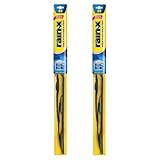
- Conventional Wiper Blade: Rain-X Weatherbeater windshield wiper blade set of two 22 inch blades, built to meet or exceed original equipment manufacturer standards for durability, quality and construction
- Streak-Free Wipe in Wet Weather: Embedded friction reducers and multiple pressure points keep the squeegee flush against the curve of the glass, clearing rain in a smooth pass instead of chattering and streaking
- Built to Take on All Seasons: The galvanized steel frame stands up to road spray and winter salt while the natural rubber squeegee resists the cracking and splitting that come with heat, cold and harsh weather
- Fits Most Wiper Arms: A pre-installed adapter connects to J-hook, pin and bayonet arms, the three most common arm types on cars, trucks and SUVs on the road today
- Installs in Minutes: Watch our easy-to-follow installation videos or simply lift the wiper arm, release the old blade, snap the new blade onto the arm until it clicks and lower it back to the glass; no additional tools required
GMC’s maintenance guidance summarizes the combination of symptoms this way: “Cracked rubber, constant streaking, noise or chattering, and poor windshield contact indicate that the blade is worn and requires replacement.” “Constant” matters: a single mark caused by a wet or dirty windshield is not proof that the blade has reached the end of its life.
Check the frame, arm, and contact
Inspect the blade frame or beam for corrosion, bent sections, broken joints, or parts that no longer hold the rubber evenly. Examine the wiper arm for bending or damage and verify that the blade sits flat against the glass. A new insert cannot correct a bent arm or a damaged mounting point. If a replacement blade still leaves an isolated strip or lifts from the glass, have the arm and attachment checked.
Why are my wipers streaking or chattering?
Streaking and chatter have several possible causes. Dirt, road grime, tree sap, wax, and other residue on either the glass or rubber can interrupt contact. A hardened, torn, or uneven edge can do the same. Windshield contamination is especially likely after a vehicle has been parked outdoors or driven through spray and construction dust.
Rank #3

- 100% Brand New 16 and 26 inch Wiper Blades: Suitable for various weather conditions and seasons, ensuring excellent performance whether in cold winters or hot summers.
- Patented Design Wipers: Unique design seamlessly combines functionality and aesthetics, specially designed for (9*3 & 9*4) U/J hook wiper arms, no need for cumbersome adapters, installation takes only a few seconds.
- Innovative Design: High-tensile memory spring steel sheets combined with red armor provide stable support and even pressure distribution to better contact the windshield, with no gaps or noise during operation. Tested through 1.5 million cycles.
- Streak-Free Wiping: Adaptive wiper resists arm pressure aging, ensuring seamless contact with the glass for optimal wiper performance. It continues the classic bracketless design to prevent snow and ice accumulation. Improved aerodynamic design significantly reduces resistance, noise, and wind drag, tested and verified.
- High-Quality User Experience: Streak-free, outstanding performance, and quiet operation, meeting all my needs. Cleans the windshield and leaves no streaks. Highly recommend this product. The best-performing wipers I've ever tried. They were very easy to install, and you can't beat the price. Streak-free and very smooth and quiet. I highly recommend.
- Wet the windshield. Do not evaluate wiping on dry glass, which can create noise and unnecessary friction.
- Clean the glass. Remove visible film, sap, dirt, and road residue with an automotive glass cleaner or another product suitable for the windshield.
- Clean the blade edge. Wipe the rubber carefully to remove deposits. Cleaning can restore performance when contamination is the cause, but it cannot repair torn or cracked rubber.
- Inspect both blades and the hardware. Check for damage, uneven edges, corrosion, bent arms, broken frame pieces, and sections that do not contact the glass.
- Retest on a wet windshield. If streaking, smearing, chatter, squeaking, skipping, or poor contact continues, replace the blade or follow the vehicle manufacturer’s diagnostic procedure.
If the same area remains uncleared with a new, correctly fitted blade, the problem may be the arm, spring pressure, windshield surface, or attachment rather than the rubber. Persistent visibility problems warrant inspection by a qualified technician.
Do these 3 things before closing this tab:
1Scan for outdated or missing drivers - takes under a minute2Repair Windows errors before they cause bigger problems3Fix the driver behind crashes, sound loss and screen glitchesHow often should I change wiper blades?
Use an interval as a reminder to inspect, not as an automatic expiration date. Blade life changes with temperature, ultraviolet exposure, dust, ice, rain, parking conditions, and frequency of use. General Motors’ North American service bulletin 24-NA-164, issued in August 2024 for specified passenger-car and truck model years, says lifespan can differ substantially with environmental conditions and use.
| Guidance | What it says | How to apply it |
|---|---|---|
| Rain-X maintenance guidance | Check every six months and change at least once a year. | Use the six-month point to inspect condition; do not treat one year as a guaranteed lifespan. |
| Rain-X FAQ, modified March 7, 2021 | Its blades typically last six to twelve months, depending on conditions. | This describes Rain-X blades, not every brand or vehicle. |
| Tesla owner documentation hosted by NHTSA | Replace at least annually for the vehicle covered by that manual. | Apply the interval only within the scope of that vehicle’s documentation. |
| NHTSA seasonal guidance | Winter storms and spring rains can take a heavy toll; summer heat can also affect blades. | Inspect after severe weather and check both sides of the vehicle. |
| General Motors bulletin 24-NA-164 (August 2024) | Blade life varies with environment and use. | Condition and performance take priority over a fixed calendar interval. |
For a driver in mild weather who parks in a garage, a sound blade may last longer than a calendar reminder suggests. A vehicle exposed to freezing conditions, intense heat, dust, salt, or frequent rain may need replacement sooner. The condition-based signs above override a routine date.
Rank #4

- Bosch ICON makes windshield wiper replacement simple and easy with 2-pack bundles that include popular driver and passenger side blade length combinations designed to fit specific vehicles
- Exclusive fx dual rubber technology resists heat and ozone deterioration and has proven to last up to 40% longer than other premium wiper blades
- Patented beam design features exclusive tension spring arcing technology, that creates a fit that's custom-contoured to the curvature of each side of the windshield, for optimized visibility even under extreme weather conditions
- Built-in flexible asymmetric spoiler distributes uniform downward force along the entire length of the wiper blade, holding it firmly to the windshield at higher speeds to prevent lift-off, ensuring a cleaner wipe
- Quick, easy installation with original equipment quality hook adapter that is compatible with 9x3mm and 9x4mm hook wiper arms (not compatible with side lock, pinch tab, or top lock wiper arms which require "OE" suffix part numbers)
Why inspect after winter storms, spring rain, and summer heat?
Seasonal weather accelerates wear in different ways. Ice and frozen precipitation can pull at the rubber or make it stick to the glass. Repeated spring rain increases use and exposes the edge to road film. Summer heat and ultraviolet exposure can harden rubber and reduce flexibility. NHTSA advises that “Windshield wiper blades may need to be replaced after the heavy toll from winter storms and spring rains.”
After a severe storm, clear ice and debris before operating the wipers, then inspect both blades. Never use the wipers to scrape frozen material from the windshield. If a blade was frozen to the glass, check for a torn edge or a bent arm before the next drive. Seasonal inspection is particularly important before a long trip because rain can turn a minor defect into a major visibility problem.
PC Slower Than It Used to Be?
A free scan shows the junk files, broken settings and background clutter dragging Windows down - then fixes them in one click.Free scan · Windows 10 & 11Crashes, No Sound, or Screen Glitches?
Random freezes, missing sound and display glitches usually trace back to one bad driver. Find and replace yours safely.Free scan · under a minuteHow do I find the right wiper blades for my car?
Wiper blades are vehicle-specific. Confirm both the length and the connector before buying. The owner’s manual, a vehicle fitment lookup, or the existing blade’s verified specification can provide the information, but the manual takes priority when they disagree.
Best Value
- Bosch ICON makes windshield wiper replacement simple and easy with 2-pack bundles that include popular driver and passenger side blade length combinations designed to fit specific vehicles
- Exclusive fx dual rubber technology resists heat and ozone deterioration and has proven to last up to 40% longer than other premium wiper blades
- Patented beam design features exclusive tension spring arcing technology, that creates a fit that's custom-contoured to the curvature of each side of the windshield, for optimized visibility even under extreme weather conditions
- Built-in flexible asymmetric spoiler distributes uniform downward force along the entire length of the wiper blade, holding it firmly to the windshield at higher speeds to prevent lift-off, ensuring a cleaner wipe
- Quick, easy installation with original equipment quality hook adapter that is compatible with 9x3mm and 9x4mm hook wiper arms (not compatible with side lock, pinch tab, or top lock wiper arms which require "OE" suffix part numbers)
| Fitment detail | What to verify | Why it matters |
|---|---|---|
| Driver-side length | The exact inch or millimeter size specified for your vehicle. | The driver’s blade is often a different length from the passenger-side blade. |
| Passenger-side length | The separate size specified for the other side. | Installing the wrong length can leave uncovered glass or cause blades to collide. |
| Connector type | The hook, push-button, side-pin, bayonet, or other attachment specified by the vehicle. | A blade with the wrong adapter may not lock securely or may not attach at all. |
| Vehicle procedure | Service or maintenance mode and any integrated washer-system instructions. | Some arms cannot be safely lifted from their parked position without the prescribed procedure. |
A Tesla manual lists 26-inch and 21-inch blades for one specific vehicle and warns that another connector may not attach. Those dimensions must not be generalized to other Tesla models or any other vehicle. Confirm the exact year, model, body style, and trim when using a fitment catalog.
What should I consider when choosing replacement blades?
Fit before design
Correct length and a secure connector are non-negotiable. A premium construction style cannot compensate for a blade that does not lock onto the arm or cover the intended sweep.
Construction and climate
Replacement blades may use different frame or beam constructions, and some are marketed for winter or particular climates. The available evidence does not establish a universal best design or an independently tested ranking. Choose a construction that is listed as compatible with the vehicle and suited to the conditions in which you drive.
Replacement cadence and installed cost
Compare the manufacturer’s stated service expectations, the price of the correctly fitted pair, and whether installation is included. A lower purchase price is not automatically cheaper if the connector is wrong, the blade fits poorly, or it must be replaced immediately. No available evidence establishes that one product lasts longer than another, so do not treat marketing claims as a guaranteed lifespan.
A practical replacement decision checklist
- Inspect both blades at least twice a year and after severe seasonal weather.
- Replace immediately if either rubber edge is cracked, split, torn, badly rough, or missing material.
- When symptoms appear without visible damage, clean the windshield and blade, then retest on wet glass.
- Inspect the arm, frame, joints, and glass contact if cleaning does not restore an even wipe.
- Replace the blade when symptoms persist after cleaning and the hardware appears sound.
- Confirm the exact driver-side and passenger-side lengths and the connector for your vehicle.
- Use the owner’s manual for service mode, integrated washer systems, and any model-specific procedure.
- Test the new blades with washer fluid before driving in rain and verify that both sides clear the intended area.
What not to assume about wiper replacement
- Do not assume a calendar date proves failure. Annual advice is maintenance guidance, not a universal legal deadline or measured lifespan.
- Do not assume streaking always requires new blades. Contamination can cause streaks, while damaged arms or poor contact can mimic worn rubber.
- Do not assume one size fits a vehicle range. Lengths and connectors can change by model, year, trim, and side.
- Do not keep a visibly damaged blade in service. Damage can reduce visibility and may allow the holder or arm to contact the glass.
- Do not run blades on a dry or icy windshield. Wet the glass and remove ice safely before testing.
The safest rule is simple: inspect on a schedule, respond to actual damage or persistent performance symptoms, and verify fitment from the vehicle’s own documentation. That approach accounts for the large differences in climate, use, and vehicle design that make a single replacement interval unreliable.
Quick Recap
Product prices and availability are accurate as of the date/time indicated and are subject to change. Any price and availability information displayed on Amazon at the time of purchase will apply.




