The Renault 8 Gordini became a rally legend because it delivered an extraordinary result immediately, then sustained it while Renault continued developing the car and giving ordinary drivers a way into competition. At its first official appearance, the 1964 Tour de Corse, a 1108 cc Gordini won outright and other Renaults finished third, fourth and fifth. The same rally fell to Renault again in 1965 and 1966. That record was remarkable because the Gordini was not an exotic purpose-built racer: it was a compact, rear-engined family sedan made genuinely competitive through a stronger engine, revised driveline, improved braking and focused development.
The short answer: results came before the legend
Renault launched the Renault 8 Gordini in 1964, naming it after engineer Amédée Gordini. The car transformed the Renault 8’s modest family-car identity with a high-revving engine, competition-oriented driveline and braking changes. Renault’s first version, the R1134, used a 1108 cc engine rated at 95 SAE horsepower at 6,500 rpm—almost twice the output of the standard Renault 8 engine, according to Renault’s historical material.
As an Amazon Associate I earn from qualifying purchases.
Those specifications mattered, but the decisive proof arrived in competition. On 7–8 November 1964, the Gordini entered the Tour de Corse for the first time officially. In torrential rain, dense fog, rutted roads and ice, only eight of 79 starters were classified as finishers in Renault Classic’s account. Jean Vinatier and Roger Masson won in a 1108 cc Gordini, while Renault Gordinis also took third, fourth and fifth. The result immediately established the car as agile, robust and fast enough to defeat a much broader field.
Renault Classic later described the newcomer as “agile, responsive, reliable and fully competitive.” That is Renault’s own historical assessment, not an independently measured test result, but the finishing record explains why the phrase endured.
#1 Best Overall
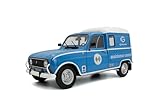
- SOLIDO BRAND QUALITY: Solido is known for producing high-quality diecast model cars with exceptional detail, durable construction, and accurate representations of real vehicles. Each model is crafted with precision and built to last.
- RENAULT OFFICIALLY LICENSED MODEL: This Renault 4LF4 Gordini Service vehicle replica is produced as an officially licensed Renault model. It represents the support vehicle used by the Gordini racing division during the 1970s, reflecting Renault’s motorsport heritage and the role of service vehicles in rally and racing operations. Official licensing allows Solido to reproduce Renault trademarks, body design, and historical markings associated with the Renault 4LF4 Gordini Service vehicle.
- FEATURES & DETAILS: This 1:18 scale Renault 4LF4 Gordini Service model measures approximately 8 inches in length and reproduces the compact proportions of the classic Renault 4 utility vehicle. The diecast replica features opening front doors that reveal interior details including seating and dashboard elements. Finished in the blue Gordini Service livery representing the 1976 support vehicle, the model is designed for display and does not include a separate display base.
- TOP QUALITY MATERIALS: Produced using a diecast metal body with carefully molded plastic components, this model provides durability while maintaining fine visual details. The paint finish and Gordini Service graphics are applied to reproduce the appearance of the real support vehicle. Exterior body lines, interior elements, and wheel details demonstrate Solido’s approach to creating collectible diecast replicas with recognizable automotive styling.
- COLLECTIBLE DISPLAY ITEM: Designed for collectors aged 14 and above, this Renault 4LF4 Gordini Service model is intended as a collectible display piece rather than a toy. Its historic service livery, detailed craftsmanship, and accurate scale proportions make it an appealing addition to classic car or motorsport collections. This diecast model also makes a thoughtful gift option for Renault enthusiasts and collectors of historic automotive vehicles.
Why the 1964 Tour de Corse victory was so persuasive
It was the car’s first official appearance
A debut win carries more weight than a later victory after years of testing. The Tour de Corse was the Gordini’s first official competition appearance, so Renault had not yet built a long public record for rivals to discount. The car had made earlier attempts, but they were not a clean sequence of successes. Renault Classic recounts an unsuccessful Alpine Rally entry, followed by three pre-production cars retiring from the 1964 Liège–Sofia–Liège for different reasons. The Corsica result therefore marked a sharp change from promising project to proven competitor.
It survived an unusually destructive event
Eight classified finishers from 79 starters means the result was shaped by endurance as well as speed. Rain, fog, broken and deeply rutted surfaces, and ice punished cars that could not maintain traction, braking control or mechanical reliability. Winning in those conditions showed that the Gordini was more than a quick compact on smooth roads.
It beat varied and powerful opposition
Renault says the Gordini had to compete in the sports-car category rather than the touring-car category. Its rivals included the Porsche 904 GTS, Alfa Romeo Tubolare, Lancia Flavia, Citroën DS19, Ford Mustang, Lotus Elan, Ferrari 250 GT, Mini Cooper S and Alpine A110. These cars represented very different approaches to performance: purpose-built sports machinery, larger touring cars, lightweight sports cars and other compact rally specialists. The Gordini’s outright victory—and four Renaults in the top five—made the performance difficult to dismiss as a class advantage.
How the Gordini’s layout helped it on rough roads
The Renault 8 was rear-engined, and the Gordini retained that basic architecture rather than adopting the front-engine layout common in many rivals. A rear-mounted engine places driven weight over the rear axle, which can help a rear-drive car find traction when accelerating on loose or wet surfaces. The compact body also suited narrow, twisting stages where a large car could be harder to place. These are layout advantages, not a claim that every rear-engined car is automatically faster; suspension setup, tires, braking and driver technique still determine the result.
Rank #2

- 1/24 car in metal
- Vehicle screwed on base, in blister: no box
- A great gift idea!
Renault concentrated on the parts that converted that basic package into a competition car. The engine produced substantially more power than the standard Renault 8 unit, while the driveline and brakes were revised for harder use. The first version’s four-speed transmission was later replaced by a five-speed unit, extending the car’s development rather than freezing the specification after the debut win.
The three-year Corsica winning run
The 1964 result was not a one-off. Renault credits Jean Vinatier with the first victory, Pierre Orsini with the 1965 win and Jean-François Piot with the 1966 victory, giving the Renault 8 Gordini three consecutive Tour de Corse wins. Renault’s Gordini history records the sequence in its competition account: Renault Group’s Gordini-badged model history.
The works team was still experimenting during that run. At the 1965 Tour de Corse, Renault used a 1296 cc prototype with lighter aluminum body panels. That detail shows why the victories should be understood as a development programme, not simply the performance of an unchanged showroom car. Renault was testing more displacement and lower weight while retaining the compact Gordini concept.
What’s actually slowing this PC down?
Pick the symptom - the matching free tool is one click away.
Three wins in succession also changed the meaning of the badge. A single upset can be explained by weather, attrition or a particularly strong driver. Repeating the result over three editions, with different winning drivers, demonstrated that the car and the organisation had a repeatable competitive base.
Rank #3

- SOLIDO BRAND QUALITY: Solido is known for producing high-quality diecast model cars with exceptional detail, durable construction, and accurate representations of real vehicles. Each model is crafted with precision and built to last.
- RENAULT OFFICIALLY LICENSED MODEL: Officially licensed Solido replica of the 1975 Renault 4LF4, finished in White and reproducing the distinctive appearance of Renault's compact light commercial vehicle.
- FEATURES & DETAILS: 1:18 scale diecast model featuring opening front doors, directional wheels, White exterior finish and styling based on the original 1975 Renault 4LF4 panel van.
- TOP QUALITY MATERIALS: Diecast metal body with molded plastic components, detailed interior, White paint finish, reproduced trim, wheels and exterior styling matching the original vehicle.
- COLLECTIBLE DISPLAY ITEM: Designed for collectors ages 14 and up. Intended for display by Renault enthusiasts, automotive collectors and diecast model fans, making an excellent gift choice.
What changed between the two main production versions?
The production car evolved from the R1134 to the R1135. Renault uses SAE and DIN horsepower figures in its historical material, so the units should not be merged into one unqualified power number.
| Version | Displacement | Renault-stated output | Gearbox | Fuel-system change |
|---|---|---|---|---|
| R1134, introduced in 1964 | 1,108 cc | 95 SAE hp at 6,500 rpm | Four-speed | The original specification |
| R1135, introduced in October 1966 and marketed as the 1300 | 1,255 cc | 110 SAE hp (88 DIN hp) at 6,750 rpm | Five-speed | Additional 26-litre tank beneath the front hood |
Renault’s museum summarises the Gordini range as 1108–1255 cc and 95–110 hp, with top speeds of 170–175 kph depending on version. The figures describe different versions and measurement standards; they are not a single laboratory comparison. The later car’s five-speed gearbox and extra front-mounted fuel capacity addressed the practical demands of longer competition stages, while the larger engine provided more performance for the continued works effort.
Why reliability mattered as much as horsepower
Rally stages punish a car in ways a short circuit race may not. A car must keep its engine, gearbox, brakes and cooling system functioning over changing surfaces and weather, often with limited service time. The 1964 Corsica attrition makes that point starkly: the winning Gordini was not merely the quickest entry over one section; it remained operational when most of the field did not.
Free tools Windows power users keep installed
One-click scans. No signup required.
The compact sedan format also made the car understandable to private competitors. It used a production-based shell and a relatively small engine rather than a scarce, highly specialised racing platform. Renault’s subsequent Cup programme made that accessibility part of the car’s identity, allowing drivers to learn in machinery related to the successful works car.
Rank #4

- Accurate 1:18 Scale Replica: Detailed representation of the 2021 Rogue with realistic SUV proportions, sharp body lines, and refined diecast finishing.
- Premium Metal Construction: Built from zinc alloy with ABS components, providing substantial weight, structural durability, and high-quality exterior detailing.
- Six Functional Opening Doors:Features fully opening front and rear doors, hood, and tailgate, allowing a clear view of the interior and engine bay.
- Working Suspension System: Equipped with functional suspension on all four wheels for enhanced realism and a natural stance during display.
- Collector-Focused Design:Crafted for display and collection, ideal for automotive enthusiasts who appreciate precise and high-detail miniature replicas.
The 1966 Gordini Cup turned success into a driver pipeline
Renault introduced the Renault 8 Gordini Cup in 1966. Renault UK describes it as the first one-make racing series, while Renault’s historical account says it helped reveal drivers including Jean-Claude Andruet, Bernard Darniche, Jean-Pierre Jabouille, Michel Jarier, Jean Ragnotti and Jean-Louis Thérier. The Cup’s importance was broader than a promotional race series: it gave ambitious amateurs a common car, a visible ladder and direct experience of competition.
A single works victory can create an admired car. A one-make series creates a community around it. Drivers could compare preparation and technique without the entire contest being decided by fundamentally different machinery. That helped spread knowledge of the Gordini’s handling and maintenance, and it connected the road-going model to the next generation of professional racers.
Independent reader supportYour contribution helps us test, update, and keep practical guides available for everyone.Important victories beyond Corsica
Corsica is the central evidence for the Gordini’s reputation, but it was not the only major result. Renault records Jean-Pierre Nicolas and the Gordini’s success in the 1968 Morocco Rally. Renault’s German press history also lists a 1966 Sardinia Rally victory. These results extended the car’s credibility to different events and surfaces instead of leaving its reputation dependent on one island rally.
Windows Errors? Fix Them Before They Spread
Repair common Windows errors and clear accumulated junk for a smoother, more stable PC - no reinstall needed.Free scan · no reinstallCrashes, No Sound, or Screen Glitches?
Random freezes, missing sound and display glitches usually trace back to one bad driver. Find and replace yours safely.Free scan · under a minuteThe broader competition story is why Renault’s historical account says the Gordini powertrain was used in a wide array of sports cars and race cars. The engine and related development work became a foundation for other Renault and Gordini competition projects, so the 8 Gordini’s influence outlasted its own production run.
Best Value

- Detailed model kit on a scale of 1:24. The stand model has the following dimensions: Length: 156 mm, Width: 74 mm, Height: 57 mm. The kit also includes two driver figures.
- The high-quality kit from TAMIYA must be assembled by the customer.
- Self-assembly is accompanied by step-by-step and illustrated assembly instructions. The assembly instructions are of course included.
- The precisely fitting individual parts must be assembled according to the assembly instructions. The parts can be painted according to your own idea.
- Tools, glue and paint are not included with the plastic sealant. These should be purchased optionally.
How many were built, and why that matters to the legend
More than 11,800 Renault 8 Gordinis were produced from 1964 to 1970, according to the Renault The Originals Museum. That production scale is significant. The car was rare enough to feel special but numerous enough to support private ownership, club activity, racing preparation and preservation. It also meant the competition image was attached to a car people could recognise on public roads, not only to a factory prototype.
The museum’s page also presents a Renault 8 Gordini miniature, reflecting how the model has become a collectible object as well as a historic competition car. Availability, scale and pricing can change, so a miniature should be treated as a current retail question rather than a fixed historical specification.
What the evidence establishes—and what it does not
The event results and technical specifications above come primarily from Renault’s own historical materials: Renault Classic’s Renault 8 Gordini: The Rally, Renault Group’s Gordini history and the museum record. Those are authoritative sources for Renault’s published account of its car. The available material does not include an independently hosted period result sheet or FIA homologation record, nor does it provide a controlled independent performance test.
Recommended Free Tools
That qualification does not weaken the central case. Renault’s account supplies a coherent chain: an outright debut win in a high-attrition event, three consecutive Corsica victories, continued technical development, further international rally success and a Cup that expanded participation. Together, those elements explain why the Renault 8 Gordini became a rally legend rather than merely an interesting fast sedan.
Quick Recap
The decisive reasons, in one checklist
- Immediate proof: the first official appearance ended in an outright 1964 Tour de Corse victory.
- Strength under pressure: Renault reports eight finishers from 79 starters, with Gordinis first, third, fourth and fifth.
- Repeatability: Renault credits the car with Corsica victories in 1964, 1965 and 1966.
- Effective evolution: the car grew from the 1108 cc, four-speed R1134 to the 1255 cc, five-speed R1135 with extra fuel capacity.
- Accessible competition: the 1966 Gordini Cup created a route for private drivers and helped launch notable careers.
- Enduring influence: more than 11,800 were produced, and the Gordini powertrain continued into other sports and race cars.
Product prices and availability are accurate as of the date/time indicated and are subject to change. Any price and availability information displayed on Amazon at the time of purchase will apply.