Do these 3 things before closing this tab:
1Clear out junk files and repair common Windows errors2Scan for outdated or missing drivers - takes under a minute3Repair Windows errors before they cause bigger problemsWhat is E15 fuel, and why should you care about the EPA’s emergency waiver? E15 is gasoline containing 10.5% to 15% ethanol; the EPA’s 2026 waiver temporarily eased summertime sale restrictions, not engine-compatibility rules. Use E15 only in model-year-2001-and-newer approved light-duty vehicles or equipment whose manufacturer expressly permits it.
The consumer-facing answer is straightforward: an EPA decision allowing a fuel to be sold does not mean every vehicle or gasoline engine can use that fuel. E15 availability, especially during the summer, is also subject to changing federal waivers, state rules, fuel formulations, and retailer compliance.
As an Amazon Associate I earn from qualifying purchases.
Key takeaways
- E15 contains 10.5% to 15% ethanol by volume, while E10 contains about 10% ethanol; E15 is a fuel-content designation, not an octane rating. The U.S. Department of Energy’s ethanol-blend guidance explains the distinction.
- E15 is approved for model-year-2001-and-newer light-duty conventional vehicles and flexible-fuel vehicles, but it is not approved for conventional vehicles older than model year 2001 or for many motorcycles, boats, snowmobiles, lawn mowers, chainsaws, and other gasoline equipment. DOE’s E15 guidance lists the approved-use boundaries.
- EPA’s 2026 emergency action changed temporary fuel-sale and fuel-distribution rules, not engine-compatibility rules. The initial national action began May 1, 2026, and was scheduled through May 20, 2026, the maximum 20-day period under the cited emergency-waiver authority. EPA’s March 25, 2026 announcement describes the action.
- EPA said E15 was available at more than 3,000 gas stations nationwide and that, without the action, E15 could not be used by roughly half of the country during summer. Those are EPA’s policy figures, not an independent estimate of every station’s current availability.
- Ethanol has higher octane but less energy per gallon than gasoline. A lower price per gallon therefore does not automatically mean a lower cost per mile, and there is no single mileage penalty that applies to every vehicle.
What is E15 fuel?
E15 is gasoline blended with 10.5% to 15% ethanol by volume. E10, the more common low-level blend, contains about 10% ethanol and 90% gasoline. The name E15 describes ethanol content; E15 does not mean 15-octane fuel, and the pump’s octane number remains a separate specification.
According to the U.S. Department of Energy Alternative Fuels Data Center’s current ethanol-fuel guidance, reviewed for this article on August 13, 2026, more than 98% of U.S. gasoline contains some ethanol. E15 is therefore an incremental increase over the blend many Americans already buy, not a completely different category such as a dedicated alternative-fuel vehicle fuel.
#1 Best Overall

- EVERYDAY TREATMENT: Keep your diesel engine in top condition with our EDT that is designed to improve performance & maintain engine health. With regular use, you can ensure your engine runs smoothly & efficiently giving you peace of mind on the road.
- BOOST FUEL ECONOMY: Enhance your vehicle performance with our diesel additive that boosts cetane levels by up to 7 points resulting in better fuel economy & reduced maintenance costs. Say goodbye to poor acceleration & frequent trips to the mechanic.
- FUEL INJECTOR CLEANER: Cleans both internal & external injector deposits, enhances the lubricity of fuel to safeguard the fuel system components, such as the pump & injectors to increase engine longevity while also acting as a fuel system cleaner.
- PREVENTS RUST & CORROSION: While demulsifying moisture & adding stability to fuel by preventing oxidation & degradation, it also provides a reliable solution for protecting fuel systems from the damaging effects of rust & corrosion.
- EASY TO USE: Use at every fill-up, 1 oz. or 2oz. (for more cetane and lubricity boost) for every 25 gallons of diesel, this product is easy to use! Just pour it into your diesel fuel tank during your next fill up.
Ethanol is useful as a gasoline-blending component because ethanol has a higher octane number than gasoline. Ethanol also contains less energy per gallon than gasoline. The practical effect depends on the vehicle’s calibration, the exact fuel formulation, driving conditions, and the price difference between blends, so E15 should not be presented as a guaranteed performance upgrade or a guaranteed fuel-economy improvement.
What is the difference between E10 and E15?
The main difference between E10 and E15 is ethanol concentration, but that difference affects eligibility, seasonal distribution, fuel properties, and the safeguards required at the pump.
| Criterion | E10 | E15 |
|---|---|---|
| Ethanol content | About 10% ethanol and 90% gasoline | 10.5% to 15% ethanol by volume |
| What the name describes | Ethanol percentage, not octane | Ethanol percentage, not octane |
| Energy per gallon | More energy per gallon than higher-ethanol blends | Less energy per gallon than gasoline; exact mileage effect varies by vehicle and conditions |
| Octane property | May be sold at several octane ratings | Ethanol can raise octane, but E15 itself does not specify the octane rating |
| Vehicle eligibility | Still subject to the vehicle or equipment manufacturer’s fuel requirements | Approved for model-year-2001-and-newer light-duty vehicles and FFVs, with important exclusions for older vehicles and many gasoline-powered machines |
| Seasonal availability | Generally less affected by the specific E15 summertime restriction | Can depend on vapor-pressure rules, waivers, geography, and state fuel requirements |
Because E15 can have a different energy content and different compatibility requirements, a lower E15 price at the pump should not be evaluated by gallons alone. Compare the price per mile for the vehicle in question, and follow the fuel listed in the owner’s manual before comparing savings.
Can I put E15 in my car?
You can use E15 in a conventional light-duty vehicle from model year 2001 or later when the vehicle’s fuel guidance and the dispenser label permit it. Flexible-fuel vehicles are also included in the approved category, but the approval does not extend to every gasoline engine or every vehicle type.
Compatibility rule: A fuel-sale waiver does not override the engine manufacturer’s fuel limitations. Check the fuel cap, owner’s manual, or the manufacturer’s official fuel guidance. If the manufacturer excludes E15 or lists only E10 or another fuel, do not choose E15.
| Vehicle or equipment | E15 guidance | What to do |
|---|---|---|
| Conventional light-duty vehicle, model year 2001 or newer | Approved under EPA’s partial-waiver category | Confirm the owner’s manual and pump label before fueling |
| Flexible-fuel vehicle | Included in the approved-use category | Follow the vehicle manufacturer’s listed fuel options |
| Conventional light-duty vehicle older than model year 2001 | Not approved under the E15 guidance | Do not use E15 |
| Motorcycle | Not approved under the cited DOE guidance | Use the fuel specified by the motorcycle manufacturer |
| Boat or other marine gasoline engine | Not approved under the cited DOE guidance | Do not treat an EPA sales waiver as approval for marine use |
| Snowmobile, lawn mower, chainsaw, or other off-road gasoline equipment | Not approved under the cited DOE guidance | Use only the fuel approved by the equipment manufacturer |
| Heavy-duty gasoline vehicle or engine | Not included in the light-duty approval | Check the manufacturer’s specific fuel guidance |
The important distinction is between vehicle eligibility and fuel availability. The EPA and DOE approval covers a defined class of vehicles; it does not mean that an E15 pump is safe for an older car, motorcycle, boat, snowmobile, lawn mower, chainsaw, or other excluded equipment.
Rank #2
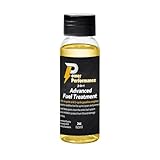
- 2oz Bottle Treats 10 gallons of gas
- Antioxidants stabilize fuel for up to 2 years and prevents gumming
- Advanced detergents clean the entire fuel system
- Corrosion inhibitors protect from Ethanol damage
- For all 4-cycle and 2-cycle gasoline engines
What did the EPA’s emergency waiver change?
EPA’s 2026 emergency waiver temporarily relaxed certain summertime fuel-volatility and fuel-pool restrictions so E15 could remain available in more of the country. The waiver addressed whether fuel could be sold under temporary regulatory conditions; it did not rewrite the list of engines and vehicles approved to use E15.
PC Slower Than It Used to Be?
A free scan shows the junk files, broken settings and background clutter dragging Windows down - then fixes them in one click.Free scan · Windows 10 & 11Crashes, No Sound, or Screen Glitches?
Random freezes, missing sound and display glitches usually trace back to one bad driver. Find and replace yours safely.Free scan · under a minuteGasoline vapor pressure is regulated more tightly during the warm-weather ozone season because volatile fuel components can contribute to evaporative emissions and ground-level ozone. E15 distribution has historically been constrained in some regions because of the interaction between E15 and summertime Reid Vapor Pressure requirements. EPA’s Fuel Waivers page records the waiver actions and their dates.
| Question | What the 2026 action did | What it did not do |
|---|---|---|
| Could E15 be sold nationwide? | EPA announced temporary conditions allowing nationwide E15 sales | It did not make E15 suitable for every engine |
| What happened to E10? | EPA said the action removed federal impediments to selling E10 across the country by addressing boutique-fuel markets | It did not eliminate every state, regional, or manufacturer fuel requirement |
| What fuel pool did EPA describe? | A common national gasoline pool with 9% to 15% ethanol content at a common 10-psi Reid Vapor Pressure standard under the temporary conditions | The 9% to 15% pool description does not mean every pump dispensed E15 |
| How long did the initial action last? | The action was announced March 25, 2026, began May 1, 2026, and initially remained in place through May 20, 2026 | A temporary waiver did not automatically last for the entire summer |
EPA issued the action in consultation with the Department of Energy under the Clean Air Act. The agency’s stated rationale was to provide fuel-supply flexibility and consumer choice before the summer driving season.
How long did the 2026 E15 waiver last?
The initial nationwide E15 action was announced on March 25, 2026, began May 1, 2026, and was initially scheduled to remain in effect through May 20, 2026. EPA described 20 days as the maximum period allowed under the cited emergency-waiver authority.
EPA’s waiver log later recorded extensions of separate boutique-fuel enforcement relief effective April 14 through May 3 and May 4 through May 23, 2026. Those entries should not automatically be described as a new or continuing E15-specific approval period. As of the official EPA waiver page reviewed on August 13, 2026, the page documents the 2026 national action and listed extensions through May 23, 2026, but does not establish a later nationwide E15-specific waiver period after that date.
That distinction matters if you are reading an old article or seeing an E15 pump later in the year. E15 availability can depend on the applicable waiver, state fuel rules, local supply, and whether a retailer has completed the required compliance steps. A temporary EPA action should not be treated as a permanent summertime rule.
Rank #3
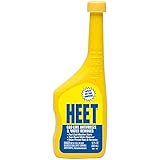
- Prevents gas-line freeze up
- Prevents rust and corrosion
- Prevents fuel-line freeze-up
- Removes water from fuel system
Why did the EPA issue the E15 waiver?
EPA said the emergency action was intended to increase fuel-supply flexibility and consumer choice ahead of the summer driving season. According to EPA’s March 25, 2026 press release, E15 was already offered at over 3,000 gas stations nationwide, and without the action E15 could not be used by roughly half of the country during the summer.
According to the DOE Alternative Fuels Data Center’s E15 guidance, reviewed for this article on August 13, 2026, E15 was available at just over 3,000 stations in 31 states. EPA’s nationwide figure and DOE’s station-count statement come from different official documents and publication contexts, so they should not be silently combined into a single market statistic. Both figures indicate that E15 availability is geographically limited compared with ordinary gasoline.
Is E15 available year-round?
E15 is not guaranteed to be available year-round everywhere. Availability depends on seasonal Reid Vapor Pressure rules, emergency waivers, state and regional fuel requirements, retailer compliance, and local distribution.
What’s actually slowing this PC down?
Pick the symptom - the matching free tool is one click away.
During periods when summertime volatility rules apply, E15 may face additional restrictions in regions that do not have the necessary waiver or fuel formulation. A retailer also needs the required label, compliance plan, transfer documentation, fuel-quality procedures, and approved dispensing equipment. The presence of an E15 pump in one state or at one time of year does not establish nationwide or year-round availability.
Does E15 save money or reduce gas mileage?
E15 may have a lower price per gallon in some markets, but a lower pump price does not automatically produce a lower cost per mile. Ethanol contains less energy per gallon than gasoline, so the vehicle may travel a different distance on a gallon of E15; the exact result depends on the vehicle, calibration, fuel formulation, driving conditions, and price difference.
There is no responsible universal percentage to apply to every car. A practical comparison uses the same vehicle and driving pattern:
Rank #4
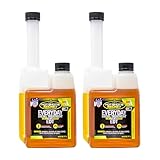
- EVERYDAY TREATMENT: Keep your diesel engine in top condition with our EDT that is designed to improve performance & maintain engine health. With regular use, you can ensure your engine runs smoothly & efficiently giving you peace of mind on the road.
- BOOST FUEL ECONOMY: Enhance your vehicle performance with our diesel additive that boosts cetane levels by up to 7 points resulting in better fuel economy & reduced maintenance costs. Say goodbye to poor acceleration & frequent trips to the mechanic.
- FUEL INJECTOR CLEANER: Cleans both internal & external injector deposits, enhances the lubricity of fuel to safeguard the fuel system components, such as the pump & injectors to increase engine longevity while also acting as a fuel system cleaner.
- PREVENTS RUST & CORROSION: While demulsifying moisture & adding stability to fuel by preventing oxidation & degradation, it also provides a reliable solution for protecting fuel systems from the damaging effects of rust & corrosion.
- EASY TO USE: Use at every fill-up, 1 oz. or 2oz. (for more cetane and lubricity boost) for every 25 gallons of diesel, this product is easy to use! Just pour it into your diesel fuel tank during your next fill up.
- Record the E10 and E15 prices per gallon.
- Use the vehicle’s observed miles per gallon on each approved fuel rather than assuming a fixed mileage change.
- Calculate fuel cost per mile by dividing price per gallon by miles per gallon.
- Choose E15 only if the vehicle is approved for it and the resulting cost, availability, and convenience make sense.
Ethanol’s higher octane can be useful in fuel formulation, but E15 does not guarantee more power or better acceleration in a vehicle that was not calibrated to gain from the additional octane. Fuel economy and performance claims should be vehicle-specific rather than presented as universal E15 benefits or penalties.
Quick wins for a faster PC:
Fix the driver behind crashes, sound loss and screen glitchesFind Drivers →Repair Windows errors before they cause bigger problemsFix Now →Why does E15 require special labels and infrastructure?
E15 requires retail safeguards because it is not approved for every gasoline engine. The DOE’s E15 compliance and codes guidance identifies an EPA-approved dispenser label, an approved Misfueling Mitigation Plan, product-transfer documents, participation in a fuel-quality survey, applicable vapor-pressure limits, and approved dispenser and hose configurations.
Those safeguards are intended to reduce misfueling and help ensure that the fuel sold as E15 meets the applicable requirements. The pump label is therefore not decorative: it is part of the system that tells drivers which vehicles and equipment must not use the fuel.
Storage infrastructure also matters. EPA’s emerging-fuels guidance for underground storage tanks says E15 currently requires a demonstration of underground-storage-tank-system compatibility because E15 contains more than 10% ethanol. That requirement is primarily a retailer and infrastructure issue, but it explains why nationwide E15 availability involves more than changing a sign at a fuel pump.
Independent reader supportYour contribution helps us test, update, and keep practical guides available for everyone.Does E15 have lower emissions?
E15 should not be described as having zero emissions impact. EPA materials indicate that covered vehicles were expected to remain within their applicable certified emissions standards when using E15 under the relevant waiver conditions, while also recognizing that small emissions impacts may occur.
Free tools Windows power users keep installed
One-click scans. No signup required.
The accurate distinction is between regulatory compliance and absolute environmental effect. A covered vehicle’s emissions system can remain within its certification standards without E15 producing no possible change in evaporative emissions, tailpipe emissions, or energy use. Fuel formulation and real-world operation still matter.
Best Value

- UNLEASH YOUR ENGINE'S FULL POTENTIAL - Star Tron Enzyme Fuel Treatment uses advanced enzyme technology to ensure all engines start easily and run smoothly, even after months of inactivity
- ADDRESS ETHANOL-RELATED PROBLEMS - Helps prevent and cure most ethanol-related issues, including poor performance, rough idling, and decreased fuel economy, supporting improved engine operation when used as directed
- MAXIMIZE FUEL ECONOMY - By removing and preventing gum, carbon deposits, and varnish build-up, Star Tron keeps your fuel delivery system clean, resulting in improved fuel economy
- WORKS FOR ALL ENGINES AND FUEL TYPES - Whether you have a car, boat, RV, or lawn mower, Star Tron works in all engines and all fuels, making it the ideal fuel treatment and stabilizer for any vehicle
- PREVENT WATER BUILD-UP - Helps prevent phase separation by dispersing water throughout fuel as submicron-sized droplets that are safely eliminated while the engine operates, keeping your engine running smoothly in humid or wet conditions
EPA also maintains registration and testing requirements for E15 fuel and fuel additives. EPA’s E15 fuel-registration guidance is the relevant source for those regulatory requirements.
How did E15 become approved for newer vehicles?
EPA granted E15 partial waivers in stages rather than approving E15 for every gasoline engine. In October 2010, EPA approved E15 for model-year-2007-and-newer cars and light trucks. In January 2011, EPA granted the additional partial waiver covering model-year-2001 through 2006 cars and light trucks.
The statutory question was whether E15 would cause or contribute to covered engines and vehicles failing applicable emissions standards over their useful life. EPA’s E15 Fuel Partial Waivers page explains the staged approval. The January 21, 2011 EPA decision for model-year-2001 through 2006 vehicles provides the archived notice for the second expansion.
Recommended Free Tools
EPA’s later labeling and compliance materials continued to distinguish covered light-duty vehicles from older vehicles, heavy-duty gasoline engines and vehicles, motorcycles, and nonroad products. The history is why the safe shorthand is “model-year-2001-and-newer approved light-duty vehicles,” not “all cars” or “all gasoline engines.”
How should you decide whether to buy E15?
- Identify the fuel. Read the dispenser label and confirm that the product is E15, not merely a gasoline grade with a particular octane number.
- Check the vehicle or equipment. Look at the fuel cap, owner’s manual, or manufacturer’s official fuel guidance. Model year matters for conventional light-duty vehicles, and equipment categories such as boats, motorcycles, and lawn equipment have separate restrictions.
- Do not use the waiver as a compatibility shortcut. The EPA waiver governs temporary sale and distribution conditions; the manufacturer’s approval governs the engine or vehicle.
- Compare cost per mile only after eligibility is established. A cheaper gallon may not be cheaper transportation because ethanol contains less energy per gallon.
- If approval is unclear, do not guess. Use the fuel expressly permitted by the manufacturer rather than treating E15 as universally interchangeable with E10.
Can an ethanol fuel tester or stabilizer solve a fuel problem?
For readers who have a legitimate reason to investigate the ethanol content of stored or purchased gasoline, an ethanol fuel tester is the relevant tool category. Bosch’s fuel-composition tester documentation illustrates the type of testing used to identify fuel composition.
A tester does not determine whether a vehicle or piece of equipment is approved for E15. The correct order remains: check the manufacturer’s fuel approval, read the pump label, and use a tester only when there is a specific reason to investigate fuel composition.
Ethanol-compatible fuel conditioners are a separate storage-maintenance category. For example, one manufacturer markets an ethanol fuel conditioner for fuels including E15. That product positioning supports a storage-maintenance use case; it does not make E15 suitable for a lawn mower, chainsaw, boat, motorcycle, snowmobile, or any other equipment whose manufacturer excludes E15.
The practical rule for E15
E15 is a regulated gasoline blend, not a universal replacement for E10. The 2026 EPA emergency waiver temporarily expanded the conditions under which E15 could be sold, but the waiver did not expand engine compatibility. If the fuel cap or owner’s manual does not approve E15, do not use it simply because the pump offers it.
The Bottom Line
Bottom line: E15 contains 10.5% to 15% ethanol and is approved for model-year-2001-and-newer light-duty vehicles and flexible-fuel vehicles, subject to the manufacturer’s guidance. EPA’s 2026 emergency waiver affected temporary fuel-sale rules, not equipment compatibility. Check the owner’s manual and pump label before fueling, and never assume E15 is suitable for small engines, boats, motorcycles, or older vehicles.
Quick Recap
Product prices and availability are accurate as of the date/time indicated and are subject to change. Any price and availability information displayed on Amazon at the time of purchase will apply.




