What’s actually slowing this PC down?
Pick the symptom - the matching free tool is one click away.
Compressed natural gas (CNG) is natural gas—mostly methane—stored in a vehicle as a high-pressure gas. It powers an internal-combustion engine much like gasoline does, but the fuel system, storage tanks, refueling process, and ownership considerations are different.
CNG can reduce certain tailpipe pollutants and may work well for vehicles that travel predictable routes, especially buses, delivery trucks, refuse haulers, and utility fleets. For a private driver, however, limited fueling locations, shorter range, tank replacement dates, and limited vehicle choice can matter more than the fuel’s potential savings.
As an Amazon Associate I earn from qualifying purchases.
What does CNG stand for?
CNG stands for compressed natural gas. Natural gas is processed and compressed until it occupies less than 1% of the volume it would occupy at normal atmospheric pressure. The compressed gas is stored in reinforced cylinders, commonly at pressures of up to about 3,600 psi.
Free tools Windows power users keep installed
One-click scans. No signup required.
CNG is primarily methane, or CH4. It is not gasoline, diesel, or a liquid fuel. When a vehicle is filled with CNG, the gas travels from the station into high-pressure storage tanks rather than into a conventional liquid-fuel tank.
#1 Best Overall

- Universal Design: The included adapters, hoses and fittings cover most fuel injection systems and Gas Engine Cars, Motorcycles, Trucks, SUVs, ATVs, UTVs, RVs. (Does not compatible with Bosch, CIS Jetronic, TB System on GM vehicles, 2012 Dodge 5.7L, 1999 GNMC Sonoma 4.3). Please verify your vehicle's vallve size and pressure specs before purchase
- Ideal For Mechanics: Fuel Injection Pump Pressure / Oil Combustion Spraying Pressure Gauge Teste
- Durable: Designed for repeated use with high quality materials
- Convenient and Safe Design: Fuel pressure tester with a quick release valve button could offer single-handed operation inflation and deflation
- Measuring Range: 0-140psi (0-10 bar)
CNG vs. LNG: What is the difference?
CNG and liquefied natural gas (LNG) both come from natural gas, but they are stored in completely different forms:
| Fuel | How it is stored | Typical use |
|---|---|---|
| CNG | Natural gas compressed to high pressure | Cars, buses, delivery vehicles, refuse trucks, and fleet vehicles |
| LNG | Natural gas cooled to approximately -260°F so it becomes a liquid | Some medium-duty and heavy-duty vehicles requiring greater onboard energy storage |
LNG stores more energy in a given volume, which can make it more useful for some long-haul applications. CNG is generally the more familiar option for vehicles that refuel at a dedicated station or return to a depot every day.
How does a CNG vehicle work?
A CNG vehicle normally uses a spark-ignited engine that is broadly similar to a gasoline engine. The fuel system handles much higher storage pressure, but the basic process is straightforward:
Do these 3 things before closing this tab:
1Repair Windows errors before they cause bigger problems2Scan for outdated or missing drivers - takes under a minute3Clear out junk files and repair common Windows errors- CNG is held in one or more reinforced high-pressure cylinders.
- Fuel lines carry the gas toward the engine.
- A pressure regulator reduces the pressure to a level the engine can use.
- Injectors meter the gas into the intake air stream.
- Spark plugs ignite the air-and-fuel mixture in the cylinders.
There are three common configurations:
- Dedicated CNG: The vehicle runs only on natural gas.
- Bi-fuel: Separate CNG and gasoline systems allow the driver to use either fuel. Many bi-fuel vehicles use gasoline as a backup when CNG is unavailable.
- Dual-fuel: Natural gas is used with diesel fuel, which helps initiate combustion. This setup is more commonly associated with heavy-duty vehicles.
How is CNG measured at the pump?
CNG is usually priced and compared using a gasoline gallon equivalent (GGE) or a diesel gallon equivalent (DGE). These are energy comparisons, not physical gallons of liquid fuel.
- 1 GGE of CNG is approximately 5.66 pounds of CNG.
- 1 GGE of CNG is approximately 123.57 standard cubic feet.
Using GGE makes it easier to compare the energy in CNG with the energy in gasoline. If a CNG vehicle is rated at 30 miles per GGE, that does not mean it contains or uses a literal gallon of liquid fuel. It means the vehicle travels about 30 miles on the same energy content as one gallon of gasoline.
Where does CNG come from?
Conventional natural gas is cleaned before use to remove water, unwanted hydrocarbons, and other impurities. It then moves through the natural-gas pipeline network to a CNG station. Compressors at the station raise the pressure so the gas can be stored in a vehicle’s cylinders.
CNG can also be produced from renewable natural gas (RNG). RNG, sometimes called biomethane, is made by cleaning biogas from sources such as landfills, wastewater-treatment plants, livestock operations, and other organic-waste facilities.
Outdated Drivers Are Slowing You Down
One free scan finds every outdated or missing driver and matches the right update for your exact hardware.Free scan · exact hardware matchWindows Errors? Fix Them Before They Spread
Repair common Windows errors and clear accumulated junk for a smoother, more stable PC - no reinstall needed.Free scan · no reinstallRank #2

- Multi-fuel Detection: This AFR gauge can measure the air-fuel ratio for up to eight types of fuel, including gasoline, diesel, methanol, ethanol, E85, LPG, CNG, and hydrogen.
- Integrated Design: This broadband UEGO AFR gauge features a built-in controller and is equipped with an LSU 4.9 sensor, allowing buyers to complete installation quickly. This model is compatible with vehicle systems operating at 12V to 16V.
- Easy-to-Read Display: With a measurement range of 5–50, the 1.77-inch extra-large LED digital display allows you to clearly and easily read the air-fuel ratio. You can freely set alarm thresholds, and an audible alarm will sound when the air-fuel ratio reaches the preset value.
- Easy Installation: Includes a 2.05 inch mounting bracket kit, allowing you to place the gauge in your preferred location inside the vehicle.
- Service: Prioritizing Your Shopping Experience. Devoted to Supplying Top Products and Excellent Service, Contact Us for Swift and Dependable Replies.
The terms describe different characteristics:
- RNG describes where the gas came from.
- CNG describes the gas’s compressed physical form.
Not all CNG is renewable. A vehicle can run on CNG made from fossil natural gas or on CNG made from purified RNG.
How do you refuel a CNG vehicle?
A public fast-fill CNG station works somewhat like a gasoline station. The driver connects a dedicated nozzle to the vehicle’s CNG receptacle and starts the dispenser. Filling speed depends on the compressor, the station’s storage capacity, current demand, and the size and temperature of the vehicle’s tanks.
CNG stations generally use one of these arrangements:
| Station type | How it works | Common application |
|---|---|---|
| Fast-fill | Uses compressors and high-pressure storage to fill a vehicle relatively quickly | Public stations |
| Time-fill | Fills the vehicle gradually while it is parked, often overnight | Fleet depots |
| Combination-fill | Offers both fast-fill and time-fill capability | Large fleet facilities |
Before buying a CNG vehicle, check the Alternative Fuels Data Center station locator and verify the stations’ current status. Availability is much more location-dependent than gasoline or diesel. A station that appears on a map may also have restricted fleet access, limited hours, or temporary service interruptions.
Quick wins for a faster PC:
Fix the driver behind crashes, sound loss and screen glitchesFind Drivers →Repair Windows errors before they cause bigger problemsFix Now →How far can a CNG vehicle travel?
CNG contains less energy per unit of onboard volume than gasoline or diesel. As a result, a CNG vehicle may have a shorter range unless it carries larger or additional cylinders.
The tanks also add weight and take up space. Depending on the vehicle design, they may reduce cargo capacity or occupy an area that would otherwise be used for luggage or a spare tire. These compromises are easier for a bus or delivery fleet to manage than for a family car that regularly makes long trips.
CNG tends to make the most sense when a vehicle:
- Travels many miles every day
- Returns to a known fueling location
- Has access to a private or fleet CNG station
- Uses predictable routes
- Can accommodate the range and payload effects of its tanks
Are CNG vehicles cleaner than gasoline vehicles?
CNG vehicles are not zero-emission vehicles. They still burn fuel in an internal-combustion engine and produce tailpipe emissions.
Rank #3
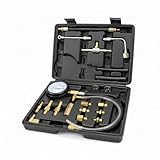
- 1. Wide Compatibility for Gasoline Engines This fuel pressure tester kit fits most gasoline-powered cars, trucks, SUVs, motorcycles, ATVs, UTVs and small engines. Includes multiple adapters (M6/M8/M10/M12/M14) and Schrader valve connections to test a wide range of fuel systems. Not suitable for diesel high-pressure or direct-injection systems.
- 2. Accurate 0–140 PSI Dual-Scale Gauge Equipped with a large 0–140 PSI / 0–10 Bar dual-scale dial gauge, protected by a durable rubber cover for shock and scratch resistance. Ensures stable, accurate readings during automotive fuel system diagnostics.
- 3. Complete Adapter & Hose Set Includes straight adapters, 90-degree adapters, quick-connect hoses, pressure relief hose, and multiple brass fittings to match common fuel test ports. Designed for professional mechanics and DIY users needing reliable fuel pressure testing tools.
- 4. Quick Release Valve for Safe Operation The integrated pressure relief/quick release valve allows controlled pressure discharge and safer single-hand operation. Prevents accidental fuel spray and allows quick resetting for repeated measurements.
- 5. Durable Build for Repeated Use Constructed with reinforced hoses, corrosion-resistant brass fittings, and precision-machined adapters. Designed for long-term service life when diagnosing fuel pump performance, clogged filters, faulty regulators, or leaking lines.
According to the U.S. Environmental Protection Agency, CNG generally produces fewer smog-forming tailpipe emissions than gasoline and can reduce tailpipe greenhouse-gas emissions by about 20% in some comparisons. The actual result varies with the vehicle, engine calibration, duty cycle, and fuel efficiency.
Recommended Free Tools
A complete environmental comparison must also account for emissions before the fuel reaches the vehicle. Methane can escape during natural-gas production, processing, transmission, distribution, fueling, and vehicle operation. Methane is a potent greenhouse gas, so upstream leakage and engine methane slip can reduce the climate advantage of natural gas.
RNG may produce substantially lower life-cycle greenhouse-gas emissions than fossil natural gas, but the result depends on its feedstock, production process, leakage, and accounting method. It is not accurate to assume every CNG vehicle is automatically running on renewable fuel.
Is CNG safe?
CNG is flammable and stored at high pressure, so its fuel system requires equipment and maintenance that a gasoline vehicle does not. Vehicle fuel containers are covered by requirements including FMVSS No. 304, while facilities and fuel systems may also be subject to NFPA 52 and local rules.
Natural gas has no smell in its natural state. Odorants such as mercaptan are added to distributed natural gas, producing the familiar rotten-egg odor that can warn of a leak. Methane is lighter than air, so it can rise and disperse outdoors. In an enclosed garage, tunnel, or poorly ventilated space, however, leaked gas can collect near the ceiling and form an ignitable mixture.
The Tool Desk
Outbyte Driver Updater FREEScan for outdated or missing drivers - takes under a minuteDriver Scan →Outbyte PC Repair FREERepair Windows errors before they cause bigger problemsFix Now →If you smell a persistent rotten-egg odor around a CNG vehicle:
- Do not smoke, start the engine, or create sparks nearby.
- If it is safe, move people away from the vehicle and move the vehicle away from ignition sources.
- Close the manual fuel shut-off valve if the vehicle has one and you know how to operate it safely.
- Have the vehicle inspected by qualified CNG technicians. Do not attempt to repair a high-pressure leak yourself.
CNG tank inspections and expiration dates
CNG cylinders are not lifetime components. Depending on their construction and certification, vehicle tanks commonly have a useful life of approximately 15 to 20 years. The label on each tank provides the expiration date. Once a tank reaches that date, it must be replaced rather than treated as permanently serviceable.
Rank #4

- [A Good Replacement Fuel Guage] The Needle is Smooth Sweeping and Surpasses the Original Version in the Boat
- [Adjustable and Wide Application]Sucicago Boat Fuel Gauge is Designed to Measure & Display the Amount of gas or Fuel in Your Boat or Vehicle's Gas Tank. Signal Input : 0-190ohm, 240-33ohm, 240-30ohm, 0-180ohm, 10-180ohm
- [Easy to install and Calibrate] Install diameter: Φ52mm or 2-1/16'', Indication range: E-F, Working voltage: 9-32v dc [ fit 12V-24V Vehicle or Engine] The instruction is Easy to Follow
- [7 Color Adjustment Cycle Modes] Includes Red(Default), Green, Blue, White, Yellow, Yellow Green, Orange, Purple Allow You to Match Your Factory Dashboard Lights or Add a Custom Style to the Interior of Your Vehicle
- [Body Material]IP67 waterproof and Dustproof grade,316 Stainless Steel Bezel Sucicago Guarantees with 1 Year Limited Warranty & Free Lifetime Technical Support
Inspection intervals can vary by vehicle and manufacturer, but AFDC guidance includes:
| Vehicle | Inspection interval |
|---|---|
| Light-duty vehicle | Every 36 months or 36,000 miles, whichever comes first |
| Vehicle over 10,000 pounds GVWR | At least every 12 months |
| Any vehicle involved in a crash, fire, or potentially damaging event | Inspect before returning to service |
Underbody cylinders deserve particular attention because road debris, curbs, corrosion, and impact damage can affect them. Expired or damaged tanks must be defueled, depressurized, purged, and replaced by a qualified facility.
CNG maintenance requirements
Routine engine maintenance is similar to maintenance on a gasoline vehicle, but the high-pressure fuel system adds important inspection points. Technicians may need to examine the cylinders, valves, pressure-relief devices, lines, fittings, pressure regulator, and fuel receptacle.
The CNG fuel filter also requires periodic replacement—often annually, depending on the manufacturer’s schedule and operating conditions. Always use the vehicle’s service information rather than applying a gasoline maintenance schedule without checking.
Be cautious with conversions. Converting a gasoline vehicle to CNG is not simply a matter of adding a tank and injectors. Conversion-system manufacturers must demonstrate compliance with applicable emissions standards, and the work should be performed with certified equipment by a qualified installer.
Independent reader supportYour contribution helps us test, update, and keep practical guides available for everyone.Does CNG save money?
It can, but savings are not automatic. The calculation depends on the local price per GGE or DGE, fuel economy, annual mileage, access to a station, maintenance costs, and the purchase or conversion cost of the vehicle.
A high-mileage fleet that fills at its own depot may achieve a different result from a private owner who drives out of the way to reach a public station. A used CNG vehicle can also require an expensive tank replacement if its cylinders are near their expiration dates.
Best Value
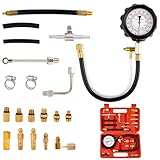
- Compatibility Note: For further confirmation of specific model compatibility, refer to the vehicle owner's manual or contact a professional technician. Excludes Fo/rd, K/I/A, Bo/s/ch, C/I/S Je/tro/nic, G//M Th/rot/tle Bo/dy Systems, A/cu/ra, J/ee/p, B/M/W, Ni/s/san, and To/yo/ta fuel systems. Not compatible with small/non/standard S/chra/der vallves, high/pre/ssure direct in/ject/ed engines, or die//sel injection pumps. Verify your vehicle’s vallve size and pressure specs before purchase
- Wide Compatibility: This fuel pressure tester kit comes with multiple adapters for most gasoline engines in trucks, cars, motorcycles and RVs. But not compatible with diesel high - pressure injection pumps or direct injection engines
- Accurate Testing: The fuel pressure tester features high - precision sensors for accurate measurement of fuel system pressure changes. Measures range 0-140PSI/ 0-10bar dual color coded scale to diagnose fuel supply and injection issues
- Multipurpose Use: The 8 inches hose fits all M6 fuel pressure test ports. The 15 inches hose connects snugly to any 1/4" standard schrader valve. The M8, M10, M12, and M14 adapters make sure this tool kit can be used on most cars and vehicles
- Corrosion Resistance: Crafted from high - strength materials, the fuel pressure tester offers excellent corrosion and impact resistance. It ensures long - term stability and reliability even in harsh working conditions
When comparing costs, include:
- Fuel price on an energy-equivalent basis
- Expected miles per GGE
- Annual mileage and route changes
- Public-station access or the cost of private infrastructure
- Tank inspection and eventual replacement
- Parts and labor from CNG-qualified technicians
- Purchase-price difference or conversion cost
Common CNG myths
“CNG and LNG are the same fuel.”
They are both made from natural gas, but CNG is compressed gas and LNG is cryogenically cooled liquid.
“CNG vehicles produce no emissions.”
They produce tailpipe emissions because they use an internal-combustion engine. They may emit less of some pollutants than comparable gasoline or diesel vehicles, but they are not zero-emission vehicles.
“Every CNG vehicle uses renewable gas.”
CNG can come from fossil natural gas or purified RNG. The fuel label alone does not identify its source.
“CNG tanks never need replacement.”
Every tank has a manufacturer-specified service life. Check the label and inspection records before buying a used vehicle.
“CNG is always cheaper.”
Fuel pricing, station access, vehicle efficiency, infrastructure, and tank-related costs determine whether it is cheaper for a particular owner.
FAQ
What is CNG fuel made of?
CNG is compressed natural gas, made primarily of methane. It may come from conventional fossil natural gas or from purified renewable natural gas (RNG).
Is CNG better than gasoline?
CNG can produce fewer smog-forming tailpipe emissions and may lower fuel costs in high-mileage fleet use. However, limited stations, shorter range, tank weight, vehicle availability, and tank replacement costs can make gasoline more practical for many private drivers.
How long do CNG tanks last?
CNG tanks commonly have a useful life of about 15 to 20 years, but the exact expiration date is printed on the tank label. Expired tanks must be replaced by a qualified facility.
Can a gasoline car be converted to CNG?
Some vehicles can be converted, but the conversion requires an approved system and qualified installer. It is not a simple do-it-yourself tank installation, and the system must meet applicable emissions requirements.
The Bottom Line
CNG is natural gas compressed for vehicle use, not a liquid fuel and not the same thing as LNG. It can be a sensible choice for high-mileage vehicles with predictable routes and dependable access to a CNG station. For most private-car shoppers, the decision should start with station availability, real-world range, tank expiration dates, and total ownership cost—not the fuel price alone.
Quick Recap
Product prices and availability are accurate as of the date/time indicated and are subject to change. Any price and availability information displayed on Amazon at the time of purchase will apply.




