Windows Errors? Fix Them Before They Spread
Repair common Windows errors and clear accumulated junk for a smoother, more stable PC - no reinstall needed.Free scan · no reinstallOutdated Drivers Are Slowing You Down
One free scan finds every outdated or missing driver and matches the right update for your exact hardware.Free scan · exact hardware matchHomologation is the formal approval or recognition that a defined product, vehicle, component, system, or qualification meets specified requirements for a particular market or use.
For cars, it usually means that an authority or recognized approval system has assessed a particular vehicle type, component, or technical system against safety, environmental, technical, and production rules. But homologated does not automatically mean the product is the best, approved everywhere, safe in every situation, or still legal after modification.
Before buying, importing, modifying, or racing a vehicle, ask four questions: approved by whom, against which rules, for which exact product and market, and what document or database entry proves it?
Homologation in plain English
When a product is described as homologated, it has been formally accepted as conforming to a defined set of requirements. Those requirements might concern vehicle safety, emissions, noise, radio performance, aircraft design, medical performance, workplace electrical safety, or eligibility for a racing category.
Free tools Windows power users keep installed
One-click scans. No signup required.
#1 Best Overall

- Low profile ratchet: up to 25% thinner head* for access in tight spaces. 72-tooth ratchet: delivers 5 degree arc swing
- All in one mechanics set: contains a full assortment of sockets, ratchets, metric wrench set and SAE, deep socket set, specialty bits for automotive enthusiasts and mechanics, packed in a durable 3-drawer tool kit for car
- Full Lifetime Warranty
- Includes: (91) Sockets (3) Ratchets (21) Wrenches (44) Hex Keys (66) Specialty Bits (5) Accessories
- One handed locking dial: spring loaded dial enables users to open and close drawers with one hand and lock drawers when not in use. Drawers can be nested on top of the tool box for easy access and temporary storage. VERSASTACK compatible: this flexible storage system allows for custom combination based on user needs
In automotive regulation, type approval is often the more precise official term. A regulator or authorized approval system assesses a defined type of vehicle, system, component, or separate technical unit and confirms that it satisfies the applicable rules. The UK Vehicle Certification Agency describes vehicle type approval as a process for demonstrating that a vehicle, component, or system meets the required regulatory standards. The VCA explains vehicle type approval here.
The important word is defined. Approval normally applies to a particular specification, configuration, jurisdiction, and intended use. A homologated exhaust may be legal only on certain vehicle models. A car approved for sale in the European Union is not automatically compliant with every U.S. rule. An FIA-homologated race car is not automatically legal on public roads.
Homologated for what? That is a much better question than simply asking whether something is homologated.
Homologation, type approval, certification, and registration are not the same
These terms often appear together, but they describe different parts of the compliance process.
What’s actually slowing this PC down?
Pick the symptom - the matching free tool is one click away.
| Term | What it generally means | What it does not necessarily prove |
|---|---|---|
| Homologation | A broad term for formal approval, validation, or recognition that something conforms to prescribed requirements. | That the item is approved in every country, superior to alternatives, or legal after being modified. |
| Type approval | Certification that a defined type of vehicle, system, component, or technical unit meets specified administrative and technical requirements. In the EU vehicle framework, this is the formal regulatory process. | That every product with a similar name, or every modified example, is covered. |
| Certificate of Conformity | A document confirming that an individual manufactured vehicle conforms to an already approved type. | That it is the original type-approval certificate, or that a used vehicle has not since been modified. |
| Conformity assessment | The umbrella process of determining whether a product, service, system, person, or organization meets specified requirements. It can involve testing, inspection, certification, declarations, registration, or accreditation. | That a government agency performed every part of the assessment. |
| Certification | A written assertion or formal confirmation that specified requirements have been met. Depending on the scheme, it may come from a manufacturer, customer, independent body, or government agency. | That the product has government approval or that the certification remains valid after changes. |
| Accreditation | Recognition that a laboratory, inspection body, or certification organization is competent to perform a defined scope of work. | That the accredited organization has approved the product itself. |
| Registration | Entry of a vehicle, device, business, qualification, or other item into a government or industry register. | That the item passed every technical approval requirement. |
| Road legality | Permission to use a particular vehicle or modification on public roads under the applicable federal, national, state, provincial, or local rules. | That the part is legal for racing, or that it is approved for every vehicle installation. |
NIST’s conformity-assessment overview explains how first-party, second-party, third-party, and government assessments fit into the wider compliance system.
What can be homologated?
Homologation does not apply only to complete cars. Approval may cover different levels of a product:
| Approval scope | Automotive example | What the approval does not automatically prove |
|---|---|---|
| Whole vehicle type | A passenger-car model with defined body styles, engines, batteries, weights, equipment, and variants. | That every example remains compliant after an engine swap, suspension change, emissions modification, or software alteration. |
| Vehicle system | Braking, lighting, emissions, electronic stability control, cybersecurity, or software-update systems. | That the system is legal when installed in an unapproved vehicle or in a different configuration. |
| Component | A tire, lamp, window, seat, child restraint, exhaust, wheel, or other regulated part. | That it is approved for every vehicle, size, installation, or intended use. |
| Separate technical unit | A technical assembly designed for specified vehicle types, such as a particular lighting or exhaust unit. | That it may be freely substituted across all models. |
| Individual vehicle | A converted, imported, reconstructed, kit-built, or uniquely configured vehicle. | That another vehicle of the same make and model qualifies under the same route. |
| Motorsport vehicle or equipment | A race car, helmet, seat, harness, fuel tank, or other item accepted under a specific racing regulation. | That it is street legal or accepted by another racing series. |
The EU vehicle framework distinguishes whole-vehicle, system, component, separate-technical-unit, individual, multi-stage, step-by-step, single-step, and mixed type approval. Those categories are set out in Regulation (EU) 2018/858.
Outside cars, the same word can describe recognition of an overseas academic qualification, aircraft design approval, medical-device regulatory status, or communications-equipment approval. For example, Spain uses homologation in the process of recognizing certain foreign educational qualifications. The terminology changes by sector, so the responsible authority and the applicable rules always matter.
How homologation generally works
Homologation is not usually one test followed by a sticker. It is a chain of decisions and evidence that normally continues after the approval certificate is issued.
Rank #2

- [Durable Aluminum Toolbox Included] – This 240-piece tool set comes with a heavy-duty aluminum carrying case, offering superior durability and organization compared to standard plastic boxes. The sturdy case keeps tools securely in place, preventing them from shifting or falling out during transport.
- [High Quality Tools] – All sockets and wrenches are crafted from high-quality steel with a chrome vanadium finish for excellent corrosion resistance. The forged construction delivers increased torque, strength, and long-lasting performance.
- [Comprehensive 240-Piece Set] – Includes a wide range of SAE and metric combination wrenches, a full selection of 1/4", 3/8", and 1/2" drive sockets (both SAE and metric), 1/2" and 3/8" ratchets, an adjustable wrench, pump pliers, screwdrivers, long nose pliers, and a variety of 1/4" screwdriver bits (Phillips, slotted, square, star, and Pozi).
- [Versatile Tool Kit for Any Job] – Ideal for automotive repairs, motorcycle maintenance, household fixes, and mechanical work. Whether at home, in the garage, or on the jobsite, this mechanic tool set has you covered with the most essential tools for everyday tasks.
- [Great Gift for Choice] – Packaged in a sleek, portable aluminum storage case, this tool set makes a practical and impressive gift. Perfect for homeowners, handymen, hobbyists, repair technicians, and construction workers alike.
- Define the jurisdiction and intended use. The applicant identifies the country or trading bloc, product category, intended use, applicable regulations, and whether the item is new, imported, modified, or individually constructed. A product can satisfy one jurisdiction’s rules and fail another’s because of differences in emissions, noise, radio frequencies, dimensions, labels, testing methods, or approval structure.
- Define the approved type. A type is not necessarily every product sold under one model name. It may be restricted by model year, engine or battery, body style, weight, dimensions, software version, emissions family, safety equipment, production variant, and destination market.
- Prepare the technical file. Depending on the sector, this can include drawings, specifications, materials, test reports, software and hardware descriptions, risk assessments, manufacturing controls, instructions, labels, and a list of approved variants.
- Test representative samples. Vehicle testing may cover crash performance, braking, lighting, stability control, emissions, noise, electromagnetic compatibility, cybersecurity, software updates, or other regulated characteristics. The tested sample must represent the production version.
- Obtain assessment from the appropriate organization. Depending on the regime, testing and review may involve a government approval authority, a designated technical service, an accredited laboratory, the manufacturer itself under self-certification, or an independent certification body. In the EU vehicle system, approval authorities work with designated technical services; the technical service performs or oversees specified assessments, while the approval authority issues the formal approval. The European Commission explains this division of responsibility.
- Issue the approval and evidence. Depending on the product, evidence may include a type-approval certificate, a Certificate of Conformity, an E mark or e mark, a statutory plate, an EPA Certificate of Conformity, an FCC ID, a Declaration of Conformity, an FIA homologation form, or an official database entry.
- Maintain conformity during production. Production vehicles and parts are expected to continue matching the approved type. Approval systems can involve factory inspections, sample checks, certificate verification, and quality-control procedures. EU authorities can withdraw approval if production no longer conforms. The EU regulation covers conformity of production and withdrawal procedures.
- Monitor products after sale. Market-surveillance testing, complaints, recalls, corrective actions, suspension, and withdrawal can follow approval. Approval is therefore not a permanent guarantee that every product will remain compliant regardless of defects or later changes.
Why car buyers and enthusiasts should care
It can determine whether a vehicle may be sold, imported, registered, or driven
Approval is often a market-access requirement. Without the relevant approval or conformity evidence, a vehicle or component may be refused entry, be ineligible for registration, be illegal to sell or use, fail an inspection, or be excluded from a racing series.
In the EU, an approved vehicle type and its Certificate of Conformity support registration across Member States under the EU’s type-approval and mutual-recognition framework. That does not mean every modification is automatically accepted; it means the vehicle was manufactured as an example of the approved type. The European Commission’s vehicle type-approval FAQ explains the role of the CoC and mutual recognition.
It affects imported vehicles
A car that is legal in Europe, Japan, Australia, or another foreign market is not automatically legal to import and use in the United States. For a nonconforming vehicle under 25 years old, NHTSA generally requires an eligibility determination and import through a Registered Importer, or through an individual who has contracted with one. NHTSA’s importation FAQ explains the 25-year safety rule and Registered Importer process. NHTSA also maintains a Registered Importer directory.
The 25-year rule concerns federal motor-vehicle safety requirements. It does not automatically resolve emissions, Customs, state registration, title, insurance, or local inspection requirements.
Emissions are a separate U.S. issue. Vehicles and engines generally need the appropriate EPA emissions certification before entering U.S. commerce, unless a specific exemption or import pathway applies. EPA guidance says certain vehicles more than 21 years old may qualify under an emissions provision when the engine and configuration meet the applicable conditions, but that does not eliminate NHTSA, Customs, state, or registration obligations. See EPA’s vehicle and engine certification overview and its vehicle-import guidance.
It matters when choosing aftermarket parts
An aftermarket exhaust, lamp, tire, wheel, seat, electronic device, or other component may be approved only:
- For particular vehicle models or model years.
- In particular dimensions or load ratings.
- With specified installation hardware or settings.
- At a defined noise or emissions level.
- Under a specific version of a regulation.
- For road use but not racing, or for racing but not road use.
That is why the claim this part is homologated is incomplete. The useful question is whether it is homologated for this vehicle, this installation, this market, and this purpose. A component’s approval may not cover the completed vehicle, and installation outside the documented application can create a separate compliance problem.
Do these 3 things before closing this tab:
1Clear out junk files and repair common Windows errors2Scan for outdated or missing drivers - takes under a minute3Repair Windows errors before they cause bigger problemsIt helps separate regulatory evidence from marketing language
Homologated, approved, certified, tested, compliant, registered, listed, and CE marked are not interchangeable claims. A laboratory report may show that one sample was tested. A certification may be a manufacturer declaration. A registration may merely show that paperwork was filed.
CE marking is a particularly common misunderstanding. The European Commission says CE marking represents the manufacturer’s declaration that a product meets applicable EU legal requirements; it does not mean that the EU or another authority has generally approved the product as safe. See the European Commission’s CE-marking guidance.
Rank #3
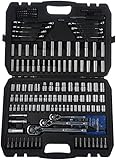
- Mechanic's 201-piece tool kit and socket set for tackling multiple sizes and types of fasteners, especially nuts and bolts
- Includes most popular 1/4, 3/8 and 1/2 inch sockets, hex keys, and screwdriver bits; both Metric and SAE sizes included
- Chrome-vanadium steel forged body for torque, strength, and durability
- Full polished-chrome finish provides anti-corrosion protection
- Case provides convenient tool storage and portability
EU vehicle type approval versus the United States
People sometimes describe one system as stricter than the other, but the more accurate distinction is that the systems use different conformity-assessment architectures.
| Question | European Union vehicle system | United States vehicle system |
|---|---|---|
| Is there pre-sale authority approval? | Type approval is generally central to placing an approved vehicle type on the market. | NHTSA does not pre-approve vehicles or equipment for sale. The manufacturer certifies compliance with applicable Federal Motor Vehicle Safety Standards. |
| Who carries the primary safety-compliance responsibility? | The manufacturer must provide evidence and maintain conformity of production; an approval authority issues the type approval. | The manufacturer is responsible for certifying that the vehicle complies with FMVSS. NHTSA conducts compliance and enforcement testing after certification. |
| What is the consumer evidence? | A type-approval number, statutory plate, applicable approval marks, and usually a Certificate of Conformity for an individual vehicle. | A manufacturer certification label and applicable records. There is no general NHTSA pre-sale approval sticker or certificate. |
| How are emissions handled? | Emissions requirements form part of the applicable vehicle type-approval framework. | Emissions certification is a separate EPA process. Vehicles and engines generally need an EPA Certificate of Conformity. |
| What happens with an imported or individually built vehicle? | Individual, national, small-series, or other approval routes may apply depending on the vehicle and country. | Federal safety import rules, Registered Importer requirements, EPA emissions rules, Customs procedures, and state requirements may all apply. |
NHTSA explicitly states that it does not approve motor vehicles before sale. That does not mean U.S. vehicles are unregulated: mandatory FMVSS requirements still apply, manufacturers must certify compliance, and NHTSA can investigate, test, require recalls, and enforce violations.
For U.S. emissions, EPA’s certification and compliance program includes Certificates of Conformity and confirmatory or in-use testing. Safety certification and emissions certification should therefore not be treated as one approval.
UNECE approval and international recognition
The UNECE 1958 Agreement provides a framework for harmonized vehicle regulations and reciprocal recognition of approvals. If a component is type-approved under a UN Regulation by one participating party, other parties applying that same regulation may recognize the approval. This can reduce duplicate testing and help manufacturers sell across borders.
Recognition is not universal. It depends on the country being a party to the relevant agreement, whether that country applies the particular regulation, the precise regulation version, the product category, and any local conditions or additional requirements. UNECE’s vehicle-regulations FAQ describes the mutual-recognition framework.
What homologation means in motorsport
In motorsport, homologation usually means formal eligibility under the technical and sporting rules of a particular racing category. It may confirm that:
The Tool Desk
Outbyte PC Repair FREERepair Windows errors before they cause bigger problemsFix Now →Outbyte Driver Updater FREEFix the driver behind crashes, sound loss and screen glitchesFind Drivers →- A race car complies with a championship’s technical regulations.
- A production-based competition car derives from an eligible model.
- A seat, harness, helmet, fuel tank, or other safety item meets a specified FIA standard.
- A component is accepted for a defined racing class.
- A vehicle’s design is fixed or restricted for a specified homologation period.
The FIA publishes homologated-vehicle lists, homologation documents, technical lists, and current sporting and technical regulations through its homologations page. Different categories have different rules; the FIA’s 2026 technical-regulations material includes separate provisions for categories such as GT3, rally, cross-country vehicles, and safety equipment.
FIA homologation is not the same as road homologation. A race car may be eligible for competition but not street legal. A road-legal homologation special may have been produced to satisfy production-based racing rules, but the road version and competition version can differ substantially. The specific series’ rules control; there is no single universal motorsport homologation standard.
Modern vehicle homologation includes software and cybersecurity
Vehicle approval is no longer limited to crash structures, brakes, lights, tires, and emissions hardware. Connected vehicles increasingly rely on software that can affect safety systems, performance, emissions, driver assistance, and legally regulated operating behavior.
Rank #4

- Built to Last: Sockets are made from high-quality CR-V steel, ensuring long-term durability with excellent resistance to rust and wear. Whether for home repairs or professional use, this mechanics tool set delivers reliability you can trust
- All-in-One Tool Set: This 314-piece mechanic tool kit brings together essential tools for automotive repair, home improvement, plumbing work, and DIY projects—all in one versatile kit
- Better Grip: The 6-point socket design of the mechanic tool set grips fasteners more securely, minimizes rounding and wear, and delivers improved torque for loosening stubborn bolts
- Roll-stamped Size Markings: This socket set features roll-stamped size markings to resist wear and remain clear over time, allowing faster identification and smoother workflow
- A Thoughtful Choice: This tool box set includes a sturdy storage case for organized transport and storage. Compatible with manual tools and most drills or impact wrenches—making it a practical and gift-worthy set
UNECE vehicle regulations now address areas including:
- Cybersecurity management systems.
- Cyberattack risk assessment and monitoring.
- Software-update management systems.
- Identification of software relevant to type approval.
- Safe over-the-air updates.
- Software changes that affect legally regulated characteristics.
UNECE’s overview of vehicle cybersecurity and software updates discusses this development. The relevant rules include UN Regulation No. 155 on cybersecurity and UN Regulation No. 156 on software updates.
This does not mean every country applies identical software rules. It does mean that a vehicle’s approved configuration can now include software governance, not just physical parts. An over-the-air update may raise approval questions if it changes a safety function, emissions characteristic, driver-assistance behavior, or another regulated feature.
How to verify a homologation claim before you buy
Do not rely on a seller’s statement that a product is fully homologated. Ask for evidence that matches the exact product and intended use.
- Who granted or recognized the approval? Identify the government authority, technical service, certification body, manufacturer, racing organization, or other responsible entity.
- Which regulation or standard applies? Ask for the regulation number and, where relevant, its revision or effective date.
- Which country or market does it cover? A foreign certificate is not automatically evidence of compliance in your country.
- What is the approval number? Check that it appears on the part, vehicle plate, certificate, database record, or other official evidence where applicable.
- Does it cover the exact variant? Match model year, engine, battery, body style, axle load, dimensions, software version, emissions family, and equipment.
- What level was approved? Determine whether the approval covers a whole vehicle, system, component, separate technical unit, or individual vehicle.
- Is it current? Check whether the approval has been extended, revised, suspended, withdrawn, or limited to a particular production period.
- Are there installation conditions? Look for required brackets, wiring, calibration, tire sizes, software settings, clearances, or other instructions.
- Will the modification affect the original vehicle approval? A certified part does not necessarily preserve the compliance of the completed vehicle after installation.
- What kind of legality is being claimed? Clarify whether the item is road legal, race legal, workplace legal, emissions compliant, or merely tested.
- Is there an official document or database entry? Prefer a certificate, label, approval number, manufacturer document, or responsible authority’s record over an unsourced advertisement.
- Do separate rules still apply? Check import, registration, emissions, inspection, insurance, state, provincial, local, or racing-series requirements.
Evidence you might reasonably request
- EU Certificate of Conformity for an individual vehicle.
- Vehicle or component type-approval certificate and approval number.
- E mark or e mark together with the associated approval number and application scope.
- EPA emissions label or Certificate of Conformity for a U.S.-market vehicle or engine.
- NHTSA manufacturer certification label.
- FCC ID or equipment-authorization record for relevant radio-frequency devices.
- FDA approval, clearance, or authorization record for a medical device.
- An OSHA-recognized Nationally Recognized Testing Laboratory certification mark for a workplace electrical product.
- FIA homologation form or technical-list entry for racing equipment or a competition vehicle.
- FAA type-certificate or approved-design documentation for an aircraft.
The correct document depends on the sector. For example, the FDA warns that device registration and listing do not mean a device has been FDA approved or cleared. The FDA explains how to distinguish registration, listing, clearance, approval, and authorization. Likewise, OSHA’s NRTL program concerns recognized laboratories that test and certify products to appropriate standards; NRTL recognition itself is not product approval.
Recommended Free Tools
Common misconceptions about homologation
Does homologated mean safe?
It means the defined item met specified legal or technical requirements within the relevant scope and at the relevant time. It does not mean that it is risk-free, the safest product available, suitable for every use, or immune from defects and recalls.
Does homologated mean legal everywhere?
No. Approval is jurisdiction-specific unless a mutual-recognition or equivalence arrangement applies. Even within a region that recognizes the original approval, local registration, inspection, insurance, or modification rules may still matter.
Is homologated the same as certified?
No. Certification is a broad conformity statement and may be performed by a manufacturer, private body, customer, or government agency. Homologation commonly refers to formal approval or recognition of a defined type, especially in vehicle and motorsport contexts.
Does a CE mark mean the European Union approved the product?
No. CE marking generally indicates the manufacturer’s declaration that the product meets applicable EU legal requirements. It is not a general EU guarantee or a universal government safety approval. Some products require notified-body involvement, while others rely primarily on the manufacturer’s own conformity assessment.
Quick wins for a faster PC:
Scan for outdated or missing drivers - takes under a minuteDriver Scan →Repair Windows errors before they cause bigger problemsFix Now →Best Value

- COMPREHENSIVE SET -- 96-piece set includes a complete range of SAE and Metric standard and deep sockets (5/16"-3/4", 8-22mm), with extensions, adapters, spark plug socket, and more for versatile use in automotive and mechanic tasks.
- DURABLE MATERIAL -- Forged from high-quality Cr-V steel with a black phosphate coating, this set is built to withstand heavy torque, offering strong corrosion and rust resistance for long-lasting durability in tough conditions.
- PRECISION DESIGN -- Laser-etched size markings on each socket ensure easy identification even in low-light conditions. The 6-point socket design increases contact surface for a secure fit, reducing wear and preventing rounding.
- CONVENIENT STORAGE -- This set comes with a sturdy box that keeps each tool neatly organized. The custom storage slots prevent sockets from falling out, and the sizes are clearly marked for quick, hassle-free access.
- VERSATILE PERFORMANCE -- Perfect for mechanics, DIY enthusiasts, and automotive repair, this set includes a ratchet wrench, universal joint, extension bars, power drill adapter, screwdriver bit holder, and more, making it ideal for various applications.
Does an FIA-homologated car have to be street legal?
No. FIA homologation establishes eligibility under a particular competition rule set. Public-road legality is a separate question governed by the applicable road-vehicle regulations.
Does a U.S. car need NHTSA approval before it can be sold?
Not in the way many people assume. NHTSA says it does not pre-approve vehicles. Manufacturers certify that their vehicles comply with FMVSS, and NHTSA performs enforcement and compliance activity. Emissions certification is handled separately by EPA.
Does an approved aftermarket part make my modified car legal?
Not necessarily. The part may be approved only for particular vehicles, installations, or uses. The completed car may still fail emissions, noise, lighting, structural, registration, inspection, or other requirements.
Does a Certificate of Conformity prove that a used car is currently compliant?
It confirms that the vehicle was manufactured as an example of an approved type. It does not prove that a used vehicle has not been modified, damaged, improperly repaired, fitted with non-original software, or otherwise changed since manufacture.
Type approval versus self-certification: the trade-off
Type approval and self-certification are different ways of organizing conformity assessment, not simple labels for strict and lax regulation.
Type approval
Advantages:
- Independent approval-authority involvement before market access.
- Clearer approval documentation for importers, buyers, and regulators.
- More predictable mutual recognition where agreements apply.
- Defined control over approved product variants.
Costs and limitations:
- More testing, paperwork, and expense before launch.
- Longer lead times.
- Market-specific engineering changes.
- Possible re-testing when hardware, software, production methods, or regulations change.
- Potentially greater difficulty for small manufacturers.
Self-certification
Advantages:
- More flexibility during product development.
- Less upfront government involvement.
- Potentially faster product changes and market entry.
- Lower direct approval costs in some cases.
Costs and limitations:
- Greater responsibility rests on the manufacturer.
- Buyers may have less obvious pre-sale approval documentation.
- Regulators can discover failures after sale.
- Noncompliance can lead to enforcement, recalls, penalties, and litigation.
The U.S. vehicle-safety model still imposes mandatory standards and allows enforcement testing. The EU type-approval model still depends heavily on manufacturer documentation and continuing production conformity. They are different compliance architectures, not a simple strict-versus-lax comparison.
Why approval can change or fail
- A component is approved, but the completed product is not. A certified lamp, exhaust, tire, wireless module, or seat may be lawful only in a documented application.
- A model is approved, but an individual used example is no longer compliant. Modifications, emissions tampering, accident repairs, replacement engines, software changes, and reconstructed vehicles can alter the result.
- Foreign approval does not transfer automatically. Recognition depends on the receiving jurisdiction, agreement, regulation, product category, and approval version.
- Road legality is narrower than a general approval claim. A product may be approved for sale but become noncompliant after modification, importation, or registration in another jurisdiction.
- Small-series and individual vehicles may follow different routes. Kit cars, coachbuilt vehicles, low-volume manufacturers, and unique conversions may use national, individual, or small-series procedures rather than ordinary whole-vehicle type approval.
- Approval rules and versions change. A design revision, software update, model-year change, or new regulation may require an extension, repeated testing, or a new approval.
- Official-looking language can mislead. A certificate for another model, a generic test report, an expired mark, or a listing that merely shows registration may create an impression of approval without proving it.
In the EU system, changes to an approved type can require a revision or extension, and the approval authority determines whether additional testing or a new approval is needed. Regulation (EU) 2018/858 describes these approval changes.
A date-sensitive EU document change
Under Regulation (EU) 2018/858, from July 5, 2026, manufacturers may use structured electronic Certificates of Conformity instead of automatically issuing paper copies where the required electronic system is in place. Owners retain the right to request a paper duplicate for 10 years after manufacture, subject to a charge no greater than the cost of issuing it. This is an EU vehicle rule, not a worldwide change. Check the current text of the regulation before relying on an electronic CoC.
Outdated Drivers Are Slowing You Down
One free scan finds every outdated or missing driver and matches the right update for your exact hardware.Free scan · exact hardware matchWindows Errors? Fix Them Before They Spread
Repair common Windows errors and clear accumulated junk for a smoother, more stable PC - no reinstall needed.Free scan · no reinstallThe practical definition to remember
When you see the word homologated on a car, part, document, or advertisement, translate it into four questions:
- Approved by whom?
- Against which rules or standards?
- For which country, market, product variant, and use?
- What document, mark, or official database entry proves it?
If a seller cannot answer those questions, treat homologation as an unverified marketing claim rather than proof that the product is legal for your vehicle.
The Bottom Line
Bottom line: Homologation is approval within a defined scope—not a worldwide guarantee. For any vehicle or part, verify the authority, rule, exact configuration, market, intended use, current status, and supporting document before assuming it is legal to buy, import, modify, register, drive, or race.
Quick Recap
Product prices and availability are accurate as of the date/time indicated and are subject to change. Any price and availability information displayed on Amazon at the time of purchase will apply.
Recommended Free Tools