Recommended Free Tools
Waymo recalled software used in 3,067 U.S. vehicles after its robotaxis could stop for a school bus with flashing red lights or an extended stop arm, then move before those warnings were deactivated. The voluntary recall, filed with the National Highway Traffic Safety Administration on December 10, 2025, involved Waymo’s fifth-generation automated-driving system. It was an over-the-air software remedy, not a physical repair, and Waymo said every affected vehicle had already received the update before the filing.
The recall followed a September 22 incident in Atlanta and a wider set of reported encounters in Austin. No collision occurred in the incidents covered by recall 25E084, but regulators are still examining whether the software fix addressed every relevant school-bus scenario.

As an Amazon Associate I earn from qualifying purchases.
What Waymo’s recall covers
This was a recall of automated-driving-system software. The affected vehicles were owned by Waymo, and the company had already installed the remedy across the affected population by the time it submitted the filing. Because there were no conventional vehicle owners, dealers, or distributors who needed to bring cars in for repair, the filing said traditional notification was unnecessary.
Quick wins for a faster PC:
Repair Windows errors before they cause bigger problemsFix Now →Fix the driver behind crashes, sound loss and screen glitchesFind Drivers →Clear out junk files and repair common Windows errorsFree Scan →The defect involved how the fifth-generation ADS responded to a stopped school bus displaying flashing red lights and/or an extended stop arm. In some encounters, the vehicle could slow or stop appropriately at first, then proceed before the school bus had withdrawn its stop arm or turned off its warning signals.
#1 Best Overall
NHTSA characterized that behavior as increasing crash risk compared with remaining stationary. The recall report did not say that the vehicle’s collision-detection system or vulnerable-road-user sensors had stopped working. The problem was the driving decision made after the vehicle encountered the bus—not a total loss of sensing or collision-avoidance capability.
The Atlanta incident that triggered NHTSA’s evaluation
The first known event associated with the recalled behavior occurred on September 22, 2025, in Atlanta. A driverless Waymo approached a stopped school bus from a perpendicular side street. The bus was reported to have flashing red lights, an extended stop arm, and a deployed crossing-control arm while students were getting on or off.
The Waymo initially stopped. It then drove around the front of the bus and continued down the roadway, passing near the bus’s crossing-control arm and disembarking students. The event became the subject of public reporting and prompted NHTSA’s Office of Defects Investigation to open preliminary evaluation PE25013 on October 17, 2025.
Free tools Windows power users keep installed
One-click scans. No signup required.
NHTSA said its evaluation would examine how Waymo’s ADS performed around stopped school buses, how the system was designed to comply with school-bus traffic laws, and whether it could follow those requirements consistently.
Waymo told TechCrunch that the bus partially blocked the driveway from which the robotaxi was exiting. The company said the vehicle could not see the bus’s flashing lights or stop sign in that particular geometry. Waymo also said it had deployed software improvements before the formal recall filing. That explanation describes the circumstances Waymo identified; it does not eliminate the broader question NHTSA was examining: whether the system should have remained stopped when a school bus and its warning equipment were present, even in a difficult viewing angle.
Why the robotaxi moved
Waymo linked the behavior to an August 20, 2025 driverless-software release that was broadly deployed in mid-September. The release changed how the ADS predicted the intended behavior of other road users.
In some school-bus encounters, the system apparently concluded that it might be impeding a priority vehicle, such as a public bus or school bus. It then selected a maneuver intended to clear the path and stop impeding that vehicle. That priority-vehicle logic improperly overrode the more important instruction to remain stopped while the school bus displayed its red warning lights or stop arm.
Windows Errors? Fix Them Before They Spread
Repair common Windows errors and clear accumulated junk for a smoother, more stable PC - no reinstall needed.Free scan · no reinstallCrashes, No Sound, or Screen Glitches?
Random freezes, missing sound and display glitches usually trace back to one bad driver. Find and replace yours safely.Free scan · under a minuteRank #2

- Licensed Replica of Popular International Trucks
- Must-Have for HO Model Railroads
- Position able Parts on Many Models
- Fully Assembled & Painted
- Die Cast Metal & Plastic Parts
That distinction matters. The issue was not simply that Waymo failed to recognize every school bus. The system could recognize a stopped bus or respond to it by slowing down, yet still make the wrong decision about what to do next. A vehicle can have functioning cameras, radar, lidar, and vulnerable-road-user detection while its decision-making hierarchy produces an unsafe response to a particular combination of road geometry, bus movement, and traffic-control signals.
How Waymo identified and fixed the issue
According to the recall report, Waymo engineers identified the behavior in October while analyzing an increase in events involving school buses with extended stop arms. On October 30, the company’s Field Safety Committee authorized an out-of-cycle software hotfix.
After validation, Waymo incrementally deployed the update to all affected vehicles from November 5 through November 17. The remedy changed the ADS’s decision logic so that it would not prioritize clearing the path for another vehicle over remaining stationary for a school bus with flashing red lights and/or an extended stop arm. The updated software also included additional enhancements for behavior around school buses.
Waymo’s Safety Board reviewed the matter on December 2 and decided that the company should conduct a recall. Waymo reported the recall to NHTSA eight days later, on December 10.
Do these 3 things before closing this tab:
1Repair Windows errors before they cause bigger problems2Scan for outdated or missing drivers - takes under a minute3Clear out junk files and repair common Windows errorsRecall timeline
| Date | Development |
|---|---|
| August 20, 2025 | Waymo released the software version later associated with the school-bus behavior. |
| Mid-September 2025 | The release was broadly deployed. |
| September 22, 2025 | The first known event tied to the behavior occurred in Atlanta. The vehicle slowed to about 5 mph for a school bus and then proceeded before the stop arm retracted. |
| October 17, 2025 | NHTSA opened preliminary evaluation PE25013 after media reporting about the Atlanta event. |
| October 30, 2025 | Waymo’s Field Safety Committee authorized an out-of-cycle software hotfix. |
| November 5–17, 2025 | The validated software update was incrementally deployed to the affected vehicles. |
| November 24, 2025 | NHTSA said Austin Independent School District had documented 19 incidents and asked about operations during student pickup and drop-off periods. |
| December 2, 2025 | Waymo’s Safety Board reviewed the matter and decided to conduct a recall. |
| December 10, 2025 | Waymo filed voluntary recall 25E084 with NHTSA. |
| January 2026 | The National Transportation Safety Board opened a separate investigation into repeated alleged failures to stop for school buses in Austin. |
Austin reports broadened the concern
The Atlanta incident was not the only event that drew attention. In a November 24 follow-up email, NHTSA said Austin Independent School District had reported 19 documented incidents in which Waymo vehicles passed stopped school buses in violation of the Texas Transportation Code and Austin City Code.
The school district asked Waymo to stop autonomous-vehicle operations during common student pickup and drop-off times. NHTSA asked Waymo whether it had suspended operations during those periods, whether an appropriate software fix had been implemented, and whether the company intended to file a recall.
NHTSA then sent Waymo a detailed information request on December 3. The agency sought information about how the ADS detects and classifies stopped school buses, how Waymo monitors the system’s competency in obeying bus-mounted traffic-control devices and traffic laws, and what the company’s testing and safety analyses showed. The request also sought incident video, information about remote-assistance involvement, simulations, and other evaluations.
Rank #3

- DIECAST SCHOOL BUS TOY WITH LIGHTS & SOUNDS: Realistic 8-inch yellow school bus toy with opening doors, flashing lights, and sound effects; perfect vehicle toy for kids who love buses and imaginative play
- PULLBACK SCHOOL BUS ACTION TOY: Easy pull back and go feature lets kids race the bus across the floor; no batteries needed for motion, making it a fun and interactive toy anytime
- REALISTIC DETAILS & DURABLE BUILD: Made from high-quality diecast metal with rubber tires and authentic design; built tough for everyday play while looking just like a real school bus
- INTERACTIVE LIGHTS & SOUND FEATURES: Press to activate headlights and honking sounds for a lifelike experience; keeps kids engaged and adds excitement to pretend school day adventures
- PERFECT GIFT FOR KIDS & COLLECTORS: Great for birthdays, holidays, or classroom themes; ideal for boys and girls ages 3 and up who enjoy toy vehicles, buses, and realistic playsets
The Austin count should not be casually combined with later figures. The 19 incidents were reported by the school district in the November 24 communication. In January 2026, the NTSB referred to more than 20 incidents in Austin as it announced its own investigation. Those counts came from different agencies, reporting dates, and stages of review.
What the recall does—and does not—prove
The recall confirms a specific software defect
Recall 25E084 establishes that Waymo identified a software behavior in which the ADS could proceed too early around a stopped school bus. It also documents the release associated with the behavior, the company’s investigation, the hotfix, the deployment window, and the corrected priority logic.
It is therefore accurate to describe the action as a voluntary software recall over school-bus behavior. It is not accurate to describe it as a physical defect requiring replacement of a camera, lidar unit, brake component, or other hardware.
The recall report says there were no collisions in the covered incidents
Waymo told NHTSA that it was aware of 12 citations related to the behavior, all occurring between September 25 and November 14, 2025. The recall report states that no collisions occurred in connection with the behavior. That means reports of the recall should not claim that a child was struck or that a collision occurred in the incidents covered by 25E084.
The absence of a collision does not make the behavior compliant or risk-free. A robotaxi passing a stopped school bus with its warning equipment active can create danger even when no impact ultimately occurs. NHTSA specifically said the behavior increased crash risk compared with remaining stationary.
What’s actually slowing this PC down?
Pick the symptom - the matching free tool is one click away.
The recall does not automatically resolve every later allegation
Waymo had deployed the update to the affected vehicles before the December 10 filing, but scrutiny continued afterward. In January 2026, the NTSB opened an investigation into more than 20 alleged incidents in Austin involving Waymo robotaxis and school buses loading or unloading students.
Those later reports raise an important but unresolved question: do they describe the same defect, a residual version of it, separate software or operational scenarios, or edge cases that the recall’s remedy did not cover? The available record does not justify declaring that recall 25E084 failed in every case. It also does not justify treating the recall as proof that all school-bus encounters are now resolved.
Rank #4
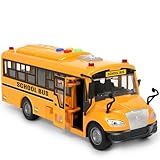
- 【Realistic School Bus】Our toy school bus is equipped with cool light & sound, friction-powered wheels, openable doors & movable stop sign and attractive bright yellow color. Ensuring uninterrupted playtime fun. Perfect school bus toys for toddlers 3-5.
- 【LED And Sound Effects】Our yellow bus 4 buttons at the top produce 4 different sounds. bus toys for toddlers. School bus toy with just a press of a button, displays colorful lights, plays dynamic music and creating an engaging and interactive playtime experience.
- 【Friction-Powered Wheels】That little school bus driver will love the push ‘n’ go mechanism. No battery is needed. Simply rev the wheels on the ground, it will move forward. When the light up toys car moves, it will attract your kid to chase and crawl. Perfect to develop gross motor skills and learn how to control big muscles walking running, jumping and body.
- 【Safe Material Does Not Hurt Hands】 The school bus toy is smooth, with no burrs. The truck toys for boys overall strictly selected plastic material, rest assured that environmental protection. The toddler boy toys edge is smooth, not scratching hands, and workmanship.
- 【Perfect Gift for Kids】 It will be a great gift for kids who love school bus toy. Suitable toy for 3 4 year old and up boy girl asChristmas birthday gift 3 4+ year old. Great yellow bus for toddlers 3 4 years.
Why the NTSB investigation matters
NHTSA and the NTSB have different roles. NHTSA is the federal vehicle-safety regulator involved in the defect evaluation and recall process. Its work focused on the ADS’s behavior, compliance, and the adequacy of the software remedy.
The NTSB is an independent transportation-safety investigative agency. Its January 2026 inquiry was intended to establish facts and identify safety lessons around the reported Austin incidents. The NTSB generally issues findings and non-binding recommendations; it does not impose fines or order a recall in the way a regulator might.
The NTSB said it planned to gather information on site and examine repeated incidents in which Waymo robotaxis allegedly failed to stop for school buses loading or unloading students. Its investigation is significant because it can test whether the problem was limited to the recalled decision rule or points to broader challenges in operating automated vehicles around school-bus loading zones.
Independent reader supportYour contribution helps us test, update, and keep practical guides available for everyone.Waymo’s position
Waymo has said that its vehicles safely navigate thousands of school-bus encounters each week. The company also said there were no collisions in the incidents under discussion and argued that its safety performance around school buses was superior to that of human drivers.
Those are company statements, not independent conclusions established by the NHTSA recall or the NTSB investigation. The relevant distinction for readers is between Waymo’s overall safety comparison and the narrower finding behind the recall: a particular software behavior could cause a vehicle to move when it should have remained stopped.
What to watch next
- NHTSA’s PE25013: The recall filing documents the remedy, but the supplied record does not establish that NHTSA formally closed its preliminary evaluation. A recall should not be described as proof that the investigation ended.
- NTSB findings: The later investigation may clarify how many incidents occurred after the November software deployment and whether they involved the same behavior.
- School-bus geometry: The Atlanta account involved a bus partly blocking a driveway and a difficult viewing angle. Future findings may show whether unusual approach angles, crossing-control arms, bus movement, or visibility limitations created separate failure modes.
- System monitoring: NHTSA specifically requested information about testing, simulations, incident review, remote assistance, and how Waymo measures ADS competency around bus-mounted traffic-control devices.
- Operational restrictions: Austin’s request to suspend service during pickup and drop-off periods puts attention on whether software changes alone are sufficient or whether service rules and geofencing are also needed in higher-risk environments.
The practical takeaway
For the affected Waymo vehicles, the immediate remedy was a remotely deployed software update that changed the system’s priority logic around stopped school buses. Waymo completed that deployment before filing recall 25E084, and the recall report says no collision occurred in the covered incidents.
But the larger safety question remains open. The Atlanta event exposed a conflict between two automated-driving goals: avoiding obstruction of another vehicle and obeying a stopped school bus’s warning equipment. The Austin reports and the later NTSB investigation will help determine whether the fix addressed that conflict comprehensively or whether additional scenarios require separate changes.
Best Value
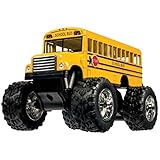
- Oversized Tires: This monster school bus toy features massive knobby tires that can traverse any terrain with ease.
- Pullback Action: Just pull the bus back and let it go to watch it race forward, propelled by its powerful pullback motor.
- Durable Die-Cast Metal: Constructed from sturdy die-cast metal, this toy can withstand rough play and crashes.
- Realistic Details: Authentic school bus design with 'SCHOOL BUS' lettering and a stop sign for added realism.
- Portable Size: Measuring 5 inches long, this toy is the perfect size for on-the-go fun and imaginative play.
Frequently Asked Questions
How many Waymo vehicles were covered by the school-bus recall?
Recall 25E084 covered 3,067 U.S. vehicles equipped with Waymo’s fifth-generation automated-driving system. Waymo owned the affected vehicles, and the company said all had received the software remedy before the recall was filed.
Did a Waymo robotaxi hit a child or a school bus in the recalled incidents?
No. The NHTSA recall report states that no collisions occurred in connection with the behavior covered by recall 25E084. The behavior nevertheless increased risk because a vehicle could proceed before a school bus’s flashing red lights or extended stop arm had been deactivated.
Was this a physical vehicle recall?
No. It was a software recall. Waymo deployed an over-the-air update that changed how the automated-driving system prioritized remaining stopped for a school bus versus clearing the path for another vehicle.
What happened in the Atlanta Waymo school-bus incident?
On September 22, 2025, a driverless Waymo approached a stopped school bus from a perpendicular side street. The bus reportedly had flashing red lights, an extended stop arm, and a deployed crossing-control arm. The Waymo initially stopped, then drove around the front of the bus and continued near the crossing-control arm and disembarking students.
Did the NTSB order Waymo to issue the recall?
No. NHTSA handled the defect evaluation and recall process. The NTSB later opened an independent safety investigation into reported Austin incidents. The NTSB is an investigative agency and generally issues findings and non-binding recommendations rather than ordering recalls or imposing fines.
The Bottom Line
Waymo’s recall fixed a documented priority-logic error that could make a robotaxi move before a stopped school bus had deactivated its warning signals. The 3,067 affected vehicles received a software update, and no collision was reported in the incidents covered by the recall. However, the subsequent Austin reports and January 2026 NTSB investigation mean the broader question—whether every school-bus operating scenario is handled safely—remains under review.
Quick Recap
Product prices and availability are accurate as of the date/time indicated and are subject to change. Any price and availability information displayed on Amazon at the time of purchase will apply.
The Tool Desk
Outbyte PC Repair FREERepair Windows errors before they cause bigger problemsFix Now →Outbyte Driver Updater FREEScan for outdated or missing drivers - takes under a minuteDriver Scan →



