Short answer: The best two-door SUVs are the Jeep Wrangler/CJ, Ford Bronco, Toyota Land Cruiser FJ40, Suzuki Samurai, and Isuzu VehiCROSS. They succeed because the short body, removable roof, compact dimensions, or rugged mechanicals serve a clear purpose. The weakest examples—including the Nissan Murano CrossCabriolet and Suzuki X-90—removed doors or roof structure without creating a convincing replacement for the utility they lost.
As of August 10, 2026, the U.S. new-vehicle market has effectively narrowed to three mainstream two-door SUV model lines: the Jeep Wrangler 2-Door, Ford Bronco 2-Door, and Land Rover Defender 90. That makes this primarily a historical and enthusiast ranking, followed by a separate guide to the three new choices still available in America.
The last three two-door SUVs still standing in America
Two-door SUVs were once a familiar part of the U.S. market. Buyers could choose compact models such as the Suzuki Samurai, Geo Tracker, Isuzu Amigo, and Toyota RAV4, or larger recreational vehicles such as the Chevrolet S-10 Blazer, Ford Bronco, Ford Explorer Sport, Jeep Cherokee, and Toyota 4Runner. Some were serious 4x4s; others were inexpensive lifestyle vehicles or open-top experiments.
That market has largely disappeared. Modern SUVs increasingly serve as family transportation, where rear-seat access, child-seat installation, cargo flexibility, fleet demand, and four-door platform economics matter more than the maneuverability of a short-wheelbase trail vehicle. The result is a tiny current market: effectively three U.S. model lines as of the date above, rather than a broad field of new two-door choices. That enumeration is a time-sensitive market observation, not a permanent industry rule; check current manufacturer configurators before buying.
Do these 3 things before closing this tab:
1Repair Windows errors before they cause bigger problems2Scan for outdated or missing drivers - takes under a minute3Clear out junk files and repair common Windows errors#1 Best Overall
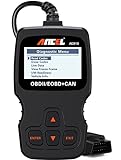
- CEL Doctor: The ANCEL AD310 is one of the best-selling OBD II scanners on the market and is recommended by Scotty Kilmer, a YouTuber and auto mechanic. It can easily determine the cause of the check engine light coming on. After repairing the vehicle's problems, it can quickly read and clear diagnostic trouble codes of emission system, read live data & hard memory data, view freeze frame, I/M monitor readiness and collect vehicle information
- Sturdy and Compact: Equipped with a 2.5 foot cable made of very thick, flexible insulation. It is important to have a sturdy scanner as it can easily fall to the ground when working in a car. The AD310 OBD2 scanner is a well-constructed mechanic tool with a sleek design. It weighs 12 ounces and measures 8.9 x 6.9 x 1.4 inches. Thanks to its compact design and light weight, transporting the device is not a problem. The buttons are clearly labelled and the screen is large and displays results clearly
- Accurate Fast and Easy to Use: The AD310 scanner can help you or your mechanic understand if your car is in good condition, provides exceptionally accurate and fast results, reads and clears engine trouble emission codes in seconds after you fixed the problem. This device will let you know immediately and fix the problem right away without any car knowledge. No need for batteries or a charger, get power directly from the OBDII Data Link Connector in your vehicle
- OBDII Protocols and Car Compatibility: Many cheap scan tools do not really support all OBD2 protocols. AD310 scanner as it can support all OBDII protocols such as KWP2000, J1850 VPW, ISO9141, J1850 PWM and CAN. This device also has extensive vehicle compatibility with 1996 US-based, 2000 EU-based and Asian cars, light trucks, SUVs, as well as newer OBD2 and CAN vehicles both domestic and foreign. Pls confirm with our customer service whether it is compatible with your vehicle before purchasing
- Home Necessity and Worthy to Own: This is an excellent code reader to travel or home with as it weighs less and it is compact in design. You can easily slide it in your backpack as you head to the garage, or put it on the dashboard, this will be a great fit for you. The AD310 is not only portable, but also accurate and fast in performance. Moreover, it covers various car brands and is suitable for people who just need a code reader to check their car
The format is not obsolete, however. A short body can be dramatically better on a narrow trail, and a removable roof and doors can make a vehicle feel like a purpose-built recreational tool rather than a tall family car. The central rule for this ranking is simple:
Two-door SUVs are at their best when the missing doors serve a purpose—shortening the wheelbase, reducing weight, improving off-road geometry, or creating a simple open-air tool. They are at their worst when designers remove doors and roof merely to create novelty.
What counts as a two-door SUV?
This list counts vehicles with:
- Two conventional side doors used for front-seat access.
- A rear hatch, tailgate, or spare-tire door treated as cargo access rather than a passenger door.
- SUV, 4×4, crossover, or utility-vehicle intent.
- Regular production availability, rather than a concept, prototype, or one-off conversion.
That convention is why a Defender 90, Bronco, Wrangler, and two-door FJ40 qualify even though each has a rear cargo opening. It counts passenger-side doors, not every movable body panel.
It also excludes four-door vehicles marketed as “coupe SUVs.” A BMW X6, Mercedes-Benz GLE Coupe, or Lamborghini Urus may have a sloping roof, but a fastback profile does not make a vehicle a two-door SUV. The Toyota FJ Cruiser is a closer edge case: its rear-hinged auxiliary doors provide additional passenger access, so it is generally excluded here even though some lists classify it as an extended-cab-style two-door. The 2018 Range Rover SV Coupe is excluded because it was a concept or limited proposal rather than a regular production model.
Crashes, No Sound, or Screen Glitches?
Random freezes, missing sound and display glitches usually trace back to one bad driver. Find and replace yours safely.Free scan · under a minutePC Slower Than It Used to Be?
A free scan shows the junk files, broken settings and background clutter dragging Windows down - then fixes them in one click.Free scan · Windows 10 & 11How the ranking was decided
“Best” and “worst” are editorial judgments, not objective engineering categories. The best vehicles combine a clear purpose with capability, usable packaging, mechanical credibility, historical importance, and character. The worst entries are better described as the least successful concepts or executions; that does not mean every individual example is unreliable or unpleasant to drive.
The ranking considers:
- Purpose clarity: whether the two-door layout solves a real problem.
- Off-road capability: drivetrain, low range, geometry, articulation, clearance, tires, and recovery hardware.
- On-road usability: steering, ride, braking, noise, stability, acceleration, and weather protection.
- Packaging: rear-seat access, passenger room, cargo space, visibility, and top or door storage.
- Mechanical credibility: durability, repairability, parts support, and drivetrain complexity.
- Historical importance: influence on the SUV category or enthusiast culture.
- Execution: whether the unusual body style was integrated into the vehicle or simply grafted onto it.
- Ownership reality: rust, parts, specialist support, insurance, emissions, and restoration cost.
- Value and character: what the vehicle delivered for its original and current cost.
The 10 ranked at a glance
| Rank | Vehicle | Verdict | Best or worst because… |
|---|---|---|---|
| 1 | Jeep Wrangler/CJ | Best overall | The most complete expression of the traditional short-wheelbase, open-air 4×4. |
| 2 | Ford Bronco 2-Door | Best modern alternative | Combines removable body panels with better road manners and useful cargo space. |
| 3 | Toyota Land Cruiser FJ40 | Best historical icon | Simple, durable, globally supported, and genuinely expedition-oriented. |
| 4 | Suzuki Samurai/Jimny | Best small off-roader | Light weight and tiny dimensions make difficult trails accessible. |
| 5 | Isuzu VehiCROSS | Best cult classic | Unusual styling and serious hardware made it far better than its commercial outcome suggested. |
| 6 | Nissan Murano CrossCabriolet | Least convincing novelty | The convertible body sacrificed utility without adding meaningful trail capability. |
| 7 | Suzuki X-90 | Most confused | Too compromised to be a useful SUV and too slow and tall to be a convincing sports car. |
| 8 | Range Rover Evoque Convertible | Polished but unnecessary | More capable and refined than its rivals, but expensive and impractical for its mission. |
| 9 | Kia Sportage Convertible | Marginal open-top utility | A global-market experiment that gave up practicality without becoming a Wrangler. |
| 10 | Volkswagen T-Roc Cabriolet | Stretching the definition | More lifestyle convertible than genuine SUV, especially for an off-road-focused list. |
The five best two-door SUVs
1. Jeep Wrangler and CJ: the benchmark
The Jeep Wrangler is the safest choice for the top spot because it has preserved the original logic of the category better than any modern rival. Its lineage runs through the civilian CJ models to the military Jeep: a compact body, low-range four-wheel drive, removable doors and roof, strong axles, simple access to the outdoors, and enough aftermarket and trail support to make the vehicle useful long after it leaves the showroom.
That continuity matters. The Wrangler is not merely a two-door SUV with a removable roof as a styling feature. The short body and open-air hardware are central to what it is. A Wrangler can be used as a daily driver, but its strongest case is trail work, recreation, and the freedom to remove the parts that separate occupants from the landscape.
The current 2026 Wrangler 2-Door remains available in several forms, including Sport, Willys, Rubicon, Rubicon X, and special editions. Jeep lists the Sport 2-Door at a starting MSRP of $36,035; verify the live configurator for destination charges, incentives, and inventory. The 2026 Wrangler specifications page is the appropriate place to confirm current trims and equipment.
For serious off-roading, the Rubicon remains the obvious enthusiast choice. For buyers who want trail tires and a lower price, Willys can be a more rational compromise. The available hardware, huge modification market, and extensive owner community make it easier to build a Wrangler for a specific type of trail than almost any other SUV.
What the short body gets right
- Short wheelbase and body length improve maneuverability between trees and rocks.
- Removable doors and roof create a genuinely open-air experience.
- Low-range 4×4 and rugged suspension hardware support slow, technical terrain.
- The aftermarket makes everything from recovery equipment to replacement body panels easy to find.
Jeep advertises up to a 32.4-degree breakover angle for certain two-door configurations with available 35-inch tires. That is configuration-dependent, not a universal specification for every Wrangler. Tire size, suspension, axles, approach and departure angles, and driver skill still determine whether the vehicle clears a particular obstacle. Jeep explains the capability figures on its Wrangler capability page.
Where the Wrangler loses
The Wrangler is noisy, upright, and less composed on pavement than the Bronco. Rear-seat access is awkward, cargo space is limited, and the rear seats are best viewed as occasional-use seating rather than a family-friendly second row. The current two-door model’s maximum tow rating is 2,000 pounds when properly equipped, well below the Bronco’s 3,500-pound maximum; check Jeep’s towing FAQ for configuration rules.
Safety equipment also must be judged by body style. The IIHS 2026 Wrangler 2-Door page lists weak or marginal headlight results depending on equipment and says pedestrian front-crash prevention is unavailable. Do not automatically transfer the four-door Wrangler’s ratings to the two-door version. For a buyer who wants open-air trail use and aftermarket depth, these compromises are acceptable. For a quiet family commuter, they are not.
Best for: Serious trail use, open-air driving, customization, and buyers who value Jeep tradition over refinement.
2. Ford Bronco 2-Door: the best modern all-rounder
The current Ford Bronco is the Wrangler’s most credible modern rival and, for many buyers, the better all-rounder. Ford ended the original Bronco line after the 1996 model year and revived the name for 2021. The new Bronco retained removable doors and roof panels, but added more modern engines, drive modes, suspension choices, and road manners.
The two-door body has a 100.4-inch wheelbase and is approximately 173 inches long, making it substantially shorter than the four-door Bronco. Ford lists seating for four, 20.6 cubic feet of cargo space behind the rear seats, and 52.0 cubic feet with those seats folded. Second-row legroom is listed at 35.7 inches. The official figures are available in Ford’s Bronco specifications.
That cargo advantage is meaningful. In a comparison test, Car and Driver reported that the two-door Bronco held five carry-on suitcases behind its rear seat, compared with two in the two-door Wrangler. The same comparison found the Bronco more composed on pavement, while the Wrangler retained live axles front and rear. The Bronco is still loud and upright, but it is easier to recommend to someone who spends a lot of time driving between trails.
Recommended Free Tools
For 2026, Ford lists the base Bronco 2-Door at $40,795 and the Badlands 2-Door at $49,385 on its model-selection and pricing page. A properly equipped two-door can tow up to 3,500 pounds. Sasquatch equipment adds substantial off-road capability, but the price can climb quickly once buyers select larger tires, upgraded engines, and option packages.
Rank #2

- Multi-Functions - Practical Multi-Functions OBD2 code reader features built-in OBD2 DTC lookup library, which help you to determine the cause of the engine light, read code, erase code, view freeze frame, I/M ready, vehicle information, data flow, real-time curve, get vehicle speed information, calculate load value, engine coolant temperature, get engine speed.
- Wide Capability - Supports 9 protocols compatible with most 1996 US-Based, 2000 EU-Based and Asian cars, and newer OBD II & CAN domestic or import vehicles. Supports 6 languages - English,German, Dutch, Spanish, French, Italian.
- 2.8" LCD Display - Designed with a clear display 2.8" Large LCD screen - white backlight and contrast adjustment. No need any battery or charger, OBD reader gets the power directly from your vehicle through the OBDII Data Link Connector.
- Compact Design - Car diagnostic scanner is equipped with a 2.5 feet long cable and made of a very thick flexible insulator.There are 6 buttons on OBD2 Scanner:scroll up/down,enter/exit and buttons that quick query VIN vehicle number& the DTC fault code.
- ABS / Airbag codes NOT Supported - It is able to read and clear check engine information which is part of OBDII system, but it cannot work with non-OBDII systems, including ABS / Airbag / Oil Service Light, etc.
Important 2026 availability notes
The 2026 Bronco Raptor is not offered as a two-door. Ford’s 2026 order guide also says the Stroppe Edition became four-door-only, with the two-door Stroppe body deleted. Buyers who remember earlier special editions should verify the exact 2026 body-style availability in Ford’s official order guide.
Where the Bronco loses
Wind noise, hard interior materials, a wide body, and expensive options prevent it from feeling like a luxury SUV. It also does not provide the Wrangler’s depth of aftermarket and decades of trail culture. The two-door Bronco is a better modern compromise, but the Wrangler remains the more focused recreational tool.
Best for: Buyers who want authentic off-road capability but spend substantial time on highways and urban streets.
3. Toyota Land Cruiser FJ40: the durability icon
The Toyota Land Cruiser FJ40 is the historical reliability and durability icon of this group. Toyota’s 40 Series was produced from 1960 through 1986, and the company credits the 24-year model with helping establish the Land Cruiser’s worldwide reputation for reliability, durability, and off-road performance. The body range included soft-top models, two-door vans, four-door vans, pickups, and other configurations. Toyota’s own history of the Land Cruiser and 40 Series provides the useful historical context.
The FJ40 is not the most comfortable, safest, fastest, or easiest classic SUV to own. Its place here comes from the combination of straightforward mechanical design, global expedition history, strong parts and enthusiast support, and genuine durability rather than lifestyle marketing. It is a vehicle whose short body was useful in rough country, not simply fashionable.
What buyers should understand
An FJ40 is a restoration and inspection project even when it looks finished. Old brakes, steering, wiring, cooling systems, crash protection, and highway performance are all far removed from a 2026 SUV. Rust in the frame, body mounts, floors, inner fenders, and suspension mounting areas can turn a desirable truck into an expensive shell. A fresh paint job is not evidence of a properly restored frame or drivetrain.
Collector pricing can also make a restored FJ40 poor value compared with a newer Wrangler or Bronco. Buy one for its history, simplicity, and character—not because the badge guarantees that a particular example has been maintained.
What’s actually slowing this PC down?
Pick the symptom - the matching free tool is one click away.
Best for: Collectors, restorers, and enthusiasts who prefer historical significance and mechanical simplicity to convenience.
4. Suzuki Samurai and Jimny: the best small off-roader
The Suzuki Samurai is the strongest argument that a two-door SUV does not need to be large or powerful to be excellent. It was exceptionally compact, light, inexpensive, and mechanically simple. Its narrow body and short wheelbase made it highly maneuverable on trails where a larger Bronco or Wrangler could struggle to find room.
Period comparisons cited by enthusiast coverage put the Samurai at roughly eight inches of ground clearance and note its dual-range four-wheel drive and manually locking front hubs. Against a contemporary Jeep CJ-7, the Samurai was reported to be approximately 900 pounds lighter and 20 inches shorter. Those figures vary by year and specification, but they illustrate the central advantage: less mass and less vehicle to place between obstacles. A useful period-focused overview is available from CarsForSale.
The global Jimny remains the spiritual successor, although the current Jimny is not sold as a new passenger vehicle in the United States. American shoppers are therefore looking at used Samurais, often heavily modified examples, rather than ordering a new one from a U.S. dealer.
Free tools Windows power users keep installed
One-click scans. No signup required.
Where the Samurai loses
Acceleration is slow, highway refinement is poor, and the cabin and cargo area are tiny. A Samurai fitted with an extreme lift, oversized tires, wheel spacers, or poorly engineered suspension modifications deserves special caution. Inspect the geometry, steering, braking, welding, and tire condition rather than assuming that modifications make it more capable or safer.
The Samurai’s famous rollover controversy should also be handled carefully. Broad slogans about the model being inherently dangerous are not a substitute for identifying the specific test, market, tires, modifications, and model year. A buyer should examine the exact vehicle and its current setup, not rely on a decades-old generalization.
Best for: Narrow trails, low-speed off-road fun, and buyers who want the smallest practical 4×4.
5. Isuzu VehiCROSS: the cult classic that should have worked
The Isuzu VehiCROSS is one of the most interesting two-door SUVs because its commercial failure does not tell the whole story. The U.S. model was sold from 1999 through 2001, and Isuzu’s corporate history records the vehicle receiving a Japan Car of the Year Special Award. Its short overhangs, torque-on-demand four-wheel-drive system, distinctive cladding, and unusual off-road hardware stayed close to the earlier VX concept vehicle. Isuzu’s corporate history documents the award and the vehicle’s place in the company’s timeline.
Quick wins for a faster PC:
Repair Windows errors before they cause bigger problemsFix Now →Scan for outdated or missing drivers - takes under a minuteDriver Scan →The VehiCROSS was expensive, strange, and difficult to explain to mainstream buyers. It also arrived as Isuzu’s U.S. passenger-vehicle presence was weakening. Those market problems do not mean it was incapable. The vehicle had a clear enthusiast identity, but its small rear-seat area, awkward interior packaging, limited production, and unusual body panels make ownership more specialized today.
A commonly repeated figure is 5,958 total vehicles, including 4,153 for the U.S. That number is best treated as commonly reported rather than as a confirmed Isuzu production release; the available supporting material is primarily enthusiast and secondary-source coverage.
Rank #3
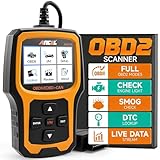
- Understand Your Check Engine Light – The ANCEL AD410 OBD2 scanner helps everyday drivers quickly read and clear engine-related fault codes, view code definitions, and understand why the check engine light is on before visiting a repair shop. With 42,000+ built-in DTC lookups, this car code reader helps reduce guesswork and makes basic vehicle diagnostics easier for beginners and DIY users
- Full OBD2 Diagnostics Made Simple – More than a basic engine code reader, this OBD2 scanner diagnostic tool supports key OBDII functions including reading/clearing codes, live data, freeze frame, I/M readiness, O2 sensor test, EVAP test, vehicle information, and MIL status. It helps you check your car’s condition, verify repairs after the issue is fixed, and communicate with mechanics more confidently
- Live Date & Real-time Vehicle Insights – View real-time engine data such as RPM, coolant temperature, fuel trim, oxygen sensor readings, and other available OBD2 parameters directly on the screen. These live data readings help you better understand how your vehicle is running, spot abnormal patterns, and make more informed repair decisions instead of relying only on a warning light
- Smog Check Readiness At A Glance – Use the I/M readiness function before a smog check or emissions inspection to see whether your vehicle’s monitors are ready. This OBD2 code scanner helps you confirm if recent repairs have brought the system back to a ready state, reducing the chance of failed inspections, retests, wasted trips, and unnecessary inspection fees
- Works With Most OBD2 Vehicles – Compatible with most 1996 and newer U.S.-based OBD2 cars, SUVs, and light trucks, as well as many 2000 and newer EU/Asian OBD2 vehicles. Supports major OBDII protocols including CAN, ISO9141, KWP2000, J1850 VPW, and J1850 PWM. This automotive diagnostic scanner is designed for wide vehicle coverage; please check compatibility with your vehicle before purchase
Rarity is not the same as reliability. Check parts availability, body-panel condition, drivetrain service, and the seller’s documentation before paying a collector premium. A VehiCROSS is compelling because it is genuinely unusual, not because every scarce example is automatically valuable.
Best for: Design-focused collectors and enthusiasts who want a capable oddball rather than a practical daily SUV.
The Tool Desk
Outbyte PC Repair FREEClear out junk files and repair common Windows errorsFree Scan →Outbyte Driver Updater FREEScan for outdated or missing drivers - takes under a minuteDriver Scan →The five worst—or least successful—two-door SUV executions
6. Nissan Murano CrossCabriolet: novelty overwhelmed utility
The Nissan Murano CrossCabriolet is the clearest example of a vehicle whose novelty became its main product feature. Sold in the United States beginning with the 2011 model year and phased out after 2014, Nissan marketed it as the world’s first all-wheel-drive crossover convertible. The company’s pricing announcement shows how Nissan positioned the model.
It was not necessarily terrible to drive. Edmunds recorded a 60-to-0-mph braking distance of 124 feet for the 2011 model, which is a specific test result rather than a verdict on every CrossCabriolet. The problem was the overall proposition: a tall crossover body with two large doors, a complex convertible roof, limited cargo utility, difficult packaging, and no meaningful advantage on serious trails over a conventional crossover.
The CrossCabriolet was conspicuous and expensive for what it did. It also asked buyers to accept the compromises of a convertible without offering the compactness of a sports car, the utility of a normal Murano, or the off-road purpose of a Wrangler. That makes it a poor concept for this list, though its oddity now gives it genuine future-collectible appeal.
Best defense: It is comfortable, distinctive, and unlike almost anything else on the road. Its failure is one of market logic and packaging, not proof that every example is undriveable.
7. Suzuki X-90: the most confused vehicle here
The Suzuki X-90 tried to create a new segment by combining SUV styling, two-seat sports-car seating, removable roof panels, and a small cargo area. Car and Driver’s 1996 road test described the attempt as a segment that failed and highlighted the vehicle’s contradictory mission. The period review remains useful because its criticism is about packaging rather than simply appearance.
The X-90 gave up the Samurai’s utility while retaining many of its compromises. Its two-seat layout made it a poor SUV, while its tall body, modest performance, and truck-like dynamics made it a questionable sports car. The T-top roof was a memorable feature, but it did not solve the basic question of what the vehicle was for.
That does not make the X-90 worthless. Its unusual shape and low survival rate give it recognizable future-collector appeal. But scarcity should not obscure its original weakness: the body style sacrificed practical space without delivering a compelling alternative.
Best defense: It is an important example of 1990s market experimentation and a conversation starter that no modern crossover has really replaced.
8. Range Rover Evoque Convertible: polished, capable, and unnecessary
The 2017 Range Rover Evoque Convertible was more carefully executed than the Murano and more defensible as an SUV. It was a two-door, four-seat luxury crossover convertible with all-wheel drive and Land Rover off-road systems. U.S. pricing began at approximately $51,470 including destination, with the upper HSE Dynamic version listed at approximately $58,270. Pricing references include Edmunds and MotorTrend.
Its problem was not an absence of capability. It was the price and the compromises. The convertible structure added weight, the luggage area was limited, and the vehicle offered less practicality than the fixed-roof Evoque Coupe while costing more. Land Rover’s off-road systems made the concept more coherent than the Murano, but most owners were paying for open-air luxury rather than using the short body to tackle serious terrain.
The fixed-roof Evoque Coupe had a clearer purpose and should not be judged exactly the same way. The Convertible belongs near the bottom because it was an expensive solution to a narrow lifestyle demand, not because it was an irredeemable engineering failure.
Best defense: It was stylish, genuinely capable by crossover standards, and substantially more polished than the other luxury convertible SUVs in this group.
9. Kia Sportage Convertible: marginal open-top utility
The first-generation Kia Sportage was available in convertible form in some global markets. It is not a normal U.S. used-car recommendation, and American readers should not assume that a readily supportable supply exists. MotorTrend places the model near the bottom of its broader convertible-SUV ranking and notes that it followed the earlier Suzuki and Isuzu formula; see its convertible SUV overview.
The concept was more coherent than the Murano’s because the Sportage was smaller and more trail-oriented. Nevertheless, it sacrificed weather protection, cargo usefulness, and everyday practicality without gaining the mechanical credibility of a Wrangler or the simple compactness of a Samurai. It is historically interesting precisely because manufacturers kept returning to this same compromise: take a small utility vehicle, remove part of its roof, and hope style creates a new market.
Best defense: In the right market and condition, it can be a charming, inexpensive open-top utility vehicle. Its rarity and import or registration complications make it a poor general recommendation for U.S. shoppers.
Rank #4
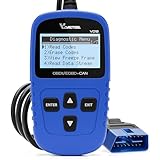
- 【A MUST-HAVE SCANNER TOOL FOR DIYERS】 - VDIAGTOOL VD10 car code reader is an incredibly useful, handheld obd2 scanner for each car owner or hobbyist, even for those with little to no experience when it comes to vehicle mechanics! Similar to a fixd car diagnostic tool, using this car diagnostic scanner is extremely easy. All you have to do is attach it to your car OBDII port and you can diagnose car problems in seconds! Read Codes (DTCs); Clear Codes; Live Data; View Freeze Frame; I/M Readiness; Vehicle Information.
- 【KEEP ENGINE IN GOOD STATUS】 - VDIAGTOOL check engine code reader brings a fast access to scan, read the car fault code, show its definition on the screen instantly, troubleshooting to find the root causes of problems, erase the engine fault code and turn off the MIL (Malfunction Indicator Light). Similar to a fixd car diagnostic tool, this car code reader helps ensure your engine stays in top condition.
- 【READ/CLEAR CODES & DTC LOOKUP】- No search online & saving your time, this vehicle car code reader retrieves generic (P0, P2, P3, and U0), manufacturer specific (P1, P3, and U1) codes, pending codes and displays DTC definitions based on the built-in database(more than 3000 codes) on the TFT screen, find out the root causes and clear the codes after fixed.
- 【ENHANCED OBD2 SCANNER WITH LIVE DATA & RETRIEVE FREEZE FRAME】 - This diagnostic scan tool for accurate diagnosis enables you to retrieve data from vehicle sensors, such as Engine RPM, Intake air temperature, Short/Long term fuel, Misfire data and etc. The freeze frame is stored in the PCM together with the diagnostic trouble code (DTC) related to the fault. Comparable to a fixd car diagnostic tool, the VD10 car code reader car scanner can be a valuable & practical diagnostic aid and also greatly help when diagnosing intermittent problems.
- 【I/M READINESS for THE S-nn-0-g CHECK】- OBDII vehicle may not pass the annual inspection unless the required monitors since reset are complete. So you should at least read the readiness monitors and make sure they are ready. This car obd2 scanner diagnostic tool is equipped with I/M readiness function to check the operations of the e-m-issi0n system on OBD2 compliant vehicles, run I/M monitor readiness test, checking if the pass vehicle s-m-0-g inspection.
10. Volkswagen T-Roc Cabriolet: a lifestyle convertible wearing SUV clothing
The Volkswagen T-Roc Cabriolet is another global-market vehicle, not a U.S.-market option. MotorTrend includes it among the lowest-ranked convertible SUVs, and that placement makes sense for this particular list. Its primary appeal is styling and open-air road driving rather than low-range off-road work or serious utility.
Do these 3 things before closing this tab:
1Clear out junk files and repair common Windows errors2Fix the driver behind crashes, sound loss and screen glitches3Repair Windows errors before they cause bigger problemsIt is not “worst” because it is undriveable. A road-going convertible can be pleasant precisely because it is lighter-duty and more polished than a Wrangler. It ranks here because the SUV label stretches the category: its body style, drivetrain, and intended use are closer to a raised convertible crossover than a two-door sport-utility vehicle.
Best defense: If the buyer wants a comfortable open-air car with a raised driving position, it may make more sense than several rugged vehicles above. It simply does not answer the same question as an FJ40, Samurai, Bronco, or Wrangler.
Why did two-door SUVs disappear?
The simple explanation is that buyers wanted practicality, but that is only part of the story. A two-door SUV became harder to justify as SUVs changed from recreational and utility vehicles into primary family transportation.
- Rear-seat access: Parents do not want to lean through a front door to install a child seat or help a child climb into the back.
- Safety expectations: Modern buyers expect usable rear restraints, easier loading, better side-impact engineering, and contemporary driver-assistance features.
- Family cargo: Strollers, sports equipment, groceries, pets, and luggage are easier to load when the rear doors and cargo area are larger.
- Fleet economics: Rental fleets, commercial buyers, and mainstream dealers generally prefer the wider customer base of a four-door model.
- Platform efficiency: Once a manufacturer has engineered a four-door SUV, the additional body length can serve more customers with relatively little added complexity.
- Changed expectations: Many owners now use SUVs as all-weather family cars instead of weekend trail tools.
That shift did not make two-door SUVs technically pointless. It made them commercially narrow. The Wrangler and Bronco survive because their removable body panels and short-wheelbase capability are central to their identities. Most other manufacturers found that a four-door crossover produced a much easier vehicle to sell and live with.
What’s actually slowing this PC down?
Pick the symptom - the matching free tool is one click away.
What does a shorter wheelbase actually improve?
Breakover angle is the angle a vehicle can crest without the center of its underside contacting the ground. A shorter wheelbase generally allows the front and rear tires to be closer to the crest at the same time, reducing the length of chassis that must pass over the obstacle. That is why short-wheelbase vehicles can climb over a sharp ridge where a longer SUV may high-center.
A shorter body also improves:
- Trail maneuverability: Less length to swing around trees, rocks, switchbacks, and narrow ledges.
- Turning convenience: A compact footprint is easier to place on tight trails and in small parking spaces, although steering geometry and tire size still affect turning radius.
- Body clearance: Shorter overhangs can reduce the chance of dragging the body at the ends of a steep approach or departure.
- Weight: A shorter vehicle may weigh less, improving flotation and reducing the load on brakes, suspension, and drivetrain. This is not automatic; equipment and structure can erase the advantage.
- Open-air usability: On a purpose-built vehicle such as a Wrangler or Bronco, fewer doors and a shorter roof make removal and storage more manageable.
Short is not synonymous with capable. Tire size, ground clearance, approach and departure angles, traction systems, suspension travel, axle articulation, gearing, underbody protection, and driver skill may matter more than wheelbase on a particular trail. A short crossover with poor tires and no low range is not automatically more capable than a longer, properly equipped 4×4.
What does the shorter body make worse?
The same dimensions that help on a trail hurt in daily use:
- Rear-seat entry: Front seats must fold or slide forward, and loading passengers in a tight parking space is awkward.
- Child-seat installation: Reaching the rear mounting points through a large front door is less convenient and can be difficult with adjacent vehicles parked close by.
- Rear-seat comfort: Shorter cabins usually mean less legroom, shoulder room, ventilation, and usable recline.
- Cargo volume: There is less room behind the second row and often less useful length with the seats folded.
- Door size: Two-door SUVs need large front doors to provide access to the rear. Those doors can be heavy and inconvenient in narrow spaces.
- Passenger loading: Families, older passengers, and people with mobility limitations generally benefit from four conventional side doors.
- Ride and refinement: Older short-wheelbase vehicles can pitch more over uneven pavement and feel less settled at highway speeds.
The 2026 Bronco illustrates the trade-off clearly. Its two-door model provides 35.7 inches of second-row legroom and 20.6 cubic feet of cargo space behind the rear seats. The four-door Bronco provides 36.3 inches of rear legroom and approximately 33.3 to 38.3 cubic feet behind the second row, depending on configuration. The four-door is not simply longer for appearance; it provides materially easier passenger and cargo duty.
Are two-door SUVs safer?
There is no universal two-door-versus-four-door safety answer. Safety depends on the exact generation, body structure, restraints, roof design, tires, electronic systems, and crash-test protocol. A modern two-door can be safer than an old four-door, while a current four-door rating cannot automatically be assigned to a two-door derivative.
Two-door SUVs may have a shorter rear compartment, a high center of gravity, fewer modern driver-assistance features, or less complete testing than the corresponding four-door model. Older vehicles such as the FJ40 and Samurai were designed before current crash standards and should not be treated as equivalent to a 2026 vehicle because they have four-wheel drive.
The 2026 Wrangler demonstrates why body-style precision matters. IIHS has a dedicated Wrangler 2-Door rating page, separate from the four-door page. The two-door page lists marginal or poor headlight performance depending on equipment and says pedestrian front-crash prevention is unavailable. Those are specific observations about the tested vehicle and available equipment, not a blanket claim that every Wrangler is unsafe.
Before buying any two-door SUV, check the exact model year and body style in IIHS and NHTSA databases, confirm the equipment installed on the vehicle, and inspect child-seat access in person. Do not rely on a four-door review or a rating from a different generation.
Free tools Windows power users keep installed
One-click scans. No signup required.
Which current two-door SUV is best for daily driving?
Ford Bronco 2-Door is the best modern compromise for most daily drivers. It offers real removable-door and roof capability, more useful cargo capacity than the Wrangler, and more composed pavement behavior in independent comparison testing. It is still noisy and wide, but it asks fewer daily-use sacrifices.
Jeep Wrangler 2-Door is the better choice for buyers who prioritize open-air driving, serious low-speed off-roading, aftermarket support, and Jeep tradition. Its poorer road manners and 2,000-pound tow limit are meaningful trade-offs.
Land Rover Defender 90 is the luxury and power choice, not the rational value choice. It offers a more refined cabin and substantial capability, but its short rear compartment, high purchase price, and potential maintenance costs make it a specialized purchase.
Older two-door SUVs are generally enthusiast vehicles rather than sensible daily transportation. A carefully maintained Samurai or FJ40 can be rewarding, but age, crash protection, weather sealing, parts, and highway performance should be part of the decision.
Best Value

- 【Diagnose Check Engine Light in Seconds – No Mechanic Needed】The FOXWELL NT301 OBD2 scanner instantly reads & clears engine fault codes (DTCs) with one click. Simply plug into the 16-pin DLC port, turn ignition on, and get accurate results within seconds—No prior car knowledge required. Save hundreds on dealership fees by knowing exactly what’s wrong before you visit a shop. The #1 choice car scanner for DIYers and car owners who want to take control of their vehicle’s health
- 【Clear & Reset CEL with Confidence】Unlike cheap code readers that just erase codes temporarily, NT301 works like all professional vehicle code readers: It clears the check engine light only after you’ve fixed the underlying issue. If the problem isn’t fully repaired, the fault code will reappear. So you’ll never get a false pass. Use the foxwell scanner to verify your repair work and drive with peace of mind
- 【Sm-og Check Helper – Know Your Pass/Fail Status Before the Test】With dedicated one-click I/M readiness hotkeys and a simple Red-Yellow-Green LED indicator, you’ll instantly know if your vehicle is ready for annual testing. Built-in speaker provides clear audio feedback. No guesswork—just confidence before you head to the test center. One less thing to worry about when inspection day comes
- 【Advanced OBDII Modes – O- 2 Sensor & EVAP Testing】NT301 go beyond basic code reading with enhanced OBD2 modes. Run an EVAP system check to assess fuel tank condition, and use the O- 2 sensor test to optimize air-fuel ratio, boosting fuel economy, cutting em- issions, and saving you money at the pump. The code reader for cars and trucks is like having a mini em-issions lab in your glove box
- 【Live Data Graphing – Spot Engine Issues in Real Time】View and log live sensor data in easy-to-read graphs with this OBD2 scanner diagnostic tool. Monitor ox- ygen sensors, fuel trims, coolant temperature, RPM, and more to spot suspicious values instantly. This obd scanner gives you professional-grade insight without the pro price tag—a feature you won’t find on basic $20 car code readers
Which current two-door SUV is the best value?
| Model | Strongest value argument | Biggest value problem |
|---|---|---|
| Jeep Wrangler 2-Door | Lowest listed entry price, proven trail formula, and enormous aftermarket. | Limited cargo and rear-seat usability, poorer pavement behavior, and a 2,000-pound tow limit. |
| Ford Bronco 2-Door | More cargo space, better road manners, and a 3,500-pound tow limit when properly equipped. | Higher starting price and rapidly increasing cost with off-road and powertrain options. |
| Land Rover Defender 90 | Luxury, power, refinement, and premium off-road hardware. | Pricing and powertrain information is inconsistent, and ownership is unlikely to be inexpensive. |
The clearest value answer is the base Wrangler Sport, with Jeep listing a 2026 starting MSRP of $36,035 on its specifications page. The base Bronco is listed at $40,795 on Ford’s 2026 configurator, but the Bronco’s additional cargo capacity and stronger towing ability may justify the difference for a buyer who drives on pavement frequently.
The 2026 Land Rover Defender 90 price problem
The Defender 90 requires an explicit qualification. Land Rover’s current U.S. model page lists a Defender 90 S starting at $61,000, while automotive reporting that quotes Land Rover says the 2026 U.S.-market Defender 90 is V8-only and starts at $116,250. The two sources conflict, suggesting that the official page may contain stale model or configuration information, or that the market transition was not reflected consistently across pages.
Use the official Defender 90 specifications page and the reported 2026 V8-only information as starting points, then confirm the live configurator, VIN-specific inventory, and dealer order guide before publication or purchase. Until that conflict is resolved, the Defender 90 cannot honestly be called a value choice.
The Defender uses an all-wheel-drive system with a twin-speed transfer box, so it should not be casually described as having the same traditional 4×4 system as a Wrangler or Bronco. Use each manufacturer’s terminology when comparing drivetrains; Land Rover’s capability information is on its Defender 90 page.
The Tool Desk
Outbyte Driver Updater FREEFix the driver behind crashes, sound loss and screen glitchesFind Drivers →Outbyte PC Repair FREERepair Windows errors before they cause bigger problemsFix Now →Used two-door SUV buying guide
Condition matters more than the badge. A cheap two-door SUV can become expensive quickly when rust, modifications, missing trim, and neglected drivetrain service are combined. Use this inspection sequence before buying.
1. Inspect the structure before the cosmetics
- Check the frame, body mounts, floor pans, rocker panels, inner fenders, and suspension mounting points for corrosion.
- Look behind undercoating, fresh paint, carpeting, and skid plates. Rust hidden by cosmetic work is still structural rust.
- Inspect door gaps, roof seams, windshield pillars, and the underside for evidence of rollover or collision repair.
- On convertibles and removable-roof vehicles, check whether the body has sagged or the doors have become difficult to align.
2. Treat modifications as engineering changes
Lift kits, oversized tires, lockers, bumpers, winches, wheel spacers, and engine swaps can improve a trail vehicle, but they also increase stress and may create legal or insurance complications. Look for poor welding, cracked brackets, uneven tire wear, steering wander, driveshaft vibration, brake-line extensions that bind, and suspension geometry that was never corrected after the lift.
A vehicle advertised as a former off-road build deserves more scrutiny, not less. Signs of a rollover, hard impact, deep-water use, or repeated overheating may be hidden under new body panels or a new paint job.
3. Test the four-wheel-drive system
- Engage every available 4×4 range and verify that the indicator lights, hubs, transfer case, and differential controls work.
- Listen for clunks, whining, grinding, and vibration under acceleration and coast.
- Check transfer-case, differential, axle, transmission, and engine-fluid service history.
- Inspect recovery points and underbody protection for bent or cracked hardware.
Do not confuse a vehicle that can select four-wheel drive with one whose low range, traction systems, and axle hardware are actually operating correctly.
Windows Errors? Fix Them Before They Spread
Repair common Windows errors and clear accumulated junk for a smoother, more stable PC - no reinstall needed.Free scan · no reinstallOutdated Drivers Are Slowing You Down
One free scan finds every outdated or missing driver and matches the right update for your exact hardware.Free scan · exact hardware match4. Check cooling, braking, and steering
Older classics and modified 4x4s need careful attention to overheating, radiator condition, fan operation, hoses, brake lines, steering boxes, tie rods, wheel bearings, and suspension bushings. A road test should include cold start, highway speed, firm braking, low-speed steering, and a hill or rough surface where legally and safely possible.
5. Test every roof, door, and seal
Water leaks can damage floors, wiring, seats, and carpets long after the vehicle appears dry. Operate removable roof panels, soft tops, convertible mechanisms, door hinges, latches, windows, and tailgates. Replacement hardware for a common Wrangler may be straightforward; trim and body-panel sourcing for a VehiCROSS, X-90, or rare global-market convertible can be much harder.
6. Verify ownership legality
- Run the VIN and check open recalls, title history, odometer records, and theft records.
- Confirm emissions compliance and registration requirements in the buyer’s state.
- Ask an insurer whether the modified or imported vehicle can be covered at an acceptable rate.
- Confirm that replacement parts are available before buying a rare model.
- For a restored vehicle, demand photographs and receipts showing frame, drivetrain, wiring, and structural work—not just a description that says restored.
On a classic FJ40 or Samurai, documentation can be worth more than fresh paint. On a low-volume VehiCROSS, X-90, or global convertible, parts and trim availability may determine whether an otherwise good vehicle can remain on the road.
Honorable mentions and exclusions
The two-door SUV field is too broad for ten entries to be exhaustive. These models deserve consideration but did not make the final ranking:
Recommended Free Tools
- Toyota RAV4 2-Door and Convertible: important compact crossover pioneers, but generally more road-oriented and less mechanically focused than the top five.
- Isuzu Amigo and Rodeo Sport: useful compact two-door SUVs with a clearer mission than the X-90, though not as influential or distinctive.
- Chevrolet S-10 Blazer and GMC Jimmy: important U.S. two-door utility vehicles, but their age, packaging, and broad model history make them difficult to rank as a single entry.
- Ford Explorer Sport and Mazda Navajo: influential 1990s two-door derivatives that helped define the recreational SUV boom.
- Suzuki Vitara and Geo Tracker: compact, affordable open-air 4x4s closely related in spirit to the Samurai.
- Isuzu Trooper RS: a rare short-body off-roader with more utility than the VehiCROSS.
- GMC Typhoon: a fast and memorable performance SUV, but its appeal is acceleration rather than the short-wheelbase/open-air formula.
- Land Rover Freelander SE3: an unusual limited-roof compact Land Rover that belongs in the broader convertible-SUV conversation.
- Second-generation Toyota 4Runner: a highly respected two-door SUV in some configurations, but its body and trim history are complicated enough that it deserves a separate model-specific ranking.
Broader historical catalogs from Jalopnik and MotorTrend show how many incompatible categories are often mixed together: body-on-frame 4x4s, compact unibody crossovers, luxury convertibles, global-market vehicles, concepts, and SUVs with rear-hinged auxiliary doors. They are useful references, but they should not be treated as a single apples-to-apples ranking.
Final verdict
The Jeep Wrangler/CJ earns first place because it makes the strongest case for the two-door SUV as a category. The Bronco 2-Door is the better modern compromise for many drivers, the FJ40 is the historical durability icon, the Samurai is the most effective small off-roader, and the VehiCROSS is the most compelling cult classic.
The Murano CrossCabriolet, X-90, Evoque Convertible, Sportage Convertible, and T-Roc Cabriolet are not all bad vehicles. Their common weakness is that the missing doors or roof often cost more utility than they returned in capability, space, or driving purpose. The two-door SUV is not dead in America, but it has become a niche format that survives when its compromises are the point—not when novelty is the only reason to accept them.
Frequently Asked Questions
Which two-door SUV is best for everyday driving?
The Ford Bronco 2-Door is the best modern compromise because it combines removable doors and roof panels with more cargo space and better pavement behavior than the Wrangler. The Wrangler is preferable when open-air driving, aftermarket support, and serious trail use matter more than refinement.
How many new two-door SUVs are sold in the U.S. in 2026?
As of August 10, 2026, the U.S. market effectively has three mainstream two-door SUV model lines: the Jeep Wrangler 2-Door, Ford Bronco 2-Door, and Land Rover Defender 90. Confirm current availability through manufacturer configurators because model-year inventories and body styles can change.
Does the Toyota FJ Cruiser count as a two-door SUV?
Usually not under a strict passenger-door definition. The FJ Cruiser has rear-hinged auxiliary passenger doors in addition to its primary doors. This article counts vehicles with two conventional passenger-side doors and treats the rear hatch or tailgate as cargo access.
Is a two-door SUV practical for a family?
It can be, but it is usually less practical than the equivalent four-door model. Rear-seat access, child-seat installation, passenger loading, rear-seat comfort, and cargo capacity are all compromised. A two-door SUV makes the most sense when its short wheelbase and open-air capability are important enough to justify those trade-offs.
The Bottom Line
Bottom line: Choose the Wrangler if the trail and open air come first, the Bronco if you want the best modern compromise, and the Defender 90 if luxury matters more than value. Buy an FJ40, Samurai, or VehiCROSS for character and history, not because an old SUV is automatically cheap or dependable. The best two-door SUVs have a purpose for being short; the worst ones merely have fewer doors.
Quick wins for a faster PC:
Repair Windows errors before they cause bigger problemsFix Now →Fix the driver behind crashes, sound loss and screen glitchesFind Drivers →Clear out junk files and repair common Windows errorsFree Scan →Quick Recap
Product prices and availability are accurate as of the date/time indicated and are subject to change. Any price and availability information displayed on Amazon at the time of purchase will apply.