Recommended Free Tools
Traction control limits wheelspin; stability control helps keep the vehicle moving along the direction you steer. They solve different problems, but commonly share sensors and braking hardware and can work together. Neither can create tire grip or make an unsafe speed safe.
How are traction control and stability control different?
| What to compare | Traction control (TCS) | Electronic stability control (ESC) |
|---|---|---|
| Main problem | Driven wheels spinning because engine torque exceeds the grip available, often during acceleration. | The vehicle’s actual movement diverging from the direction the driver is steering. |
| What it monitors | Wheel speeds to identify slip. | Wheel speeds plus vehicle-motion and driver-input information, such as steering angle, yaw rate and lateral acceleration. |
| Typical response | Reduce engine output and/or brake a spinning wheel. | Brake selected wheels and, on some vehicles, reduce engine throttle or torque. |
| Scope | A focused function for managing driven-wheel spin. | A broader directional-control function that can build on or include traction-control capabilities. |
These descriptions explain each system’s primary job, not two wholly separate devices. TCS uses wheel-speed sensors associated with anti-lock braking systems (ABS); ESC builds on ABS and traction-control capabilities with additional information about steering input and vehicle motion. The precise equipment and intervention vary by vehicle. NHTSA describes TCS as intended to prevent wheel slippage from excess torque in its technical report on light-vehicle crash-prevention technologies. Transport Canada also explains how traction control uses wheel-speed sensing and braking and/or engine-power reduction.
What does traction control do?
When a driven wheel spins faster than the system expects relative to the other wheels or the vehicle’s motion, TCS can intervene to limit the spin. Depending on the design, it may reduce engine output, apply brake force to the spinning wheel, or use both approaches. The aim is to help manage acceleration when grip is limited—not to increase the grip the tires and road can provide.
Wheelspin is most likely to matter when accelerating on a slippery surface, but the system’s operation depends on the vehicle. TCS is not a substitute for choosing a suitable speed, maintaining appropriate tires, or driving with care.
#1 Best Overall
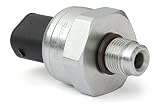
- replacement of failed pressure sensor restores proper stability control system operation
- direct-fit oe replacement design for easy installation
- easy plug-and-play wiring connection
- manufactured using high-quality polymer and corrosion-resistant metal materials to withstand vehicle heat
- Fit type: Vehicle Specific
What does stability control do?
ESC looks at whether the vehicle is responding to the driver’s steering input as intended. It uses wheel-speed information along with signals that can include steering angle, yaw rate and lateral acceleration. If those inputs indicate that the vehicle is beginning to depart from the intended path, ESC can brake one or more selected wheels and may reduce engine torque to help the driver retain directional control. NHTSA outlines these inputs and interventions in its technical description of electronic stability control.
That assistance is not autonomous steering, and it does not guarantee that the vehicle will avoid a skid or stay on the road. NHTSA puts the limit plainly: “ESC cannot keep your vehicle on the road if the vehicle’s speed is simply too great for the conditions.” Read its consumer guidance on safety features that support safe driving.
Rank #2

- [Vehicle Fitment]: Compatible with BMW 323Ci/323i/328Ci/328i 2000, 323i/328i 1999 (Sedan), 325Ci/330Ci/M3 2001-2006, 325i/330i 2001-2005, 525i/530i/545i/645Ci 2004 (For cars with aive cruise control), 525i/530i 2005-2006 (For cars with aive cruise control; through 8/2005), 545i/645Ci 2005 (For cars with aive cruise control; through 8/2005), Z3 1997-1998 2.8L, Z3 1998 2.8L (Roadster Model), Z3 1999-2000 (Coupe & Roadster Model), Z3 2001-2002, Z4 2003-2005 --- It fits for Dynamic Stability Control
- [Reference Number]: 5S16159, 34521164458, V20720301
- [Specifications]: ① Terminal Quantity: 3 Pins ② Terminal Type: Blade ③ Terminal Gender: Male ④ Color/Finish: Black ⑤ Connector Gender: Female
- [Benefits]: Manufactured to exacting OEM specifications. Made from high performance materials to ensure consistent performance. Fast response and precise testing for stable engine operation
- [Buy with Confidence]: A-Premium offers a one-year unlimited-mileage guarantee on our meticulously crafted Pressure Sensor. We offer a wide variety of automotive accessory categories, ensuring that you can hit the road with peace of mind
When might each system intervene?
Driven wheels lose grip during acceleration
If a driven wheel spins as you accelerate, TCS may reduce engine output or brake that wheel. The purpose is to manage wheelspin, not to make aggressive acceleration safe on a low-grip surface.
The vehicle does not follow the steered path
If the vehicle begins to turn more or less than the steering input indicates—for example, in a developing oversteer or understeer situation—ESC may brake selected wheels and possibly reduce engine torque to help correct the vehicle’s movement. It can assist only within the limits of the available grip and conditions.
Rank #3
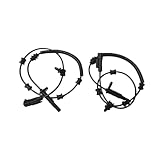
- Package: 2pcs rear left or right ABS wheel speed sensors, replacemet reference OE number: 68262947AB, 68262947AC, 68262947AE, 68262947AF
- Compatible with RAM: 1500 3.0L Diesel Turbocharged 2020-2023 / 1500 3.6L 2019-2025 / 1500 5.7L 2019-2025
- Precision OE Match: Manufactured strictly to original equipment (OE) specifications to ensure a perfect fit with your vehicle. Directly replace damaged or faulty sensors without complex modifications. Simple and quick installation saves you valuable repair time
- Please note that this is an ABS wheel speed sensor, not a speed sensor. Replace it to fix the underlying issue: ABS Light On; Brake Pulsing; No / Erratic Traction or Stability Control; No / Erratic ABS Operation; Braking Without Pedal Contact. Some vehicles may use the same part for both a Speed Sensor and an ABS Wheel Speed Sensor, while others may use two different parts
- PLB020 is a rear ABS wheel speed sensors set - o series. It is a choice for standard replacement. The recommended lifespan for this series: 3 years or 80,000 miles
The systems can cooperate: wheelspin control is one part of managing how a vehicle moves, while ESC addresses the broader question of directional stability. Their presence does not mean every loss-of-control situation can be corrected.
Independent reader supportYour contribution helps us test, update, and keep practical guides available for everyone.Do the names and controls vary by vehicle?
Yes. Automakers may use labels such as ESC, ESP, DSC or VSA, among other branded names. The label, dashboard indicator and available controls are vehicle-specific; the names do not establish that two models use identical algorithms or hardware. Check the owner’s manual to learn what a particular vehicle’s control does and when its manufacturer says to change a setting. Do not assume that disabling traction control is appropriate for ordinary slippery-road driving.
Rank #4

- anti-lock brake system (abs) sensors monitor wheel speed
- glass reinforced plastic for superior resistance to contamination
- includes all necessary brackets and hardware
- application specific harness length
- causes for replacement: abs/brake lamp illumination - no/erratic abs, traction control or stability control operation
A warning light also cannot be diagnosed from the system name alone. Its meaning and the correct response depend on the vehicle, so consult the owner’s manual and follow its guidance.
What these systems cannot do—and why tires matter
TCS and ESC work with the grip available at the tire-road contact; they cannot manufacture extra traction. ESC may help correct some developing directional-control problems, but excessive speed for the conditions can still take a vehicle beyond its limits. All-wheel drive does not remove those limits or replace stability control.
Quick wins for a faster PC:
Scan for outdated or missing drivers - takes under a minuteDriver Scan →Clear out junk files and repair common Windows errorsFree Scan →Tire condition and inflation pressure affect available grip. Check pressure regularly and use the vehicle-specific values on the tire-information placard or in the owner’s manual, as NHTSA’s TireWise guidance recommends. Electronic intervention cannot make worn, unsuitable or improperly inflated tires perform as if they had more grip.
What the original ESC safety estimate does—and does not—say
In the 2007 final rule establishing FMVSS No. 126, NHTSA estimated ESC’s potential to prevent 71 percent of passenger-car rollovers and 84 percent of SUV rollovers that otherwise would occur in single-vehicle crashes. These are historical, population-level estimates for potential rollover prevention in that specific crash context—not guarantees, predictions of an individual driver’s risk reduction, or a claim about every current vehicle. The figures appear in the 2007 final rule for electronic stability control systems.
Quick Recap
Product prices and availability are accurate as of the date/time indicated and are subject to change. Any price and availability information displayed on Amazon at the time of purchase will apply.