The safest tip for driving through deep water is not to drive through it. Turn around, choose another route, or wait until authorities reopen the road. A view from the driver’s seat cannot reliably show how deep or fast the water is, whether the road beneath it is intact, or whether the level is rising.
What to do when you encounter deep water
- Do not enter floodwater. A shallow-looking or calm surface can hide a strong current, a damaged road, debris, or a sudden change in depth. The National Weather Service warns, “NEVER drive through flooded roadways – you do not know the condition of the road under the water.” National Weather Service: Turn Around Don’t Drown
- Turn around and reroute. NSW Government guidance puts it plainly: “It’s safer to turn around than to drive in floodwater.” NSW Government: Driving in poor conditions Queensland Government’s advice is similarly direct: “If it’s flooded, forget it.” Queensland Government: Road safety during flooding and fire
- Obey closures and barriers. Do not go around a roadblock or proceed because another driver has crossed. Wait until the road is officially reopened; Queensland Government advises waiting until a road reopens after flooding.
- Check conditions before setting out. Check official weather alerts, road conditions, and closure notices for your route. If severe or unpredictable weather develops, change your route or stop somewhere safe. On wet roads that are not flooded, NHTSA advises slowing down and leaving more following distance. NHTSA: Driving in wet weather
Why there is no safe depth rule for floodwater
A visual estimate cannot establish a safe crossing depth. The water may be moving, the road surface may have washed away, and debris or rising water may be hidden from view. NSW Government and the National Weather Service both stress that the depth and condition of a submerged road are difficult to judge.
Published figures are warnings about the force of water, not permission to drive through it. The National Weather Service says 6 inches of fast-moving water can knock over and carry away an adult, 12 inches can carry away a small car, and 18–24 inches can carry away most large SUVs, vans, and trucks. GOV.UK gives different reference figures: around 15 cm of shallow water can knock a person over, and around 60 cm can carry away a vehicle of any size. The figures are not interchangeable measures of a safe limit; they illustrate how dangerous even apparently modest water can be. National Weather Service flood preparedness · GOV.UK flood guidance
Floodwater is not the same as ordinary standing water
Vehicle manuals may contain instructions for limited standing-water situations, but those instructions do not override a closure or make floodwater safe. Moving water, a changing water level, uncertain depth, hidden road damage, and debris all add risks that cannot be resolved by a vehicle’s stated capability.
Quick wins for a faster PC:
Clear out junk files and repair common Windows errorsFree Scan →Scan for outdated or missing drivers - takes under a minuteDriver Scan →#1 Best Overall

- ESSENTIAL EVACUATION SUPPLIES: Designed to help people escape a building and get through the first hours of an emergency.
- FOOD AND WATER: Includes one 400-calorie food bar and one 4.225-ounce water pouch; both have a five-year shelf life.
- EMERGENCY GEAR: Includes a 12-hour emergency lightstick, emergency whistle, dust mask, two nitrile gloves, survival blanket, pocket tissue pack, and safety goggles.
- ONE-PERSON KIT: Provide one for every person in a facility.
- FIVE-YEAR SHELF LIFE.
For example, Ford’s manual warns against flowing or deep water. In the specific standing-water scenario it addresses, it says to check the depth, avoid water higher than the front-tire sidewall, and proceed very slowly without stopping. Those instructions are specific to the manual and vehicle; they are not a general flood-crossing rule. Check the supplied manual for the exact make, model, year, and market, and follow it if it differs from other vehicle information. Ford owner manuals
If water rises around your car
If floodwater rises around the vehicle, the National Weather Service advises abandoning it and moving to higher ground if you can do so safely. The safest way to get out depends on the immediate conditions, so do not assume one exit maneuver will work in every situation. Follow emergency-services instructions. In the UK, GOV.UK says to call 999 if you are trapped or need emergency help. National Weather Service: Turn Around Don’t Drown · GOV.UK flood guidance
Rank #2
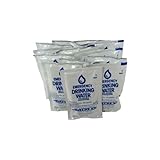
- Emergency purified water for immediate use; lightweight and extremely compact(12)-125 ml sachets
- Loss potential minimized due to individual sachets and ideal for storage
- Easy to dispense from a pre-measured sachet; superior packaging materials for optimum durability in your survival kit
- Such, Canadian Coast guard, EC and NZ approval (nan 8960 0112 4454 3)
- Expiration of 12/2027
What to do after a vehicle has been immersed
Do not assume a car is undamaged because it still runs. Water exposure can affect the engine, electrical systems, brakes, traction, and other controls. Japan’s Ministry of Land, Infrastructure, Transport and Tourism reported on 27 November 2019 that water above the vehicle floor can cause engine or electrical-system problems. It also warned that water pressure can make doors difficult or nearly impossible to open, depending on the degree of immersion, and recommended having an immersed vehicle inspected by a service facility even if it remains operable. The effects vary by vehicle design. Japan Ministry of Land, Infrastructure, Transport and Tourism, 27 November 2019
Once it is safe, follow the exact vehicle manual. Ford’s guidance for the standing-water situation it describes says to check brake operation, the horn, exterior lights, and steering assist as soon as safe. If anything seems abnormal—or the vehicle has been immersed—arrange a professional inspection rather than relying on a brief check.
Quick Recap
Best Value

- The Road Guardian- The portable roadside assistance kit is designed and hand picked by a group of experienced veterans and experts to provide every essential tools you need in roadside emergencies. The automotive safety bag contains accessories such as repair cable ties, bungee cords, electrical tape, space blanket, rain poncho, reflective warning triangle, glass breaker, seatbelt cutter, safety gloves, tow rope and more to get your vehicle back on the road and continue your travel.
- Top-Notch Digital Auto Tire Inflator- lightweight and compact air compressor can inflate your standard vehicles tire in seconds. With auto shutoff function, simply plug it into the 12v power outlet and attach the stem to the tire valve, preset the tire pressure and press the power button. The compressor starts the inflating process and stop once your tire reaches at your preset level. This cool gadget also has led light for winter nighttime and three extra nozzles for inflammable bed, others
- Copper-Clad Aluminum 12 Feet 8 Gauge Jumper Cable- A durable battery starter cable is a must-have for your trip. Unlike other kits on the market, our jumper cable has reasonable length to get your cars connected. 8 gauge wires and 300 amp output is more than enough to get your standard vehicle started. UL listed heavy-duty battery jumper cables make you physically and environmentally safer and more reliable.
- Completed 108 Pieces First Aid Kit- By having a completed first aid kit, provide you and your family proper basic wound/hygiene treatment before it possibly get worsened during your road trip. Our kit includes alcohol pads, bandages, cotton tips, knuckle bandages, butterfly bandages, wound pad, sting relief pads, gloves, tape, dressing, PBT bandage, CPR mask, tweezer, safety pins, soap wipe, disinfect wipe, adhesive wound pad, triangular bandage, finger bandage.
- Veteran Owned Company 5-Star Customer Support- Everlit is committed into providing the most comprehensive customer service. We proudly offer the exclusive 60-days hassle-free return among all products. We stand behind the quality of our inventory; all original Everlit products are covered with a 1-year satisfaction warranty.
Rank #4

- Prepare Now for the El Nino Storm Season: El Nino pushes storms closer to the U.S. coast, leaving as little as 48 hours to prepare. Backup supplies when weather catches you off guard
- Hand-Assembled in New England: Designed by a disaster professional and assembled by a real person, not a faceless factory. Every kit checked by hand before it ships
- Emergency Lifeline When You're Stuck: For flash floods, closed roads, or power outages when you can't reach a store. Below-average hurricane forecast for El Niño doesn't mean no risk-the storm that hits may arrive faster and closer to home
- Upgraded 2026 Version: Premium lined and insulated rain poncho replaces economy version plus expanded comfort kit for extended emergencies
- Comfort-Focused Emergency Kit: Beyond basic first aid with bandages, bacitracin, lip balm, alcohol wipes, PLUS hand lotion and dental pick
Rank #3

- Compact and light: 62-125 ml sachets of emergency purified water for immediate use; lightweight and extremely compact.
- 5 year shelf life: loss potential minimized due to individual sachets and ideal for storage with a 5 years shelf life
- Easy to use: simple to dispense from a measured sachet; superior packaging materials for optimum durability in your survival kit
- Such, Canadian coast guard, EC and bronze approval (NSN 8960 0112 4454 3)
- EXTRA TIPS: Includes Tips for survival by Marvin B. Lark.
Product prices and availability are accurate as of the date/time indicated and are subject to change. Any price and availability information displayed on Amazon at the time of purchase will apply.