This is what the 2024 Toyota Tacoma i-Force Max looks like without its body: a conventional truck chassis built around two longitudinal frame rails and crossmembers, with the powertrain, suspension, axles, fuel system, cab mounts, bed mounts, and hybrid hardware arranged around that separate structure. The published specifications explain the architecture even when a complete body-off photograph cannot be verified.
The 2024 Tacoma is a body-on-frame truck based on Toyota’s TNGA-F global truck platform. The cab and bed sit on a separate structural chassis, so removing the upper body would leave the recognizable mechanical foundation rather than a single load-bearing passenger-car shell.
As an Amazon Associate I earn from qualifying purchases.
The i-FORCE MAX changes the powertrain packaging, not that underlying identity. Toyota pairs a 2.4-liter turbocharged engine with a 48-horsepower electric motor inside the eight-speed automatic transmission, with a 1.87-kWh nickel-metal-hydride battery supporting the system.
Recommended Free Tools
Key takeaways
- The 2024 Toyota Tacoma uses a separate TNGA-F ladder frame made with high-strength steel, while aluminum is used in parts of the upper body to reduce weight.
- The i-FORCE MAX combines a 2.4-liter turbocharged engine with a 48-horsepower electric motor integrated into the eight-speed automatic transmission.
- Toyota rates most 2024 Tacoma i-FORCE MAX configurations at up to 326 horsepower and 465 pound-feet of torque; the Trailhunter is listed at 323 horsepower in Toyota’s 2024 brochure.
- The i-FORCE MAX battery is a 1.87-kWh nickel-metal-hydride pack; Toyota’s model overview identifies the battery system as 288 volts.
- The exact underside changes with cab and bed length, drivetrain, trim-specific suspension, factory skid protection, and stabilizer-bar-disconnect equipment.
What does the 2024 Toyota Tacoma i-Force Max look like without its body?
This is what the 2024 Toyota Tacoma i-Force Max looks like without its body: a conventional truck chassis built around two longitudinal frame rails and crossmembers, with the powertrain, suspension, axles, fuel system, cab mounts, bed mounts, and hybrid hardware arranged around that separate structure. The published specifications explain the architecture even when a complete body-off photograph cannot be verified.
#1 Best Overall

- 【Upgraded Coating with Litchi Pattern】Tougher & More Durable— Unlike standard painted or smooth-coated plates, our skid plate features an advanced spray coating with a unique litchi (pebbled) texture. This upgrade delivers superior impact resistance, scratch protection, and corrosion defense. The textured surface hides trail wear while providing a firmer, more resilient barrier against rocks and debris.
- 【Precision Fitment for 2024-2025 Toyota Tacoma】 Engineered specifically for 2WD and 4WD gas-powered Tacoma models (2024‑2025). ⚠️ Does NOT fit Hybrid versions – please verify your vehicle’s powertrain before ordering.
- 【Built-in Oil Drain Access】Maintenance Without Removal— No need to take off the whole plate for oil changes. Our guard features a reserved oil drain opening that aligns perfectly with the Tacoma's oil pan, allowing quick, clean access. Save time and hassle during routine service.
- 【Direct Bolt-On Installation】No Cutting or Drilling— Precision‑matched to factory mounting points. Comes with all necessary mounting hardware and clear instructions. With basic hand tools, you can install it in your garage and hit the road in minutes.
- 【Heavy-Duty Steel + Upgraded Coating】Built to Last— The combination of high‑strength structural steel and our exclusive litchi‑pattern coating creates an underguard that resists warping, cracking, and rust. Whether facing winter salt, summer mud, or extreme off‑road conditions, your Tacoma’s engine stays protected.
The important visual answer is that removing the cab, bed, and exterior panels does not remove the truck’s structural foundation. The Tacoma remains recognizable as a pickup underneath because its load-bearing chassis is separate from the upper body. Toyota officially describes the fourth-generation Tacoma as a TNGA-F body-on-frame truck, not a monocoque vehicle.
A caution is necessary when interpreting online images: the supplied research verifies Toyota’s chassis and powertrain descriptions, but it does not verify a primary source showing a complete 2024 Tacoma i-FORCE MAX body removal. Specific brackets, cables, battery locations, or other details should not be identified from a generic illustration or an image that does not clearly show them.
How is the 2024 Tacoma’s body-on-frame construction arranged?
The 2024 Tacoma’s body-on-frame construction separates the upper body from the structural frame. The frame carries the major suspension, drivetrain, axle, and mounting loads, while the cab and bed are attached above it through body and bed mounts.
Crashes, No Sound, or Screen Glitches?
Random freezes, missing sound and display glitches usually trace back to one bad driver. Find and replace yours safely.Free scan · under a minuteWindows Errors? Fix Them Before They Spread
Repair common Windows errors and clear accumulated junk for a smoother, more stable PC - no reinstall needed.Free scan · no reinstallToyota says the Tacoma uses the TNGA-F global truck platform, which is shared with the Tundra, Land Cruiser, and Sequoia. In a body-off view, the most important parts of that architecture would be the two long frame rails running front to rear and the crossmembers tying those rails together.
The frame is not an empty support for the body. It is the mechanical foundation around which the engine, transmission, axles, suspension, fuel system, and body mounting points are packaged. The exact arrangement and visible equipment vary by configuration, so a chassis from one Tacoma should not be treated as a universal diagram for every 2024 model.
How strong is the new Tacoma frame?
Toyota describes the TNGA-F chassis as using high-strength steel with blanking and laser welds throughout the chassis, and Toyota says the frame crossmembers were strengthened to increase durability. Toyota also uses aluminum in the upper body to reduce weight.
Rank #2
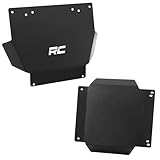
- Off-Road Protection: Heavy-duty skid plate armor helps shield your Tacoma’s undercarriage from rocks, stumps, and trail debris—so you can drive with more confidence off-road.
- 11-Gauge Steel Strength: Built from tough 11-gauge steel to absorb impacts and resist bending, helping protect critical components when you’re crawling, exploring, or daily driving on rough roads.
- Vehicle Specific Fitment: Fits 2024–2026 Toyota Tacoma 2WD/4WD (NON-Hybrid). Designed for stock height up to 3" suspension lift without a differential drop.
- TRD Off-Road Install Note: On TRD Off-Road models, the crossmember between the tow hook frame mounts must be trimmed for proper installation (per fitment requirement).
- Complete Coverage + RC Compatibility: Includes a differential skid plate for added protection and is compatible with Rough Country shackle mounts, making it easy to build a cohesive recovery/protection setup.
That combination creates a useful distinction in a body-off explanation. The exposed lower structure is the steel truck frame and its associated mechanical hardware; the removed cab, bed, and exterior body components include lighter upper-body material. The material descriptions do not establish a frame weight, rigidity percentage, or maximum load that Toyota did not publish in the supplied research.
Quick wins for a faster PC:
Scan for outdated or missing drivers - takes under a minuteDriver Scan →Clear out junk files and repair common Windows errorsFree Scan →Toyota also integrates a high-lift jack point into the rear frame end. That is a design detail associated with the frame itself, rather than a claim that every visible part of an unspecified body-off image has been identified.
What is different under an i-FORCE MAX Tacoma?
The i-FORCE MAX is a longitudinal truck hybrid: Toyota pairs a 2.4-liter turbocharged gasoline engine with a 48-horsepower electric motor integrated into the eight-speed automatic transmission. The hybrid motor is therefore part of the transmission assembly rather than a generic transverse hybrid arrangement used in unrelated Toyota applications.
Toyota lists a 1.87-kWh nickel-metal-hydride battery pack for the system. Toyota’s 2024 Tacoma model overview identifies the battery as a 288-volt NiMH unit. Those specifications explain why the i-FORCE MAX has additional electrical and hybrid-system packaging compared with the gasoline-only i-FORCE configuration, but the supplied research does not verify the battery’s exact visible position in a complete body-off photograph.
The published output figures are substantial for a midsize truck. Toyota rates the i-FORCE MAX at up to 326 horsepower and 465 pound-feet of torque in applicable 2024 configurations. The word “up to” matters: Toyota’s 2024 brochure lists the Trailhunter at 323 horsepower, while other i-FORCE MAX configurations are listed at 326 horsepower.
The Tool Desk
Outbyte PC Repair FREERepair Windows errors before they cause bigger problemsFix Now →Outbyte Driver Updater FREEScan for outdated or missing drivers - takes under a minuteDriver Scan →| i-FORCE MAX specification | Toyota-published figure | What the figure means |
|---|---|---|
| Gasoline engine | 2.4-liter turbocharged engine | The internal-combustion engine paired with the hybrid system |
| Electric motor | 48 horsepower | Motor integrated into the eight-speed automatic transmission |
| System output | Up to 326 horsepower | Applicable configurations; Trailhunter is listed at 323 horsepower |
| System torque | 465 lb-ft | Toyota’s listed i-FORCE MAX torque figure |
| Hybrid battery | 1.87-kWh NiMH; 288 volts in Toyota’s overview | Battery-system specifications, not a verified body-off visual location |
What would a body-off chassis view show?
A genuine body-off presentation would make the Tacoma’s separate structural layout easier to understand than the assembled truck does. The frame rails and crossmembers would form the central skeleton, while the engine and transmission would occupy the front and center portions of the chassis, with suspension, axles, driveshaft-related hardware, fuel-system components, and mounting points arranged around them.
Rank #3

- Fitment: Skid plate compatible with 2024-2025 Toyota Tacoma 2WD & 4WD, Fits Gas Models Only (Does Not Fit Hybrid Models)
- Underbody Protection: Skid plate offers reliable coverage for your engine, shielding critical components from rocks, debris and rough terrain
- Durable Construction: Crafted from high-strength steel for maximum durability and impact resistance. Our guard splash shield is built to withstand harsh environments and extreme conditions without warping or cracking
- Easy Installation: Includes mounting hardware and installation instructions. No drilling or modifications required—just bolt on for a perfect fit
- Built-in Oil Drain Access: Designed with a reserved oil drain access, allowing for quick and hassle-free maintenance without removing the skid plate—saving time and effort during oil changes
The i-FORCE MAX would add hybrid-system packaging to that mechanical foundation without changing the Tacoma’s basic body-on-frame identity. The electric motor is integrated into the eight-speed transmission, and the battery system is part of the hybrid powertrain. The research does not establish which of those components can be seen in a particular image, so component identification should remain conservative unless the image itself provides a clear view and a reliable label.
The body-off view is consequently more useful as an architecture lesson than as a parts scavenger hunt. It shows why the Tacoma remains a truck when the body is removed: the frame, crossmembers, axles, suspension, and powertrain remain as a separate foundation.
Why does the underside differ between 2024 Tacoma models?
The underside differs because the 2024 Tacoma was sold in multiple cab, bed, drivetrain, suspension, and equipment configurations. Toyota’s 2024 Tacoma eBrochure distinguishes two-wheel drive, part-time four-wheel drive, full-time four-wheel drive, different bed lengths, trim-specific suspension equipment, factory skid protection, and stabilizer-bar-disconnect equipment.
Free tools Windows power users keep installed
One-click scans. No signup required.
| Comparison factor | Why it changes the exposed chassis | What not to assume |
|---|---|---|
| i-FORCE versus i-FORCE MAX | The hybrid version adds the electric motor, battery, and associated electrical packaging. | Do not assume a gasoline-only chassis image shows every hybrid component. |
| Cab and bed length | Wheelbase and the proportions of the frame and body mounts change. | Do not use one bed-length layout as the exact layout for every Tacoma. |
| 2WD, part-time 4WD, or full-time 4WD | Driveline and transfer-case hardware can differ beneath the truck. | Do not generalize one drivetrain’s underside to all trims. |
| Trim-specific suspension | TRD Sport, TRD Off-Road, TRD Pro, Limited, and Trailhunter use different equipment. | Do not identify suspension hardware by trim from an unclear photograph. |
| Factory underbody protection | Skid protection can cover different areas, including applicable front, transfer-case, fuel-tank, and rear-differential zones. | Factory protection is not identical across the lineup. |
| Stabilizer-bar disconnect | Applicable off-road versions can have additional or different visible hardware. | Fitment must be checked before ordering replacement or aftermarket protection. |
Where is the Tacoma hybrid battery?
The 2024 Tacoma i-FORCE MAX uses a 1.87-kWh, 288-volt nickel-metal-hydride battery system, but the supplied research does not verify a precise battery location from a complete body-off image. The safe conclusion is that the battery is part of the i-FORCE MAX’s dedicated hybrid packaging, not that an unseen component can be located confidently from a generic chassis view.
That distinction matters because the Tacoma i-FORCE MAX should not be described as using the same packaging layout as Toyota’s unrelated transverse Hybrid MAX vehicles. Toyota’s published description specifically places the Tacoma’s 48-horsepower electric motor inside the eight-speed automatic transmission.
Independent reader supportYour contribution helps us test, update, and keep practical guides available for everyone.Does the 2024 Tacoma have factory skid protection?
Some 2024 Tacoma configurations have factory protection for areas such as the front underside, transfer case, fuel tank, and rear differential, but the equipment depends on grade and configuration. A body-off image may make the unprotected areas of the frame and running gear look especially exposed; that does not mean every Tacoma was delivered with the same protection.
Rank #4

- Fitment: 2024-2025 Toyota Tacoma 2WD 4WD gas (SR, SR5, TRD Sport, TRD Off-Road, Limited). Not for hybrid i-FORCE MAX, including TRD Pro and Trailhunter; not for 2023 and older Tacoma; not confirmed for 2026. Check your model before ordering.
- Heavy Duty Material: Manganese steel panel with a black powder coat finish resists rock chips, road salt and corrosion; a real steel upgrade over the factory plastic splash shield.
- Engine Protection: Shields the engine and oil pan from rocks, mud and debris; the built-in oil drain access lets you change oil without removing the plate.
- Easy Bolt-On Install: Mounts to factory points with no drilling; hardware kit included. Loosen the front air dam if needed and do not over tighten the subframe bolts.
- In the Box: 1 x engine front skid plate and mounting hardware kit; backed by a 12-month warranty; check the panel shape against your truck before ordering.
Owners who regularly drive over rocks, ruts, or other rough terrain can compare a 2024 Tacoma skid plate or a Tacoma i-FORCE MAX underbody-protection kit as an adjacent protection upgrade. An aftermarket plate is not required merely because the truck looks exposed without its body, and protection should be selected only after confirming the hybrid powertrain, automatic transmission, cab and bed configuration, trim, and stabilizer-bar-disconnect fitment. Toyota’s brochure is the appropriate starting point for distinguishing factory equipment, while aftermarket fitment information should be checked separately.
What’s actually slowing this PC down?
Pick the symptom - the matching free tool is one click away.
How should you identify parts in a body-off Tacoma photo?
- Confirm the vehicle. Establish that the chassis is a 2024 Tacoma and not a Tundra, Land Cruiser, Sequoia, earlier Tacoma, or a generic TNGA-F platform image.
- Confirm the powertrain. Look for reliable documentation that the vehicle is an i-FORCE MAX rather than the turbocharged gasoline-only i-FORCE model.
- Separate frame architecture from trim equipment. The frame’s basic rails and crossmembers are platform-level features, while skid plates, suspension parts, axles, and stabilizer equipment can vary.
- Do not infer hidden hybrid hardware. Toyota confirms the electric motor, battery type, voltage, and transmission integration; Toyota’s supplied materials do not verify every component’s appearance or position in an unspecified image.
- Use repair documentation for procedures. Readers planning removal, inspection, or structural repair should consult 2024 Tacoma repair documentation and Toyota’s OEM service-information ecosystem rather than attempting to reproduce a teardown from a photograph.
What does the body-off view tell us about the 2024 Tacoma?
The body-off view reveals the Tacoma’s priorities more clearly than the exterior does: a high-strength-steel TNGA-F ladder frame, reinforced crossmembers, truck-style running gear, and a body mounted above a separate structural foundation. The i-FORCE MAX adds a 2.4-liter turbocharged engine, transmission-integrated electric motor, and NiMH battery system, but the hybrid hardware does not turn the Tacoma into a monocoque vehicle.
Toyota’s official 2024 Tacoma i-FORCE MAX media materials and published specifications support that architectural explanation. They do not, however, prove that a particular online image is a complete body-off teardown or identify every unseen component. The most accurate takeaway is therefore straightforward: underneath the 2024 Toyota Tacoma i-FORCE MAX is a separate, reinforced truck frame carrying a hybrid powertrain whose exact visible packaging depends on the vehicle’s configuration.
Frequently Asked Questions
Where is the 2024 Tacoma i-FORCE MAX hybrid battery?
The 2024 Toyota Tacoma i-FORCE MAX uses a 1.87-kWh nickel-metal-hydride hybrid battery. Toyota’s model overview identifies the battery system as 288 volts, but the supplied research does not verify its precise location in a complete body-off image.
What engine and transmission does the 2024 Tacoma i-FORCE MAX use?
The 2024 Tacoma i-FORCE MAX combines a 2.4-liter turbocharged engine with a 48-horsepower electric motor integrated into the eight-speed automatic transmission. Toyota rates applicable configurations at up to 326 horsepower and 465 pound-feet of torque.
Is the 2024 Toyota Tacoma i-FORCE MAX really body-on-frame?
No. The 2024 Tacoma i-FORCE MAX remains a body-on-frame truck using Toyota’s TNGA-F platform. The hybrid powertrain adds electrical components but does not replace the separate ladder-style frame with a monocoque shell.
The Bottom Line
The 2024 Toyota Tacoma i-FORCE MAX is genuinely body-on-frame. Remove the cab and bed, and the key structure is a reinforced TNGA-F steel chassis with truck running gear underneath; the hybrid version adds a transmission-integrated electric motor and a 1.87-kWh NiMH battery system. Exact underside details vary by trim, drivetrain, bed, suspension, and protection equipment.
Quick Recap
Product prices and availability are accurate as of the date/time indicated and are subject to change. Any price and availability information displayed on Amazon at the time of purchase will apply.




