Crashes, No Sound, or Screen Glitches?
Random freezes, missing sound and display glitches usually trace back to one bad driver. Find and replace yours safely.Free scan · under a minutePC Slower Than It Used to Be?
A free scan shows the junk files, broken settings and background clutter dragging Windows down - then fixes them in one click.Free scan · Windows 10 & 11The Jeep 4.0L inline-six is one of the most durable engines ever installed in a Jeep, but the model year still matters. The basic engine design remained recognizable from 1987 through 2006, while fuel injection, cylinder heads, engine management, emissions equipment, and vehicle electronics changed several times.
For most buyers, the best balance is a 1996–1999 Jeep with the 4.0L High Output engine. The best newer choice is generally a well-maintained 2003–2006 example. The years requiring the most caution are 1987–1990 Renix Jeeps because of their aging electronics and 2000–2001 vehicles because some used the crack-prone 0331 cylinder head.
As an Amazon Associate I earn from qualifying purchases.
Jeep 4.0L engine years at a glance
| Years | Version or major change | Verdict |
|---|---|---|
| 1987–1990 | Renix fuel injection; early 4.0L | Durable engine, but difficult electrical and sensor diagnosis |
| 1991–1995 | High Output 4.0L; Chrysler engine management | Very good older choice |
| 1996–1999 | OBD-II High Output 4.0L | Best overall used range for simplicity and durability |
| 2000–2001 | Later intake and coil-rail ignition; 0331 head introduced | Highest-caution years |
| 2002–2004 | Later 0331 casting and revised electronics | Good if the head is inspected |
| 2005–2006 | Final 4.0L applications | Good newer choice, though vehicle electronics are more complex |
This table applies to the engine family, not every Jeep model in exactly the same way. The 4.0L was used in vehicles including the XJ Cherokee, MJ Comanche, ZJ Grand Cherokee, TJ Wrangler, WJ Grand Cherokee, and some other Jeep applications. Transmission, drivetrain, rust, and electrical condition can matter more than a two-year difference in engine production.
The Tool Desk
Outbyte PC Repair FREERepair Windows errors before they cause bigger problemsFix Now →Outbyte Driver Updater FREEScan for outdated or missing drivers - takes under a minuteDriver Scan →How the Jeep 4.0L changed over time
The 4.0L descended from American Motors’ 258-cubic-inch inline-six. Jeep introduced the fuel-injected 4.0L for the 1987 model year. Its cast-iron block, cast-iron cylinder head, seven-main-bearing crankshaft, and relatively low specific output gave it a large durability margin.
#1 Best Overall
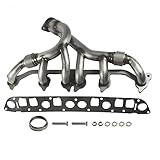
- Pipes Have Been Upgraded To Stainless Steel; Flex Joints & Flange Still Made Of Standard Steel For Natural Thermal Expansion/Contraction
- Package Include: 1 x Exhaust Manifold, all necessary gaskets and downpipe hardware; Included heat shield, Includes flex bellows
- Replace Part Number: 33007072, 4883385, 674-196, 10105812
- Replacement For Jeep Cherokee L6 4.0L 1991-1999; Replacement For Jeep Comanche (MJ) L6 4.0L 1991-1992; Replacement For Jeep Grand Cherokee L6 4.0L 1993-1998; Replacement For Jeep Wrangler L6 4.0L 1997-1999; Replacement For Jeep Wrangler L6 4.0L 1991-1995; Replacement For Jeep TJ L6 4L 1997-1999
- Direct replacement, exact-fit kit replaces the vehicle's factory installed exhaust manifold; Smooth interior of the exhaust manifold; Offers the flow characteristics for the engine at high engine speeds; Soft sound for comfortable driving experience
The engine was never especially light or refined. It can be noisy, it can leak oil, and it produces significant vibration for an inline-six. Those traits do not automatically indicate internal failure. A 4.0L with 200,000 miles can be healthier than a neglected example with half the mileage.
1987–1990: Renix 4.0L
The first fuel-injected 4.0L Jeeps used a Renix engine-management system developed by Renault and Bendix. These engines are mechanically stout, but the control system is the reason these years are usually not the first recommendation for a daily driver.
Renix Jeeps do not use a conventional OBD-II diagnostic system. Troubleshooting often requires checking individual sensors, grounds, wiring, and connector voltage rather than plugging in a modern scan tool and reading a complete fault history. Poor engine grounds, a failing crankshaft-position sensor, a faulty coolant-temperature sensor, vacuum leaks, and degraded wiring can cause hard starting, stalling, poor idle, or rich running.
Quick wins for a faster PC:
Fix the driver behind crashes, sound loss and screen glitchesFind Drivers →Clear out junk files and repair common Windows errorsFree Scan →Scan for outdated or missing drivers - takes under a minuteDriver Scan →The 1987–1990 engines can be excellent candidates for a restoration or simple off-road build if the wiring is intact. They are less attractive when the vehicle already has intermittent electrical problems, hacked wiring, or a missing diagnostic history.
1991–1995: High Output 4.0L
For 1991, Jeep introduced the High Output version. It received revised cylinder-head and intake-manifold hardware, higher-flow fuel-injection components, and Chrysler engine management. Output rose to roughly 190 horsepower in many applications, compared with approximately 177 horsepower for the earlier version.
These engines retain the 4.0L’s simple, durable architecture while avoiding much of the Renix system’s diagnostic frustration. They are among the best choices for buyers who want an older XJ, YJ, or early ZJ without the earliest fuel-injection electronics.
The main disadvantage is age. A 1991–1995 Jeep is now old enough that the condition of the body, unibody rails, fuel system, cooling system, and wiring is often more important than the engine version. A clean 1991 can be a better purchase than a rusted 1999.
Recommended Free Tools
Rank #2

- 【Adaptation Model】Compatible with 1997-2004 4.0L JEEP models with inline 6 motor.1997-2004 Jeep Wrangler,1997-2004 Jeep TJ,1997-2004 Jeep Grand Cherokee,1997-2001 Jeep Cherokee.
- 【Function】Protects injectors & fuel rail from engine heat,Reduces fuel rail and injector heat sink, reduces the chance of vapor lock, and keeps fuel cool.
- 【High Quality】The heat shield is a glass fiber-backed heat barrier with thick aluminum skin,High reliability and durability, tested several times before leaving the factory, meeting or exceeding OEM standards.
- 【Easy Installation】Kit includes everything you need for a complete job,the hook and loop design makes for easy installation.
- 【Perfect Service】Friendly return policy and customer service. If you have any questions, please contact us by email, we will reply you within 24 hours
1996–1999: The best overall 4.0L years
The 1996–1999 High Output Jeeps are the safest general recommendation for a used 4.0L. They combine the improved HO engine with OBD-II diagnostics, conventional distributor-based ignition, and fewer of the later cylinder-head concerns.
The distributor and separate plug wires are not as modern as the later coil-rail system, but they are easy to inspect and inexpensive to service. Misfires can usually be traced to plugs, wires, the coil, injector operation, vacuum leaks, or the crankshaft-position sensor without dealing with a complete coil rail.
These years are especially appealing in the XJ Cherokee and TJ Wrangler. They are old enough to be relatively straightforward but new enough to have better parts availability and easier fault diagnosis than a Renix Jeep.
There are still known service points. Rear-main-seal leaks, valve-cover leaks, oil-filter-adapter leaks, cracked exhaust manifolds, worn motor mounts, cooling-system neglect, and failed crankshaft-position sensors are common age-related problems. None is proof that the basic engine is unreliable.
2000–2001: The years that deserve the most inspection
The 2000 and 2001 model years brought several changes, including a revised intake manifold and coil-rail ignition on many applications. The major concern is the 0331 cylinder head.
Some 0331 heads can crack between the #3 and #4 exhaust-valve areas. When that happens, coolant may enter the oil or combustion chamber. The result can be unexplained coolant loss, milky oil, overheating, a misfire, or a clean-looking spark plug in the affected cylinder. Not every 2000–2001 Jeep develops the problem, and the existence of an 0331 head does not mean the engine is automatically defective.
Before buying one of these vehicles:
- Check the coolant level and look for oil contamination.
- Inspect the oil filler cap and dipstick for abnormal sludge or creamy residue, while remembering that short-trip condensation can create harmless deposits.
- Pressure-test the cooling system when appropriate.
- Perform a compression or leak-down test if there is a persistent misfire or coolant loss.
- Inspect the cylinder-head casting and ask whether the original head was replaced.
A 2000–2001 4.0L with a known-good replacement head can be a sound purchase. A cheap Jeep with unexplained coolant loss is not a bargain until the head and cooling system have been diagnosed.
Rank #3

- [Vehicle Fitment]: Compatible with Jeep Grand Cherokee 1999-2004 L6 4.0L VIN S// Wrangler 2000-2006 L6 4.0L VIN S
- [Kit Parts Included]: 1 X Aluminum Engine Water Pump, 1 X Engine Water Pump Gasket, This Product with 5 Impeller Vane and 6 Mounting Hole
- [Reference Number]: AW7164, 05012366AF, 05012366AG, 05025366AF, 5012366AA, 5012366AB, 5012366AC, 5012366AD
- [Specifications]: ①Housing Material: Aluminum; ②Impeller Vane Quantity: 5; ③Impeller Material: Steel; ④Impeller Rotation: Reverse; ⑤Hub Hole Quantity: Same As Original ⑥Mounting Hole Quantity: 6 ⑦Drive Type: Serpentine Belt
- [Buy with Confidence]: A-Premium offers a one-year unlimited-mileage guarantee on our meticulously crafted engine water pump. We offer a wide variety of automotive accessory categories, ensuring that you can hit the road with peace of mind.
2002–2004: Better later versions, but verify the head
Later 4.0L engines continued using the 0331 design, but revised castings are generally considered less susceptible to the early cracking problem. The casting revision is not a substitute for inspection: maintenance history, overheating, previous repairs, and the exact part installed still matter.
These years can be good choices in the TJ Wrangler and WJ Grand Cherokee. They offer newer interiors, updated safety equipment, and improved vehicle systems compared with many 1990s Jeeps. They also bring more body and electrical components that can be expensive or time-consuming to repair.
The WJ deserves separate consideration. Its 4.0L is durable, but the Grand Cherokee has more electronics, tighter packaging, and more complicated cooling and accessory arrangements than an XJ or TJ. A good engine does not make a neglected WJ a low-cost vehicle.
2005–2006: The final 4.0L years
The last 4.0L Jeeps are attractive because they are the newest examples, not because they represent a radically new engine. By this point, the basic design had been in service for nearly two decades and most common engine-service procedures were well understood.
In a TJ Wrangler, a 2005–2006 4.0L can be a strong choice if the frame is sound and the vehicle has not been heavily modified. The primary buying risks are often frame rust, suspension wear, water leaks, clutch or automatic-transmission condition, and previous off-road damage rather than a fundamental 4.0L design flaw.
Free tools Windows power users keep installed
One-click scans. No signup required.
The downside is that later Jeeps have more integrated electronics and modules. A newer model can therefore be mechanically sound but still costly to repair because of body-control, instrument-cluster, air-conditioning, or wiring problems.
The best Jeep 4.0L years
Best overall: 1996–1999
These are the best all-around years for buyers who want the classic Jeep 4.0L. The HO engine provides useful power, OBD-II makes diagnosis easier, and these vehicles generally avoid the early 0331 head concern.
Rank #4

- [Vehicle Fitment]: Compatible with Jeep TJ 2003/2005-2006 L4 2.4L, TJ/Wrangler 1997-2002 L4 2.5L, TJ 1997-2006 L6 4.0L, Wrangler 2003-2006 L4 2.4L, Wrangler 1987-1995 L4 2.5L, Wrangler 1991-1995/1997-2006 L6 4.0L, Wrangler 1987-1990 L6 4.2L---Automatic Transmission
- [Reference Number]: 1682, 8012101, 52028041, 52028112, 52004781, 52006122, 52006123, 52007228, 52028114AB, 52028123, 52029121, 52029122, 52040229, 52080180AF, 52080181AB, 52080183AF, 52080183AG, 52080184AC, 52006125, 52080180AB, 52080180AE, 55037652AA
- [Specifications]: ① Transmission Oil Cooler Included: Yes; ② Engine Oil Cooler Included: No; ③ Core Height: 18-1/8 inch; ④ Core Thickness: 1-1/4 inch; ⑤ Core Width: 19-3/16 inch; ⑥ Inlet Diameter: 1-1/4 inch; ⑦ Outlet Diameter: 1-1/2 inch
- [Advantage]: A-Premium Radiator is manufactured and tested to the strictest standards for superior performance to restore the vehicle's cooling system performance to optimum operating condition.
- [Buy with Confidence]: A-Premium offers a one-year unlimited-mileage guarantee on our meticulously crafted engine coolant radiator assembly. We offer a wide variety of automotive accessory categories, ensuring that you can hit the road with peace of mind.
They are also old enough to be mechanically accessible. A buyer can replace a distributor, ignition coil, sensors, and many gaskets without the complexity found in newer vehicles. The important qualification is that many 1996–1999 Jeeps have now accumulated significant rust, abuse, or modifications.
Best older choice: 1991–1995
A clean 1991–1995 HO Jeep is a good option when a 1996–1999 vehicle is unavailable or too rusty. The engine-management system is simpler than the later OBD-II setup, but it is much easier to live with than Renix in many cases.
Best newer choice: 2003–2006
For buyers who prioritize newer body structures, equipment, and lower age-related wear, 2003–2006 is a reasonable target. These Jeeps still need a cylinder-head inspection and a thorough pre-purchase check, but they avoid much of the risk associated with the earliest 0331 applications.
The worst Jeep 4.0L years
Most difficult to own: 1987–1990
The early Renix years are not necessarily the least durable internally. They are simply the least convenient to diagnose. A vehicle with corroded grounds, modified wiring, or multiple intermittent sensor faults can consume more repair time than its purchase price suggests.
Highest mechanical caution: 2000–2001
These years deserve the strongest engine-specific warning because of the 0331 cylinder-head cracking issue. The problem affects some engines, not all of them, so the correct approach is inspection rather than an automatic rejection.
Do not confuse this concern with a blanket condemnation of every 2000 or 2001 Jeep. Service records showing a professionally installed updated head can materially change the buying decision.
Common Jeep 4.0L problems that are not automatically catastrophic
| Symptom | Common causes | What to check |
|---|---|---|
| Oil around the back of the engine | Rear main seal, valve cover, oil-filter adapter | Clean the engine and identify the highest wet point |
| Ticking from the exhaust side | Cracked exhaust manifold or exhaust leak | Listen cold and inspect for soot near manifold joints |
| Hard starting or stalling | Crankshaft-position sensor, wiring, grounds, fuel delivery | Scan for codes and test sensor signals rather than guessing |
| Overheating | Radiator, thermostat, fan clutch, water pump, air in system | Verify coolant flow and fan operation |
| Low idle or hesitation | Vacuum leaks, dirty throttle body, sensors, ignition parts | Smoke-test vacuum system and inspect plugs |
| Coolant loss without an obvious leak | Head gasket, cracked 0331 head, internal leak | Cooling-system pressure test and combustion-gas test |
What to inspect before buying any Jeep 4.0L
- Inspect the frame or unibody first. On an XJ, check the unibody rails, suspension-mount areas, floor sections, and windshield areas. On a TJ, inspect the frame thoroughly, especially around the control-arm mounts and skid-plate areas.
- Start the engine cold. A seller can hide smoke, difficult starting, and excessive valvetrain noise by warming the Jeep before you arrive.
- Check the oil and coolant separately. Look for coolant loss, oil contamination, an overfull crankcase, or evidence of repeated overheating.
- Scan for trouble codes. A basic OBD-II scanner works on 1996-and-newer Jeeps. Check both current and pending codes, and review misfire data when the scanner supports it.
- Listen for exhaust leaks. A cracked manifold is common and usually repairable, but broken fasteners can make the job more involved.
- Check oil pressure with a mechanical gauge if pressure is suspect. Do not rely only on the dashboard gauge, which is not a precise diagnostic instrument.
- Test the cooling system. Confirm that the electric fan or mechanical fan operates correctly and that the temperature remains stable during a road test.
- Look for modifications. Poorly installed lifts, engine swaps, forced-induction kits, aggressive tuning, and cut wiring can outweigh any advantage of a preferred model year.
- Verify the cylinder head on 2000–2004 vehicles. Obtain repair records if possible, then use coolant, compression, and leak-down tests when symptoms justify them.
Should you buy a high-mileage Jeep 4.0L?
Yes, provided the inspection is favorable. Mileage alone is not a reliable rejection criterion for this engine. A 4.0L with 180,000 miles and regular oil changes may be a better purchase than one with 110,000 miles that has overheated, spent years modified for off-road use, or has severe rust.
Best Value

- 【Part Number】917-366, 917366, 53010445AB
- 【Fitment】Fit for Jeep Cherokee 1996-2001 L6 4.0L (From 10/04/1995),for Grand Cherokee 1996-2004 L6 4.0L (From 10/04/1995),for TJ 1997-2006 L6 4.0L,for Wrangler 1997-2006 L6 4.0L
- 【Specifications】Dipstick Material: Stainless Steel; Handle Material: Plastic; Dipstick Length: 23.82 inch; Overall Size: 25.2 inch; Fitment Type: Direct Replacement
- 【Package Includes】1*Engine Oil Level Dipstick Indicator 4.0L
- 【About us】After production, our products will be tested and checked again before delivery to avoid quality problems with the products you receive, so that you can have a better use experience
Budget for normal 4.0L ownership: oil leaks, cooling-system parts, sensors, motor mounts, exhaust-manifold repairs, and worn accessory components. The engine’s reputation makes some sellers overprice neglected Jeeps, so compare the condition of the entire vehicle rather than paying a premium simply for the words “bulletproof 4.0.”
FAQ
What is the best year for the Jeep 4.0L engine?
For most used buyers, 1996–1999 is the best overall range. These Jeeps use the High Output engine, have OBD-II diagnostics, and generally avoid the early 0331 cylinder-head concern found in some 2000–2001 vehicles.
Which Jeep 4.0L years should I avoid?
Use extra caution with 2000–2001 vehicles because some have the crack-prone 0331 cylinder head. The 1987–1990 Renix Jeeps can also be difficult to diagnose when their wiring, grounds, or sensors are deteriorated. Neither range should be rejected automatically if the vehicle has strong records and passes an inspection.
Do these 3 things before closing this tab:
1Clear out junk files and repair common Windows errors2Scan for outdated or missing drivers - takes under a minute3Repair Windows errors before they cause bigger problemsIs the 2000 Jeep 4.0L reliable?
It can be reliable, but the cylinder head must be checked. Coolant loss, unexplained misfires, milky oil, overheating, or a clean spark plug on one cylinder can indicate an 0331 head problem.
How long will a Jeep 4.0L engine last?
A properly maintained 4.0L can exceed 200,000 miles, but there is no guaranteed lifespan. Oil-change history, overheating, rust, driving conditions, modifications, and the condition of the cooling system are more useful predictors than mileage alone.
The Bottom Line
For the best balance of durability, diagnostics, and simplicity, look first at a 1996–1999 Jeep 4.0L. Choose a clean 1991–1995 HO model if its body and drivetrain are better, or a 2003–2006 Jeep if you want a newer vehicle and can verify the cylinder-head and cooling-system condition. Treat 1987–1990 Renix Jeeps as specialist purchases and inspect every 2000–2001 4.0L carefully for 0331 head problems.
The best year is still the one with a solid frame or unibody, documented maintenance, no evidence of overheating, and minimal electrical or off-road abuse.
Quick Recap
Product prices and availability are accurate as of the date/time indicated and are subject to change. Any price and availability information displayed on Amazon at the time of purchase will apply.




