Do these 3 things before closing this tab:
1Scan for outdated or missing drivers - takes under a minute2Repair Windows errors before they cause bigger problems3Fix the driver behind crashes, sound loss and screen glitchesThe most historically important classic Japanese cars are not necessarily the fastest, rarest, or most expensive. A defensible top ten is: the Toyota Corolla, Honda Civic, Toyota Land Cruiser, Subaru 360, Datsun 240Z, Mazda MX-5, Lexus LS400, Nissan Skyline GT-R, Mazda RX-7, and Honda NSX.
Together, these cars explain how Japan progressed from postwar kei-car motorization to globally dominant family cars, world-class utility vehicles, affordable sports cars, luxury sedans, rotary-powered performance cars, hybrids, and usable supercars. This is a ranking of historical influence—not a list of the best cars to drive, the most valuable collector cars, or the most popular JDM performance legends.

What makes a Japanese car historically important?
There is no universally correct ranking of important Japanese cars. Importance can mean high production volume, engineering innovation, export success, motorsport achievement, cultural influence, or the creation of an entirely new market. Those measures do not always point to the same car: the Toyota 2000GT was vastly more significant as a symbol than as a mass-market product, while the Corolla changed daily transportation without becoming a poster car.
For this article, a classic Japanese car means a historically significant passenger car, light utility vehicle, or sports car designed and produced by a Japanese manufacturer, generally from the postwar era through the early 1990s. Classic is used here culturally and historically, not as a strict legal or insurance classification. A model family is represented by the generation that best illustrates its importance.
Recommended Free Tools
#1 Best Overall
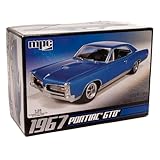
- V8 POWER: The model features a 400 cubic inch V8 engine, reflecting the muscle and power that defined the GTO's reputation.
- DETAILED SUSPENSION & EXHAUST: The kit incorporates separate rear suspension and exhaust detailing, adding to the realism of the model.
- BUCKET SEATS & CONSOLE: The model's interior features bucket seats and a floor shifter with a console, capturing the iconic look and feel of the GTO.
- OPTIONAL SUPERCHARGER: For those seeking more power, the kit offers an optional supercharger, allowing you to customize your model.
- CLEAR & COMPREHENSIVE INSTRUCTIONS: The included instructions are clear and user-friendly, making the kit accessible to modelers of different skill levels, from beginners to experienced hobbyists.
The ranking gives the greatest weight to the factors that changed the automobile industry:
| Criterion | Weight | What it measures |
|---|---|---|
| Mass-market and industry impact | 30% | Whether the car sold at scale or created a new segment |
| Technical importance | 25% | Whether it introduced or popularized a meaningful engineering solution |
| Global influence | 20% | Whether it changed overseas perceptions of Japanese cars |
| Motorsport and cultural impact | 15% | Racing success and influence on tuning, media, games, and enthusiast culture |
| Collectability and lasting recognition | 10% | Whether its importance remains legible to later generations |
That approach explains why an ordinary Corolla appears ahead of a supercar. It also prevents the term JDM from becoming a synonym for every Japanese classic. JDM properly refers to Japanese domestic-market specification; many important Japanese cars were designed specifically for export markets, sold under different names, or adapted substantially for other countries.
A short history of Japan’s automotive rise
- 1950s: Kei cars and affordable small vehicles made private ownership increasingly attainable in postwar Japan.
- 1960s: Japanese manufacturers developed globally credible compact cars, sports cars, and four-wheel-drive vehicles.
- 1970s: Oil shocks and tightening emissions rules favored efficient, compact, clean-running cars. Japanese exports became increasingly attractive in the United States and Europe.
- 1980s: Quality control, production scale, export sophistication, motorsport technology, and luxury ambitions accelerated.
- Late 1980s and early 1990s: Japan’s economic bubble helped fund technically ambitious projects such as the Lexus LS400, Nissan Skyline GT-R, and Honda NSX.
- After 1997: The Toyota Prius made gasoline-electric hybrid power relevant to mass-market transportation.
This was not simply a story of Japan copying European cars and then becoming reliable. It was a progression from compact postwar engineering to globally competitive manufacturing, specialized technology, and the creation of new automotive categories.
The 10 most important classic Japanese cars
1. Toyota Corolla: the global standard car
Representative model: First-generation Corolla, launched in Japan in 1966.
The Corolla is the strongest candidate for the most important Japanese car ever made because it turned Japanese automotive competence into an everyday global experience. Toyota introduced it as a five-passenger compact positioned between the Publica and Corona, specifically responding to a rapidly motorizing Japanese society. Its significance is not one breakthrough feature; it is the repeatable combination of affordability, durability, sensible packaging, and manufacturing consistency.
Toyota’s product philosophy was summarized as 80 points plus alpha: a car should meet its basic requirements thoroughly, then offer something extra. That formula made the Corolla easy to understand and easy to sell, while Toyota adapted production and equipment for different markets. The nameplate arrived in the United States in 1968 as a 1969 model and eventually became a global, locally produced car sold in more than 150 countries and regions.
Toyota reports approximately 55.46 million global sales for the Corolla series through December 2024. That figure refers to the series—including related body styles and derivatives—not one generation, one body style, or one market. It is therefore not accurate to describe 55.46 million as sales of the original KE10 alone. Toyota’s current fact sheet explains the series total.
Why it changed the industry: The Corolla demonstrated that a Japanese manufacturer could produce a practical family car at enormous scale, export it successfully, and maintain a consistent reputation across continents. Its fuel economy and mechanical simplicity were particularly valuable during the 1970s oil crises, but its deeper legacy is manufacturing globalization. Millions of drivers encountered Japanese quality not in a sports car showroom, but in an ordinary sedan, wagon, hatchback, or van.
What’s actually slowing this PC down?
Pick the symptom - the matching free tool is one click away.
Generation to know: The KE10 first generation establishes the original concept, while later generations show how Toyota turned that concept into a worldwide production system.
What enthusiasts often get wrong: The Corolla’s importance is not diminished by its modest performance. An AE86, Corolla GT, or rally-prepared example may be more exciting to drive, but the historically consequential achievement is the entire nameplate’s ability to provide affordable transportation at global scale.
Collector caveat: Condition, originality, and regional specification matter greatly. Many early Corollas were inexpensive daily drivers, so surviving examples may have suffered rust, accidents, engine swaps, or incomplete restorations.
Toyota’s Corolla history provides the model’s launch context and evolution.
2. Honda Civic: the compact car reinvented
Representative model: First-generation Civic and Civic CVCC, 1972–1975.
Honda released the first Civic in July 1972 as a small, front-wheel-drive, two-box car with a transverse engine. The layout was not unique in the global industry, but Honda made it exceptionally effective. The company’s man maximum, machine minimum philosophy concentrated the mechanical hardware into a small footprint and left more space for passengers and cargo.
The original 1.2-liter Civic was developed around a target weight of approximately 600 kilograms. Its hatchback body, compact dimensions, and useful interior made small-car ownership feel practical rather than punitive. That mattered enormously when fuel prices rose and American buyers began looking seriously at efficient imported cars.
The Civic’s most consequential innovation was the Compound Vortex Controlled Combustion, or CVCC, engine. Introduced in December 1973, CVCC used a prechamber combustion arrangement so a rich mixture near the spark plug could ignite a leaner mixture in the main chamber. Honda’s technology met the relevant U.S. emissions requirements associated with the 1975 standards without depending on a catalytic converter. The Civic began U.S. shipments with the 1975 model year, and Honda states that it was the EPA’s most fuel-efficient car for four consecutive years beginning in 1974.
Crashes, No Sound, or Screen Glitches?
Random freezes, missing sound and display glitches usually trace back to one bad driver. Find and replace yours safely.Free scan · under a minutePC Slower Than It Used to Be?
A free scan shows the junk files, broken settings and background clutter dragging Windows down - then fixes them in one click.Free scan · Windows 10 & 11Claims that the Civic was the first car to clear America’s strict emissions rules should be treated carefully. The precise claim concerns a production-car application of CVCC and the applicable U.S. certification requirements; it does not mean the Civic permanently solved every emissions problem. The Honda CVCC history and the Japan Automotive Hall of Fame provide the relevant context.
Why it changed the industry: The Civic showed that a small car could be spacious, efficient, clean-running, reliable, and desirable at the same time. It helped establish the front-wheel-drive hatchback as a mainstream answer to fuel and packaging pressures, influencing compact-car design well beyond Japan.
Generation to know: The first-generation SB Civic is the historical foundation; the CVCC-equipped cars are especially important for understanding Honda’s emissions response.
What enthusiasts often get wrong: The Civic’s later Si, Type R, and tuning variants are culturally important, but the model’s industry-changing achievement began with the humble early hatchback.
Quick wins for a faster PC:
Fix the driver behind crashes, sound loss and screen glitchesFind Drivers →Repair Windows errors before they cause bigger problemsFix Now →Scan for outdated or missing drivers - takes under a minuteDriver Scan →Collector caveat: Early Civics are light and mechanically approachable, but rust, unavailable trim, emissions-system originality, and modifications can complicate restoration. A period-correct CVCC car is historically more significant than a heavily altered example, even if the modified car is faster.
Read Honda’s first-generation Civic history for the original design brief and development details.
3. Toyota Land Cruiser: the Japanese global utility vehicle
Representative model: Toyota BJ and 20 Series context, with the 40 Series as the best-known classic representative.
Rank #2

- Versatile 3-in-1 Kit: Build your 1963 Chevy Corvette Sting Ray as factory stock, a street custom, or a drag gasser with this multi-option kit.
- Enhanced Features: Includes pre-lettered drag slicks, clear red taillights, and stock & custom wheels for an authentic and detailed build.
- Multiple Engine Options: Customize your model with various engine intake options, allowing for unique and personalized creations.
- Retro Styling: Comes with a full-color, retro-styled decal sheet and vintage “Street Rods Series” packaging, perfect for nostalgic collectors.
- High-Quality Collectible: AMT's improved reissue offers superior parts and detailing, making it a must-have for model enthusiasts and collectors.
The Land Cruiser established Japanese credibility in the most demanding kind of automotive work: moving people and supplies through places where roads, fuel quality, weather, and repair facilities could not be taken for granted.
Toyota began developing the Toyota Jeep BJ in 1951 for Japan’s National Police Reserve. It was not selected for that role, but the vehicle’s potential led to civilian volume production in 1953. Toyota changed the name to Land Cruiser in June 1954 because Jeep was a Willys-Overland trademark. The 20 Series then expanded overseas exports from 1955, turning a Japanese utility vehicle into an international product.
The 40 Series became the iconic classic: a body-on-frame, solid-axle, four-wheel-drive tool that could serve agriculture, construction, exploration, emergency work, and military or government fleets. Its importance lies less in luxury or speed than in the design priorities of durability, off-road traction, field repairability, and long-term service.
Toyota reported more than 10 million cumulative Land Cruiser sales by August 2019. The figure covers the Land Cruiser family over its history, not the 40 Series alone. Toyota’s Land Cruiser history traces the model’s worldwide development.
Why it changed the industry: The Land Cruiser gave the global market an alternative to established British and American utility vehicles. It also became a foundation for Toyota’s later split between heavy-duty, work-focused models and increasingly luxurious versions intended for affluent buyers.
The Tool Desk
Outbyte Driver Updater FREEScan for outdated or missing drivers - takes under a minuteDriver Scan →Outbyte PC Repair FREEClear out junk files and repair common Windows errorsFree Scan →Generation to know: The 40 Series best represents the classic Land Cruiser idea, while the BJ and 20 Series explain how the concept began and became exportable.
What enthusiasts often get wrong: Calling every Land Cruiser indestructible turns a design achievement into folklore. Reliability depends on maintenance, operating conditions, corrosion, parts quality, and the specific series. The historically defensible point is that Land Cruisers combined durability, off-road ability, and worldwide support unusually well.
Collector caveat: Frame rust, poorly repaired bodywork, agricultural use, imported replacement parts, and drivetrain swaps deserve close inspection. A restored 40 Series can be a superb historical artifact, but it is still an old utility vehicle with old brakes, steering, and crash protection.
The heavy-duty Land Cruiser history explains the BJ origin, name change, and early export expansion.
4. Subaru 360: the car that made small ownership practical
Representative model: Subaru 360 K111, launched in 1958.
The Subaru 360 was Subaru’s first mass-produced automobile and one of the defining cars of Japan’s postwar kei-car movement. It was designed for a country where private transportation needed to be affordable, compact, economical, and easy to operate. Despite its tiny footprint, the four-passenger 360 offered a practical alternative to motorcycles and basic commercial transport.
Its rear-engine, lightweight construction and small two-stroke powerplant reflected the engineering constraints of the kei category. Subaru also drew on its parent company’s aeronautical background, visible in the car’s lightweight construction and efficient packaging. The model remained in production until May 1970 and is recognized by Japanese automotive and engineering heritage organizations.
Why it changed the industry: The 360 represents the domestic foundation of Japan’s automotive success. A history focused only on cars exported to the United States misses the way kei vehicles helped create a broad base of Japanese car ownership. The category encouraged manufacturers to solve transportation problems through weight reduction and clever packaging rather than simply adding power and size.
Generation to know: The original K111 is the essential model because it established Subaru as a passenger-car manufacturer and defined the company’s early kei-car identity.
What enthusiasts often get wrong: The Subaru 360 was not Japan’s first car or the first kei car. The more accurate claim is that it was one of the earliest genuinely successful mass-produced kei family cars and a defining model in postwar motorization.
Collector caveat: The 360’s historical value is much greater than its modern safety or performance. Its small two-stroke engine, unusual construction, limited parts supply, and vulnerability in contemporary traffic make it a specialist collector vehicle rather than an easy daily driver.
See Subaru’s corporate history and its heritage timeline for the 360’s place in the company’s development.
Free tools Windows power users keep installed
One-click scans. No signup required.
5. Datsun 240Z and Nissan Fairlady Z: affordable global sports-car credibility
Representative model: S30 Fairlady Z and export-market Datsun 240Z, 1969–1973.
The S30 Fairlady Z launched in Japan in 1969, while the Datsun 240Z debuted in North America in 1970. The export version was designed with the North American market in mind and joined the Japanese lineup as the 240Z in November 1971. Different names and equipment reflected different markets, but the underlying achievement was the same: a stylish, six-cylinder, fixed-roof sports car that was usable on long journeys and affordable compared with European alternatives.
The 240Z combined an inline-six engine, independent suspension, attractive fastback styling, and a practical hatch area. It was not the first Japanese sports car—the Datsun Sports roadster and Honda S-series came earlier—but it was one of Japan’s first globally successful affordable fixed-roof sports cars.
Competition reinforced the car’s credibility. Nissan’s 240Z won the Safari Rally overall in 1971 and 1973, demonstrating that the car’s appeal extended beyond showroom styling. Nissan’s heritage entry documents the launch, specification, and rally record.
Why it changed the industry: The Z proved that a Japanese manufacturer could offer an appealing alternative to European sports cars without requiring exotic maintenance or an exotic price. It helped shift overseas perceptions from Japanese cars as merely economical transportation toward Japanese cars as desirable performance products.
Generation to know: The early S30 240Z is the clearest expression of the original formula. Later 260Z and 280Z versions are related but should not be treated as identical cars; emissions, bumpers, engine size, and equipment changed by market and year.
Rank #3

- Revell Model Kit #14531, Skill Level 5, Contains 77-Parts, Recommended for ages 13 and up
- Detailed 440+6 V-8 engine, hood scoop that can be positioned open or closed
- Detailed interior with separate side panels and a front bench seat
- Molded in white and clear with chrome plated parts and black vinyl tires
- Illustrated assembly instructions. Requires paint and glue. (not included)
What enthusiasts often get wrong: The 240Z was not a Japanese copy of one specific European sports car. Its influences were international, but its packaging, production strategy, price, and market execution were distinctly Nissan.
Collector caveat: Rust is the central concern. Check the floors, frame rails, suspension mounting points, hatch area, windshield surrounds, and previous accident repairs. Modified cars can be excellent drivers, but originality and documented bodywork have a major effect on historical value.
Crashes, No Sound, or Screen Glitches?
Random freezes, missing sound and display glitches usually trace back to one bad driver. Find and replace yours safely.Free scan · under a minutePC Slower Than It Used to Be?
A free scan shows the junk files, broken settings and background clutter dragging Windows down - then fixes them in one click.Free scan · Windows 10 & 116. Mazda MX-5, Eunos Roadster, and Miata: the lightweight roadster revival
Representative model: NA-generation MX-5, launched in 1989.
The Mazda MX-5 did not invent the two-seat roadster. Its importance is that it modernized and revived the format after many manufacturers had concluded that small open sports cars were too compromised, expensive, or difficult to certify.
Mazda’s North American operation helped initiate the concept, and public design research in the United States explored what buyers wanted from a simple sports car. Development moved to Japan in 1986. The finished car returned to fundamentals: a compact body, low weight, front-engine rear-wheel drive, simple controls, and an open top. It went on sale in the United States in spring 1989 and in Japan as the Eunos Roadster in September of that year; the MX-5 name was used in many other markets and Miata in North America.
Why it changed the industry: The MX-5 showed that driving pleasure could come from lightness, balance, and ease of use rather than horsepower or technological complexity. It influenced later affordable sports cars and gave manufacturers a commercially credible template for the modern roadster.
The Tool Desk
Outbyte Driver Updater FREEFix the driver behind crashes, sound loss and screen glitchesFind Drivers →Outbyte PC Repair FREEClear out junk files and repair common Windows errorsFree Scan →Generation to know: The NA is the essential historical car, especially in its early pop-up-headlamp form. Later generations preserved the concept while adding equipment, safety, and weight.
What enthusiasts often get wrong: Saying the MX-5 single-handedly revived every roadster market overstates the evidence. The defensible argument is that it became the most influential modern example of a lightweight, affordable roadster and proved the format could work at scale.
Collector caveat: Check for rust in the sills, wheel arches, chassis rails, and drain areas; inspect convertible-top condition and accident repairs; and be cautious with heavily modified suspension or engine conversions. A low-mileage original car is not automatically better than a well-maintained example, but undocumented modifications can make ownership harder.
Mazda’s development history explains the concept, the move to Japan, and the engineering priorities behind the roadster.
Do these 3 things before closing this tab:
1Clear out junk files and repair common Windows errors2Fix the driver behind crashes, sound loss and screen glitches3Repair Windows errors before they cause bigger problems7. Lexus LS400 and Toyota Celsior: Japan enters the luxury establishment
Representative model: First-generation LS400, launched in 1989.
The first Lexus LS400 rolled off Toyota’s Tahara assembly line in May 1989, and Lexus launched in the United States on September 1, 1989. In Japan, the closely related car was sold as the Toyota Celsior. Toyota spent six years developing the car and explicitly targeted established luxury competitors such as BMW and Mercedes-Benz.
The original U.S.-market LS400 used a 4.0-liter V8 rated at 250 horsepower, but its importance was not primarily its output. Toyota concentrated on quietness, smoothness, high-speed stability, careful panel fit, materials, manufacturing consistency, and a new dealer experience. Lexus was not just a badge placed on a Toyota showroom car; it was a separate luxury-market strategy built around the entire ownership experience.
Why it changed the industry: The LS400 forced established luxury brands to take Japanese refinement and quality control seriously. It offered a credible alternative at a different value proposition and helped reset customer expectations for quietness, reliability, standard equipment, and service. It did not make every European luxury car obsolete, but it changed the competitive conversation.
Generation to know: The 1989–1994 first-generation LS400 is the defining model. It is the clearest evidence of Toyota’s original challenge to the global luxury establishment.
What enthusiasts often get wrong: The LS400’s historical achievement was not that it was universally better than every Mercedes-Benz or BMW. Its importance was that a new Japanese luxury brand could compete directly on refinement and build quality while offering a compelling ownership proposition.
Collector caveat: Early LS400s are often affordable compared with sports-car icons, but deferred maintenance can erase that advantage. Timing-belt service, suspension components, electrical accessories, climate-control systems, interior materials, and neglected transmissions should all be assessed before purchase.
Toyota’s LS400 history covers the six-year development program, launch, Tahara production, and original specifications.
8. Nissan Skyline GT-R: motorsport, technology, and mythology
Representative models: 1969–1972 Hakosuka GT-R and especially the R32 GT-R, launched in 1989.
The GT-R’s importance comes from two separate eras. The first Skyline GT-R emerged from the Prince Skyline lineage in 1969 and quickly established a motorsport reputation. Nissan records that it reached 50 domestic racing victories by March 1972. After a 16-year absence, the GT-R name returned with the R32 in August 1989.
The R32 combined a twin-turbocharged inline-six with advanced all-wheel-drive and four-wheel-steering systems, creating a formidable competition platform. Nissan records that the R32 GT-R won all 29 rounds of the relevant Japanese touring-car championship across four seasons through 1993. That record, together with tuning culture, magazine coverage, and video games, turned the GT-R into a global technological and cultural myth.
Why it changed the industry: The GT-R gave Japan a performance flagship that could challenge established assumptions about European and Australian touring-car dominance. It also made sophisticated electronic control systems, turbocharging, and all-wheel drive central to the Japanese performance-car identity.
Recommended Free Tools
Generation to know: The R32 is the key historical model because it revived the name and delivered the defining racing record. The Hakosuka is essential for the original GT-R story, while the R33 and R34 extended the platform’s cultural reach. The later R35 Nissan GT-R is a distinct model, not a Skyline generation.
Rank #4

- A PERENNIAL CLASSIC FOR EXPERIENCED MODELERS: AMT’s 1/25 scale 1967 Shelby GT-350 is the perfect project for muscle car builders. Add it to your collection today!
- FEATURE PACKED: The 1967 Shelby GT-350 is a historical muscle car that stands alone! Fully paintable, it features authentically detailed water-slide decals. Build it up right with a Ford 289 V8 engine and all the Shelby touches—custom rear lower pan, chrome wheels, custom taillights and front grille, bucket seats, and more. Wrapped up nicely in retro-styled packaging!
- QUICK SPECS: 1/25 Scale, 123 Parts, 7 inches long once assembled. Parts molded in white, clear and transparent red, with black vinyl tires. Some parts are chrome plated. Plastic model kit paint and cement required (Testors or Tamiya brands recommended). Paint guide included in kit. Skill Level 2. For ages 10+
- THE PERFECT PRESENT: Don't know what to get dad for his birthday? Or maybe you have an avid hobbyist or collector in your life. This model kit makes an ideal gift for any occasion!
What enthusiasts often get wrong: The nickname Godzilla is associated with overseas automotive media and should not be presented as Nissan’s official designation. Nor should the R34 be treated as the sole source of GT-R importance; its fame rests on a lineage that began decades earlier and was technologically re-established by the R32.
Collector caveat: Many GT-Rs have been modified, raced, crashed, or converted between specifications. Verify chassis identity, drivetrain condition, corrosion, turbocharger health, electronics, and the quality of any engine or all-wheel-drive work. A famous badge does not guarantee a good car.
See Nissan’s accounts of the early GT-R racing record and the R32’s return and competition history.
9. Mazda RX-7: the rotary engine reaches a wider audience
Representative model: First-generation Savanna RX-7, 1978–1985, with FC and FD context.
Mazda introduced the first-generation RX-7 in March 1978. Its compact 12A two-rotor engine was mounted in a front-midship layout, allowing a low hood and favorable weight distribution. Mazda positioned it as a sports car focused on driving pleasure at a time when oil shocks and stricter emissions rules made large, thirsty performance cars harder to justify.
The RX-7 was not Mazda’s first rotary sports car. That distinction belongs to the Cosmo Sport, which Mazda describes as the world’s first volume-production sports car powered by a two-rotor rotary engine. The RX-7’s achievement was broader public and commercial influence: it made rotary power a recognizable Mazda identity and brought the engine to a much larger audience. Later FC and FD generations expanded the formula through turbocharging, sharper chassis development, and a major presence in tuning culture.
Mazda also identifies the RX-7 as the first Japanese car to win overall at the 24 Hours of Spa, in 1981. That result strengthened the link between the unusual engine layout and serious competition success.
Why it changed the industry: The RX-7 made an unconventional powertrain commercially meaningful in a sports car. Rotary engines offered compact dimensions, smoothness, and high-revving character, but they also carried disadvantages involving fuel consumption, heat management, emissions, and apex-seal durability. The RX-7 matters partly because Mazda pursued the technology in spite of those trade-offs.
Generation to know: The SA/FB first generation best represents the original rotary idea. The FC and especially FD explain why the RX-7 became such a powerful enthusiast and tuning-culture symbol.
What enthusiasts often get wrong: Rotary smoothness does not mean zero maintenance. A rotary-powered classic needs correct compression testing, cooling-system care, proper oiling, and an owner or specialist who understands its sealing and thermal requirements.
Collector caveat: Rust, overheating, poor rebuilds, turbocharger condition on later cars, and undocumented engine work are major risks. A rotary car with a healthy, documented engine is a very different proposition from one being sold on the strength of its badge alone.
Free tools Windows power users keep installed
One-click scans. No signup required.
Mazda’s company history and RX-7 rotary timeline provide the production and motorsport context.
10. Honda NSX and Acura NSX: the usable supercar
Representative model: First-generation NSX, launched in 1990.
Honda developed the NSX as a mid-engine sports car that combined high performance with comfort, reliability, and everyday usability. The NS-X prototype appeared at the 1989 Chicago Auto Show; the production car debuted in Japan in September 1990 and was sold as the Acura NSX in North America.
Honda says the NSX used the world’s first all-aluminum monocoque body in a mass-production car. Aluminum reduced body weight by about 140 kilograms and total vehicle weight by nearly 200 kilograms compared with a steel-bodied equivalent. Honda also invested in a dedicated production facility, extensive high-speed testing, and Nürburgring development. Ayrton Senna’s involvement in testing and feedback is part of Honda’s own account of the car’s development, but it should not be inflated into a claim that he designed the NSX.
What’s actually slowing this PC down?
Pick the symptom - the matching free tool is one click away.
The result was a supercar with a mid-engine layout, precise handling, strong ergonomics, and a reputation for being far easier to live with than many exotic contemporaries. The first production run continued through 2005 and achieved more than 18,000 worldwide sales.
Why it changed the industry: The NSX challenged the assumption that an exotic performance car had to be temperamental, uncomfortable, difficult to drive, or inconsistently assembled. Its influence was not simply a matter of lap times; it expanded the definition of what a supercar could combine.
Generation to know: The original 1990–2005 NA1 and NA2 cars are the historical core, with the early five-speed manual and later six-speed manual versions representing different stages of development. The Type R and later updates are important variations, not separate origins.
What enthusiasts often get wrong: It is too strong to say the NSX killed Ferrari or single-handedly forced Ferrari to improve. The defensible claim is that the NSX changed perceptions of how performance, reliability, ergonomics, and build quality could coexist in a supercar.
Quick wins for a faster PC:
Fix the driver behind crashes, sound loss and screen glitchesFind Drivers →Clear out junk files and repair common Windows errorsFree Scan →Scan for outdated or missing drivers - takes under a minuteDriver Scan →Collector caveat: Timing-belt and water-pump history, transmission condition, body-panel repairs, aluminum corrosion or damage, and evidence of track use deserve close inspection. A cheap NSX can be an expensive NSX if major maintenance has been deferred.
Honda’s NSX development history covers its aluminum construction, testing, and design goals; Honda’s production history documents its worldwide sales and first-generation run.
Independent reader supportYour contribution helps us test, update, and keep practical guides available for everyone.The strongest near misses
A top ten necessarily excludes cars that are historically important in their own right. These are the strongest alternatives, depending on how a reader defines importance.
Toyota 2000GT
Launched in 1967 and developed jointly by Toyota and Yamaha, the 2000GT was Japan’s landmark grand tourer and international prestige statement. It demonstrated that Japanese design and engineering could produce a sophisticated, beautiful halo car. Its very low production volume limited its direct industrial and mass-market impact, which is why it misses a list weighted toward broad influence. Toyota’s official 2000GT history covers the car’s significance.
Best Value
Toyota Prius
The Prius is arguably the most consequential Japanese car of the modern environmental era. Launched in Japan in December 1997, Toyota describes it as the world’s first mass-produced hybrid passenger car. It made gasoline-electric hybrid power visible and mainstream, influencing regulators, manufacturers, and consumer expectations worldwide. It is excluded only because a traditional classic-car definition may stop before the late 1990s and because the Prius deserves a separate treatment of environmental technology. See Toyota’s Prius history.
Mazda Cosmo Sport
Unveiled at the 1963 Tokyo Motor Show and entering production in 1967, the Cosmo Sport was the world’s first volume-production sports car powered by a two-rotor rotary engine, according to Mazda. It is the technological ancestor of the RX-7, but the RX-7 had substantially broader public and cultural reach. Read Mazda’s Cosmo Sport history.
Subaru 1000
The Subaru 1000 deserves recognition for its modern front-wheel-drive layout, horizontally opposed engine, and independent suspension. Its technical importance is high, but its global cultural profile is lower than that of the Subaru 360 or later Impreza and WRX models.
Suzuki Jimny
The first-generation LJ10 Jimny, launched in 1970, created a lightweight kei-class four-wheel-drive formula that remains unusually durable as a concept. It is arguably one of Japan’s most enduring automotive ideas. The Land Cruiser ranks higher here because it better represents Japan’s worldwide full-size utility influence.
Free tools Windows power users keep installed
One-click scans. No signup required.
Datsun 510
The Datsun Bluebird 510 combined compact dimensions, an overhead-cam engine, independent suspension, and successful rallying. It is an excellent alternative for a list focused on American enthusiast culture, affordable rear-wheel-drive sedans, or motorsport. It loses out to the Corolla and Civic on worldwide historical reach.
Mitsubishi Pajero, Subaru Impreza WRX, and Toyota AE86
Each of these cars is a legitimate candidate under a different weighting. The Pajero represents globally successful rally-bred four-wheel-drive technology; the Impreza WRX helped define the turbocharged, all-wheel-drive performance sedan; and the AE86 became a foundational lightweight rear-wheel-drive icon through racing, drifting, tuning, manga, and games. Their cultural importance is substantial, but the core ten favors cars that changed broader markets as well as enthusiast culture.
The same reasoning explains the absence of the Toyota Supra, Mitsubishi Lancer Evolution, Honda Integra Type R, and other 1990s performance legends. They are not unimportant. They simply do not explain the full development of Japanese automotive influence as well as the ten selected here.
Names, markets, and the problem with using JDM loosely
Japanese cars often changed names, brands, specifications, and equipment as they crossed borders. Those distinctions are part of the history:
| Japanese-market name | Export-market name or brand | Why it matters |
|---|---|---|
| Fairlady Z | Datsun 240Z | Nissan designed the car with North American buyers in mind, and the Datsun name was central to its export success. |
| Eunos Roadster | Mazda MX-5 / Miata | The same lightweight roadster was marketed under different names and, in some markets, through a separate Eunos brand. |
| Toyota Celsior | Lexus LS400 | The Celsior was the Japanese-market counterpart to the first Lexus flagship sold in the United States. |
| Honda NSX | Acura NSX in North America | The Acura brand helped Honda enter the U.S. luxury and performance market. |
| Skyline GT-R | Later Nissan GT-R | The R32, R33, and R34 are Skyline GT-Rs; the R35 is a separate Nissan GT-R model. |
A Japanese-market car is not automatically more authentic or more important than an export-market version. The Datsun 240Z’s North American development priorities, the Miata’s U.S. identity, and the Acura NSX’s branding all show that overseas markets were active parts of Japan’s automotive story.
Buying or importing one in the United States
Historical importance does not automatically make a car sensible to own. Before buying an imported Japanese classic, separate four questions: is it federally admissible, can it clear EPA requirements, can your state title and register it, and can you keep it running?
The federal 25-year safety rule
NHTSA generally allows a motor vehicle at least 25 years old to be imported without regard to the Federal Motor Vehicle Safety Standards. The clock runs from the vehicle’s date of manufacture, not merely its model year. If the manufacture date is unclear, NHTSA may require documentation such as an invoice, registration record, or statement from a recognized historical society.
The threshold changes every day. For example, on August 10, 2026, a vehicle manufactured on or before August 10, 2001 could meet the federal 25-year safety threshold, subject to documentation and all other entry requirements. Confirm the exact date before shipping a car using NHTSA’s importation FAQ.
EPA emissions rules are separate
NHTSA’s safety exemption does not automatically resolve EPA emissions compliance. EPA has historically described a separate framework for older non-U.S.-specification vehicles, including treatment of qualifying vehicles at least 21 original-production years old when they remain in original, unmodified configuration. Requirements, forms, and interpretations can change, so verify the current process through the EPA vehicle-import guidance before purchase or shipment.
An engine swap, altered emissions equipment, reconstructed chassis, or undocumented restoration can complicate the analysis. A car that qualifies by age is not necessarily exempt from every federal import requirement.
State registration is a different decision
Federal import admissibility does not guarantee registration in every state. Check the destination state’s title, inspection, emissions, equipment, and documentation requirements separately. Some states are straightforward; others may require additional inspections or impose restrictions on imported, right-hand-drive, reconstructed, or modified vehicles.
Right-hand drive and originality
Right-hand drive is not automatically prohibited, but an under-25-year vehicle can be more complicated because NHTSA does not treat right-hand drive as automatically equivalent to a similar left-hand-drive U.S.-certified vehicle. NHTSA’s eligibility guidance explains why configuration matters.
Recommended Free Tools
For any of the cars on this list, inspect rust, accident history, chassis identity, parts availability, specialist support, and modification quality. Rarity can make a car historically interesting while making routine ownership difficult. A collector should also distinguish market fashion from significance: a famous performance badge may command attention, but an original Corolla, Civic, or Land Cruiser can tell a more important story about the development of the automobile.
Why the ordinary cars belong at the top
The central lesson of Japanese automotive history is that no single category created Japan’s global reputation. Kei cars made ownership practical. The Corolla and Civic made Japanese manufacturing and efficient packaging familiar to millions. The Land Cruiser proved Japanese durability in harsh environments. The Z and MX-5 made Japanese sports cars desirable worldwide. The LS400 challenged luxury conventions, the GT-R and RX-7 built technological and motorsport mythology, and the NSX showed that a Japanese manufacturer could rethink the supercar.
That progression is why a historically serious list cannot be built entirely from turbocharged 1990s icons. The coolest car in a showroom is not always the car that changed the industry. Sometimes the most important Japanese classic is the one that quietly became the standard by which every competitor was measured.
Frequently Asked Questions
What is the most important classic Japanese car?
There is no objective single answer, but the Toyota Corolla is the strongest overall choice because it combined enormous global sales, affordability, durability, manufacturing scale, and local production across more than 150 countries and regions. The Honda Civic is the strongest alternative if technical innovation and emissions history receive more weight.
Does classic Japanese car mean JDM?
No. JDM means Japanese domestic market and properly describes a specification or market, not every car made by a Japanese manufacturer. Important Japanese cars such as the Datsun 240Z, Mazda Miata, Acura NSX, and Lexus LS400 were developed or marketed substantially for export markets.
Can I import a classic Japanese car into the United States after 25 years?
The federal 25-year NHTSA safety exemption generally applies once a vehicle is at least 25 years old from its date of manufacture, but EPA emissions requirements, Customs entry, documentation, and state registration are separate issues. Confirm the exact cutoff date and current requirements before shipping the vehicle.
Which generation best represents each car’s historical importance?
The key representatives are the KE10 Corolla, first-generation Civic and CVCC, Toyota 40 Series Land Cruiser, Subaru 360 K111, S30 Datsun 240Z, NA MX-5, first-generation LS400, R32 Skyline GT-R, first-generation RX-7, and first-generation NSX.
The Bottom Line
The most important classic Japanese cars were not united by one engine layout, body style, or performance target. They mattered because they expanded what Japanese manufacturers—and the global automobile industry—could produce: affordable transportation, efficient compacts, durable utility vehicles, credible sports cars, luxury sedans, advanced hybrids, and usable supercars.
What’s actually slowing this PC down?
Pick the symptom - the matching free tool is one click away.
Quick Recap
Product prices and availability are accurate as of the date/time indicated and are subject to change. Any price and availability information displayed on Amazon at the time of purchase will apply.