Short answer: Tesla’s Cybercab reveal was the company’s “We, Robot” event, held on October 10, 2024, at the Warner Bros. Discovery studio lot in Burbank, California. Tesla unveiled a two-seat, two-door prototype without a steering wheel or pedals, announced the larger Robovan, and demonstrated Optimus humanoid robots.
The event is over, but you can still watch the official Tesla replay on YouTube. This guide separates what Tesla actually demonstrated from Elon Musk’s targets for price, production, safety, and autonomous operation—and explains how the project compared with Tesla’s reported status as of August 9, 2026.
How to watch Tesla’s Cybercab reveal replay
The best archive is Tesla’s official “We, Robot” replay on YouTube. YouTube is more practical than the original live broadcast for most viewers because you can pause, skip the pre-show material, use any available chapter controls, and watch on a television.
Tesla also broadcast the event through its X account. The company’s original announcement is available through this Tesla X post, and past broadcasts can be found on the Tesla YouTube streams page.
Free tools Windows power users keep installed
One-click scans. No signup required.
#1 Best Overall
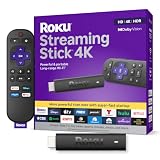
- Stunning 4K and Dolby Vision streaming made simple: With America’s number 1 TV streaming platform,* exploring popular apps—plus tons of free movies, shows, and live TV—is as easy as it is fun. *Based on hours streamed—Hypothesis Group
- Breathtaking picture quality: Stunningly sharp 4K picture brings out rich detail in your entertainment with four times the resolution of HD. Watch as colors pop off your screen and enjoy lifelike clarity with Dolby Vision and HDR10+.
- Seamless streaming for any room: With Roku Streaming Stick 4K, watch your favorite entertainment on any TV in the house, even in rooms farther from your router thanks to the long-range Wi-Fi receiver.
- Shows on the go: Take your TV to-go when traveling—without needing to log into someone else’s device.
- Compact without compromises: Our sleek design won’t block neighboring HDMI ports, so you can switch from streaming to gaming with ease. Plus, it’s designed to stay hidden behind your TV, keeping wires neatly out of sight
- Event: Tesla “We, Robot”
- Original date: October 10, 2024
- Advertised start: 7 p.m. Pacific time / 10 p.m. Eastern time
- Location: Warner Bros. Discovery studio lot, Burbank, California
- Official replay: Watch on YouTube
The livestream did not begin at the advertised time. Contemporary event coverage reported a delay of nearly an hour, with Musk attributing it to a medical emergency in the crowd. If you are watching the replay, that delay is one reason it is better to use the recording rather than search for an old “watch live” link. TechCrunch’s event archive documented the original chronology.
What Tesla announced in one minute
- A compact, two-seat vehicle called the Cybercab, also referred to as the Robotaxi.
- A design without a conventional steering wheel, accelerator, or brake pedals.
- An eventual price target of less than $30,000, according to Musk.
- A production target of 2026, later described as production before 2027.
- Inductive, or wireless, charging for the purpose-built robotaxi.
- The Robovan, a much larger autonomous vehicle Tesla said could carry up to 20 people.
- Optimus humanoid robot demonstrations, including interactions with event attendees.
- A future Tesla robotaxi network in which Tesla-owned vehicles and, potentially, privately owned Teslas could provide rides.
Those points describe Tesla’s announcement and vision. They do not amount to a final consumer specification sheet, regulatory approval, or proof of a mature citywide driverless service.
What was the “We, Robot” event?
“We, Robot” was Tesla’s standalone product and technology presentation focused on autonomy, artificial intelligence, robotics, and fleet-based transportation. Tesla’s official event recap described autonomy as the next phase of the company’s mission and presented Cybercab as a vehicle designed specifically for autonomous operation.
The event was strategically broader than a normal vehicle launch. Tesla was presenting itself not only as an electric-car manufacturer but also as a potential transportation platform: a company that could build the vehicle, operate a ride-hailing network, supply the software, and eventually use a mixture of company-owned and customer-owned cars.
Do these 3 things before closing this tab:
1Repair Windows errors before they cause bigger problems2Scan for outdated or missing drivers - takes under a minute3Clear out junk files and repair common Windows errorsThe main reveal was the Cybercab. Robovan and Optimus expanded the presentation into higher-capacity transportation and general-purpose robotics. The result was a highly visual demonstration of Tesla’s intended future, rather than a conventional launch with a complete price list, order process, homologation details, and delivery schedule.
The Cybercab: what Tesla showed
The Cybercab prototype was a compact, low-profile two-seat vehicle with two doors that opened upward. Its interior was designed around passengers rather than a human driver, and the prototype had no steering wheel or conventional accelerator and brake pedals.
Tesla and Musk presented that absence of manual controls as fundamental to the concept. The Cybercab was not simply an ordinary Tesla with a ride-hailing app. It was shown as a purpose-built autonomous vehicle intended to spend much of its time carrying passengers rather than waiting for an owner to drive it.
The configuration has obvious advantages. Removing the driver’s controls can free interior space, reduce the number of parts associated with manual driving, and make the vehicle’s intended use clear. A smaller two-seat cabin could also help reduce energy consumption and increase the number of vehicles a fleet can operate in a given space.
The Tool Desk
Outbyte Driver Updater FREEScan for outdated or missing drivers - takes under a minuteDriver Scan →Outbyte PC Repair FREERepair Windows errors before they cause bigger problemsFix Now →It also creates practical limitations. Two seats are less useful for families, groups, airport passengers with luggage, and many accessibility needs. Tesla did not present a final accessible configuration at the event, so it would be a mistake to assume that the displayed two-seat prototype represents every eventual version.
Price and production targets
Musk said the Cybercab would eventually cost less than $30,000. That was a company projection, not a confirmed U.S. MSRP. The event did not establish whether the figure would include incentives, taxes, delivery fees, or other charges. It also did not establish whether it referred to a vehicle sold to an individual, a fleet purchase, or an estimated manufacturing cost.
Musk targeted production in 2026 and also used language describing production as occurring before 2027. A target is not the same as a guaranteed customer-delivery date. It leaves open questions about regulatory approval, manufacturing volume, final design changes, and which market would receive the vehicle first.
Rank #2

- Ultra-speedy streaming: Roku Ultra is 30% faster than any other Roku player, delivering a lightning-fast interface and apps that launch in a snap.
- Cinematic streaming: This TV streaming device brings the movie theater to your living room with spectacular 4K, HDR10+, and Dolby Vision picture alongside immersive Dolby Atmos audio.
- The ultimate Roku remote: The rechargeable Roku Voice Remote Pro offers backlit buttons, hands-free voice controls, and a lost remote finder.
- No more fumbling in the dark: See what you’re pressing with backlit buttons.
- Say goodbye to batteries: Keep your remote powered for months on a single charge.
Tesla’s Q3 2024 shareholder update later described the Cybercab and Robovan as vehicles designed without a steering wheel or pedals. It also gave the Cybercab’s next-generation powertrain an estimated efficiency of 5.5 miles per kilowatt-hour. That figure was useful context, but it was not a complete consumer specification: Tesla did not provide a final battery capacity, EPA range, charging rate, or production configuration.
Wireless charging
Tesla said the Cybercab would use inductive, or wireless, charging. For an autonomous fleet, that could remove the need for a person or robot to connect a charging cable after every trip. A vehicle could theoretically park over a charging pad and recharge automatically.
However, the reveal did not establish the charging power, energy-transfer efficiency, cost, reliability, or deployment schedule. A commercial system would need compatible depots or parking spaces, accurate vehicle alignment, sufficient charging throughput, maintenance for charging surfaces, and a plan for vehicles that are too low on energy to reach a charging location.
What Tesla demonstrated at Warner Bros.
Musk arrived at the presentation in a Cybercab that appeared to drive without a human driver. Tesla also showed autonomous vehicles moving around the Warner Bros. lot, and some attendees received rides in the vehicles.
That was a meaningful prototype demonstration, but its setting matters. The Warner Bros. Discovery studio lot was private and controlled rather than an ordinary open-city environment. The routes, road geometry, and surroundings could be mapped and prepared in advance. Traffic complexity was limited compared with a public road, and event staff and production support were present.
Windows Errors? Fix Them Before They Spread
Repair common Windows errors and clear accumulated junk for a smoother, more stable PC - no reinstall needed.Free scan · no reinstallOutdated Drivers Are Slowing You Down
One free scan finds every outdated or missing driver and matches the right update for your exact hardware.Free scan · exact hardware matchIndependent reports made the same distinction. WIRED’s event report and MotorTrend’s first-ride report described the controlled nature of the demonstration. A passenger ride around a studio lot is not equivalent to a robotaxi operating throughout a city in rain, construction, unusual traffic, emergency situations, or roads the system has not previously handled.
The evidence ladder matters
- A concept vehicle is displayed.
- A prototype moves on a private or controlled lot.
- Passengers ride in a controlled environment.
- The vehicle operates on public roads.
- It operates without a safety driver or other responsible human.
- Regulators approve the service and operating design domain.
- The service operates reliably at commercial scale.
The 2024 event clearly established the first three steps. It did not, by itself, establish the last four.
Cybercab, FSD, and autonomous driving are not the same thing
Tesla’s naming makes this distinction especially important. The Cybercab was presented as a purpose-built vehicle intended for autonomous operation. Tesla’s ordinary customer vehicles, by contrast, use the company’s FSD (Supervised) driver-assistance system.
Tesla’s FSD support documentation says that FSD (Supervised) requires active driver supervision and does not make the vehicle autonomous.
Quick wins for a faster PC:
Fix the driver behind crashes, sound loss and screen glitchesFind Drivers →Clear out junk files and repair common Windows errorsFree Scan →Special offer. See more information about Outbyte and uninstall instructions. Please review EULA and Privacy policy.
That means a Tesla owner using FSD (Supervised) remains responsible for monitoring the road and taking control when necessary. It should not be described as a driverless robotaxi system simply because the software can perform more driving tasks than a conventional cruise-control system.
The event’s implied future path was different: a vehicle designed without driver controls, operating as part of a Tesla network, with no passenger expected to take over. That is a much more demanding technical, legal, and operational proposition.
Rank #3

- The Google TV Streamer (4K) delivers your favorite entertainment quickly, easily, and personalized to you[1,2]
- HDMI 2.1 cable required (sold separately)
- See movies and TV shows from all your services right from your home screen[2]; and find new things to watch with tailored recommendations for everyone in your home based on their interests and viewing habits
- Watch live TV and access over 800 free channels from Pluto TV, Tubi, and more[3]; if you find an interesting show or movie on your TV, mobile app, or Google search, you can easily add it to your watchlist, so it’s ready when you are[2]
- Up to 4K HDR with Dolby Vision delivers captivating, true-to-life detail[4]; and you can connect speakers that support Dolby Atmos for more immersive 3D sound
Promises versus confirmed specifications
The most important way to read the event is to separate Tesla’s claims and targets from things the prototype actually established.
| Tesla statement or demonstration | What it means |
|---|---|
| Less than $30,000 | An eventual price target stated by Musk, not a confirmed final MSRP or out-the-door price. |
| Production in 2026 or before 2027 | A target, not a guaranteed delivery date, production volume, or launch schedule. |
| Wireless charging | An intended feature; charging power, efficiency, infrastructure cost, and deployment timing were not disclosed. |
| Ten, 20, or 30 times safer than a human driver | Tesla’s and Musk’s projection, not an independently validated safety result. Tesla repeats the claim on its event page. |
| Unsupervised FSD in California and Texas in 2025 | A future promise made at the event, subject to technical performance, regulation, and operational approval. |
| 5.5 miles per kilowatt-hour | Tesla’s later estimate for the Cybercab’s next-generation powertrain, not an EPA range rating. |
| Driverless movement at Warner Bros. | A prototype demonstration in a controlled private environment, not proof of unrestricted citywide autonomous service. |
| Up to 20 passengers | Tesla’s stated capacity for the larger Robovan, not the two-seat Cybercab. |
Tesla’s claim that autonomy could eventually be 10 to 30 times safer than human driving is particularly important to label correctly. It is a long-term projection. The event did not present independent crash statistics or a validated comparison demonstrating that result.
The Robovan and Optimus reveals
Robovan
The Robovan was the event’s surprise vehicle reveal: a much larger autonomous van intended to carry people or goods. Musk said it could transport up to 20 people and discussed high-density transportation as one possible use.
Robovan and Cybercab should not be treated as two sizes of the same taxi. The Cybercab was a small two-seat passenger vehicle designed for individual trips or pairs. The Robovan was presented as a higher-capacity platform that could potentially serve campuses, dense urban routes, group transportation, or cargo operations. Tesla did not provide a production date, price, range, final interior layout, or operating plan for the Robovan.
Optimus
Optimus humanoid robots appeared on stage, interacted with attendees, served drinks, and participated in a dance sequence. Tesla presented them as part of a broader robotics strategy rather than merely as an accessory to its car business.
The demonstrations were visually engaging, but the replay should not be read as proof that every interaction was fully autonomous. Post-event reporting and attendee observations raised questions about how much of the robots’ behavior may have been remotely assisted. Unless a specific segment establishes autonomous operation, the careful description is that Tesla demonstrated Optimus robots performing those activities—not that it proved unsupervised general-purpose autonomy.
Recommended Free Tools
The robotaxi network Tesla described
Tesla continued its long-running idea that owners could place their vehicles into a Tesla ride-hailing network when they were not using them. Under that model, a privately owned Tesla could potentially earn revenue while its owner was away. Tesla could also operate a dedicated fleet of Cybercabs or other vehicles where customer-supplied cars were insufficient.
The business model would make the vehicle more than a personal car. It could become an income-generating asset when parked, while Tesla would potentially control the software, customer interface, dispatching, and a portion of the revenue.
The event did not provide a complete commercial plan. It left important questions unanswered:
- What percentage of fares would go to Tesla and what percentage would go to vehicle owners?
- Would Cybercab buyers be able to use the vehicles privately, or would they be fleet-only?
- Would Tesla sell Cybercabs to individuals, commercial operators, or both?
- Who would carry insurance and liability for a crash or passenger injury?
- Who would clean, charge, maintain, and reposition vehicles?
- How would Tesla handle remote assistance, emergencies, blocked roads, bad weather, or stranded passengers?
- Which cities would receive the service first?
WIRED reported that Musk repeated the owner-fleet concept but did not supply many of the operational details needed to evaluate the economics.
What Tesla did not disclose
The reveal showed the vehicle’s broad design but not a complete production specification. Tesla did not provide confirmed figures for:
Rank #4

- Advanced 4K streaming - Elevate your entertainment with the next generation of our best-selling 4K stick, with improved streaming performance optimized for 4K TVs.
- The newest Fire TV experience (2026) – Our biggest update to Fire TV has a new, modern design that gets you to your entertainment fast. Browse dedicated content categories, pin more of your favorite apps, and get personalized recommendations from Alexa+. Spend less time scrolling, and more time watching.
- Cloud gaming, no console required – Stream Call of Duty: Black Ops 7, Hogwarts Legacy, Outer Worlds 2, Ninja Gaiden 4, and hundreds of games on your Fire TV Stick 4K Select with Xbox Game Pass and Luna via cloud gaming. Xbox Game Pass subscription and compatible controller required. Each sold separately.
- Smarter picks with Alexa+ – Getting to what you love has never been easier. Press the voice remote button and talk naturally to find what to watch across your apps, manage your smart home, or dive into virtually any topic.
- Wi-Fi 6 support - Enjoy smooth 4K streaming, even when other devices are connected to your router.
- Battery capacity.
- EPA range.
- Charging speed or wireless-charging power.
- Acceleration or top speed.
- Vehicle dimensions.
- Cargo volume.
- Warranty coverage.
- Final interior configuration.
- Final sensor suite.
- Redundancy architecture for steering, braking, power, and computing.
- Production plant and detailed manufacturing schedule.
- Confirmed launch cities.
- Regulatory approvals.
- Customer ordering and delivery process.
- Final price structure or whether the under-$30,000 figure included incentives.
The missing information is not merely technical trivia. For a vehicle without a steering wheel or pedals, the safety architecture, failure response, accessibility, regulatory status, and emergency procedures are central to whether it can be sold and operated.
Why a vehicle without manual controls is difficult to deploy
The lack of a steering wheel and pedals is the Cybercab’s defining feature—and its largest deployment hurdle.
If the vehicle becomes immobilized, a passenger may have no way to drive it out of danger. Emergency responders need a reliable method to enter, control, move, or disable the vehicle. A passenger may need to stop before reaching the destination, while a software fault, blocked camera, lost connection, or unusual road situation could require intervention.
United States regulators have a pathway for certain vehicles that do not comply with traditional equipment requirements. The NHTSA Part 555 exemption process can permit a manufacturer to sell up to 2,500 noncompliant motor vehicles per year—including vehicles without traditional steering wheels, driver-operated brakes, or rearview mirrors—when the manufacturer demonstrates equivalent safety and public interest.
That pathway is not evidence that Cybercab had received approval. It simply illustrates the regulatory issue Tesla would need to address. NHTSA’s automated-vehicle safety materials provide broader federal context for automated driving systems.
Independent reader supportYour contribution helps us test, update, and keep practical guides available for everyone.Other real-world issues the event left open
Accessibility
A two-seat, low-profile vehicle may be efficient, but the event did not establish how the Cybercab would accommodate wheelchair users, mobility equipment, service animals, or passengers who need additional assistance. A separate accessible vehicle or a higher-capacity option such as Robovan could be necessary.
Charging and cleaning
An autonomous network needs more than vehicles and software. It needs charging locations, maintenance facilities, cleaning procedures, inspection routines, and a way to remove a vehicle from service when it becomes dirty, damaged, or mechanically suspect.
What’s actually slowing this PC down?
Pick the symptom - the matching free tool is one click away.
Connectivity and remote assistance
When a vehicle encounters construction, flooding, a crash, emergency activity, or a road it cannot safely navigate, the system needs a defined response. That may involve rerouting, pulling over, requesting remote assistance, or sending a service vehicle. The event did not explain Tesla’s staffing, response times, or accountability for those situations.
Passenger control and emergencies
Passengers need to know how to end a trip, communicate with support, retrieve lost property, and summon help. Tesla’s current Robotaxi support materials list features and procedures including app-based support, a Pull Over function, lost-item assistance, and arrangements for wheelchair-accessible rides. Those are useful examples of the operating problems a real service must solve, but they should not be attributed retroactively to the 2024 Cybercab reveal.
Sensor strategy
WIRED described Tesla’s broader autonomy approach as relying heavily on cameras and artificial intelligence rather than the mixture of cameras, radar, lidar, and other sensors used by some competitors. The event did not fully disclose the final production Cybercab sensor suite, so it is too broad to state that the production vehicle would use only cameras.
Cybercab status as of August 9, 2026
The most useful current update is that the Cybercab is no longer only a 2024 concept, but it also should not be described as a broadly available consumer robotaxi based on the sources reviewed here.
The Tool Desk
Outbyte PC Repair FREERepair Windows errors before they cause bigger problemsFix Now →Outbyte Driver Updater FREEScan for outdated or missing drivers - takes under a minuteDriver Scan →Best Value

- Essential 4K streaming – Get everything you need to stream in brilliant 4K Ultra HD with High Dynamic Range 10+ (HDR10+).
- The newest Fire TV experience (2026) – Our biggest update to Fire TV has a new, modern design that gets you to your entertainment fast. Browse dedicated content categories, pin more of your favorite apps, and get personalized recommendations from Alexa+. Spend less time scrolling, and more time watching.
- Make your TV even smarter – Fire TV gives you instant access to a world of content, tailor-made recommendations, and Alexa, all backed by fast performance.
- All your favorite apps in one place – Experience endless entertainment with access to Prime Video, Netflix, YouTube, Disney+, Apple TV+, HBO Max, Hulu, Peacock, Paramount+, and thousands more. Easily discover what to watch from hundreds of thousands of movies and TV episodes (subscription fees may apply), including free, ad-supported content.
- Getting set up is easy – Plug in and connect to Wi-Fi for smooth streaming.
Tesla’s Q2 2026 Form 10-Q says the company began Cybercab production during the first half of 2026. That confirms a production milestone, but it does not by itself establish mass production, final customer pricing, broad consumer deliveries, or deployment across a public robotaxi network.
Tesla’s current Robotaxi support page says the operating fleet initially consists of Model Y vehicles. It lists service in limited areas of Miami, Orlando, Tampa, Austin, Dallas, and Houston. Tesla’s Robotaxi product page continues to describe Cybercab as a purpose-built autonomous vehicle, but the public materials reviewed here do not establish that it has become the ordinary rider vehicle or that it is broadly available for purchase.
That distinction is crucial: Cybercab production, a Robotaxi service, and a mass-market driverless Cybercab network are separate milestones. Current Model Y Robotaxi operations do not retroactively prove that the Cybercab demonstration was a fully deployed service, and production beginning does not automatically mean that every promised feature or market is available.
How to watch the replay critically
If you want to understand what happened rather than simply revisit the spectacle, pay attention to four things:
- Separate the vehicle from the network. The Cybercab is a vehicle concept; Robotaxi is the transportation service built around vehicles, software, support, charging, and regulation.
- Listen for attribution. “Musk said,” “Tesla targeted,” and “Tesla described” are more accurate than presenting future projections as specifications.
- Notice the environment. The Warner Bros. lot was suitable for a controlled demonstration, not a substitute for public-road, all-weather, citywide operation.
- Look for missing details. Battery size, range, charging performance, insurance, accessibility, remote assistance, launch cities, and final pricing were not settled at the reveal.
The replay is still valuable because it shows Tesla’s intended cabin layout, the no-controls design, the visual relationship between Cybercab and Robovan, and the company’s effort to frame autonomy and robotics as its next major businesses.
Bottom line
Tesla’s October 10, 2024 “We, Robot” event was a genuine Cybercab reveal, but it was primarily a vision-and-prototype presentation. Tesla showed a two-seat vehicle with no steering wheel or pedals, promised a price below $30,000 and production targeted for 2026, introduced the 20-passenger Robovan, and demonstrated Optimus robots.
It did not launch a finished consumer vehicle, publish a complete technical specification, announce regulatory approval, or prove a commercially mature driverless network. As of August 9, 2026, Tesla had reported that Cybercab production began in the first half of the year, while its current Robotaxi support page still identified Model Y vehicles as the initial fleet in limited areas. Watch the official replay for the reveal—but treat the price, timing, safety, and autonomy claims as targets until Tesla demonstrates the corresponding production and service milestones.
Frequently Asked Questions
Is the Tesla Cybercab available to buy?
The sources reviewed for this article do not establish broad consumer availability. Tesla’s Q2 2026 filing says Cybercab production began in the first half of 2026, while Tesla’s current Robotaxi support page identifies Model Y vehicles as the initial operating fleet.
Was Tesla’s Cybercab fully autonomous at the 2024 reveal?
The prototype appeared to operate without a human driver on the controlled Warner Bros. studio lot, and attendees received rides. That demonstrated prototype operation in a private environment, not unrestricted citywide, all-weather, commercially approved autonomy.
Is Tesla FSD the same as the Cybercab’s autonomous system?
No. Tesla says FSD (Supervised) requires active driver supervision and does not make a vehicle autonomous. Cybercab was presented as a separate purpose-built vehicle intended for autonomous operation.
What was Tesla’s promised Cybercab price?
Elon Musk said the Cybercab would eventually cost less than $30,000. Tesla did not provide a final MSRP, clarify whether the figure included incentives or fees, or explain whether it applied to individual buyers or fleet operators.
The Bottom Line
The replay is worth watching, but read the event as a Cybercab prototype and autonomy strategy reveal—not as a finished vehicle launch or proof of a fully deployed robotaxi network. Tesla showed the no-controls concept and made ambitious price, production, safety, and service promises. Its later filing reported Cybercab production had begun in the first half of 2026, while its current Robotaxi support page still describes a limited Model Y-based service.
Free tools Windows power users keep installed
One-click scans. No signup required.
Quick Recap
Product prices and availability are accurate as of the date/time indicated and are subject to change. Any price and availability information displayed on Amazon at the time of purchase will apply.