The Tool Desk
Outbyte Driver Updater FREEFix the driver behind crashes, sound loss and screen glitchesFind Drivers →Outbyte PC Repair FREERepair Windows errors before they cause bigger problemsFix Now →Three recent Piedmont High School graduates died and a fourth was seriously injured after a 2024 Tesla Cybertruck crashed and caught fire in Piedmont, California, at about 3:07 a.m. on November 27, 2024. The California Highway Patrol later concluded that unsafe speed, alcohol and drug impairment contributed to the collision. Its data showed the truck traveling approximately 77.6 to 84.0 mph five seconds before the crash, and found that Autopilot was unavailable and not in use. Separately, Alameda County autopsy findings listed smoke inhalation as the cause of death, with burns contributing.
The unresolved question is what happened after the impact. Witnesses and lawsuits allege that the Cybertruck’s electronic doors and reinforced glass delayed rescue, but no final official finding or court judgment has established that Tesla’s design caused or worsened the deaths.
This article separates the established facts about the crash from the allegations about the vehicle’s emergency exits. That distinction matters: the official investigation addressed why the Cybertruck left the road, while the civil lawsuits focus largely on whether the occupants could escape after the vehicle caught fire.
The public record reviewed through August 9, 2026 supports four central conclusions:
What’s actually slowing this PC down?
Pick the symptom - the matching free tool is one click away.
#1 Best Overall

- The Road Guardian- The portable roadside assistance kit is designed and hand picked by a group of experienced veterans and experts to provide every essential tools you need in roadside emergencies. The automotive safety bag contains accessories such as repair cable ties, bungee cords, electrical tape, space blanket, rain poncho, reflective warning triangle, glass breaker, seatbelt cutter, safety gloves, tow rope and more to get your vehicle back on the road and continue your travel.
- Top-Notch Digital Auto Tire Inflator- lightweight and compact air compressor can inflate your standard vehicles tire in seconds. With auto shutoff function, simply plug it into the 12v power outlet and attach the stem to the tire valve, preset the tire pressure and press the power button. The compressor starts the inflating process and stop once your tire reaches at your preset level. This cool gadget also has led light for winter nighttime and three extra nozzles for inflammable bed, others
- Copper-Clad Aluminum 12 Feet 8 Gauge Jumper Cable- A durable battery starter cable is a must-have for your trip. Unlike other kits on the market, our jumper cable has reasonable length to get your cars connected. 8 gauge wires and 300 amp output is more than enough to get your standard vehicle started. UL listed heavy-duty battery jumper cables make you physically and environmentally safer and more reliable.
- Completed 108 Pieces First Aid Kit- By having a completed first aid kit, provide you and your family proper basic wound/hygiene treatment before it possibly get worsened during your road trip. Our kit includes alcohol pads, bandages, cotton tips, knuckle bandages, butterfly bandages, wound pad, sting relief pads, gloves, tape, dressing, PBT bandage, CPR mask, tweezer, safety pins, soap wipe, disinfect wipe, adhesive wound pad, triangular bandage, finger bandage.
- Veteran Owned Company 5-Star Customer Support- Everlit is committed into providing the most comprehensive customer service. We proudly offer the exclusive 60-days hassle-free return among all products. We stand behind the quality of our inventory; all original Everlit products are covered with a 1-year satisfaction warranty.
- The Cybertruck left the roadway, struck a retaining wall and tree, became wedged between them and was fully engulfed in flames.
- CHP investigators attributed the collision to a combination of unsafe speed, alcohol and drug impairment. Autopilot was not in use.
- Soren Dixon, Jack Nelson and Krysta Tsukahara died from smoke inhalation and burns, according to coroner findings. Jordan Miller survived with severe injuries.
- Whether the electronic door system, window design or rescue delay contributed to the three deaths remains a disputed issue in civil litigation.
What happened in Piedmont?
The crash occurred early Wednesday, November 27, 2024, on Hampton Road east of King Avenue in Piedmont, an Alameda County city in the San Francisco Bay Area. It was a single-vehicle crash involving a 2024 Tesla Cybertruck.
According to the CHP investigation, the truck left the roadway, jumped a curb, struck a retaining wall and then hit a tree. The vehicle became wedged between the wall and tree before catching fire. When officers arrived, the Cybertruck was fully engulfed. Piedmont Police’s initial advisory identified the location and early emergency response.
| Time | What the investigation found |
|---|---|
| 3:02:21 a.m. | The Cybertruck backed out of a garage. |
| 3:04:26 a.m. | The right-rear door opened and two passengers entered. |
| 3:06:02 a.m. | Recovered vehicle video ended as the truck approached Hampton Road. |
| 3:07 a.m. | CHP’s recorded crash time. |
| 3:08 a.m. | Piedmont Police received a smartphone crash alert. |
| About 3:10 a.m. | Police officers arrived at the burning vehicle. |
| About 3:16 a.m. | Firefighters arrived, according to the CHP timeline. |
The times and sequence come from the redacted CHP Multidisciplinary Accident Investigation Team report. Police and fire response times are approximate in the report.
Who died and who survived?
All four occupants were 2023 graduates of Piedmont High School and were college students home for Thanksgiving. They were not current high-school students at the time of the crash.
| Person | Age | Position | Outcome |
|---|---|---|---|
| Soren Dixon | 19 | Driver | Died |
| Jack Nelson | 20 | Rear passenger | Died |
| Krysta Tsukahara | 19 | Rear passenger | Died |
| Jordan Miller | 20 | Front passenger | Survived with severe injuries |
The names and family statements were released by the City of Piedmont. The families requested privacy, so unnecessary personal details are omitted here.
What did the Cybertruck’s data recorder show?
CHP investigators obtained a warrant on December 4, 2024, and imaged the Cybertruck’s airbag-control module on December 9. The module had extensive fire damage, so investigators removed and imaged it directly. The report said the event-data record was complete and identified one deployment event. Investigators also recovered 27 relevant video files from the truck’s USB storage.
The extracted data showed the following:
| Recorded item | Finding | How to interpret it |
|---|---|---|
| Speed five seconds before the event | 130 km/h, or 80.8 mph | After the report’s stated possible variance, approximately 77.6–84.0 mph. This was not necessarily the impact speed. |
| Speed at the report’s 0.0-second point | 93 km/h, or 57.8 mph | A recorded event-point speed, not a figure that should automatically be described as the truck’s speed at the initial collision. |
| Accelerator pedal | 79% applied five seconds before the event; 61% applied 3.5 seconds before | Shows substantial accelerator application during the approach. |
| Service brakes | Off from five seconds to 3.5 seconds before the event; on from three seconds before through the event | The recorded braking began shortly before the crash sequence. |
| ABS | Active from 0.5 seconds before the event through the event | Indicates anti-lock braking activity near the collision. |
| Total delta-V | Approximately 57 mph | Delta-V is the change in velocity during the collision, not the Cybertruck’s travel speed. |
| Autopilot | Unavailable and not in use | The CHP report did not find that Autopilot caused or contributed to the crash. |
The most commonly misunderstood number is the 80.8-mph figure. It describes the truck’s recorded speed five seconds before the event. It is inaccurate to say that CHP found the Cybertruck was traveling 84 mph at the instant of impact. Likewise, a 57-mph delta-V is not a second measurement of the vehicle’s speed.
CHP’s data supported a high-speed roadway-departure sequence. The report did not find that Autopilot was operating; it specifically recorded that the system was unavailable and not in use. That finding does not mean no other active-safety or driver-assistance features were present. It means only that the CHP investigation did not identify Autopilot as an operating system in this crash.
What did CHP conclude caused the collision?
Piedmont Police summarized the CHP conclusion as follows: A combination of alcohol and drugs, along with unsafe speed, were contributing factors.
The conclusion is based on the full investigation, including vehicle data, video, roadway evidence and toxicology—not on the presence of a substance alone.
The CHP report did not conclude that a Cybertruck defect, Autopilot or either of the truck’s documented open recalls caused the collision. The available official findings therefore support this formulation: unsafe speed combined with alcohol and drug impairment contributed to the crash. They do not establish that Tesla was legally responsible for the collision.
Rank #2

- Portable & Compact: The car safety kit is designed to fit neatly into an organizer bag, allowing for easy storage in either the backseat or trunk of your vehicle. This ensures that all essential safety items are kept together and easily accessible in case of an emergency. By keeping the kit organized and readily available, you can be better prepared for unexpected situations while on the road
- Fully Prepared: This kit should include essential tools and supplies to help you in case of an emergency. By being prepared, you can feel more secure while driving and have the necessary resources to handle unexpected situations
- Multi-Purpose Emergency Kit: This emergency kit contains everything you need for emergencies. It's suitable for different occasions such as winter weather, commuting and road trips
- Premium Material: The cable surface is covered by PVC material and the interior is made of premium copper wire. The use of premium materials can significantly enhance the overall quality and value of a product. This universal cable is suitable for small vehicles
- Wonderful Car Safety Kit: This kit is ideal for family and friends, especially for teenagers who are about to own their first car. It's a thoughtful and practical present that will undoubtedly be appreciated by the recipient
What did toxicology show?
Public reporting based on Alameda County Coroner records stated that alcohol and cocaine were detected in all three deceased occupants. The reported blood-alcohol concentrations were:
| Person | Reported BAC |
|---|---|
| Soren Dixon | 0.195% |
| Jack Nelson | 0.168% |
| Krysta Tsukahara | 0.028% |
Reports also described additional findings, including methamphetamine in Dixon’s results and, in some secondary summaries, marijuana. Those additional findings have not been presented consistently across published accounts, so they should not be treated as an identical substance list without consulting the underlying coroner records.
Crashes, No Sound, or Screen Glitches?
Random freezes, missing sound and display glitches usually trace back to one bad driver. Find and replace yours safely.Free scan · under a minuteWindows Errors? Fix Them Before They Spread
Repair common Windows errors and clear accumulated junk for a smoother, more stable PC - no reinstall needed.Free scan · no reinstallToxicology results and a causal impairment conclusion are not the same thing. The careful distinction is that the coroner records reported alcohol and cocaine findings, while CHP later attributed the collision to unsafe speed together with alcohol and drug impairment. The presence of a substance in a toxicology report does not, by itself, prove precisely how it affected a person’s driving.
The San Francisco Chronicle’s report on the autopsy and toxicology findings and Piedmont Exedra’s report on the coroner’s findings provide the public summaries currently available.
How did the three occupants die?
The Alameda County Coroner’s findings classified the deaths as accidental and listed asphyxia from smoke inhalation as the cause of death, with burns contributing. The public findings do not establish blunt-force impact as the direct official cause of death.
That finding answers a narrow medical question: what caused the deaths. It does not by itself answer whether the initial crash was survivable, whether every occupant remained conscious after impact, how quickly the fire spread inside the passenger compartment, or whether a different escape route would have changed the outcome.
Free tools Windows power users keep installed
One-click scans. No signup required.
Those questions are now central to the lawsuits. Plaintiffs argue that the occupants survived the initial crash forces but could not escape the resulting fire. That is a legal theory advanced by the families and their attorneys, not a final medical, engineering or judicial finding.
What happened during the rescue attempt?
A friend who was traveling behind the Cybertruck reached the scene almost immediately, according to witness accounts described in public-records reporting and later court complaints. The witness said he tried the exterior door buttons, but the doors did not open. He then repeatedly struck a front-side window with a tree branch, broke it and pulled Jordan Miller out through the opening.
The witness also tried to reach Krysta Tsukahara in the rear passenger area, but reported that the flames had become too intense. KTVU’s report on released police video, surveillance footage and crash photographs describes the rescue account and the material released through public-records reporting.
This account is important but has limits. It does not independently prove that the doors were defective, that all three deceased occupants were conscious and able to operate an interior release, or that they would have survived had a door opened immediately. It does establish why rescue access became a major issue: the only documented extraction of a survivor occurred through a broken window rather than a conventional exterior door handle.
Rank #3
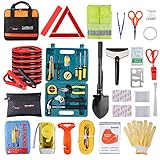
- ESSENTIAL RESOURCES: Packed with practical supplies from jumper cables, reflective triangle and vest to tow rope, and tire presure gauge, we've got everything you need to stay safe during an roadside emergency. But that's not all - it also includes rarely used but essential items like safety hammer, emergency blanket, and survival whistle. With these, you'll be prepared for almost everything the road throws your way.
- RELIABLE JUMPER CABLES: Say goodbye to uncoated jumper cable clamps! Our clamps are fully covered with premium PVC material to protect you from electrical shocks and make sure you can use them safely. The four giant alligator clamps are equipped with strong jagged teeth and springs for an excellent grip force. With a 6 gauge thick inner core, our cables are reliable even in cold winter weather.
- FOLDABLE SURVIVAL SHOVEL: At 16.5 inches, it's a portable size and comes with a carrying pouch. Its versatile design allows for shoveling, digging, hoeing, sawing, and chopping, making it the perfect tool to get you out of any tight situation.
- CAR REPAIR TOOL SET: This handy kit contains all the necessary tools for emergency vehicle repairs and basic household DIY projects, including hammer, wrench, plier, tape measure, PVC tape, digital display test pen, 3 screwdrivers, and 5 hex key. Each tool is neatly organized in a handy case for easy storage and portability.
How are Cybertruck emergency doors supposed to work?
Tesla’s current North American Cybertruck Owner’s Manual, identified on Tesla’s manual site as version 2026.20, says the doors are electrically powered. If the vehicle loses low-voltage power, the normal interior door-open buttons will not work.
Front doors
The manual directs an occupant to use the manual door release located near the window switches, pull it upward and push the door open. Tesla warns that the window may not automatically lower when the manual release is used and that the glass or trim could be damaged.
Rear doors
The rear manual release is less obvious. An occupant must:
- Remove the rubber mat at the bottom of the rear-door map pocket.
- Locate and pull the mechanical release cable forward.
- Push the door open.
Tesla’s collision guidance also warns that doors may fail to unlock or may be physically damaged in a crash. It says occupants may need to use a manual release, another door or a broken window. The relevant Cybertruck manual section on airbags and collisions describes those alternatives.
The distinction between inside and outside access is crucial. Occupants have manual emergency releases, but the rear release is concealed beneath the map-pocket mat. An outside rescuer cannot simply pull a conventional mechanical exterior handle; the exterior door button depends on the vehicle’s electrical system. The manual describes the intended operation of the system, but it does not prove what happened to the specific Cybertruck in Piedmont.
It also matters that the cited manual is the current North American version, not necessarily the exact manual, hardware or software configuration installed in the truck manufactured in 2024. Vehicle configuration, crash damage, fire, smoke and the occupants’ physical condition could all affect whether an emergency release was usable in the time available.
What do the lawsuits allege about Tesla and the doors?
The civil cases focus on crashworthiness and post-crash escape rather than simply disputing CHP’s conclusion about speed and impairment.
- Krysta Tsukahara’s family: The family sued the estate of Soren Dixon and the estate of vehicle owner Charles Patterson, later adding Tesla. The second amended complaint alleges that the Cybertruck’s design, electronic door system, concealed rear releases and reinforced glass contributed to the deaths.
- Jack Nelson’s family: A separate lawsuit names Tesla and the Dixon and Patterson estates. The complaint alleges that Nelson survived the crash forces but could not escape the fire and died from smoke inhalation and thermal injuries.
- Jordan Miller: Miller initially sued the Dixon and Patterson estates and amended his complaint in March 2026 to add Tesla. His lawsuit alleges that he spent five days in an induced coma and suffered airway and lung burns, third-degree burns requiring skin grafts, spinal fractures requiring fusion, abdominal injuries and permanent disfigurement.
The complaints assert theories including defective crashworthiness, inadequate emergency egress, electronic-door failure, concealed rear-door releases, reinforced glass that impeded rescue and post-crash fire risk. These are allegations made by plaintiffs. They are not findings that Tesla’s design caused the deaths, and they do not eliminate the separate official finding that speed and impairment contributed to the collision.
Do these 3 things before closing this tab:
1Repair Windows errors before they cause bigger problems2Fix the driver behind crashes, sound loss and screen glitches3Clear out junk files and repair common Windows errorsAs of August 9, 2026, no verified public judgment, trial verdict or settlement resolving the Piedmont litigation had been located in the sources reviewed. Tesla should not be described as legally responsible unless a court establishes liability or the parties resolve the cases in a documented settlement.
The litigation timeline extends well beyond the first news reports: the Nelson and Tsukahara families added Tesla-related claims in 2025, and Miller amended his case in March 2026. The relevant pleadings are available through the Nelson complaint and the Tsukahara second amended complaint.
Rank #4

- If your car is parked at the scene of an accident waiting to be rescued, you may need this car emergency kit
- If this roadside assistance kit can help a novice driver or a family member or friend in the event of an accident on the road, they will surely thank you for gifting him this car emergency kit
- Lightweight and compact tire inflator inflates standard vehicle tires in seconds. The surface of the reinforced cable is made of high-quality PVC, which has the characteristics of anti-freezing, anti-cracking, and anti-tangling
- Roadside emergency car kits come in handy during winter weather, hiking, camping, road trips, or traveling in a car or other vehicle
- All of our products are stowed inside a high quality bag to keep our products in the trunk. Perfect for teens, novices, and experienced car enthusiasts
Did the Cybertruck’s battery cause the fire?
The established fact is that the truck caught fire and was fully engulfed. The precise ignition source and the role, if any, of the lithium-ion traction battery are not established in the available public record.
Piedmont’s fire chief said shortly after the crash that the blaze appeared unlikely to have become a sustained traction-battery fire. That was an early on-scene assessment, not a complete published fire-origin determination. The public CHP report documents extensive thermal damage but does not provide a definitive ignition-origin analysis.
Quick wins for a faster PC:
Repair Windows errors before they cause bigger problemsFix Now →Scan for outdated or missing drivers - takes under a minuteDriver Scan →It is therefore inaccurate to call this a confirmed Cybertruck battery fire. The more precise description is: the Cybertruck burned extensively; an early fire-department assessment said a sustained traction-battery fire appeared unlikely; and the public record does not conclusively identify the ignition source or establish whether battery cells contributed. Spectrum News’ early report and the Associated Press report provide context on the fire assessment.
Were recalls involved?
CHP’s vehicle inspection noted two unrepaired recalls on the Cybertruck:
- NHTSA 24V-718: a delayed rearview-camera image after the vehicle is shifted into reverse.
- NHTSA 24V-832: a drive-inverter fault that could result in loss of drive power.
The CHP report did not conclude that either recall caused the Piedmont crash. Neither documented recall directly concerns the emergency door system or establishes a post-crash fire mechanism. The first concerns rear visibility; the second concerns possible loss of propulsion.
That means both of the following statements can be true: the truck had open recalls when it was inspected, and the available evidence does not show that either recall caused this particular crash. The NHTSA report for recall 24V-718 describes the rear-camera issue; the CHP MAIT report documents the inspection findings and the absence of a causal conclusion.
Recommended Free Tools
Is there broader investigation of Tesla electronic doors?
Yes, but it should not be confused with a finding about the Piedmont Cybertruck. In 2025, NHTSA opened preliminary evaluation PE25010 concerning electronic door handles becoming inoperative on certain Tesla Model Y vehicles when power is lost. NHTSA’s stated focus was exterior electronic-door operation and the availability of interior manual releases.
The NHTSA proceeding is broader regulatory context, not proof that the Cybertruck’s doors were defective. It does not establish that the investigation directly covers the 2024 Cybertruck involved in Piedmont, nor does it determine that the door system caused any death in this crash. NHTSA’s preliminary-evaluation document explains the scope and the agency’s references to interior manual releases.
Independent reader supportYour contribution helps us test, update, and keep practical guides available for everyone.Confirmed, alleged and still unknown
| Confirmed by the public record | Alleged or disputed | Still unresolved |
|---|---|---|
| The truck crashed at about 3:07 a.m. after leaving the roadway. | The electronic doors delayed rescue. | The precise ignition source. |
| Unsafe speed, alcohol and drug impairment contributed to the collision. | The Cybertruck’s design turned an otherwise survivable crash fatal. | Whether the traction battery contributed to ignition. |
| Autopilot was unavailable and not in use. | Reinforced glass materially delayed rescue. | Whether every occupant remained conscious after impact. |
| The three fatalities were caused by smoke inhalation, with burns contributing. | Tesla’s design was legally defective. | Whether the manual releases could have been found and used in time. |
| A survivor was removed through a broken window. | The doors failed in the specific post-crash conditions. | Whether different rescue access would have prevented the three deaths. |
| The truck had two unrepaired recalls. | Either recall caused the crash. | The final outcome of the civil lawsuits. |
The distinction is not merely semantic. The CHP report and event-data recorder are the strongest evidence about the collision itself. Coroner records establish the medical cause of death. Video and witness accounts document parts of the rescue attempt. The complaints explain the plaintiffs’ product-liability theories. None of those sources, standing alone, resolves every question about fire behavior, emergency egress or legal responsibility.
Investigation and litigation timeline
- November 27, 2024: The Cybertruck crashes and burns in Piedmont.
- December 4, 2024: CHP obtains a warrant to image vehicle data.
- December 9, 2024: CHP images the airbag-control module and recovers video storage.
- February 12–13, 2025: Toxicology and autopsy findings become public through reporting based on coroner records.
- February 28, 2025: Piedmont releases a preliminary investigation update.
- March 1–3, 2025: CHP’s findings about speed, impairment and Autopilot receive broad public coverage.
- April 10, 2025: Police body-camera footage, surveillance video and crash photographs are released through public-records reporting.
- July 9, 2025: The redacted CHP MAIT report becomes publicly available.
- October 2025: The Nelson and Tsukahara families add Tesla-related claims in civil litigation.
- March 16–20, 2026: Miller amends his lawsuit to add Tesla.
Primary documents include the Piedmont Police investigation update, the CHP MAIT report and the March 2026 report on Miller’s litigation.
Best Value

- 【Things you may need】: This roadside assistance packages is a perfect gift.Contain the necessary roadside kits, snow shovel, flashing lights, reflective triangle warning signs, advanced jumpers (8.2 foot), powerful towing rope, safety hammer and seat belt cutters, life blankets, raincoats, compasses and more!
- 【Safe and durable】: UL certified jumper cables are safer and more reliable than other non-UL certified cables. Four huge alligator clips provide excellent grip. The grip of the clip is covered with an insulating rubber sleeve. The surface of the reinforced cable is made of high-quality PVC, which has the characteristics of anti-freezing, anti-cracking, and anti-tangling.
- 【Car repairs tool box】: Small and compact, suitable for any place, the tools are neat and orderly. Including hammer, pliers, utility knife, tape measure, PVC tape, digital display test pen, 3 screwdrivers. Each kit has a separate location. Clean, safe, convenient, light and strong plastic shell can withstand pressure
- 【Upgrade kit】: Our hammer head is made of high-quality high-carbon steel, with a pointed and flat hammer. It helps to use any side of the car escape tool to quickly break the window in an emergency. We provide raincoats and reflective safety clothing, which can be safer to wear when you repair a broken down car.
- 【Emergency car kit】: This emergency kit car, It’s lightweight, compact. that can fit anywhere in your backseat, trunk or even in your spare tire compartment, can handle unexpected things,it also includes preparedness survival tools for outdoor activities like camping, hiking, hunting, act. perfect for family use at home.
What the evidence does—and does not—say
The evidence does not support a simple either-or explanation in which only the driver or only Tesla is responsible for everything that happened. It supports a two-stage analysis.
Stage one: Why did the collision happen?
CHP’s official answer is that unsafe speed, alcohol and drug impairment contributed. The EDR recorded high speed and substantial accelerator application before braking. Autopilot was unavailable and not in use. The public report did not identify the Cybertruck’s door system, battery or open recalls as causes of the roadway departure.
Stage two: Why did three occupants die after the collision?
The official medical answer is smoke inhalation and burns. The answer to whether rescue access, door design, window strength, occupant position, fire behavior or delay changed the outcome remains unsettled. The lawsuits allege that the vehicle’s design made escape and rescue more difficult, but that claim must be tested through litigation and evidence rather than presented as an established engineering conclusion.
Likewise, it is too strong to state that the crash was definitely survivable or that the victims definitely could have escaped. The autopsy findings establish the cause of death, not a formal survivability determination.
Frequently misunderstood points
- They were not high-school students. They were college sophomores and 2023 Piedmont High School graduates home for Thanksgiving.
- The truck was not confirmed to be traveling 84 mph at impact. The CHP range of 77.6–84.0 mph applied to the recorded speed five seconds before the crash.
- A fire does not automatically mean a battery fire. The truck burned, but the public evidence does not establish the ignition source or a sustained traction-battery fire.
- Door difficulty is not the same as a proven defect. A rescuer reported that the exterior buttons did not open the doors, and lawsuits allege design defects; neither is a final official or judicial finding.
- Toxicology is not itself a DUI verdict. The coroner findings reported substances, while CHP made the separate causal determination that alcohol and drug impairment contributed.
- Open recalls are not proof of causation. The two recalls documented by CHP concerned a rearview-camera delay and possible inverter-related loss of drive power.
Sources and documents
The key evidence is the official CHP MAIT report and Piedmont Police releases, followed by coroner findings, recovered video and body-camera material, witness accounts and civil complaints. Readers should treat the complaints as allegations and the current Tesla manual as a description of the intended emergency-release system—not as proof of how the crashed vehicle functioned under fire and impact damage.
Frequently Asked Questions
Was Autopilot on when the Piedmont Cybertruck crashed?
No. The CHP MAIT report found that Autopilot was unavailable and not in use. That finding does not address every other safety or driver-assistance feature, but it contradicts claims that Autopilot was operating in this crash.
Was the Cybertruck traveling 84 mph at impact?
Not according to the published data. CHP recorded 80.8 mph five seconds before the event and gave an adjusted range of approximately 77.6 to 84.0 mph for that timestamp. The report recorded 57.8 mph at its 0.0-second event point, while its approximately 57-mph delta-V measured the change in velocity during the collision.
Did a Cybertruck battery fire kill the occupants?
That has not been established. The truck was fully engulfed, and the coroner attributed the three deaths to smoke inhalation, with burns contributing. An early fire-chief assessment said a sustained traction-battery fire appeared unlikely, but the available public record does not provide a definitive ignition-origin analysis.
Recommended Free Tools
Could Cybertruck occupants open the doors without electrical power?
Tesla’s current North American Cybertruck manual describes manual releases. The front release is near the window switches; the rear release requires removing the rubber mat at the bottom of the rear-door map pocket and pulling a mechanical cable. The manual also warns that crash damage can prevent normal unlocking. Those instructions do not establish whether the occupants in Piedmont could locate or use the releases before the fire and smoke became overwhelming.
The Bottom Line
The official cause of the Piedmont collision is unsafe speed combined with alcohol and drug impairment—not Autopilot. The three deaths were officially attributed to smoke inhalation and burns after the truck caught fire. Whether Cybertruck door and window design delayed rescue or made the outcome worse is the central unresolved issue in the lawsuits, and no court had established Tesla’s liability as of August 9, 2026.
Quick Recap
Product prices and availability are accurate as of the date/time indicated and are subject to change. Any price and availability information displayed on Amazon at the time of purchase will apply.