Nissan CVT problems are real but not universal: the documented concerns are tied to particular models, years, vehicle-identification numbers (VINs), and operating conditions. Shuddering or “judder,” abnormal noise, delayed response, slipping sensations, warning lights, or diagnostic trouble codes deserve a professional diagnosis, but none by itself proves that the entire transmission must be replaced. Start by recording exactly when the symptom occurs, check the VIN for campaigns and warranty extensions, and then have a qualified technician identify the root cause.
What a Nissan CVT does—and why symptoms can be confusing
A continuously variable transmission (CVT) changes the ratio between the engine and drive wheels through a belt or chain, pulleys, hydraulic pressure, and control software rather than a fixed set of conventional gears. Nissan describes CVT fluid as doing two jobs at once: transmitting hydraulic pressure for ratio changes and protecting internal parts while providing the required friction between the belt and pulleys. That makes fluid level, fluid condition, the specified formulation, and control calibration important to operation.
As an Amazon Associate I earn from qualifying purchases.
The same sensation can have different causes. A shudder may reflect a belt-slip condition in a specific campaign population, a fluid or pressure problem, a control issue, or another driveline fault. A noise may be normal for a CVT in one circumstance and abnormal in another. A stored code identifies what a control module detected; it does not automatically identify the failed part. Nissan warranty instructions tell technicians to use the applicable technical service bulletin and electronic service manual to determine the root cause before selecting a repair.
Recommended Free Tools
Nissan has also made broad statements about newer CVTs, but those statements are not reliability statistics. In an article published May 13, 2025, Nissan said its latest CVT generation had been durability-tested over more than 4 million public-road miles and claimed 4–8% better fuel efficiency than the previous generation in models such as Sentra, Kicks, and Rogue. Those are Nissan’s own test and efficiency claims, not an independent population-level failure study.
#1 Best Overall

- The exact original equipment manufacturer fluid that your vehicle came with; use where nissan cvt ns-3 fluids are required in nissan, infiniti, and other make vehicles
- Unique formulation of high quality friction modifiers and additives ensures stable, precise operation
- Offers superior low temperature fluidity for smoother shifting and maintains proper pressure in hot weather
- Offers superior low temperature fluidity for smoother shifting and maintains proper pressure in hot weather
Symptoms owners may notice
Nissan’s warranty materials ask what symptoms an owner might experience when a CVT has an issue. The practical answer is a group of changes in behavior, not one definitive test:
- Shaking or “judder” while coasting: Nissan’s campaign letter for certain 2013 Altima vehicles identified shaking from the CVT when coasting as an indicator that the CVT belt may have slipped. The letter warned that continued driving in that condition could cause accelerated wear and damage.
- Shudder during acceleration or at a steady speed: This is a useful description for a technician, but it does not establish the cause or mean the belt is damaged.
- Abnormal whine, growl, or other noise: A Nissan technician bulletin instructs technicians to listen under specified conditions and distinguish noise that stops when the selector is moved into Drive or Reverse from noise that continues in those gears. That procedure is diagnostic context, not evidence that every similar noise indicates a failing CVT.
- Delayed engagement or delayed response: A pause after selecting Drive or Reverse, or a delay in the vehicle responding to the accelerator, should be documented with temperature, engine speed, and gear-selection details.
- Slipping or inconsistent acceleration: The engine may rev without the expected increase in road speed, or acceleration may vary even when the accelerator position is steady.
- Warning lights or stored diagnostic codes: A transmission warning, check-engine light, or code can help narrow the investigation. It still requires code retrieval and testing rather than an automatic transmission replacement.
- Reduced-power or fail-safe behavior: If the vehicle limits speed or ratio, stop driving when safe and arrange an assessment, particularly if the vehicle cannot merge, climb, or move reliably.
Write down whether the symptom occurs cold or hot, during acceleration or coasting, at a particular speed, on a hill, after a long drive, or when selecting a particular gear. That context can be more valuable than describing the sensation simply as “the CVT is bad.”
Documented Nissan CVT campaigns and warranty extensions
Campaigns and warranty extensions apply to defined vehicle populations. A model name or model year alone is never proof of eligibility; the dealer or Nissan must verify the VIN and the applicable terms.
What’s actually slowing this PC down?
Pick the symptom - the matching free tool is one click away.
| Vehicle group or material | What Nissan documented | What an owner should do |
|---|---|---|
| Certain 2013 Altima vehicles | Nissan described a belt-slip condition that could produce shaking or “judder” from the CVT while coasting. Continued driving in that condition could cause accelerated wear and damage. The campaign remedy was no-charge TCM reprogramming for eligible vehicles. | Check the VIN for the campaign and ask whether the prescribed procedure was completed. Do not treat this historical campaign as a universal fix for all Altimas or all Nissan CVTs. |
| Listed 2016–2018 Maxima (A36) and 2015–2018 Murano (Z52) | Nissan’s October 3, 2025 dealer bulletin extended CVT coverage from 60 months/60,000 miles to 84 months/84,000 miles, whichever comes first, for the listed vehicles and specified CVT components. Eligibility can depend on VIN and settlement status; the bulletin notes that some owners may have opted out of a class-action settlement. | Have Nissan or an authorized dealer verify the VIN, in-service date, mileage, covered components, and any settlement-related condition before authorizing paid work. |
| Specified Altima, Versa, Versa Note, Sentra, and Juke vehicles | A 2020 Nissan bulletin describes an extension program in which trained technicians diagnose the concern and select the appropriate repair, ranging from a repair to CVT assembly replacement when necessary. | Use the bulletin only as a starting point. Confirm that the individual vehicle is included and that coverage remains available. |
| 2003–2010 CVT-equipped vehicles | Nissan’s owner-support information describes a 10-year/120,000-mile CVT limited-warranty extension for certain vehicles. | Check the actual warranty terms and VIN. The age of this program means many vehicles may now be outside the stated time or mileage limits. |
The 2025 Maxima and Murano bulletin is not a promise that every vehicle in those model-year ranges is covered, and the earlier extension materials do not establish current eligibility for every Altima, Versa, Versa Note, Sentra, or Juke. Coverage can also depend on the vehicle’s original in-service date, mileage, repair history, and the terms of a settlement or extension.
Rank #2

- Synthetic & Mineral Blend: Ensures smooth transmission operation and enhanced durability
- 6 Quarts: Ideal for full transmission fluid change in most Nissan vehicles
- Nissan Genuine: Engineered specifically for Nissan transmissions
- Bottle Packaging: Easy to handle and pour
- Replaces 999MP-NS300P: Direct fit for various Nissan models
Possible causes: what is established and what is not
Model-specific belt-slip condition
For the affected 2013 Altima population, Nissan specifically connected a coasting judder to possible CVT belt slip and warned of accelerated wear if the vehicle continued to be driven that way. That is a documented condition for that campaign, not a diagnosis for every Nissan model.
Fluid level, fluid type, or pressure concerns
Nissan’s technical bulletin cautions that overfilled fluid or fluid that is not approved for the vehicle can produce symptoms addressed by the bulletin. CVT fluid is part of the hydraulic and friction system, so the wrong specification or an incorrect level can alter belt-and-pulley operation. The correct fluid and checking procedure vary by model and year.
Control-module or calibration issues
The 2013 Altima campaign used TCM reprogramming as its remedy for eligible vehicles. That demonstrates why a software or control diagnosis matters, but it does not mean reprogramming will cure an unrelated mechanical fault.
Mechanical wear or damaged components
Belts, pulleys, bearings, valve bodies, pumps, and other components can require inspection when codes, pressure tests, noise checks, or service procedures point to them. Nissan’s warranty instructions support identifying the root cause before choosing a valve body, fluid service, repaired assembly, or complete replacement.
Rank #3
- Precisely engineered frictional characteristics outstanding anti-shudder performance in CVTs equipped with torque converter
- Exact frictional properties provides superior performance in demanding, high torque applications
- Provides superior deposit control and protects metal surfaces from rust and corrosion
- Advanced anti-wear technology provides maximum protection to belt and pulleys
- Precisely engineered formulation provides excellent viscosity control minimal viscosity loss due to shearing, outstanding low temperature fluidity, enhanced lubricant film strength at high temps
Causes that remain uncertain without testing
The available Nissan materials do not establish one universal cause for all CVT complaints, nor do they provide an independent failure rate for Nissan CVTs. Internet anecdotes and a single symptom cannot substitute for a vehicle-specific diagnosis.
What to do when symptoms appear
- Make the symptom reproducible and safe to describe. Record the year, model, mileage, VIN, warning lights, and any diagnostic codes. Note cold or hot operation, speed, acceleration or coasting, road grade, and whether Drive or Reverse was selected. Do not deliberately repeat a severe symptom in traffic.
- Check the VIN. Ask Nissan or an authorized dealer to check open recalls, service campaigns, warranty extensions, and the vehicle’s in-service date. A broad model-year list is not enough.
- Decide whether to stop driving. If the vehicle is losing propulsion, entering a reduced-power mode, making rapidly worsening noise, overheating, or behaving unpredictably, stop when safe and arrange towing or professional assessment. Nissan’s 2013 Altima campaign specifically warned that continued driving during its described belt-slip condition could accelerate wear and damage.
- Obtain a qualified diagnosis. Use a Nissan-trained technician or an independent transmission specialist with the correct scan equipment and service information. Request the stored codes, test results, fluid findings, and the identified root cause in writing.
- Separate diagnosis from repair authorization. Ask for an itemized estimate showing diagnostic charges, the proposed repair, parts and labor, taxes or fees, warranty coverage, and any alternative repair path. Confirm whether the estimate assumes a new, remanufactured, repaired, or used assembly.
- Verify coverage before paying. If a campaign or extension may apply, provide the VIN and documentation to Nissan or the dealer before authorizing a customer-paid transmission replacement.
- Follow the prescribed maintenance procedure. Use only the fluid specification, level-check method, and interval in the exact vehicle’s owner’s manual or maintenance guide. Nissan recommends dealer service when CVT fluid must be checked or replaced.
CVT fluid and maintenance: why the exact vehicle matters
There is no single Nissan CVT interval or universal fluid recommendation that safely applies to every model and year. Nissan’s 2022 Versa guide, for example, lists inspection every 15,000 miles or 12 months and replacement every 60,000 miles or 72 months for the applicable CVT configuration in that guide. That is an example for that guide, not a Nissan-wide schedule.
| Maintenance question | Correct approach | Why a generic answer is risky |
|---|---|---|
| Which fluid? | Use the exact specification in the vehicle’s current owner’s manual or service information. | Non-approved fluid can change the friction and hydraulic behavior Nissan’s bulletin addresses. |
| How much fluid? | Set the level using the model-specific temperature, procedure, and measurement method. | Overfilling can produce symptoms; capacity and checking conditions differ by vehicle. |
| When to inspect or replace? | Follow the applicable maintenance guide. The 2022 Versa example is 15,000 miles/12 months for inspection and 60,000 miles/72 months for replacement. | Applying the Versa example to another Nissan can create an incorrect service interval. |
| Should an additive, flush kit, or universal fluid be used? | Do not use one as a symptom fix unless the exact Nissan procedure expressly calls for it. | A product cannot correct a failed component, wrong fluid level, software fault, or unresolved campaign condition. |
Ask the service provider to identify the fluid by Nissan specification, document the amount and procedure used, and explain whether the service is routine maintenance or a response to a diagnosed fault. Nissan’s owner-support guidance recommends dealer service for checking or replacing CVT fluid.
The Tool Desk
Outbyte Driver Updater FREEFix the driver behind crashes, sound loss and screen glitchesFind Drivers →Outbyte PC Repair FREEClear out junk files and repair common Windows errorsFree Scan →Choosing between a dealer and an independent transmission shop
Either can be appropriate if the technician has the required Nissan service information, scan capability, and CVT experience. The decision should be based on the quality of the diagnosis and the coverage question, not on a promise that one type of shop always produces a cheaper or better outcome.
Rank #4

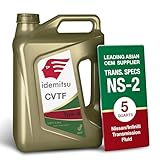
- Genuine Nissan OEM Fluid – CVTF I-NS2 Continuously Variable Transmission Fluid engineered to meet Nissan factory specifications
- Current Service Part Number – 999MP-CSHNS2. Supersedes and replaces 999MP-NS200P and 999MP-CV0NS2
- Designed for CVT Applications – Formulated specifically for Nissan vehicles requiring NS-2 specification CVT fluid
- Helps Maintain Performance – Supports proper friction characteristics, thermal stability, and internal component protection for smooth CVT operation
- 5 Quarts– Ideal for service and maintenance applications. Always verify compatibility with your owner’s manual or confirm using your VIN prior to purchase
- Dealer advantages: direct VIN-based campaign and warranty verification, access to Nissan bulletins and electronic service information, and the ability to perform Nissan-specific programming.
- Independent-shop advantages: another qualified diagnostic opinion and potentially more repair choices, provided the shop can document its testing and uses the correct Nissan procedure and fluid.
- Questions for either provider: Which codes and tests support the diagnosis? What root cause was verified? Does the proposed repair address that cause? Is a campaign or extension applicable? Are parts new, remanufactured, repaired, or used? What is the total out-of-pocket amount, written warranty, and expected downtime?
Nissan’s extension materials allow for a repair up to CVT assembly replacement where necessary, but they do not establish comparative prices, success rates, or downtime for different repair choices. Be cautious when a shop recommends a complete transmission solely from a symptom, a generic code, or a fluid color.
When a repair recommendation does not make sense
- No scan or inspection evidence: Request the codes, pressure or noise findings, and the service procedure used.
- Universal-fluid advice: Ask the provider to identify the exact Nissan specification for the VIN and model year.
- Immediate replacement without a VIN check: Verify campaigns and warranty extensions first.
- A promise based only on the model name: Eligibility is VIN-specific and may depend on mileage, in-service date, listed components, and settlement terms.
- “Flush it and see” as the entire diagnosis: Fluid service may be maintenance when appropriate, but it cannot prove or repair every mechanical, hydraulic, or software fault.
What is known about Nissan CVT reliability
Documented campaigns show that particular Nissan CVTs have had particular problems; they do not prove that every Nissan CVT will fail or that all model years share one defect. Conversely, Nissan’s public-road testing and fuel-efficiency claims for its latest generation do not establish an independent reliability rate. No independent population-level Nissan CVT failure statistic is established by the official materials discussed here, so owners should avoid converting complaint counts, forum reports, or warranty bulletins into a percentage risk.
Practical takeaway for owners
Treat a new judder, abnormal noise, slipping sensation, delayed engagement, warning light, or code as a reason to document and diagnose the vehicle—not as proof that the whole CVT is finished. The most reliable sequence is symptom record, VIN coverage check, safe driving decision, written diagnosis, and only then a repair or fluid-service decision based on the exact Nissan procedure.
Quick Recap
Product prices and availability are accurate as of the date/time indicated and are subject to change. Any price and availability information displayed on Amazon at the time of purchase will apply.




