Magnetic fields in electric cars are real, measurable, and not a reason to panic. The latest vehicle testing available found that normal driving exposure stayed within the health-protection limits intended to prevent established acute effects. That applies to the driver, passengers, and people using the car in ordinary conditions.
That is a more accurate conclusion than either extreme. An EV is not “field-free,” but current evidence does not show that driving or charging one causes cancer, makes occupants sick, or creates a lethal radiation hazard.
As an Amazon Associate I earn from qualifying purchases.
What produces magnetic fields in an EV?
Several systems in an electric car can create electromagnetic fields:
Quick wins for a faster PC:
Fix the driver behind crashes, sound loss and screen glitchesFind Drivers →Clear out junk files and repair common Windows errorsFree Scan →- The high-voltage battery and its cables
- The inverter, which converts battery power for the motor
- The traction motor
- Onboard chargers and other power electronics
- 12-volt wiring and accessories
- Bluetooth, Wi-Fi, cellular, keyless-entry, and other radio equipment
The fields most often discussed in this context are low-frequency magnetic fields created when electrical current flows through the vehicle. Some motors also contain permanent magnets, producing static magnetic fields.
#1 Best Overall

- Flex Level 1 EV Charger - The EVDANCE Level 1 electric car charger is compatible with J1772 electric vehicles and plug-in hybrid vehicles (North American Standard). *Tesla requires a SAE J1772 adapter.
- Convenient to Use - This charger has both NEMA 6-20 plug for 16A 240V charging (3.68kW, 10-12 mi/h) and a NEMA 6-20 to 5-15 plug adapter for 12A 120V charging (1.44kW, 2-5 mi/h). The included bag makes it easier to carry on the go. It also has a 25ft cable length, you can use it flexibly from anywhere in the garage or driveway.
- Check Your Outlet Type -This charger works with standard 120V NEMA 5-15/5-20 outlets (2-5 mph charging speed) and 240V NEMA 6-20 outlets (10-12 mph) . It's not compatible with NEMA 6-15/10-30/14-30/14-50/6-50 outlets – you'll need a NEMA 14-50/14-30/10-30/6-50 to 6-20 adapter (sold separately) to connect.
- Compatible EV Models -This EV charger works with most major electric vehicles, including Ford, Chevrolet, Hyundai, Audi, Nissan Ariya, Rivian R1S, Kia, and others. However, it's not compatible with Mini Cooper Electric Hardtop,Toyota Prus Prime/Z4X/RAV4Prime, Porsche Taycan Base/4S/Turbo/Turbo S or Tesla models (Tesla requires a J1772 to Tesla Adapter, sold separately). For a full list of compatible models, check out the Full Compatibility List on our product page.
- Indication Displays - LED display that can tell you the status as well as indicate errors while charging your electric vehicle.
These are non-ionizing fields. They do not carry enough energy to break chemical bonds in the way X-rays and gamma rays can. That does not mean every possible field strength is harmless: very strong low-frequency fields can induce currents in the body and stimulate nerves or muscles. Exposure limits are designed to prevent those established acute effects.
What did recent testing find?
A German Federal Office for Radiation Protection (BfS) investigation examined 11 electric cars, two hybrids, and one combustion-engine car. Measurements covered the driver, front passenger, and rear-seat positions during constant-speed driving, acceleration, braking, and standstill.
| Finding | What it means for drivers |
|---|---|
| Exposure varied considerably by vehicle | There is no universal “EV level.” Design, wiring, motor layout, and operating conditions matter. |
| Higher readings were generally found near feet and legs | The strongest localized fields were not usually around the occupants’ heads or chests. |
| Acceleration and braking often increased readings | Power flow changes can create short-lived peaks. |
| Some vehicles exceeded external reference levels in localized areas | A reference-level exceedance is a screening result, not a diagnosis of harm. |
| All tested vehicles complied with the relevant internal basic restrictions | The calculated induced fields inside the body remained within the limits intended to prevent established acute effects. |
The important detail is the distinction between reference levels and basic restrictions. Reference levels are external-field screening values calculated using conservative assumptions. If a reading stays below one, compliance is straightforward. If a localized reading exceeds one, that does not automatically mean the body has exceeded the actual internal limit. A more detailed assessment of the field induced inside the body is required.
Why a number such as 704% sounds worse than it is
The published test summary reported some results as percentages of a reference level. One maximum was reported at 704% for a front-passenger position while the car was stationary; another reached 320% during braking.
Those figures do not mean a passenger received 704% of a toxic dose, nor do they represent a 704% increase in cancer risk. They indicate that a particular external measurement was several times the screening value at that location and operating condition. The study then assessed the relevant internal exposure, rather than treating the screening number as a health outcome.
Rank #2

- 【Efficient Charging】VDLPOWERVP level 2/level 1 EV charger is equipped with NEMA 6-20 Plug(220V/240V), it offers 16A current and up 3.5kW output. Two charging options, low current charging can effectively reduce battery wear and prolong service life. Choosing to connect the conversion line for charging can realize a full day's commute mileage in one night.
- 【Level 1 & Level 2 EV Charger Adapter】This portable ev charger is equipped with NEMA 6-20 plug (Level 2, 240V, 16A) and NEMA 5-15 adapter (Level 1, 110V, 12A), you can connect our electric vehicle chargers to a standard household socket or a dedicated industrial socket, use it flexibly from anywhere in the garage or driveway.
- 【Intelligent Charging-Durable and Safe】The intelligent chip design of its control box can keep monitoring the charging status at any time, provides multiple safety protections such as lightning protection and leakage protection. This electric vehicle charger is made of premuim and sturdy materials and is FCC certified. EV Control box is IP65 waterproof and dustproof.
- 【Easy Charging and Indication Displays】Just connect to the outlet and the car, the ev charger can work properly. LED indicators that can tell you the status as well as indicate errors while charging your electric vehicle. It can help you get the charging station status information quickly.
- 【Portable Design】The ev charger has a 20ft charge cable, which is long enough for you to charge without getting tangled.The appropriate cord length and weight allow you to easily put it in the trunk of an electric car whether you are visiting friends or renting a vacation house.
This is why an inexpensive meter reading taken beside a seat, battery, or floor cannot by itself establish that a vehicle is dangerous.
Do EVs produce more magnetic fields than gasoline cars?
There is no simple rule that every EV produces higher fields than every gasoline-powered car. The BfS measurements found substantial differences between individual vehicles. The hybrid and combustion cars in the test also produced significant readings under some conditions.
Do these 3 things before closing this tab:
1Fix the driver behind crashes, sound loss and screen glitches2Repair Windows errors before they cause bigger problems3Scan for outdated or missing drivers - takes under a minuteVehicle architecture matters more than the badge on the trunk. A car with high currents routed close to a passenger’s feet may produce a different reading from one with a different battery, cable arrangement, shielding strategy, or motor design. Readings can also change as the vehicle accelerates, regenerates, brakes, or sits at a standstill with electrical systems operating.
What does the health evidence actually say?
At sufficiently high low-frequency field strengths, induced electrical currents can stimulate nerves and muscles. That is the established short-term hazard addressed by exposure limits.
For long-term, low-level exposure, current guidance from the International Commission on Non-Ionizing Radiation Protection (ICNIRP) says research has not demonstrated detrimental health effects at levels relevant to its guidance. The World Health Organization likewise says the overall evidence does not confirm health consequences from low-level electromagnetic-field exposure.
Rank #3

- 【Reliable Safety with PBE & LRC Tech】Powered by ELEGRP's exclusive PBE technology, this level 2 EV charger provides reliable protection against surges, leakage, and overloads—trusted by over 300 million households since 2000. The J1772 charger features advanced LRC tech for better conductivity, cooler operation, and stable charging speed
- 【Dual Charging Model】Charging speed depends on your outlet type. Use the NEMA 6-20 plug for Level 2 240V fast charging at up to 3.84kWh (11-14 miles/hr). For slower Level 1 charging 120V, use the included 5-15 adapter, offering 1.44kWh (4-5 miles/hr)
- 【Max 25FT Reach &and IP67 Weatherproof Reliability】 Our 25FT portable cable offers the maximum length allowed by NEC safety standards for garage, wall, or outdoor use. This electric car charger is IP67 waterproof and built for cold weather, from -21°F to 121°F, including heavy rain, or snow
- 【U.S.-Based Expert Support & and 2-Year Warranty】Get real help from our U.S.-based support team, available Mon–Sat (5 AM–3 PM PT) for fast, professional assistance. Every ELEGRP charger is backed by a 2-year replacement warranty, so you can charge your vehicle with confidence
- 【Universal J1772 Compatibility】Compatible with all SAE J1772 certified EVs, BEVs, and PHEVs. For Tesla owners: a J1772-to-NACS adapter (sold separately) may be required. Please verify your car compatibility before purchase and contact our support team with any questions
Some epidemiological research has reported a small statistical association between residential low-frequency magnetic fields and childhood leukemia. That finding remains scientifically debated and has not established that the fields cause the disease. It also does not demonstrate that riding in an EV causes cancer.
What about charging?
Charging creates a different field pattern from driving because substantial current flows through the charging cable, inlet, onboard charger, and battery. Cable charging and wireless charging should therefore be considered separately.
For ordinary plug-in charging, the relevant precautions are the normal ones: use equipment that meets local safety requirements, do not use damaged cables, and follow the vehicle and charger manufacturer’s instructions. There is no evidence that sitting in or near a normally operating car during routine charging is a lethal exposure.
Wireless inductive charging deserves its own assessment because it transfers energy through a magnetic field between a ground coil and a receiving coil on the vehicle. Exposure depends on system design, coil alignment, shielding, distance, and automatic shutoff or foreign-object detection. A compliant wireless system is engineered around those issues; it should not be judged by comparing it casually with a phone or a household magnet.
The practical exception: pacemakers and other implants
People with pacemakers, implantable cardioverter-defibrillators (ICDs), or other electronic implants should not interpret general public exposure limits as a personal guarantee of device compatibility. Those limits are intended to protect the body from established effects; they are not a substitute for the implant manufacturer’s interference guidance.
The Tool Desk
Outbyte Driver Updater FREEScan for outdated or missing drivers - takes under a minuteDriver Scan →Outbyte PC Repair FREERepair Windows errors before they cause bigger problemsFix Now →Rank #4
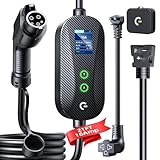
- Universal J1772 EV Charger: Compatible with all J1772-equipped EVs and PHEVs, this portable EV charger seamlessly powers brands like Ford, GM, Nissan, Audi, BMW, Kia, Hyundai, Honda, and Chevy. No more compatibility worries—just plug in and charge confidently. Whether you’re at home or on the road, this versatile electric car charger ensures your vehicle is always ready to go
- Smart Charging, Your Way: Customize your charging experience with adjustable current settings (8A, 10A, 12A, 16A) and a flexible 0–12H delay timer. Simply press and hold the “A” or “T” button for 3 seconds to start the adjustment, then press briefly to select, and finally hold again for 3s to confirm. The bright LCD screen displays real-time data like voltage, current, and power, putting you in command. Note: Once charging has started, the settings cannot be adjusted. You will need to stop charging before making any changes
- Plug Anywhere, Charge Anytime: No matter where you are, power up confidently. Supports NEMA 5-15 / 5-20 (120V丨8-12A) and NEMA 6-20 (240V丨8-16A) outlets—ideal for home, garage, or road trips. Compact and portable, it’s the perfect balance of power and freedom
- Safety You Can Trust: Built with triple overcurrent protection, a fireproof PC shell, and an IP67 waterproof rating, this portable EV charger ensures safety in any condition. It operates reliably in temperatures from -22°F to 122°F, so you can charge worry-free, rain or shine. Trust in advanced engineering that puts your safety first—because every charge should be secure
- 2-Year Professional Care & Support: If any compatibility or operational issues arise, contact the Grasside Team via Amazon Message Center for a prompt response within 12 hours. Backed by a 2-Year Grasside Care, this J1772 charger offers long-term support and peace of mind
Ordinary travel in a car is generally considered safe, but the specific device instructions take priority. The American Heart Association and U.S. Food and Drug Administration commonly advise keeping strong magnets at least 6 inches (15 cm) from an implanted device. That means avoiding a magnetic accessory, phone case, charging component, or other strong magnet directly over the implant.
- Check the implant manufacturer’s instructions before using unfamiliar magnetic accessories or wireless charging equipment.
- Do not deliberately place a strong magnet over the implant.
- If you feel symptoms or suspect interference, move away from the suspected source and contact your clinician or device manufacturer.
- Do not assume that owning an implant means you must avoid all EVs.
This is a device-interference question, not evidence that an EV’s battery is poisoning its occupants.
Why your consumer EMF meter may mislead you
A meter can be useful for curiosity, but a single peak number is not a complete exposure assessment. Before interpreting it, you would need to know:
- Whether it measures static, low-frequency, electric, or radiofrequency fields
- The frequency range and measurement units
- Where the probe was placed and how the body was oriented
- Whether the car was accelerating, braking, charging, or stationary
- How long the field lasted
- Whether the reading can be related to induced fields inside the body
Do not compare a dashboard reading in one car with a floor reading in another and call the higher number a health risk. The instrument, location, frequency, and driving condition may all be different.
What’s actually slowing this PC down?
Pick the symptom - the matching free tool is one click away.
Common claims, checked
| Claim | Verdict |
|---|---|
| “EV batteries emit lethal radiation.” | False. EV systems produce non-ionizing electric and magnetic fields, and current vehicle testing does not show a lethal hazard during ordinary use. |
| “Any reading over an ICNIRP reference level proves the car is unsafe.” | False. It signals that a more detailed internal-exposure assessment may be needed. The recent study found compliance with the relevant basic restrictions. |
| “Every EV has higher magnetic fields than a gasoline car.” | Unsupported. Results vary by vehicle and operating condition, and conventional cars can also produce substantial fields. |
| “The WHO says EV fields are carcinogenic.” | Misleading. The WHO describes the overall evidence as not confirming health consequences from low-level exposure. |
| “A cheap EMF meter proves my car is dangerous.” | No. It may show a field, but not the health risk without proper frequency, location, duration, and exposure analysis. |
FAQ
Are electric cars safe to drive from an EMF perspective?
Current evidence does not show that normal EV driving causes harmful health effects. A recent test of 11 electric cars, two hybrids, and one combustion car found that calculated internal exposures complied with the relevant ICNIRP basic restrictions.
Best Value
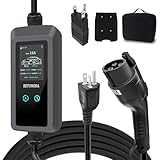
- 2026 CHARGING UPGRADE: The upgraded J1772 charger features four adjustable current levels (8A/10A/13A/16A) and an intelligent delay timer from 1 to 12 hours. Whether you're charging at night or during off-peak hours, you can enjoy smarter energy usage, lower costs, and complete convenience — all on your own schedule.
- ONE CHARGER FOR EVERY J1772 EV/PHEV: Works seamlessly with all SAE J1772 electric vehicles and plug-in hybrids—from Tesla (with adapter) to Ford, GM, Nissan, Audi, BMW, Kia, Hyundai, Honda, Chevy, and more. Ideal for both home and travel, this 16A Level 1 & 2 charger keeps your EV fully charged and ready whenever you hit the road.
- LEVEL 1 & 2 PORTABLE CHARGER ANYTIME: Designed for maximum flexibility, the BETUMODA Level 1 & 2 EV charger features both 5-15 and 6-20 plug compatibility. Whether you're charging at home, at a friend’s house, or on the road, you can stay powered up anywhere. NEMA 6-20 plug for Level 2 EV charging (240V, 16A, 3.68kW, 9–12 miles/hr) and a NEMA 5-15 adapter for Level 1 EV charging . NOTE: The 5-15 adapter is compatible only with 5-15 outlets and should not be used above 16A—protecting both your vehicle and your home’s electrical system.
- COMPLETE CONTROL INSTANTLY: Many EV chargers only show minimal information, leaving you guessing. Our upgraded charger, equipped with a 2.8-inch Touch LED display, provides comprehensive, real-time updates on voltage, current, and power load. The built-in delayed start timer lets you set charging exactly when it’s convenient for you. With just one glance, you can monitor and manage every aspect of your charging session—making each charge smarter, safer, and more efficient.
- BUILT FOR SAFETY AND DURABILITY: Charge with confidence every time. This portable EV charger is equipped with advanced protection features—including overheat, overvoltage, and overcurrent protection—and is FCC and CE certified. Its intelligent control box features a smart monitoring chip to track charging status in real time. With an IP65-rated housing, every charge is safe, reliable, and worry-free.
Are magnetic fields stronger inside an EV during acceleration?
They can be. The vehicle measurements generally found higher localized readings during acceleration and braking than during constant-speed driving, with stronger readings often near the feet and legs. The measured vehicles still complied with the applicable internal exposure restrictions.
Can an EV interfere with a pacemaker?
Ordinary car travel is generally considered safe, but implant compatibility is device-specific. Follow the pacemaker or ICD manufacturer’s instructions, keep strong magnets at least 6 inches (15 cm) away when advised, and contact your clinician if you suspect interference.
Should I avoid sitting in my EV while it charges?
There is no evidence that normal charging creates a lethal exposure. Charging produces different field patterns from driving, especially with wireless systems, so use compliant equipment, follow the manufacturer’s instructions, and take extra advice if you have an implanted electronic device.
Free tools Windows power users keep installed
One-click scans. No signup required.
The Bottom Line
Magnetic fields in electric cars can briefly become locally elevated, especially around the floor during acceleration, braking, or certain charging conditions. But the latest vehicle testing found that internal exposure remained within the limits designed to prevent established acute effects, and current evidence does not show that ordinary EV use causes illness or a fatal radiation hazard. If you have a pacemaker or another implanted electronic device, follow its manufacturer’s specific distance and interference guidance rather than avoiding EVs automatically.
Quick Recap
Product prices and availability are accurate as of the date/time indicated and are subject to change. Any price and availability information displayed on Amazon at the time of purchase will apply.




