Recommended Free Tools
Hypermiling means reducing fuel use through driving choices and vehicle care. The safest, most reliable approach is straightforward: accelerate and brake smoothly, obey speed limits, limit idling, remove unnecessary weight, combine errands, keep tires properly inflated, and follow the manufacturer’s maintenance schedule. Your results will vary with your vehicle, route, weather, traffic, and driving habits; no technique guarantees a set MPG gain.
How can I hypermile safely?
Think of hypermiling as efficient, predictable driving—not as a contest to use the least fuel at any cost. The U.S. Department of Energy (DOE) says, “Driving sensibly (smooth acceleration and braking) is safer and may save more than gas money” in its July 18, 2022 article, Tips For Your Tank This Summer Driving Season.
- Follow posted speed limits and drive at a speed appropriate for traffic and road conditions.
- Leave enough space to anticipate traffic and brake smoothly; never trade safe stopping distance for fuel savings.
- Do not coast in neutral or switch off the engine while the vehicle is moving.
- Do not impede traffic by driving unusually slowly in an attempt to save fuel.
What are the best ways to improve gas mileage?
Accelerate and brake smoothly
Build speed gradually and look ahead so you can respond to slowing traffic without abrupt braking when conditions allow. Aggressive driving—such as rapid acceleration and hard braking—can reduce fuel economy. DOE’s July 2022 article estimates that it can lower gas mileage by up to 30% at highway speeds and up to 40% in stop-and-go traffic. Those are DOE estimates, not predictions for every vehicle or driver.
Choose a sensible speed
Obey the limit and keep pace safely with the flow of traffic. DOE notes that average gas mileage usually decreases rapidly above 50 mph. Its July 2022 article estimates that each 5 mph driven over 50 mph is equivalent to paying an additional $0.34 per gallon. This is DOE’s estimate in that article, not a current universal fuel-price calculation or a reason to drive at an unsafe speed.
What’s actually slowing this PC down?
Pick the symptom - the matching free tool is one click away.
#1 Best Overall

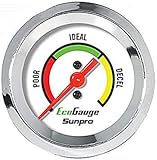
- Compatible with most gasoline ODBII equipped vehicles from 1996 to present
- Includes 5ft. Wiring Harness with 1 wire installation which easily plugs into OBDII port
- Displays RPM, Speed, Instant MPG, and Average MPG.
- Installs in minutes!
- Ecometer's ecograph helps you improve your driving habits to increase your fuel efficiency and reduce your fuel costs.
Reduce idling and unnecessary trips
Avoid leaving the engine running when you do not need to. Combine errands where practical: EPA notes that several short trips can be combined into one longer trip. The EPA and DOE fuel-saving tips explain that fuel economy depends on driving habits as well as vehicle and trip conditions.
Carry less and consider roof cargo carefully
Remove tools, sports equipment, and other cargo you do not need. Extra weight can increase fuel use. Roof cargo can also affect aerodynamics, so avoid treating a roof box or other aerodynamic change as a universal upgrade; its effect depends on the vehicle and how you use it.
Rank #2

- Programmable 3-In-1 Automotive Trip Computer: Diagnostic Scan Tool, And Up To 37 Digital Gauges In One (Vehicle Dependent)
- Real-Time Monitoring Capabilities: Watch Fuel Consumption, Cost-Per-Mile, Coolant Temperature, Engine Speed, Horsepower, And Much More In Real Time. Simple 5-button operation allows you to quickly and easily access the powerful features of the ScanGauge
- Wide Vehicle Compatibility: Works On All 1996 Or Newer Obd2 Cars, Including Gas, Diesel, Propane And Hybrid Vehicles with 16pin OBD2 port
- Diagnostic Trouble Code Functions: Checks For Diagnostic Trouble Codes (Dtcs), Clears The Codes, And Can Turn Off The Check Engine Light
- Simple Power Connection: No Batteries Required - The single connection to the diagnostic connector under the dashboard is all that is needed
Maintain the vehicle as directed
Follow the maintenance schedule in your owner’s manual and use the manufacturer-recommended motor-oil grade. DOE’s July 2022 article estimates that properly maintained vehicles have 4% better overall gas mileage on average, and gives an estimated saving of $0.19 per gallon. These are dated DOE estimates, not guaranteed results or a promise that every maintenance item will produce the same improvement.
How should I check tire pressure?
- Find the recommended pressure on the vehicle’s tire-information placard or in the owner’s manual. Use that value—not the maximum pressure printed on the tire sidewall.
- Check pressure at least monthly, when the tires are cold, using a tire-pressure gauge. NHTSA recommends keeping a gauge in the vehicle.
- Adjust pressure to the vehicle’s recommended value and check each tire. A tire-pressure monitoring system can alert you to a pressure problem, but it does not replace monthly checks.
DOE’s July 2022 article estimates that properly inflated tires could improve gas mileage by an average of 0.6%, potentially as much as 3%, and that under-inflation can lower gas mileage by 0.2% for every PSI drop in average pressure. These are DOE estimates; your result will depend on your vehicle and tire condition. For additional instructions, see NHTSA’s Tire Safety Ratings and Awareness | TireWise.
Quick wins for a faster PC:
Clear out junk files and repair common Windows errorsFree Scan →Scan for outdated or missing drivers - takes under a minuteDriver Scan →Repair Windows errors before they cause bigger problemsFix Now →Rank #3

- Plug and Play: This automotive gauge is easy to install, requiring no complicated wiring or professional installation; it connects directly to the vehicle's system.
- Fuel Economy Monitoring: Designed to help track and optimize fuel consumption, allowing drivers to monitor vehicle efficiency and potentially reduce fuel costs.
- Portable Design: This compact and lightweight gauge can be easily moved between different vehicles or removed when not needed. This fuel economy monitor can easily fit into your armrest box.
- Universal Compatibility: Suitable for vehicles using gasoline, diesel, water, and lubricants, making it suitable for a wide range of automotive applications.
Should I buy low-rolling-resistance tires?
Consider tire type when you already need replacements, not as a reason to discard usable tires for a speculative fuel-economy gain. NHTSA estimates that a 10% reduction in tire rolling resistance corresponds to a 1–2% improvement in vehicle fuel economy. Its TireWise page does not state a publication year for that estimate.
Compare vehicle-approved options across more than fuel economy: NHTSA identifies traction, durability, handling, and ride comfort as relevant considerations. Confirm that the tire size matches the vehicle’s original or manufacturer-recommended fitment, and weigh the trade-offs against your climate and driving needs. A low-rolling-resistance tire is not automatically the best choice for every vehicle or condition.
Independent reader supportYour contribution helps us test, update, and keep practical guides available for everyone.Do EPA mileage ratings predict my actual MPG?
No. EPA fuel-economy ratings are standardized figures designed to help compare vehicles, not a guarantee of what an individual driver will achieve. Actual mileage can differ with route, driving behavior, vehicle condition and maintenance, weather, road quality, and vehicle differences. EPA explains the purpose and limits of its ratings in its frequently asked questions about transportation, air pollution, and climate change; its Your Mileage May Vary page discusses why real-world results differ.
For the same reason, there is no single reliable MPG increase that every driver can expect from hypermiling. DOE’s estimates for particular practices describe those practices; they do not establish a guaranteed combined gain for a particular driver.
Best Value

- Plug and Play: This automotive gauge is easy to install, requiring no complicated wiring or professional installation; it connects directly to the vehicle's system.
- Fuel Economy Monitoring: Designed to help track and optimize fuel consumption, allowing drivers to monitor vehicle efficiency and potentially reduce fuel costs.
- Portable Design: This compact and lightweight gauge can be easily moved between different vehicles or removed when not needed. This fuel economy monitor can easily fit into your armrest box.
- Universal Compatibility: Suitable for vehicles using gasoline, diesel, water, and lubricants, making it suitable for a wide range of automotive applications.
Are fuel-saving devices or additives worth trying?
Be skeptical of products promising dramatic savings without credible evidence. EPA’s consumer information on devices and fuel additives to improve fuel economy and reduce pollution warns that unverified modifications may damage a vehicle or raise safety, emissions, warranty, and legal concerns. Stick to sound driving habits and manufacturer-recommended maintenance rather than relying on an MPG gadget or additive.
Quick Recap
Product prices and availability are accurate as of the date/time indicated and are subject to change. Any price and availability information displayed on Amazon at the time of purchase will apply.