Quick wins for a faster PC:
Scan for outdated or missing drivers - takes under a minuteDriver Scan →Clear out junk files and repair common Windows errorsFree Scan →Fix the driver behind crashes, sound loss and screen glitchesFind Drivers →Short answer: You cannot confirm a failed Subaru head gasket from one symptom, a clean oil cap, or a normal test drive. Coolant loss, overheating, coolant odor, staining at the head-to-block seam, contaminated fluids, or white, sweet-smelling exhaust should trigger a careful inspection. A qualified mechanic must identify the leak source and support the diagnosis with testing before you agree to a head-gasket replacement.
What a Subaru head-gasket problem can look like
A head gasket seals the joint between the cylinder head and engine block. It keeps combustion pressure, engine oil, and coolant in their separate passages. A failure can be internal, external, or both.
As an Amazon Associate I earn from qualifying purchases.
Internal leakage
An internal leak can allow combustion gases into the cooling system, or coolant into a cylinder or the crankcase. Possible clues include gradual, unexplained coolant loss; intermittent overheating; pressure or residue in the coolant overflow bottle; persistent white or sweet-smelling exhaust; and, in advanced cases, oil and coolant mixing. These clues are not unique to a head gasket. A cracked component, cooling-system fault, failed hose, radiator problem, thermostat issue, or another engine leak can produce similar symptoms.
What’s actually slowing this PC down?
Pick the symptom - the matching free tool is one click away.
External leakage
An external leak leaves coolant or oil outside the combustion chambers, often near the head-to-block joint. Look for fresh wetness, dried coolant crystals, oily staining, or a recurring smell after the engine reaches operating temperature. The joint can be difficult to see because of exhaust components, intake parts, shields, and the engine’s position in the vehicle. A dry area you can see does not prove that hidden areas are dry.
#1 Best Overall

- Complete Combustion Leak Test Kit: Includes fluid and all necessary components with nothing more to buy for immediate testing
- Easy Visual Indicator: Fluid turns from blue to yellow when combustion leak is present, providing clear and instant results
- Comprehensive Leak Detection: Tests in seconds for combustion leaks caused by blown head gasket, cracked head or block, pulled bolts or studs, and warped sealing surfaces
- Quality American Manufacturing: Made in USA for over 45 years with limited lifetime warranty ensuring long-lasting reliability
- Convenient Storage Solution: Comes in a box suitable for tool storage to keep your kit organized and protected
Why one clue is never enough
Coolant loss may come from a hose, radiator, water pump, reservoir, cap, heater circuit, or a small leak that evaporates before it drips. Overheating can result from restricted airflow, a thermostat, a fan, low coolant, or a failing radiator. A milky oil appearance can be caused by condensation in some conditions, while a clean oil cap does not rule out a combustion leak. Treat symptoms as reasons to investigate, not as a diagnosis.
Which Subaru engines and years deserve extra scrutiny?
Head-gasket patterns often discussed in repair references concern particular EJ25 2.5-liter engines, and the pattern differs between naturally aspirated and turbocharged versions. It is not accurate to apply an older naturally aspirated 2.5-liter pattern to every Subaru.
Subaru technical bulletin 0511-06, dated May 1, 2011, describes a confirmation procedure for naturally aspirated 2.5-liter engines in specified 2005-and-later Forester, Impreza, and Legacy/Outback applications. The bulletin’s applicability depends on the exact engine and vehicle. A separate repair-trade reference describes internal leakage in some earlier EJ25 non-turbo engines and external leakage in certain later naturally aspirated variants, while warning that its information is not a Subaru defect-rate study or a primary Subaru bulletin.
Before judging risk, record the vehicle identification number, model year, model, engine code, and whether the engine is naturally aspirated or turbocharged. Two Subarus with the same badge can have different engines, service information, and failure patterns. Do not use a mileage rule such as a guaranteed failure at 100,000 miles; no reliable prevalence or failure-rate percentage is established here.
Used-car inspection workflow
Perform the following checks in order. They are screening steps, not a substitute for a professional diagnosis.
Rank #2

- Over 100 Tests Per Kit: Keep your engine’s health and performance in peak shape with this Combustion Leak + Head Gasket Test Kit, including an 8oz bottle of leak test fluid. With enough fluid to test over 100 times, you can regularly check for leaks to prevent severe engine damage and maintain optimal performance
- Accurate Detection in Seconds: Easily identify combustion leaks from head gaskets, cylinder heads, and engine blocks, ensuring your engine runs smoothly. Leak Test fluid changes from purple to yellow in seconds once CO2 is detected, meaning you can test for leaks with confidence
- Easy & Essential Engine Maintenance: Leak tester + nozzle designed to fit multiple engine parts across a variety of vehicles, including cars, trucks, motorcycles, tractors, excavators, forklifts, and more. Simply follow the included instructions for a hassle-free testing process. Perfect for both professional mechanics and DIY car enthusiasts
- Instant Leak-Detection Formula: Our advanced chemical formulation changes color in the presence of CO2 carbon dioxide, providing clear and immediate results for head gaskets, combustion leaks, and exhaust, coolant, boost and fuel systems
- Made in the USA: Combustion Leak + Head Gasket Test Kit is produced and bottled in the USA, ensuring it meets the highest quality standards. We take pride in knowing our customers get the best possible product
1. Start with records and the seller’s history
Ask for invoices, inspection reports, cooling-system work, and any document describing a head-gasket repair. Look specifically for repeated coolant top-offs, overheating complaints, radiator or water-pump replacement, cooling-system flushes, and work performed after a temperature warning. A claim that the gasket was replaced is more useful when the paperwork identifies the parts, machine work, seals, fluids, and date.
Ask whether the car has ever overheated, needed coolant between services, produced a coolant smell, or emitted unusual exhaust. Record the answers, but treat them as history rather than proof. A seller may not have noticed an intermittent problem, and a recently cleaned engine can hide old residue.
Free tools Windows power users keep installed
One-click scans. No signup required.
2. Inspect only when the engine is cold
Park on a level surface and follow the owner’s manual for checking coolant level and condition. Never remove a radiator cap or pressurized reservoir cap from a hot engine. Hot coolant can cause severe burns, and opening the system can alter the evidence you are trying to evaluate.
With the engine cold, note whether the level is below the specified mark and whether the coolant looks unusually dirty, oily, or contaminated. Do not infer a failed gasket solely from color; old coolant, mixed coolant types, rust, or another cooling-system issue can change appearance. Check the oil dipstick and filler area for unusual creamy contamination or a rising oil level. A normal-looking dipstick and oil cap do not clear the engine.
3. Search the head-to-block seam
Use a flashlight to inspect accessible portions of the head-to-block joint. Look for fresh wetness, dried crusty residue, dark oily tracks, or staining that starts at the seam and travels downward. Photograph anything you find before the engine is cleaned. On a horizontally opposed Subaru engine, access and visibility vary by model, and covers or exhaust parts may block the most important area.
Rank #3
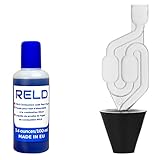
- The original head gasket tester kit of the reputable brand “RELD”
- Produced in the European Union. The efficiency is 99.9%.
- Fast and convenient. Most importantly you can check whether the head gasket of your car is fully functional without visiting the mechanic.
- If the head gasket looks damaged, you can check it yourself and save time and money.
- Thanks to the universal adapter with a wide measuring range (25-55 mm), we can check among other things: cars, trucks, road tractors, excavators, motorcycles and forklifts.
Do not crawl under an unsupported vehicle or touch hot components. A visual inspection cannot reliably find a leak that occurs only under pressure or at operating temperature.
4. Check for operating clues without creating a test-drive diagnosis
During a normal, lawful drive, watch the temperature gauge and note warning lights, heater performance, unusual smells, or persistent exhaust vapor after the engine is fully warm. Do not deliberately overheat the vehicle to see what happens. A drive with no warning is not proof that the gasket is sound; small leaks may appear only under load, after shutdown, or when the system is pressurized.
5. Make the purchase conditional on an independent inspection
If there is coolant loss, residue, overheating history, unexplained odor, or suspicious exhaust, require an inspection by a Subaru specialist or another qualified independent mechanic before committing to the purchase. Ask the shop to identify the leak source, list the tests performed, and distinguish a confirmed head-gasket leak from a suspected one. The seller’s mechanic should not be the only person deciding whether you accept a major repair recommendation.
Tests that can confirm or challenge the diagnosis
Cooling-system pressure test
A technician pressurizes the cooling system and checks whether pressure falls or coolant appears at a specific location. This can reveal external leaks that are difficult to see during a cold inspection. The test must be interpreted with the vehicle’s correct pressure specification and an inspection of hoses, radiator, pump, heater circuit, and engine joints. Pressure loss alone does not identify a head gasket.
Combustion-leak or block test
A combustion-leak test samples gases at the cooling-system expansion point and looks for combustion products. A positive result supports an internal combustion-to-coolant leak, but the mechanic should correlate it with coolant level, overheating behavior, compression or leak-down findings when appropriate, and the actual engine condition. A negative result does not automatically explain coolant loss from an external leak.
Recommended Free Tools
Rank #4
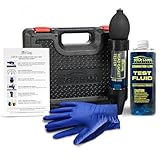
- The Gold Label Detailing Combustion Leak Tester and Head Gasket Leak Tester is a must-have tool for any professional auto mechanic looking for a reliable and efficient way to detect internal engine combustion leaks and blocks quickly and easily.
- This Block Test Kit is designed for professional auto mechanics and DIY'ers who require a high-quality detector test to identify potential problems in their engines.
- The heavy duty head gasket test is a smart addition to your toolbox, as it can help you speed up the identification of head gasket leaks and blocks, allowing you to make repairs sooner rather than later
- With its easy-to-use design and clear instructions, this leak tester is perfect for both novice and experienced auto mechanics and DIY'ers.
- Whether you're working on a car, truck, or other vehicle, the Gold Label Detailing Combustion Leak Tester and Head Gasket Leak Tester is a reliable tool that can help you save time and money on repairs.
Additional shop checks
Depending on symptoms, a shop may inspect spark plugs, perform compression or leak-down testing, verify cooling-system operation, inspect the radiator and thermostat, and use a UV dye or other method to trace coolant. These are diagnostic choices for the technician. The key question is not whether one test was performed, but whether the evidence identifies the failed component and excludes simpler causes.
What Subaru’s diagnostic bulletin says
The reproduced Subaru TSB 0511-06 describes a technician procedure for specified naturally aspirated 2.5-liter applications. It calls for cleaning the affected gasket area, warming the engine until the radiator fan operates, holding the engine at 3,000 rpm for one minute, shutting it off, allowing it to cool for three hours, and then reinspecting the area.
The bulletin’s decision rule is explicit: Replace the head gasket only if oil/coolant leak is confirmed.
If no leak is found, the procedure says not to perform the repair. This is professional service guidance, not a buyer DIY test. Do not reproduce the procedure on a vehicle you do not own or over-rev an engine based on a bulletin you have not confirmed applies. A shop should verify the current Subaru service information, vehicle application, and any revisions before relying on it.
How to evaluate a claimed previous repair
- Request documentation: Look for an invoice showing the engine, parts replaced, date, mileage, and shop identity.
- Check what was actually done: A cooling-system flush or sealant treatment is not the same as head-gasket replacement. Ask whether the heads were inspected or machined and whether related seals and fluids were renewed.
- Look for current evidence: A repaired car should still be checked for coolant level, fresh seepage, overheating behavior, and residual odor.
- Ask about recurrence: Find out whether coolant loss or overheating returned after the repair and whether the engine was driven while overheated.
- Have an independent shop verify it: Paperwork supports a claim but does not guarantee the repair was correct or that another leak is absent.
Do not assume that a seller’s statement that the gasket was replaced increases value. The quality of the work, the reason for failure, machine-shop documentation, and present engine condition matter more than the label alone.
Historical Subaru campaigns and warranty extensions
Reproduced Subaru campaign materials describe external head-gasket coolant leaks on certain vehicles from the 1999–2002 period. The historical program described an eight-year or 100,000-mile limited warranty extension, whichever came first, for specified vehicles. Those terms were vehicle-specific and time-limited.
Best Value

- ACCURATE DUAL-CHAMBER DESIGN: Features a dual-chamber system to enhance test accuracy by filtering alkaline particles that might cause false combustion leak readings, ensuring reliable results for both gasoline and diesel engines
- VERSATILE COMPATIBILITY: Our leak detector is compatible with both gasoline and diesel engines, offering broad utility and providing an accurate method to test for head gasket, cylinder head, and engine block leaks
- FAST AND ECONOMICAL: Provides a rapid, cost-effective solution for detecting combustion gas leaks with minimal downtime or expense for your vehicle, ensuring swift diagnosis and repair for improved engine health
- COLOR-CHANGING TESTER FLUID: Includes a 16 oz. bottle of tester fluid; turns from blue to yellow for gasoline engines and blue to green for diesel, offering a clear visual indicator of the presence of a combustion leak
- COMPLETE TESTING KIT: Comes with a dual-chamber tester, 16 oz. tester fluid, and easy-to-follow operating instructions, providing everything needed for accurate and efficient combustion leak testing
That history does not make every Subaru in those years eligible today, and it is not a current blanket recall. Check the VIN directly with Subaru for the correct market and review the vehicle’s records. Subaru’s official recall-information page is the appropriate starting point for VIN follow-up. A campaign search cannot replace a mechanical inspection, and an expired or inapplicable program does not prove the vehicle has a bad gasket.
Independent reader supportYour contribution helps us test, update, and keep practical guides available for everyone.Comparing two used Subarus
When two cars have similar prices, compare documented evidence rather than model reputation. Use the same questions and inspection standard for both vehicles.
| Decision point | Stronger evidence | Warning sign |
|---|---|---|
| Engine identity | VIN, engine code, model year, and naturally aspirated or turbo configuration are documented. | The seller cannot identify the engine or provides conflicting information. |
| Cooling history | Records show routine service with no unexplained coolant additions or overheating repairs. | Repeated top-offs, temperature warnings, or vague cooling-system work. |
| Visible condition | No fresh wetness or residue after a cold inspection and cleaning history is explained. | Coolant crystals, oily staining, or seepage at the head-to-block seam. |
| Diagnostic status | An independent shop identifies the source and documents supporting tests. | The seller says it is a gasket problem without test results, or says it is fine without inspection. |
| Repair history | Invoices list parts, machine work, mileage, and a reputable repair facility. | A verbal claim, stop-leak treatment, or incomplete paperwork. |
| VIN programs | Subaru confirms campaign status for that VIN and market. | Someone cites an old campaign as though it guarantees current coverage. |
A car with a documented, properly verified repair may be a better choice than a lower-mileage car with unexplained coolant loss. Conversely, a clean-looking engine with no records should not automatically outrank a car whose history is complete and whose current tests are normal.
When to walk away or renegotiate
Pause the purchase
- The temperature warning light has appeared, the gauge has entered the hot range, or the car overheats during inspection.
- The coolant level is low and the seller cannot explain why.
- There is active coolant or oil seepage at the head-to-block area.
- The coolant reservoir shows unusual residue, bubbling, or an unexplained odor after the engine warms.
- The seller refuses an independent inspection or will not allow the vehicle to be checked cold.
Proceed only with written conditions
If you remain interested in a car with suspicious evidence, make the purchase contingent on a written inspection by an independent shop. Specify that the shop must identify the leak source and state whether a head-gasket replacement is confirmed, not merely suspected. Do not accept a promise that the seller will fix it later without a written repair scope and documentation.
Do not use stop-leak as a diagnosis
A sealant product can change symptoms without proving that the underlying problem is repaired. It may also complicate later diagnosis. Treat a vehicle recently treated with cooling-system sealant as one requiring especially careful records review and testing.
Common mistakes buyers make
- Relying on the oil cap: A clean cap does not rule out an external leak or a combustion leak that has not mixed with oil.
- Assuming white exhaust always means a gasket: Condensation and other faults can create vapor; persistent, sweet-smelling exhaust is a clue that needs testing.
- Believing one pressure test settles everything: Pressure testing can find an external leak but may not identify every internal failure.
- Generalizing from internet anecdotes: Engine family, aspiration, year, maintenance, and overheating history change the risk.
- Confusing a campaign with a recall: Historical warranty extensions had specific vehicles and time limits.
- Accepting a diagnosis without the source: Ask what failed, where the leak was found, and which test supports the conclusion.
Questions to put on the inspection report
- Is there an external coolant or oil leak, and exactly where does it begin?
- Did the cooling-system pressure test hold the specified pressure?
- Was a combustion-leak or block test performed, and what was the result?
- Is there evidence that the engine has overheated or that coolant entered the oil or cylinders?
- Are the symptoms consistent with a head gasket, or is another component the confirmed source?
- Does the shop recommend monitoring, a targeted repair, or head-gasket replacement, and why?
- Does the technician confirm that the applicable Subaru service information covers this engine and model?
Keep the answers with the purchase records. If the shop cannot identify a source, a replacement recommendation is premature.
Bottom line for a used-Subaru shopper
Suspect a head-gasket problem when coolant loss, overheating, odor, residue, fluid contamination, or persistent sweet-smelling exhaust appear together or recur in the history. Do not condemn the car from one clue, and do not clear it because a test drive was normal. Identify the exact engine and year, inspect the seam and maintenance records, obtain cooling-system and combustion-leak testing when symptoms warrant, and require an independent mechanic to confirm the leak source. Subaru’s own reproduced service guidance says replacement should occur only after an oil or coolant leak is confirmed.
Quick Recap
Product prices and availability are accurate as of the date/time indicated and are subject to change. Any price and availability information displayed on Amazon at the time of purchase will apply.




