Quick wins for a faster PC:
Fix the driver behind crashes, sound loss and screen glitchesFind Drivers →Clear out junk files and repair common Windows errorsFree Scan →Scan for outdated or missing drivers - takes under a minuteDriver Scan →Replace a tire when its tread reaches 2/32 inch, its wear bars are level with the tread, or it has serious damage such as a bulge, cut, or exposed cord. Tires may also need attention before they look worn: age, uneven wear, repeated pressure loss, noise, or vibration can call for a professional inspection. Check all four tires regularly, and follow your vehicle and tire makers’ guidance.
Check tread depth and wear bars
The National Highway Traffic Safety Administration (NHTSA) says tires are not safe when tread is worn to 2/32 inch. At that point, replace them. Most tires have built-in treadwear indicators—raised bars across the grooves. When the surrounding tread is level with those bars, the tire has reached its replacement threshold.
Use the penny test as a quick check
- Insert a penny into a tread groove with Lincoln’s head upside down and facing you.
- If you can see the top of Lincoln’s head, the tread is too worn: replace the tire.
- Repeat in several grooves and on each tire, since wear can differ across a tire and between tires.
The penny test is a simple inspection aid, not a precise depth measurement. NHTSA recommends checking tread at least monthly, along with tire pressure. Its guidance is on TireWise.
Look for damage, not just worn tread
Inspect the tread and sidewalls for cuts, cracks, bulges, or exposed cord or fabric. A tire can be unsafe even when it still has plenty of tread. NHTSA says a tire worn to its indicators at 2/32 inch or less, or with exposed cord or fabric, must be replaced immediately.
#1 Best Overall

- 1.Accurate and Efficient: Different colors on the bar represents different scopes, the red range on bar: 0 - 3/ 32; Yellow range on bar: 3/ 32 - 6/ 32; Green range on bar: 6/ 32 - 32/ 32, allowing you easy and fast to read and calibrated
- 2.Reusable:Tire tread gauge is made of sturdy material, reusable and long lasting, which is an efficient tool to moenitor tire tread levels, make driving safer
- 3.Convenient:Tire tread Depth gauge measures approx 3.35 x 1.06 inch, small size, also features a pocket clip for easy carrying, you can clip it on your pocket, ideal for quick and convenient getting and using
- 4.Simple to use :Place the black flat edge of the tire tread gauge on both sides of the tire tread, press down the color bar until it reaches the bottom of the tread groove, and read the depth measurement on the indicator bar.
- 5.Easy to read: There are 3 different color codes of areas on the bar that add simplicity and convenience, which show you a clear result of your tyre condition, really easy to read, giving you a fast and accurate measurement to tread depth, smart, high efficiency
Do not assume a quick visual check rules out damage. An impact from a pothole, curb, or road debris can harm a tire internally without leaving obvious outside evidence. If you suspect damage or the vehicle has taken a hard impact, arrange an immediate inspection by a tire professional. NHTSA’s safety warning discusses this risk.
Understand what uneven wear can mean
Uneven wear—such as one shoulder wearing faster than the other or irregular patches across the tread—may indicate improper inflation, wheel misalignment, overloading, or another issue. NHTSA links irregular wear or damage with underinflation and overloading; Bridgestone also identifies inflation problems and misalignment as possible causes in its tire-wear guide.
Rank #2

- Accurate and precise tire tread depth readings in 1/32 inch increments (1/128 inch resolution)
- Durable dial type gauge with easy-to-read 32nds scale (max. tread depth 14/32 inch)
- Color coded scale shows true tire health - safe range (green), showing wear (yellow), or needs replacement (red)
- Calibrated to meet or exceed industry standards for precise accuracy of tire tread depth (+/- 0.25%)
- Rugged, convenient, and compact design for easy storage with included leather pouch
Replacing a worn tire may not solve the underlying cause. Have a tire professional assess both the tires and the vehicle so the condition does not recur.
Consider tire age even if the tread looks good
Tires age as rubber and other components change over time. Heat, storage, use, and environmental conditions affect that process, so there is no single age that guarantees every tire is safe or unsafe. Low-mileage cars are not exempt: their tread can remain deep while the tires continue to age.
Free tools Windows power users keep installed
One-click scans. No signup required.
Rank #3

- 1. Accurately measures tire tread depth gauge tool, Calibrated from 0 to 1 inch in 1/32 inch
- 2. Color coded tire tread depth gauge tool clearly indicates the tire different phase by colors
- 3. Tire tread depth gauge of Red range on bar: 0-3/32; Yellow Range on bar: 3/32 - 6/32; 5. Green Range on bar: 6/32-32/32
- 4. Comes with a pocket clip, easy to carry a tire tread depth gauge tool
- 5. Tire tread depth gauge tool reads in 32nds Suitable for trucks, motorcycles, automobiles and any passenger vehicle
Read the DOT date code
Find the Tire Identification Number (TIN) on the sidewall. Its final four digits indicate the week and year of manufacture: for example, NHTSA’s example code “0308” means the third week of 2008. The complete TIN may appear on only one side of the tire, so check the other sidewall if you do not see the full code.
Follow the applicable service-life guidance
NHTSA says some vehicle and tire manufacturers recommend replacing tires at six to ten years regardless of treadwear. In a separate 2015 safety warning, the agency recommends removing tires more than ten years old from service, while clarifying that ten years is not the service-life estimate for every individual tire. Damage, improper inflation, overloading, or wear can require earlier replacement. The U.S. Tire Manufacturers Association likewise advises owners of infrequently driven vehicles to follow their tire maker’s service-life guidance and ask a tire professional to assess suspected damage; see its tire care and safety guidance.
Rank #4
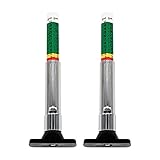
- Accurate measures tire tread depth gauge tool
- Calibrated from 0 to 1 inch in 1/ 32 inch
- Red range on bar: 0-3/32; Yellow Range on bar: 3/32 - 6/32; 5. Green Range on bar: 6/32-32/32
- Pocket-sized gauge, easy handy
- 2 pack
Check the instructions from your tire and vehicle manufacturers, and have older tires inspected rather than relying on tread depth alone. NHTSA’s current consumer guidance explains tire aging and date codes at TireWise.
Independent reader supportYour contribution helps us test, update, and keep practical guides available for everyone.Pay attention to pressure, noise, and vibration
A tire that repeatedly loses air, will not maintain proper inflation, or is accompanied by unusual noise or vibration should be checked by a tire service professional. Those symptoms do not prove the tire must be replaced, but they can signal a problem that needs diagnosis.
Best Value

- 1. Accurately measures tire tread depth gauge, Calibrated from 0 to 1 inch in 1/32 inch
- 2. Color coded tire tread depth gauge clearly indicates the tire different phase by colors
- 3. Tire tread depth gauge of Red range on bar: 0-3/32; Yellow Range on bar: 3/32 - 6/32; 5. Green Range on bar: 6/32-32/32
- 4. Comes with a pocket clip, easy to carry a tire tread depth gauge
- 5. Tire tread depth gauge reads in 32nds Suitable for trucks, motorcycles, automobiles and any passenger vehicle
If the tire-pressure monitoring system (TPMS) warning comes on, address it promptly: NHTSA says the warning indicates at least one tire is significantly underinflated. Check the tires and inflate them to the pressure specified by the vehicle maker. A warning by itself does not mean the tire is beyond repair or must be replaced.
Choose a replacement that fits the vehicle
When a tire needs replacing, use the original size or another size recommended by the vehicle manufacturer. Find the correct fitment in the owner’s manual or on the Tire and Loading Information label, usually on the driver-side door edge or door post. If the recommended size or fitment is unclear, ask a tire dealer. NHTSA’s TireWise guidance covers replacement fitment.
A tire professional can also advise whether a damaged or unevenly worn tire can remain in service, needs replacement, or points to a vehicle issue that should be corrected.
Quick Recap
Product prices and availability are accurate as of the date/time indicated and are subject to change. Any price and availability information displayed on Amazon at the time of purchase will apply.
What’s actually slowing this PC down?
Pick the symptom - the matching free tool is one click away.