Preventing overheating in a high-performance four-cylinder is a systems job, not a radiator-only upgrade. Keep the specified coolant at the correct concentration, maintain a sealed system with the correct pressure cap, verify thermostat and water-pump operation, preserve radiator airflow, confirm fan and shroud performance, maintain belts, and bleed all air after service. Diagnose the limiting part before buying a larger radiator, oil cooler or higher-flow pump.
For track use, add shorter fluid checks, fresh oil, temperature monitoring and deliberate cool-down laps. If the temperature suddenly spikes, stop safely, never remove a hot radiator cap, and do not continue driving until the cause is found.
As an Amazon Associate I earn from qualifying purchases.
How the cooling system prevents an overheat
A performance four-cylinder produces more heat when it is operated at high rpm, high load or sustained boost. The cooling system must move that heat from the cylinder head and block into the coolant, carry it through the radiator, transfer it to outside air, and keep pressure and flow stable while the engine expands and contracts. Oil also carries heat away from bearings, pistons and turbocharger components where fitted.
Quick wins for a faster PC:
Clear out junk files and repair common Windows errorsFree Scan →Fix the driver behind crashes, sound loss and screen glitchesFind Drivers →Repair Windows errors before they cause bigger problemsFix Now →The complete heat-transfer chain includes:
- Correct coolant level, chemistry and concentration.
- Leak-free hoses, fittings, radiator and expansion tank.
- A pressure cap with the vehicle maker’s specified rating.
- A thermostat that opens correctly and a water pump that delivers flow across the operating range.
- A clean radiator, condenser and any air-cooler surfaces.
- Fans, wiring, relays and shrouds that move air when vehicle speed is low.
- Correct belt condition and tension on belt-driven accessories.
- A properly bled system with no trapped air.
A weakness in any one of these areas can look like a need for more radiator capacity. Testing first prevents an expensive upgrade from masking a leak, failed fan or air pocket.
#1 Best Overall

- Comprehensive Tool Set: Orion Motor Tech's 33 pcs coolant pressure tester kit includes 22 adapters, a universal adapter, a vacuum pump, a vacuum purge & refill tool, a probe thermometer, a wrench, EU & US air intake joints, O-rings, and hoses
- Versatile Application: This cooling system pressure tester kit identifies leaks from the header and expansion tanks, head gasket, radiator core, heater matrix, and water pump & pipes, and ensures air pocket-free coolant refilling for radiators
- 23 Adapters for Most Cars: With 23 different radiator adapters, this coolant pressure tester kit is compatible with numerous vehicle makes and models such as BMW, Ford, Opel, Fiat, VW, Porsche, Mercedes-Benz, Nissan, Peugeot, Chrysler, and more
- Hassle-Free Organization: The color-coated adapters and molded size markings make it easy to quick identify the appropriate tool for the job. The custom molded carrying case keeps everything organized and ready for transport
- Built to Withstand Everyday Use: Constructed with quality aluminum alloy, nylon, rubber, and brass, this vacuum coolant fill kit is designed for enhanced strength and consistent performance for years to come
Inspect the car before hard use
Check fluid levels and visible leaks
With the engine cold and parked level, check the coolant at the reservoir or expansion tank and verify the oil level using the procedure in the vehicle manual. Do not infer a safe level from a warm tank: coolant expands as it heats. Look around hose joints, the thermostat housing, radiator seams, water-pump area, heater hoses, turbocharger coolant lines and the expansion tank for wetness or dried, crusty residue. A small dried mark can be evidence of a leak that only appears under pressure.
Inspect the oil for a sudden level change, coolant contamination or an unexplained loss. A coolant leak and an oil problem can occur together, so an apparently normal reservoir does not clear the engine for track use.
Examine hoses, belts and the radiator core
Hoses should be free of splits, bulges, soft sections, abrasion and oil saturation. Check clamps and quick-connect fittings for looseness. Inspect the accessory belt for fraying, glazing, missing ribs and contamination; verify tension according to the engine maker’s procedure. A slipping belt can reduce water-pump speed or stop the pump altogether on engines that drive it mechanically.
Free tools Windows power users keep installed
One-click scans. No signup required.
Look through the radiator opening and, where accessible, from the rear side of the core. Bent fins, leaves, mud, insects and road debris reduce the area available for heat exchange. Do not straighten delicate fins with excessive force or use a pressure washer at close range.
Check the fan, shroud and wiring
Confirm that each electric fan can run at its commanded speed and that the shroud seals the fan to the radiator. Inspect connectors, grounds, fuses, relays and wiring for heat damage or corrosion. A fan that works only when powered directly may still have a control-system fault. Mechanical fans need an intact clutch or coupling and a secure blade assembly.
At low road speed, the fan and shroud provide most of the airflow. A car that stays cool on the highway but overheats in traffic or during a pit-lane stop deserves an airflow diagnosis before a radiator upgrade.
Rank #2
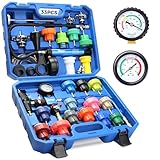
- 🔧【COMPLETE 33-PIECE MASTER KIT】This all-in-one coolant pressure tester and vacuum refill kit includes 23 radiator adapters (22 specific + 1 universal), a vacuum pump, a vacuum purge & refill tool, a probe thermometer, a wrench, EU & US air intake joints, O-rings, and hoses. Everything you need to diagnose cooling system leaks and refill without air pockets—all in one rugged carrying case.
- 🚗【WIDE COMPATIBILITY – 23 ADAPTERS FOR MOST CARS】With 23 different radiator adapters, this cooling system pressure tester works on most passenger vehicles, including Japanese, German, American, Korean, and European makes. Covers sedans, SUVs, trucks, and many light-duty vehicles. No more guessing which adapter fits—we‘ve got you covered.
- 🔍【DUAL FUNCTION: PRESSURE TESTING & VACUUM REFILL】Identify leaks quickly with the pressure testing function—check header tanks, expansion tanks, head gaskets, radiator cores, heater matrix, water pumps, and pipes. Then use the vacuum refill tool to purge air and refill coolant without any trapped air pockets. This two-in-one system saves time and prevents engine overheating.
- 📦【EASY ORGANIZATION & QUICK IDENTIFICATION】Color-coded adapters and molded size markings let you grab the right adapter instantly. The custom-molded carrying case keeps every component securely in its place, so you never lose a part. Hassle-free storage and transport for professional mechanics and DIYers alike.
- 💪【BUILT FOR DAILY USE – DURABLE MATERIALS】Constructed with quality aluminum alloy, nylon, rubber, and brass, this coolant pressure tester is engineered to withstand frequent use in busy workshops. The robust build ensures consistent performance and long-term reliability—year after year.
Use the correct coolant and pressure cap
Follow the engine-specific coolant specification
Coolant is a chemical specification, not merely colored water. Use the type, concentration and service interval stated for the specific engine and vehicle. Mixing incompatible coolant technologies can reduce corrosion protection or create deposits. Do not assume that a concentrate, premix or additive is suitable because it is marketed for racing or high performance.
What’s actually slowing this PC down?
Pick the symptom - the matching free tool is one click away.
Use the specified pressure-cap rating. System pressure raises the coolant’s boiling margin, but a higher-rated cap is not a universal overheating cure. Griffin’s technical guidance says a higher pressure offers no significant improvement when temperature and coolant flow are already controlled; it can instead stress an aging radiator, hose or seal. Never fit a cap that exceeds the rating approved for the vehicle’s radiator, expansion tank and hoses.
Pressure-test the system and cap
A cooling-system pressure tester kit is the most broadly useful diagnostic purchase for this problem. Caterpillar maintenance guidance calls for pressure-testing the radiator, cap and complete system. With the engine cold, pressurize only to the test pressure specified by the vehicle maker, watch for a pressure drop, and inspect for seepage. Test the cap separately because a cap that opens early can release coolant even when no hose visibly leaks.
Pressure testing does not replace inspection for internal leaks. If pressure falls without an external trace, professional testing may be needed for a combustion-gas leak, heater-core leak or other internal path.
Preserve airflow through the radiator
Air must reach the radiator face and pass through the core rather than around it. Remove debris from the grille, radiator, condenser and air-cooler stack. Caterpillar specifically recommends cleaning between the radiator, air cooler and condenser, where a layer of dirt can become invisible from the front while blocking a large part of the core.
Recommended Free Tools
Check that aftermarket lights, number-plate mounts, winches, duct panels or bodywork have not covered the inlet. At the rear of the radiator, make sure the fan shroud is complete and that seals or ducting do not leave large bypass gaps. Airflow improvements are most valuable when the car is moving slowly; at high speed, the limiting issue may instead be coolant flow, a restricted core or trapped air.
Rank #3

- 【TROUBLESHOOTING & SAVING MONEY】28pcs universal radiator pressure tester and vacuum refill kit with functions of leak detection, temperature measurement, liquid filling, etc. If you use the coolant pressure tester, the tester can quickly and easily solve any problems related to radiator pressure, making your job easier and faster.Note: Please select the corresponding adapter according to the user manual; otherwise, leakage may occur. If a suitable adapter is not available, please use a universal adapter, which is suitable for all vehicle models.
- 【ALL-IN-ONE TOOL KIT】1 x Radiator manual pressure tester(0-35psi/0-2.5 bar); 1 x Pneumatic vacuum coolant refiller(-30 to 0inHg/ -76 to 0cmHg); 1 x 19" Rubber nylon resin hose; 1 x Thermometer(32 - 400 ℉); 3 x Radiator cap test adapters; 1 x Universal tapered rubber adapter; 17 x Adapters; 1 x Adapter handle; 2 x Connectors; 1 x Storage case.
- 【TOP QUALITY MATERIAL】Radiator manual pump pressure detector adopts a premium aluminum cylinder and accurate shock-proof gauge design. A vacuum-type coolant refiller uses reliable brass and plastic material—a rubber hose with brass parts, anti-corrosive and waterproof. American & European style air plugs are provided for various air hoses.
- 【KEY EASE-OF-USE FEATURES】Color-coded caps help you quickly choose the right adapter without confusion.All-in-one design eliminates need for multiple separate tools.Clear instructions guide you through pressure testing and vacuum filling.Quality gauge provides accurate, easy-to-read pressure measurements,that even if you're new to cooling system work, the comprehensive kit and straightforward process make it accessible for DIY mechanics.
- 【APPLICATION】The kit includes 3 radiator cap test adapters for common cap styles.Look at your expansion tank: Most adapters are designed for expansion tank necks.Color-coded system: Each adapter has a colored cap to help you quickly identify the right fit.Universal tapered adapter: Included as a backup option for unusual fittings.Compatible with: Mercedes-Benz, BMW, Audi, VW, Ford, GM, Toyota, Honda, Nissan, Mazda, Subaru, and many more brands.The comprehensive adapter selection means you'll likely have the right fit, and if one doesn't work perfectly, you can try others in the set.
After cleaning, inspect for damaged fins and internal blockage. An external flush cannot restore a core that is clogged internally with scale or corrosion; that condition requires a cooling-system specialist’s assessment or radiator replacement.
Verify thermostat, water pump and belt operation
Thermostat behavior
The thermostat controls when coolant begins flowing through the radiator. A thermostat stuck closed or opening only partially can cause a rapid temperature rise under load. A thermostat stuck open may produce slow warm-up and poor temperature control, but replacing it with an unusually cold version is not automatically beneficial. Use the temperature and design specified for the engine-management system and vehicle.
Stewart’s cooling guidance recommends a thermostat for most street applications. Removing it can reduce control, permit unstable circulation and create a false sense of security while failing to address the actual restriction.
Water-pump flow
A worn impeller, damaged belt, slipping drive or cavitation can reduce circulation. Inspect for bearing noise, shaft play, leaks at the pump seal and belt problems. On an electric pump, verify commanded speed, electrical supply and control signals rather than assuming that a silent pump is operating.
A high-flow pump is useful only when the existing pump is the limiting component and the rest of the system can reject the additional heat. Stewart recommends high-flow pumps where needed, not as a universal replacement. Excessive flow or an unsuitable pump can create packaging, control or cavitation problems, so select one for the specific engine and operating range.
Bleed air from the system after service
Any refill, hose replacement, thermostat job or radiator change can leave an air pocket. HELLA states that trapped air “considerably reduces the circulation of the coolant” and can lead to severe damage. Air can also make the temperature gauge fluctuate, prevent the heater from producing steady heat and cause coolant to overflow during a cool-down.
Rank #4

- MULTIFUNCTION: The 14 pcs radiator pressure tester kit allows detecting for leakage in radiator system, especially head gasket failure detection, and help you to change coolant more efficiently.
- WELL MADE KIT: The adapters are made of high quality aluminum, and treated with rust and corrosion protection. High tenacity rubber and high-impact plastic for longer service life.
- COLOR CODED SET : Color coded radiator adapters are convenient to select the suitable one according to different colors without messy. 124pcs radiator adapters are perfect to test cooling systems on most vehicles.
- EASY TO CARRY: The thickened carrying case keeps all accessories in place and protects the gauges during storage and transportation.
- 100% Satisfaction: We are responsible for every product. If you have any problems with our products or services, please contact us immediately and we will provide you with exceptional responses to your every concern.
- Let the engine cool completely. Park as the vehicle manual specifies, usually with the fill point at the highest practical position.
- Fill with the manufacturer-approved coolant at the specified concentration. Open only the bleed screws or valves identified for that engine.
- Use the prescribed ignition, heater and idle procedure. Some systems require a scan-tool command or a particular sequence for electric pumps and fans; follow the service manual rather than a generic internet sequence.
- Watch for a continuous stream of coolant without bubbles at each bleed point, topping up as the level falls. Keep the reservoir from running dry.
- Close bleed points to the specified tightness, refit the cap, and allow the engine to reach normal operating temperature while checking for leaks and stable heater output.
- After a complete cool-down, recheck the level and inspect all joints. A second heat cycle may be required on vehicles with a remote expansion tank or complex turbocharger plumbing.
Do not drive hard immediately after bleeding. Confirm that the fan cycles, the gauge behaves normally and the system remains tight through a complete warm-up and cool-down.
Crashes, No Sound, or Screen Glitches?
Random freezes, missing sound and display glitches usually trace back to one bad driver. Find and replace yours safely.Free scan · under a minuteWindows Errors? Fix Them Before They Spread
Repair common Windows errors and clear accumulated junk for a smoother, more stable PC - no reinstall needed.Free scan · no reinstallPrepare a four-cylinder for track use
Service fluids before the event
Ford owner-manual guidance says to verify oil and coolant levels and change the oil and filter before track use. Its interval table specifies another oil-and-filter change after 4 hours of track use. That is an owner-manual interval, not a universal rule for every engine; follow the manual for the exact vehicle and oil specification.
Check for seepage after the engine reaches operating temperature, inspect the belt and fan wiring, and clean the radiator stack before loading the car. A track inspection should also confirm that the oil level is correct for the manufacturer’s stated measurement procedure, because both underfilling and overfilling can create problems at sustained lateral acceleration.
Account for track layout and weather
General Motors described a validation example at 86°F (30°C) and a 24-hour accumulated track test in 2015. Those figures describe that validation exercise, not a safe limit for every four-cylinder. Tighter, slower circuits can produce higher coolant temperatures because airflow is lower, while long straights and sustained high rpm increase total heat load. Ambient temperature, humidity, altitude, traffic and tire-generated heat also change the result.
Use a cool-down lap before entering the pits instead of switching off immediately after the hardest session, unless the vehicle manual directs otherwise. Monitor coolant and oil temperatures with the factory display or reliable additional instrumentation where the vehicle supports it. Record peak readings by session, weather and track layout; a trend upward from one session to the next is a warning even if the gauge has not reached the red zone.
Do these 3 things before closing this tab:
1Repair Windows errors before they cause bigger problems2Fix the driver behind crashes, sound loss and screen glitches3Clear out junk files and repair common Windows errorsChoose upgrades only after diagnosis
Compare an upgrade against the measured limitation, not against horsepower marketing. The useful questions are coolant temperature, oil temperature, radiator core area, airflow at low speed, pump flow across the operating range, pressure-cap specification, physical fitment and the split between street and track duty.
Best Value
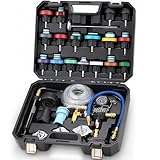
- FIND COOLING SYSTEM LEAKS BEFORE THEY BECOME BIGGER PROBLEMS: Pressure-test the cooling system to help identify leaks around the radiator, hoses, water pump, heater core, head gasket and related components before they lead to overheating or coolant loss.
- REFILL COOLANT WITHOUT TRAPPING AIR: The vacuum refill function helps draw coolant into the system while minimizing trapped air pockets, supporting a faster refill process after repairs or coolant replacement.
- COMPLETE 28-PIECE ADAPTER SYSTEM: Includes color-coded test caps and multiple adapters designed to fit a wide range of cooling systems, helping technicians quickly select the correct connection for different vehicles.
- ACCURATE PRESSURE MONITORING: The pressure pump and vacuum refill system feature easy-to-read gauges marked in PSI and BAR, helping users monitor pressure throughout testing and refill procedures.
- BUILT FOR PROFESSIONAL AND DIY COOLING SYSTEM SERVICE: Supplied in a durable blow-molded storage case that keeps adapters organized and protected. Suitable for cooling-system diagnostics, leak testing and coolant replacement across many vehicle makes.
| Upgrade | When it addresses a real limitation | Checks and cautions |
|---|---|---|
| Larger radiator | The existing core is undersized, damaged or unable to reject heat despite correct flow and airflow. | Use the largest radiator surface area that fits, as Stewart recommends. Confirm thickness, hose locations, mounting, condenser clearance, fan depth and duct sealing. |
| Aluminum radiator | A replacement is already required and the design provides more effective core area or durability for the application. | Stewart recommends aluminum radiators, but material alone does not prove greater capacity. Verify exact vehicle fitment and fan compatibility. |
| Higher-capacity fan and shroud | Temperature rises in traffic, pit lane or after a slow corner because airflow is insufficient. | Check alternator capacity, relay and fuse ratings, shroud coverage, fan rotation and clearance before installation. |
| High-flow water pump | Testing shows inadequate circulation, pump wear or a duty cycle beyond the original pump’s capability. | Choose flow appropriate to the engine’s operating range. Confirm control strategy, belt load and cavitation behavior. |
| Oil cooler | Oil temperature is the limiting measurement during sustained high-speed or racing use while coolant control is adequate. | Griffin notes that an oil cooler can keep oil temperature down in sustained high-speed or racing use. Verify thermostat control, hose routing, leak protection and adequate airflow. |
| Ducting and air sealing | Air is bypassing the radiator or entering the engine bay without passing through the core. | Seal gaps around the core and ensure the modification does not block the condenser or create water-ingestion and service-access problems. |
| Higher-pressure cap | Only when the vehicle maker explicitly approves a different rating for the complete system. | Do not use pressure to hide overheating. A higher rating can overload weak hoses, tanks or radiator seams. |
Do not install several upgrades at once if you can test one change at a time. Otherwise, a temperature improvement cannot be traced to the component that solved the problem, and a remaining fault may go unnoticed.
Diagnose the pattern before replacing parts
The temperature pattern is useful evidence. It does not replace testing, but it helps identify the first component to inspect.
| Observed pattern | Likely area to investigate first | Useful confirmation |
|---|---|---|
| Overheats while stationary or in slow traffic | Fan, shroud, relay, wiring, condenser/radiator blockage or missing duct seals. | Verify fan commands and actual airflow at each speed; inspect the entire stacked core. |
| Runs hot at sustained high speed or high rpm | Radiator capacity, internal restriction, coolant flow, oil heat load or trapped air. | Pressure-test the system, verify thermostat and pump operation, and compare coolant and oil temperatures. |
| Temperature swings after a coolant change | Air pocket, incorrect fill procedure or a leak drawing air back during cool-down. | Bleed according to the vehicle procedure, then pressure-test cold and hot after a complete cycle. |
| Coolant is expelled from the reservoir | Overheating, failed cap, trapped air or a possible internal combustion-gas leak. | Test the cap and system pressure; if no external leak explains the loss, arrange professional internal-leak testing. |
| Coolant temperature is controlled but oil temperature climbs | Insufficient oil cooling for the duty cycle, lubricant level/specification issue or excessive engine heat load. | Verify oil level and specification, then evaluate an appropriately thermostated oil cooler and airflow. |
Use a written log of coolant temperature, oil temperature, ambient conditions, session length and repairs. This separates a repeatable load problem from a one-time sensor or air-pocket event.
What to do when the temperature gauge spikes
- Reduce load and stop in a safe place as soon as traffic conditions permit. Use hazard lights and keep clear of moving traffic.
- If there is steam or coolant spray, switch the engine off and wait for it to subside. Do not stand over the radiator or expansion-tank outlet.
- Never remove a radiator cap while the engine is hot. Honda’s official procedure warns: “Removing the radiator cap while the engine is hot can cause the coolant to spray out, seriously scalding you.”
- After the engine and components are fully cool, inspect the reservoir level, visible leaks, belt condition and fan operation. Do not reach near a fan that may start automatically.
- If the level is low, add only the specified coolant or an emergency substitute permitted by the vehicle manual, and only after the cause and safe fill procedure are understood.
- Restart only if the manual permits it and the temperature returns to normal without renewed loss, steam or warning. If the gauge remains high, a warning returns, or coolant is visibly leaking, arrange professional recovery.
Continuing to drive with an overheating warning can turn a repairable cooling fault into engine damage. Government guidance lists oil breakdown, bearing wear, damaged pistons and cylinder walls, cracked cylinder heads or blocks, and engine seizure among possible consequences.
Know the limits of generic advice
There is no universal safe coolant-temperature limit, horsepower threshold or failure probability for every high-performance four-cylinder. The correct coolant, cap pressure, thermostat temperature, fan strategy, service interval and track limits depend on the exact engine, calibration, vehicle packaging and market specification. Use the owner’s and service manuals for those values.
Likewise, no radiator brand or single aftermarket part can be declared best without vehicle-specific testing. Fitment, core design, fan control and ducting matter as much as headline material or size. A sound diagnosis, pressure test and documented temperature data provide a safer basis for changes than a larger component chosen by appearance alone.
Quick Recap
Product prices and availability are accurate as of the date/time indicated and are subject to change. Any price and availability information displayed on Amazon at the time of purchase will apply.
The Tool Desk
Outbyte Driver Updater FREEScan for outdated or missing drivers - takes under a minuteDriver Scan →Outbyte PC Repair FREERepair Windows errors before they cause bigger problemsFix Now →



