Preventing overheating in a high-performance engine is a system-maintenance job, not a single-part upgrade. Use the coolant specification and service procedure for the exact year, model, engine, transmission and modifications; keep the correct coolant level and concentration; inspect the cap, radiator and airflow path; verify fan operation; and diagnose any temperature warning before replacing parts. A temperature warning does not prove that the radiator has failed: coolant leaks, a malfunctioning fan and other cooling-system faults can produce the same symptom.
Track driving requires an additional margin of safety, but there is no universal ambient-temperature limit for every performance engine. Chevrolet’s 2017 Corvette guide, for example, warns that a Z06 with the eight-speed automatic has a strong potential for engine and coolant overheating at 86°F (30°C) and above during the specified use. That figure applies to that named configuration, not to high-performance engines generally.
As an Amazon Associate I earn from qualifying purchases.
Why high-performance engines overheat under demanding use
High output and sustained load put more heat into the coolant, oil, transmission and surrounding engine bay than ordinary commuting does. Repeated acceleration, high road speed, towing, climbing, hot weather, track sessions and power modifications can all reduce the time available for the cooling system to reject that heat. The practical objective is to preserve the cooling system’s designed capacity and identify a fault before the temperature warning appears.
“Overheating” is an outcome, not a diagnosis. A restricted radiator, low coolant, an incorrect coolant mixture, a leaking or weak cap, poor airflow, a fan that does not operate, or another engine-system problem may be involved. Replacing the radiator without confirming the cause can leave the original fault in place and introduce a fitment or bleeding problem.
#1 Best Overall

- 【TROUBLESHOOTING & SAVING MONEY】28pcs universal radiator pressure tester and vacuum refill kit with functions of leak detection, temperature measurement, liquid filling, etc. If you use the coolant pressure tester, the tester can quickly and easily solve any problems related to radiator pressure, making your job easier and faster.Note: Please select the corresponding adapter according to the user manual; otherwise, leakage may occur. If a suitable adapter is not available, please use a universal adapter, which is suitable for all vehicle models.
- 【ALL-IN-ONE TOOL KIT】1 x Radiator manual pressure tester(0-35psi/0-2.5 bar); 1 x Pneumatic vacuum coolant refiller(-30 to 0inHg/ -76 to 0cmHg); 1 x 19" Rubber nylon resin hose; 1 x Thermometer(32 - 400 ℉); 3 x Radiator cap test adapters; 1 x Universal tapered rubber adapter; 17 x Adapters; 1 x Adapter handle; 2 x Connectors; 1 x Storage case.
- 【TOP QUALITY MATERIAL】Radiator manual pump pressure detector adopts a premium aluminum cylinder and accurate shock-proof gauge design. A vacuum-type coolant refiller uses reliable brass and plastic material—a rubber hose with brass parts, anti-corrosive and waterproof. American & European style air plugs are provided for various air hoses.
- 【KEY EASE-OF-USE FEATURES】Color-coded caps help you quickly choose the right adapter without confusion.All-in-one design eliminates need for multiple separate tools.Clear instructions guide you through pressure testing and vacuum filling.Quality gauge provides accurate, easy-to-read pressure measurements,that even if you're new to cooling system work, the comprehensive kit and straightforward process make it accessible for DIY mechanics.
- 【APPLICATION】The kit includes 3 radiator cap test adapters for common cap styles.Look at your expansion tank: Most adapters are designed for expansion tank necks.Color-coded system: Each adapter has a colored cap to help you quickly identify the right fit.Universal tapered adapter: Included as a backup option for unusual fittings.Compatible with: Mercedes-Benz, BMW, Audi, VW, Ford, GM, Toyota, Honda, Nissan, Mazda, Subaru, and many more brands.The comprehensive adapter selection means you'll likely have the right fit, and if one doesn't work perfectly, you can try others in the set.
Begin with the exact vehicle’s requirements
Performance cars that look similar can have different coolant chemistry, fill levels, fan controls, thermostat calibration, radiator layouts and track-use restrictions. Before changing fluid or parts, identify the exact year, model, engine, transmission, cooling-package options and modifications. The owner’s manual and the manufacturer’s track-preparation guidance take precedence over generic advice.
Record the specifications that control your decisions
- Coolant type and the mixture or concentration specified by the owner’s manual.
- Cold-fill marks and the correct reservoir, surge tank or radiator fill point.
- Temperature-gauge meanings, warning-light behavior and any reduced-power messages.
- Fan-control instructions, inspection intervals and approved service procedures.
- Track-use ambient-temperature restrictions for the precise model and transmission.
- Whether the vehicle has an original-equipment cooling system or aftermarket changes that alter fitment and airflow.
Do not transfer a threshold, fluid recommendation or emergency procedure from another vehicle simply because both cars are marketed as high performance.
Maintain coolant level and concentration
Coolant maintenance is the first protection against air entering the system, localized boiling and loss of heat-transfer capacity. GM maintenance guidance calls for maintaining both coolant level and concentration and using the mixture specified in the owner’s manual. A level that repeatedly drops is evidence to investigate, not a normal service interval.
The Tool Desk
Outbyte PC Repair FREERepair Windows errors before they cause bigger problemsFix Now →Outbyte Driver Updater FREEScan for outdated or missing drivers - takes under a minuteDriver Scan →Cold-engine inspection
- Park on a level surface and let the engine cool completely. Check the level only at the tank or fill point identified by the vehicle manual.
- Compare the fluid with the marked cold range. Do not judge a hot level against a cold mark.
- Look around the reservoir, hoses, radiator seams, water outlets and undertray for wetness or dried coolant residue.
- Use only the approved coolant and mixture. Do not substitute a different chemistry because its color looks similar, and do not guess at a concentration.
- After correcting a low level, monitor it through several cold checks. Continued loss requires diagnosis of the complete system.
Contamination, unexplained discoloration or repeated topping-up also warrants professional inspection. The correct fill procedure can require bleeding trapped air; follow the vehicle-specific procedure rather than assuming that filling the reservoir is sufficient.
Rank #2
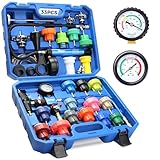
- 🔧【COMPLETE 33-PIECE MASTER KIT】This all-in-one coolant pressure tester and vacuum refill kit includes 23 radiator adapters (22 specific + 1 universal), a vacuum pump, a vacuum purge & refill tool, a probe thermometer, a wrench, EU & US air intake joints, O-rings, and hoses. Everything you need to diagnose cooling system leaks and refill without air pockets—all in one rugged carrying case.
- 🚗【WIDE COMPATIBILITY – 23 ADAPTERS FOR MOST CARS】With 23 different radiator adapters, this cooling system pressure tester works on most passenger vehicles, including Japanese, German, American, Korean, and European makes. Covers sedans, SUVs, trucks, and many light-duty vehicles. No more guessing which adapter fits—we‘ve got you covered.
- 🔍【DUAL FUNCTION: PRESSURE TESTING & VACUUM REFILL】Identify leaks quickly with the pressure testing function—check header tanks, expansion tanks, head gaskets, radiator cores, heater matrix, water pumps, and pipes. Then use the vacuum refill tool to purge air and refill coolant without any trapped air pockets. This two-in-one system saves time and prevents engine overheating.
- 📦【EASY ORGANIZATION & QUICK IDENTIFICATION】Color-coded adapters and molded size markings let you grab the right adapter instantly. The custom-molded carrying case keeps every component securely in its place, so you never lose a part. Hassle-free storage and transport for professional mechanics and DIYers alike.
- 💪【BUILT FOR DAILY USE – DURABLE MATERIALS】Constructed with quality aluminum alloy, nylon, rubber, and brass, this coolant pressure tester is engineered to withstand frequent use in busy workshops. The robust build ensures consistent performance and long-term reliability—year after year.
Never open a hot system
GM Genuine Parts radiator guidance states: “Never attempt to remove a surge or radiator cap while the engine is hot. Serious injury could result.” A pressurized system can release scalding coolant and steam. Wait until the engine and tank are fully cool, keep your face and hands away from the cap, and follow the manual’s procedure.
Inspect the radiator, cap and airflow path
The radiator can be healthy while the engine overheats, and it can also be restricted without an obvious external crack. Inspect the whole heat-rejection path before selecting a replacement.
Radiator-face and fin inspection
With the engine off and cool, examine the radiator face and the air path ahead of it. Bugs, leaves and road debris can block air; GM guidance specifically calls for periodically removing this material. Clean carefully so fins are not bent or crushed. Also check for external corrosion, damaged fins, wet seams and evidence that coolant has been spraying or evaporating.
Recommended Free Tools
A clean face does not prove that internal passages are clear. Internal restriction, trapped air or a circulation fault requires vehicle-specific testing.
Rank #3

- Comprehensive Tool Set: Orion Motor Tech's 33 pcs coolant pressure tester kit includes 22 adapters, a universal adapter, a vacuum pump, a vacuum purge & refill tool, a probe thermometer, a wrench, EU & US air intake joints, O-rings, and hoses
- Versatile Application: This cooling system pressure tester kit identifies leaks from the header and expansion tanks, head gasket, radiator core, heater matrix, and water pump & pipes, and ensures air pocket-free coolant refilling for radiators
- 23 Adapters for Most Cars: With 23 different radiator adapters, this coolant pressure tester kit is compatible with numerous vehicle makes and models such as BMW, Ford, Opel, Fiat, VW, Porsche, Mercedes-Benz, Nissan, Peugeot, Chrysler, and more
- Hassle-Free Organization: The color-coated adapters and molded size markings make it easy to quick identify the appropriate tool for the job. The custom molded carrying case keeps everything organized and ready for transport
- Built to Withstand Everyday Use: Constructed with quality aluminum alloy, nylon, rubber, and brass, this vacuum coolant fill kit is designed for enhanced strength and consistent performance for years to come
Cap inspection and pressure testing
Inspect the radiator or surge-tank cap for corrosion, damage, a hardened seal or a worn gasket. Chevrolet Parts’ guidance lists cap pressure testing as a relevant diagnostic step. A cooling-system pressure tester can help a technician determine whether the cap and system hold the specified pressure; it is a diagnostic aid, not a cure. Use a tester and adapter that fit the vehicle, and follow the manufacturer’s pressure and safety procedure.
Fan and shroud checks
GM notes that a malfunctioning fan is one possible cause of overheating. Verify fan operation using the exact vehicle procedure, keeping hands, clothing and tools clear of moving blades and remembering that electric fans may start unexpectedly. Inspect the shroud, connectors, wiring and fuses if the manual permits those checks. A fan that works intermittently, runs only at one speed or fails when the engine is hot needs diagnosis before more demanding driving.
Use symptoms to guide diagnosis, not guesswork
When a warning appears, record what the vehicle was doing, the ambient conditions, the gauge behavior and whether coolant was visible. That information helps separate an airflow problem from a leak or another fault. The following framework is a starting point; the manual and a qualified technician determine the actual test.
| Observation | What it may indicate | Next action |
|---|---|---|
| Coolant level is low or falls again after filling | A leak, incorrect fill or another cooling-system fault | Do not keep topping up indefinitely; inspect the complete system and pressure-test it according to the vehicle procedure. |
| Temperature rises mainly in slow traffic or while stationary | Airflow or fan operation may be inadequate | Check fan control, shroud, debris and the manual’s diagnostic procedure. |
| Temperature rises at speed or during sustained load | Restriction, circulation, coolant condition or another load-related fault may be involved | Stop demanding use and have the system assessed before replacing parts. |
| Wetness, dried residue or a visible spray pattern | A leak at a hose, connection, radiator, cap or another component | Allow the system to cool and arrange a proper leak inspection. |
| Warning appears but no obvious radiator damage is visible | Radiator failure is not established; fan, coolant, cap and other causes remain possible | Check the complete cooling system rather than assuming the radiator is the culprit. |
The Chevrolet Parts FAQ asks, “My engine is overheating does this mean I need to replace my radiator?” Its answer is effectively a reminder to assess leaks, fan operation and the whole system first. A radiator replacement is justified when testing identifies a radiator fault and the replacement is confirmed for the exact vehicle.
Rank #4

- Universal Compatibility: 17 color-coded test caps and 3 test covers fit most Japanese, European, and American cars. Quickly identify the right adapter for efficient cooling system diagnosis
- Precision Engineering: Durable aluminum hand pump with dual rubber rings ensures superior airtightness. Tests 0-35 PSI for accurate cooling system leak detection you can trust
- Upgraded Vacuum Refill System: Advanced metal filling valve enhances stability and suction power. Gauge displays both psi and bar for easy pressure monitoring during use
- Effortless Operation: Tests cooling system integrity and replaces coolant with ease. Vacuum gauge ranges 0 to -30 inHg, pump tests 0-35 PSI – ideal for pros and DIYers
- Quality Build & 24/7 Support: Crafted from high-quality materials for lasting durability. Includes 3 radiator cap adapters with color-coded system. Backed by 24/7 customer service for peace of mind
Prepare for track and high-load driving
Track preparation should be based on the manufacturer’s guidance for the precise configuration. A street version, manual-transmission version and automatic-transmission version of the same model may have different limits. Chevrolet’s 2017 Corvette guide warns specifically that Z06 models with the eight-speed automatic have a strong potential for engine and coolant overheating at an ambient temperature of 86°F (30°C) and above. Treat that as a configuration-specific warning, not a universal limit for performance cars.
Pre-event checklist
- Confirm the coolant level and specified concentration with the engine cold.
- Inspect the cap, hoses, radiator seams and visible connections for leaks, corrosion or worn seals.
- Clear debris from the radiator face and verify that ducting, shrouds and air exits are secure.
- Verify fan operation using the vehicle’s approved procedure.
- Review the owner’s manual and track guide for ambient-temperature limits, required fluids, break-in restrictions and cooldown instructions.
- Remove or secure modifications that obstruct the intended airflow path, and confirm that any replacement part is designed for the exact chassis and engine.
- Plan sessions and cooldowns conservatively when ambient temperature, traffic or vehicle condition reduces thermal margin.
During the event
Monitor the gauge and warning messages continuously rather than waiting for steam. If the temperature trends upward abnormally, end the session and follow the manual’s procedure. A cooldown lap or idle period is not a substitute for stopping when the vehicle instructs you to stop, and it cannot repair a leak or failed fan.
Independent reader supportYour contribution helps us test, update, and keep practical guides available for everyone.What to do when a temperature warning appears
The correct response depends on the vehicle and on whether there is steam. Use the owner’s manual for the exact model. Chevrolet’s 2022 Colorado manual provides one example for a warning with no steam: turn off the air conditioning, turn the heater to the highest temperature, pull off the road safely and stop the engine if the warning persists. That sequence is model-specific emergency guidance, not a universal rule for every performance engine.
Free tools Windows power users keep installed
One-click scans. No signup required.
If there is no steam
- Reduce load and move to a safe location without continuing a high-speed or high-rpm run.
- Apply the exact no-steam procedure in the owner’s manual. On the cited Colorado example, that includes switching off A/C and setting the heater high.
- Stop the engine if the warning persists or the manual instructs you to do so.
- Keep people clear of hot components and do not remove the cap while hot.
- After full cooling, look for obvious leaks only if it is safe. Do not restart or drive on if coolant is escaping, the warning returns or the cause is unknown.
If there is steam, a rapid coolant loss or severe symptoms
Stop as safely as possible, shut the engine down when the vehicle’s instructions permit, and keep clear of the cooling system. Do not open the cap or lean over the engine bay. Arrange recovery and have the vehicle inspected; driving farther can turn a manageable cooling fault into extensive engine damage.
Best Value
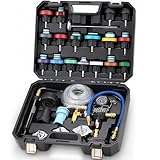
- FIND COOLING SYSTEM LEAKS BEFORE THEY BECOME BIGGER PROBLEMS: Pressure-test the cooling system to help identify leaks around the radiator, hoses, water pump, heater core, head gasket and related components before they lead to overheating or coolant loss.
- REFILL COOLANT WITHOUT TRAPPING AIR: The vacuum refill function helps draw coolant into the system while minimizing trapped air pockets, supporting a faster refill process after repairs or coolant replacement.
- COMPLETE 28-PIECE ADAPTER SYSTEM: Includes color-coded test caps and multiple adapters designed to fit a wide range of cooling systems, helping technicians quickly select the correct connection for different vehicles.
- ACCURATE PRESSURE MONITORING: The pressure pump and vacuum refill system feature easy-to-read gauges marked in PSI and BAR, helping users monitor pressure throughout testing and refill procedures.
- BUILT FOR PROFESSIONAL AND DIY COOLING SYSTEM SERVICE: Supplied in a durable blow-molded storage case that keeps adapters organized and protected. Suitable for cooling-system diagnostics, leak testing and coolant replacement across many vehicle makes.
Choose replacement parts only after the fault is confirmed
A larger radiator, lower-temperature thermostat, higher-capacity fan or different coolant may be appropriate for a specific build, but none is a universal overheating fix. A modification can change pressure, warm-up behavior, fan demand, hose routing, ducting and warranty or track compatibility. It can also mask the original problem if the actual cause is a leak, fan fault, blocked airflow path or incorrect coolant service.
| Decision factor | Questions to answer before buying |
|---|---|
| Vehicle fitment | Is the part specified for the exact year, engine, transmission, cooling package and body configuration? |
| Confirmed fault | What test proves the original component is defective, rather than merely suspected? |
| Coolant and service requirements | Does the replacement preserve the manufacturer’s coolant specification, fill procedure and pressure requirements? |
| Track compatibility | Does the manufacturer’s guidance permit the part and the intended ambient-temperature and session conditions? |
| Original equipment versus modification | What changes to airflow, mounting, controls, service access and reliability result from the choice? |
Because comparative performance gains are not established here, do not assume that a marketed capacity increase will lower temperatures in your car. Confirm the installation and recheck the system for leaks and proper operation before returning to demanding use.
A practical maintenance rhythm
Before demanding road use
- Check the cold coolant level and look for new residue or wetness.
- Inspect the cap, hoses, radiator face, shroud and visible wiring.
- Remove leaves, bugs and other debris from the airflow path.
- Confirm that the fluid and concentration match the manual.
- Review any warning or gauge abnormality from the previous drive before setting out again.
Before a track day or prolonged high-load trip
- Perform the complete pre-event checklist, not just a fluid top-up.
- Verify the model-specific ambient-temperature and transmission guidance.
- Resolve any leak, fan irregularity or unexplained level change first.
- Carry the owner’s manual or the relevant emergency instructions so the correct response is available under stress.
After an overheating event
- Do not treat a cooled-down engine as repaired.
- Document warning messages, steam, coolant loss, driving conditions and whether the fan was operating.
- Have the cap and system tested with vehicle-appropriate equipment and inspect for leaks, airflow obstruction and fan faults.
- Use the vehicle’s prescribed repair and refill procedure, then verify stable operation before high-load driving.
When professional diagnosis is the safest choice
Arrange qualified service when the warning returns, coolant level changes, the system cannot hold pressure, the fan does not operate as specified, steam appears, or the vehicle overheats despite apparently correct maintenance. A technician can follow the model’s test sequence, use the correct pressure-test adapters and distinguish a radiator fault from another cooling-system problem. Persistent overheating should not be managed by repeatedly adding coolant or fitting progressively larger parts.
Quick wins for a faster PC:
Clear out junk files and repair common Windows errorsFree Scan →Fix the driver behind crashes, sound loss and screen glitchesFind Drivers →Repair Windows errors before they cause bigger problemsFix Now →The durable strategy is straightforward: follow the exact vehicle documentation, maintain the specified coolant and airflow, inspect the cap and radiator before they fail, respect configuration-specific track limits, and stop early when the warning system says the thermal margin is gone.
Quick Recap
Product prices and availability are accurate as of the date/time indicated and are subject to change. Any price and availability information displayed on Amazon at the time of purchase will apply.




