Recommended Free Tools
In most U.S. cars, the OBD-II port is underneath the driver-side dashboard, usually below the steering wheel or close to the steering column. Check the lower dash, driver footwell, and interior fuse-panel area first; if it is hidden, the owner’s manual will show the exact location for your make, model, and year.
In most U.S. cars, the OBD-II port is underneath the driver-side dashboard, usually below the steering wheel or close to the steering column. Look along the lower edge of the dashboard, in the driver footwell, and near the interior fuse-panel area. The connector may be recessed, partly hidden by trim, or covered by a small removable access panel.
As an Amazon Associate I earn from qualifying purchases.
If you cannot find it after checking those areas, use the vehicle’s owner’s manual. The exact location varies by make, model, and year, so “under the driver’s dash” is the best starting point—not a guarantee.
The Tool Desk
Outbyte Driver Updater FREEFix the driver behind crashes, sound loss and screen glitchesFind Drivers →Outbyte PC Repair FREEClear out junk files and repair common Windows errorsFree Scan →What the OBD-II port looks like
An OBD-II port is a standardized diagnostic socket with a distinctive trapezoidal shape and multiple electrical terminals. It is usually exposed beneath the dashboard rather than located in the engine compartment.
#1 Best Overall

- CEL Doctor: The ANCEL AD310 is one of the best-selling OBD II scanners on the market and is recommended by Scotty Kilmer, a YouTuber and auto mechanic. It can easily determine the cause of the check engine light coming on. After repairing the vehicle's problems, it can quickly read and clear diagnostic trouble codes of emission system, read live data & hard memory data, view freeze frame, I/M monitor readiness and collect vehicle information
- Sturdy and Compact: Equipped with a 2.5 foot cable made of very thick, flexible insulation. It is important to have a sturdy scanner as it can easily fall to the ground when working in a car. The AD310 OBD2 scanner is a well-constructed mechanic tool with a sleek design. It weighs 12 ounces and measures 8.9 x 6.9 x 1.4 inches. Thanks to its compact design and light weight, transporting the device is not a problem. The buttons are clearly labelled and the screen is large and displays results clearly
- Accurate Fast and Easy to Use: The AD310 scanner can help you or your mechanic understand if your car is in good condition, provides exceptionally accurate and fast results, reads and clears engine trouble emission codes in seconds after you fixed the problem. This device will let you know immediately and fix the problem right away without any car knowledge. No need for batteries or a charger, get power directly from the OBDII Data Link Connector in your vehicle
- OBDII Protocols and Car Compatibility: Many cheap scan tools do not really support all OBD2 protocols. AD310 scanner as it can support all OBDII protocols such as KWP2000, J1850 VPW, ISO9141, J1850 PWM and CAN. This device also has extensive vehicle compatibility with 1996 US-based, 2000 EU-based and Asian cars, light trucks, SUVs, as well as newer OBD2 and CAN vehicles both domestic and foreign. Pls confirm with our customer service whether it is compatible with your vehicle before purchasing
- Home Necessity and Worthy to Own: This is an excellent code reader to travel or home with as it weighs less and it is compact in design. You can easily slide it in your backpack as you head to the garage, or put it on the dashboard, this will be a great fit for you. The AD310 is not only portable, but also accurate and fast in performance. Moreover, it covers various car brands and is suitable for people who just need a code reader to check their car
The connector is standardized under SAE J1962 and is generally installed under the driver instrument panel. A compatible scan tool should fit in the correct orientation. Do not force the plug: if it does not line up or seat normally, check that you have identified the right connector and that the tool is compatible.
How to find the OBD-II port: a practical search sequence
- Park safely. Stop on a level surface, place the transmission in Park or in gear as appropriate, apply the parking brake, and switch the ignition off.
- Sit in the driver’s seat. Looking from the seat gives you the best view of the underside of the dashboard.
- Look directly below the steering wheel. Check the lower dashboard, the area around the steering column, and the upper part of the driver footwell.
- Inspect toward the side of the dashboard. The port may be near the driver’s door, close to the interior fuse panel, or set farther inward toward the center console.
- Check for a small access cover. Some vehicles hide the socket behind a removable trim flap or cover. Remove only an obvious access cover; do not dismantle unrelated dashboard panels just to search.
- Consult the owner’s manual. Search the index or digital manual for “OBD,” “OBD-II,” “data link connector,” “diagnostic connector,” or “diagnostic socket.” The manual is the authoritative source for your specific model year.
Use a flashlight and move the driver’s seat back if visibility is poor. The port can be easy to miss when it is black and mounted against dark plastic.
Why the OBD-II port matters
OBD stands for on-board diagnostics. The vehicle’s OBD system monitors operating conditions, particularly emissions-related components and systems. When it detects a problem, it can store diagnostic information and illuminate the malfunction indicator lamp—commonly called the check-engine light.
What’s actually slowing this PC down?
Pick the symptom - the matching free tool is one click away.
The OBD-II port is the external data connection between the vehicle’s onboard computers and a scan tool. A scanner connected to the port may be able to:
- Read stored diagnostic trouble codes (DTCs).
- Read pending codes that may not yet have turned on the check-engine light.
- Display emissions-readiness monitor information.
- Show live data, depending on the vehicle and scanner.
- Access systems such as the transmission, ABS, or airbag module when both the vehicle and the scanner support those functions.
A basic OBD-II scanner or code reader can be useful for identifying the general system that needs attention. Scanner features are not universal: an inexpensive reader may handle standard emissions-related engine codes, while a more advanced vehicle diagnostic scanner may offer live data or access to additional modules. Check compatibility with your exact vehicle before buying. The Innova 1000, for example, is described by its manufacturer as supporting fault-code retrieval, readiness-monitor functions, live data, and selected ABS and SRS diagnostics, but those capabilities should not be treated as universal for every car.
Rank #2

- 【Diagnose Check Engine Light in Seconds – No Mechanic Needed】The FOXWELL NT301 OBD2 scanner instantly reads & clears engine fault codes (DTCs) with one click. Simply plug into the 16-pin DLC port, turn ignition on, and get accurate results within seconds—No prior car knowledge required. Save hundreds on dealership fees by knowing exactly what’s wrong before you visit a shop. The #1 choice car scanner for DIYers and car owners who want to take control of their vehicle’s health
- 【Clear & Reset CEL with Confidence】Unlike cheap code readers that just erase codes temporarily, NT301 works like all professional vehicle code readers: It clears the check engine light only after you’ve fixed the underlying issue. If the problem isn’t fully repaired, the fault code will reappear. So you’ll never get a false pass. Use the foxwell scanner to verify your repair work and drive with peace of mind
- 【Sm-og Check Helper – Know Your Pass/Fail Status Before the Test】With dedicated one-click I/M readiness hotkeys and a simple Red-Yellow-Green LED indicator, you’ll instantly know if your vehicle is ready for annual testing. Built-in speaker provides clear audio feedback. No guesswork—just confidence before you head to the test center. One less thing to worry about when inspection day comes
- 【Advanced OBDII Modes – O- 2 Sensor & EVAP Testing】NT301 go beyond basic code reading with enhanced OBD2 modes. Run an EVAP system check to assess fuel tank condition, and use the O- 2 sensor test to optimize air-fuel ratio, boosting fuel economy, cutting em- issions, and saving you money at the pump. The code reader for cars and trucks is like having a mini em-issions lab in your glove box
- 【Live Data Graphing – Spot Engine Issues in Real Time】View and log live sensor data in easy-to-read graphs with this OBD2 scanner diagnostic tool. Monitor ox- ygen sensors, fuel trims, coolant temperature, RPM, and more to spot suspicious values instantly. This obd scanner gives you professional-grade insight without the pro price tag—a feature you won’t find on basic $20 car code readers
Most importantly, a trouble code is a diagnostic clue—not automatic proof that a particular part has failed. A code mentioning an oxygen sensor, for example, can result from a wiring problem, an exhaust leak, a fuel-control issue, or another condition rather than a defective sensor. Use the code with the vehicle’s symptoms and reliable service information before replacing parts.
Which vehicles have an OBD-II port?
For the United States, OBD systems have been required on new passenger vehicles beginning with model year 1996. OBD-II equipment is also associated with U.S. light trucks from that period.
A vehicle built before 1996 may use OBD-I or another manufacturer-specific diagnostic arrangement. Therefore, an older car without the familiar trapezoidal OBD-II connector may still have a diagnostic port; it may simply require a different adapter or scan tool. Requirements and connector locations can also differ outside the United States.
If your vehicle’s model year is near the 1996 transition, verify the system in the owner’s manual or with manufacturer-specific service information rather than assuming that every diagnostic connector is OBD-II.
How to connect a scanner safely
Once you find the port, follow the instructions for both the vehicle and the scan tool. A basic scan generally works as follows:
Rank #3
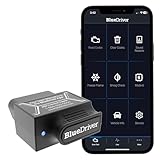
- [Diagnose Like a Pro] BlueDriver Pro is a professional OBD2 scanner and diagnostic tool that helps you scan, understand, and clear vehicle trouble codes with confidence. Turn your phone into a powerful car diagnostic scanner—no guesswork, no unnecessary repairs.
- [Read and Clear More Codes Than Ever] Read and clear more codes than basic car code readers. Access enhanced diagnostics for Check Engine, ABS, SRS, Airbag, TPMS, Transmission.
- [Verified Fixes and Real-Time Data] Get unlimited, technician-verified repair reports matched to your VIN, with definitions, causes, and confirmed fixes. Monitor live vehicle data as you drive, view freeze frames, check smog readiness, and analyze Mode 6 test results.
- [Wireless & Bluetooth Enabled] - Say goodbye to wires. BlueDriver connects with Bluetooth via your phone/tablet to a sensor that plugs into your car's OBDII port. Get all of the capabilities of an expensive code reader & scan tool without any annoying wires.
- [Broad Make & Model Coverage] Strong support for GM, Ford, Stellantis (RAM, Jeep, Chrysler), Toyota, Honda, Nissan, Mazda, Subaru, Hyundai, Mercedes-Benz, BMW, and VW.
- Keep the vehicle parked and secure.
- With the ignition off, plug the scanner into the OBD-II connector without forcing it.
- Turn the ignition to the position specified by the scanner instructions. For many basic scans, this means switching the ignition on without starting the engine.
- Allow the tool to communicate with the vehicle.
- Record stored, pending, or active codes before clearing anything.
- Turn the ignition off and disconnect the tool when finished, unless the instructions specifically require it to remain connected.
Do not leave an unfamiliar plug-in device connected indefinitely. An NHTSA-hosted owner’s manual warns that unauthorized equipment attached to the OBD-II port may interfere with vehicle systems, including safety-related systems, and may provide access to information stored in the vehicle. Remove temporary readers and unfamiliar accessories when they are no longer needed, and follow the manufacturer’s instructions for any device that remains installed.
What to do after you read a trouble code
Write down the exact code, its status, and any description shown by the scanner. Then:
- Consider the symptoms. Rough running, hard starting, poor acceleration, unusual noises, or high fuel consumption can help narrow the diagnosis.
- Check for obvious causes. Depending on the code, inspect items such as a loose fuel cap, damaged wiring, disconnected hoses, or a blown fuse—but do not disturb components unnecessarily.
- Verify the code. Look up the code using service information appropriate for the vehicle’s make, model, engine, and year.
- Test before replacing parts. A code identifies a monitored fault or abnormal condition; it does not always identify the failed component.
- Record readiness information. If you are preparing for an emissions inspection, clearing codes or disconnecting the battery can reset readiness monitors. The vehicle may need time and specific driving conditions before the monitors run again.
Effective emissions-related repair can require manufacturer-specific procedures, enhanced diagnostic information, and tools beyond a generic code reader. If the diagnosis involves ABS, airbags, transmission controls, or other modules, make sure the scanner actually supports that system.
When not to rely on a basic scan
Stop treating the port as a simple code-lookup tool if the vehicle is losing power, overheating, running dangerously, showing an oil-pressure or brake warning, smoking, or behaving unpredictably. Pull over safely when possible and arrange qualified service. A scan tool can help point toward a fault, but it cannot replace a complete mechanical, electrical, or safety inspection.
What if you do not own a scanner?
You may not need to buy one for a single check. AutoZone documents a Fix Finder service that can read warning-light information and provide a report, and it separately describes a process for borrowing an OBD reader for a self-service scan. Services, eligibility, and availability can vary by store, so confirm with the location before making a trip.
Rank #4

- Understand Your Check Engine Light – The ANCEL AD410 OBD2 scanner helps everyday drivers quickly read and clear engine-related fault codes, view code definitions, and understand why the check engine light is on before visiting a repair shop. With 42,000+ built-in DTC lookups, this car code reader helps reduce guesswork and makes basic vehicle diagnostics easier for beginners and DIY users
- Full OBD2 Diagnostics Made Simple – More than a basic engine code reader, this OBD2 scanner diagnostic tool supports key OBDII functions including reading/clearing codes, live data, freeze frame, I/M readiness, O2 sensor test, EVAP test, vehicle information, and MIL status. It helps you check your car’s condition, verify repairs after the issue is fixed, and communicate with mechanics more confidently
- Live Date & Real-time Vehicle Insights – View real-time engine data such as RPM, coolant temperature, fuel trim, oxygen sensor readings, and other available OBD2 parameters directly on the screen. These live data readings help you better understand how your vehicle is running, spot abnormal patterns, and make more informed repair decisions instead of relying only on a warning light
- Smog Check Readiness At A Glance – Use the I/M readiness function before a smog check or emissions inspection to see whether your vehicle’s monitors are ready. This OBD2 code scanner helps you confirm if recent repairs have brought the system back to a ready state, reducing the chance of failed inspections, retests, wasted trips, and unnecessary inspection fees
- Works With Most OBD2 Vehicles – Compatible with most 1996 and newer U.S.-based OBD2 cars, SUVs, and light trucks, as well as many 2000 and newer EU/Asian OBD2 vehicles. Supports major OBDII protocols including CAN, ISO9141, KWP2000, J1850 VPW, and J1850 PWM. This automotive diagnostic scanner is designed for wide vehicle coverage; please check compatibility with your vehicle before purchase
When using a free scan or borrowed reader, ask for the exact codes in writing. Treat the result as a starting point and do not assume that a store report or generic scanner has tested every vehicle system.
Independent reader supportYour contribution helps us test, update, and keep practical guides available for everyone.OBD-II port troubleshooting
The port is not where you expected
Search the full lower dashboard, not just the space immediately below the steering wheel. Check near the center console, the interior fuse-panel area, and behind an obvious small access cover. If the port still does not appear, consult the owner’s manual rather than removing dashboard trim.
The scanner will not connect
- Confirm that the tool is designed for your vehicle and model year.
- Check that the connector is fully seated and oriented correctly.
- Try the ignition position specified in the tool’s instructions.
- Inspect the port for visible damage, bent terminals, or an obstruction; do not force the scanner.
- Check the vehicle’s relevant fuse information if the port has no power, using the owner’s manual for the correct fuse location and rating.
The scanner displays no codes
No displayed code does not necessarily prove that the vehicle is problem-free. The issue may be outside the systems the scanner can access, the fault may not have met the conditions needed to set a code, or the tool may not support the relevant module. Consider the symptoms and use a more capable tool or qualified diagnostic service when appropriate.
The check-engine light is flashing
A flashing warning light generally calls for prompt attention rather than continued driving or repeated scanning. Reduce the risk of further damage by stopping safely and seeking qualified advice, especially if the engine is misfiring, shaking, or losing power.
Do these 3 things before closing this tab:
1Repair Windows errors before they cause bigger problems2Scan for outdated or missing drivers - takes under a minute3Clear out junk files and repair common Windows errorsBottom line
Start looking for the OBD-II port beneath the driver-side dashboard, below or beside the steering column. Check the driver footwell, fuse-panel area, and any small access cover, then use the owner’s manual for the exact location. The port lets a compatible scanner communicate with the vehicle and retrieve useful diagnostic information, but codes guide diagnosis—they do not automatically identify the part that needs replacement.
Best Value

- [Easy to Use—Work Out of the Box] + [FOXWELL 2026 New Version] FOXWELL NT604 Elite scan tool is the 2026 new version from FOXWELL, designed for car owners who want to figure out the cause of issues before fixing car problems by scanning common systems like ABS, SRS, engine, and transmission. The NT604 Elite obd2 scanner diagnostic tool comes with the latest software—no need to waste time downloading software first. Plug the scanner into the OBDII port with OBDII cable to start the diagnosis.
- [Affordable] + [Reliable Car Health Monitor] Will you be confused what happens when the warning light of ABS/SRS/transmission/check engine flashes? Instead of taking your cars to dealership, this FOXWELL scanner will help you do a thorough scanning and detection for your cars and pinpoint the root cause. Note:The device is a diagnostic tool, not a repair tool. To turn off a warning light, you must first physically repair the issue causing it. Only then can the scanner be used to clear the corresponding fault code.
- [5 in 1 Car Diagnostic Scanner] Compared with obd scanners (50-100), NT604 Elite code scanner not only includes their OBDII diagnosis but also serves as ABS/SRS scanner, transmission and check engine code reader. When it’s an odb2 scanner, you can use it to check if your car is ready for annual test through I/M readiness menu. In addition, live data stream, built-in DTC library, data play back and print, all these features are a big plus for it. Note: doesn't support maintenance functions like reset or relearn. For the SRS system, NT604 Elite can read and clear common fault codes not caused by a crash, but crash/collision data cannot be cleared.
- [Fantastic AUTOVIN] + [No extra software fee] Through the AUTOVIN menu, this NT604 Elite car scanner allows you to get your V-IN and vehicle info rapidly, no need to take time to find your V-IN and input one by one. What's more, the NT604 Elite ABS SRS scanner supports 60+ car brands from worldwide (America/Asia/Europe). You don’t need to pay extra software fee. AUTOVIN may not work on some older vehicles or certain vehicle brands. If AUTOVIN fails, please input the vin code manually or go to the Diagnostic Menu to select your vehicle model.
- [Solid protective case KO plastic carrying bag] + [Lifetime update] Almost all same price-level car scanner diagnostic tool only offers plastic bag to hold the scanner.However, NT604 Elite automotive scanner is equipped with solid protective case, preventing your obd2 scanner from damage. Then you don’t need to pay extra money to buy a solid toolbox.
Frequently Asked Questions
Where is the OBD-II port usually located?
In most U.S. vehicles, the OBD-II port is under the driver-side dashboard, below or beside the steering wheel. It may be near the steering column, in the driver footwell, close to the interior fuse panel, or behind a small access cover.
What does an OBD-II port look like?
Look for a trapezoidal, multi-pin socket beneath the dashboard. It is normally exposed or behind a small removable access cover. Do not force a scanner into a connector that does not align correctly.
What year did cars start having OBD-II ports?
New U.S. passenger vehicles have been required to use OBD systems beginning with model year 1996. Older vehicles may use OBD-I or another manufacturer-specific diagnostic connector.
Free tools Windows power users keep installed
One-click scans. No signup required.
Does an OBD-II code tell you which part to replace?
No. A trouble code identifies a monitored fault or abnormal condition and helps direct testing. It does not automatically prove that the sensor or component named in the code has failed.
The Bottom Line
Most OBD-II ports are under the driver-side dashboard. Look below the steering wheel and near the steering column first, then check the fuse-panel area or a small access cover. Use the owner’s manual when the connector is hidden or absent, and remember that a scan code is a starting point for diagnosis—not proof that one specific part has failed.
Quick Recap
Product prices and availability are accurate as of the date/time indicated and are subject to change. Any price and availability information displayed on Amazon at the time of purchase will apply.




