Fuel injectors can be cleaned three ways: an approved additive in the fuel tank for light deposits, a vehicle-specific pressurized service through the fuel rail, or removal for ultrasonic cleaning and flow/leak testing. Choose based on the fuel system, the injector’s test results, and the procedure specified for your engine. An additive cannot repair a failed injector coil, damaged nozzle, or leaking injector body.
Choose the right cleaning method
| Method | Best use | Equipment and skill | What it can tell you | Main limitations and risks |
|---|---|---|---|---|
| In-tank gasoline additive | Light deposit maintenance when the vehicle maker and product label approve it | Lowest effort; measure the labeled dose | Nothing about individual injector flow, electrical condition, or leakage | Cannot repair mechanical or electrical faults; wrong chemistry or concentration can damage components |
| Pressurized on-vehicle cleaning | Deposits that require service through the fuel rail | Vehicle-specific adapters, shut-off equipment, cleaner, and a documented procedure | May improve deposit-related operation, but does not replace a full bench test | Fuel-system pressure, chemical compatibility, seals, and leak checks must be controlled |
| Removed-injector ultrasonic cleaning and testing | Blocked, unbalanced, or suspect injectors requiring measurement | Removal tools, correct fixture, ultrasonic unit, approved fluid, pulse/test equipment, and new specified seals | Flow balance, spray behavior, electrical checks, and leak performance can be evaluated | Most invasive; incorrect temperature, fluid, fixtures, or seals can damage the injector or create a fuel leak |
Do not assume hesitation, poor acceleration, or a misfire proves dirty injectors. Toyota’s service guidance calls for power flushing when nozzles are visibly blocked or an injector fails a volume test. BMW’s procedure includes removing residual fuel and setting up a leak check before an injector is judged serviceable. An injector that fails electrical, flow, or leak testing may need replacement or professional diagnosis rather than more cleaning.
As an Amazon Associate I earn from qualifying purchases.
1. Confirm the fuel system and the actual fault
Identify the vehicle year, engine, injector type, and fuel before selecting a chemical or tool. Gasoline port injectors, gasoline direct injectors, and diesel systems do not share one universal cleaning method. Check diagnostic trouble codes, ignition and air-related causes, fuel pressure, injector wiring, and cylinder-specific symptoms first.
Free tools Windows power users keep installed
One-click scans. No signup required.
- Use a volume or balance test when the service information calls for one.
- Inspect for an injector that leaks after the system is shut down.
- Test electrical resistance or command performance according to the engine’s specifications.
- Stop treating the injector as merely dirty if it has a failed coil, damaged nozzle, cracked body, or persistent leak.
2. Use only chemistry approved for that vehicle
Follow the owner’s manual, service manual, and cleaner label. Manufacturer workshop chemicals are not automatically tank additives. GM states that GM Upper Engine and Fuel Injector Cleaner is its only recommended injector-cleaning agent, and specifically warns not to add it to the vehicle fuel tank because it may damage the fuel pump and other components. GM also warns that exceeding the specified concentration can damage parts without improving cleaning.
#1 Best Overall

- DESIGNED TO EXCEED EXPECTATIONS: Red Line complete SI-1 fuel system cleaner is a premium fuel additive, providing an effective fuel treatment solution to clean and prevent corrosion in fuel systems.
- PERFORM AND PROTECT: Fuel additive cleans injectors, carburetors, valve and combustion chamber deposits with a powerful, concentrated blend of high-temp and low-temp detergents
- EFFICIENT FUEL BURN: A gas treatment that enhances gasoline stability, while reducing the build up of gum and varnish formation, leading to smoother operation and increased power output.
- EASY TO USE: Use one bottle of Redline Fuel System Cleaner per tank for most effective treatment, additive cleans nearly 100% efficiency in one treatment
- ENAHNCED ENGINE EFFCIENCY: Experience improved fuel economy and engine performance with Red Line 60103 SI-1 Complete Fuel System Cleaner, as it effectively removes deposits, for enhanced exhaust system function
Never pour a pressurized-service or workshop chemical into the tank unless the vehicle maker explicitly approves that use. Use the specified fuel, dose, adapter, and procedure for the particular engine.
3. Use an approved in-tank additive only for simple gasoline maintenance
An in-tank product is the least invasive option when symptoms are mild, the vehicle maker permits it, and the label matches the fuel system. Chevron describes Techron Fuel Injector Cleaner as cleaning harmful deposits in one tankful and says it is designed for carbureted, fuel-injected spark-ignition, and gasoline direct-injection engines. Chevron does not recommend it for diesel engines and lists use every 1,000 miles or as needed. Those are Chevron’s product claims; verify compatibility and dosage for your vehicle before use.
Rank #2
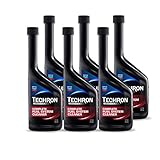
- For best performance, follow the manufacturer's recommendations in your vehicle owner’s manual.
- Cleans, restores, protects the entire fuel system (fuel injectors, carburetors, intake valves and combustion chambers)
- Restores: lost power, acceleration, lost fuel economy, and operation of the fuel gauge sensor
- Reduces: rough idle, engine surge, hesitation, and spark plus fouling
- Improves: cold start performance, and fuel stability for up to one year
- Read the vehicle and product instructions and confirm gasoline compatibility.
- Use only the stated amount; do not assume more cleaner works better.
- Add it as directed, commonly before refueling so it mixes with the specified tank volume.
- Keep records of the treatment and reassess the symptom rather than repeatedly dosing an unresolved fault.
4. Perform pressurized rail cleaning only with the correct kit and procedure
Pressurized cleaning replaces the vehicle’s fuel supply with a dedicated cleaner connected to the fuel rail through the correct adapters. GM lists a fuel-line shut-off adapter, injector-cleaning equipment, and fuel-pipe shut-off valves. Toyota’s procedure includes disabling the fuel pump, connecting the approved cleaner through an adapter, safely depressurizing afterward, reconnecting lines and seals, repressurizing, checking for leaks, and road-testing. Toyota also warns not to clamp plastic fuel lines in that procedure.
Windows Errors? Fix Them Before They Spread
Repair common Windows errors and clear accumulated junk for a smoother, more stable PC - no reinstall needed.Free scan · no reinstallOutdated Drivers Are Slowing You Down
One free scan finds every outdated or missing driver and matches the right update for your exact hardware.Free scan · exact hardware matchSafe workflow
- Work outdoors or in a thoroughly ventilated area away from flames, sparks, smoking, and hot surfaces.
- Locate the manufacturer’s fuel-pump disable and pressure-relief procedure.
- Capture residual fuel in an approved container and protect painted and electrical surfaces.
- Install only the specified shut-off valve, adapter, hoses, and cleaner.
- Run the service for the stated time and pressure; never exceed the cleaner concentration or equipment limits.
- Disconnect using the prescribed depressurization steps, reinstall lines and seals, and restore the fuel pump.
- Pressurize the system and inspect every connection for leaks before starting or driving.
- Road-test only after the leak check and any required fault-code procedure are complete.
5. Remove injectors for ultrasonic cleaning and testing when measurement matters
Removal-based service is an advanced repair, not a shortcut for every drivability complaint. It is appropriate when an injector fails a flow or leak test, remains restricted after an approved on-vehicle service, or needs comparison with the other injectors.
Rank #3

- DESIGNED TO EXCEED EXPECTATIONS: Red Line complete SI-1 fuel system cleaner treatment for cleaning and preventing corrosion in fuel systems
- PERFORM AND PROTECT: Fuel additive cleans injectors, carburetors, valve and combustion chamber deposits with a powerful, concentrated blend of high-temp and low-temp detergents
- EFFICIENT FUEL BURN: Gas treatment that enhances gasoline stability, while reducing the build up of gum and varnish formation
- EASY TO USE: Use one bottle per tank for most effective treatment, additive cleans nearly 100% efficiency in one treatment
- 15 Ounce (2 Pack)
Volkswagen’s procedure requires an ultrasonic unit, approved cleaning fluid, a 50 °C setting, and a 30-minute cycle. Audi specifies the same 50 °C/30-minute approach. Both procedures require replacing the combustion-chamber Teflon seal afterward. Use the exact fixture, fluid, injector-pulse/test equipment, and seal kit for the engine and injector application.
What a proper bench service should include
- Initial electrical, flow, spray-pattern, and leak checks.
- Ultrasonic cleaning with the specified fluid, temperature, and cycle.
- Post-cleaning flow and leak testing to identify an injector that still fails.
- Installation of new seals or O-rings wherever the service procedure requires them.
- Documentation of the before-and-after measurements and any injector that remains outside specification.
Safety checks before starting the engine
- Keep fuel and solvent containers closed and use suitable fire protection.
- Depressurize the fuel system by the vehicle’s method before disconnecting any line.
- Do not use improvised clamps on plastic fuel lines.
- Replace specified seals with the correct engine- and injector-specific parts.
- After reassembly, pressurize the system, inspect for wetness or odor, and fix any leak before driving.
When cleaning is unlikely to solve the problem
Cleaning is not a substitute for diagnosis. Continued misfire, hard starting, fuel odor, oil dilution, a failed coil, a damaged nozzle, an injector that will not hold pressure, or a cylinder that remains unbalanced after testing points toward replacement or broader fuel-system and engine diagnosis. No general consumer success-rate percentage applies to all engines, fuels, cleaners, and deposit conditions.
Quick Recap
Rank #4

- Specially formulated to remove carbon deposits from engines with over 75,000 miles
- Cleans fuel injectors, intake valves, and ports to restore performance and fuel economy
- Prevents future carbon build-up and reduces emissions
- Oxygen sensor safe and safe for use in turbocharged and supercharged vehicles
- Will not void OEM/manufacturer's warranty
Product prices and availability are accurate as of the date/time indicated and are subject to change. Any price and availability information displayed on Amazon at the time of purchase will apply.
Recommended Free Tools




