There is no universal “desert-ready” pass/fail standard. Treat readiness as a documented pre-trip inspection: use the tire pressures, coolant specification and service intervals in your owner’s manual; verify the tires, cooling and charging systems, fluids, belts, lights and safety equipment; then check weather, roads, traffic and your cargo. If you find overheating, a warning light, tire damage, a leak or another unresolved mechanical problem, have the vehicle assessed before you leave.
The checklist below follows general guidance from the National Highway Traffic Safety Administration (NHTSA). It is a risk-reduction process, not a guarantee that a vehicle will not break down in extreme heat.
As an Amazon Associate I earn from qualifying purchases.
Start with the vehicle’s own specifications
Before inspecting anything, read the owner’s manual and find the tire-pressure placard, usually on the driver’s door or door pillar. The manual and placard are the authority for your vehicle’s recommended cold tire pressure, coolant type, fluid specifications, service intervals and any special towing, loading or maintenance instructions. Tire sidewalls show a maximum pressure for the tire; that number is not the target pressure for your car.
Write down any service that is due before the trip. A desert route can expose an overdue maintenance item sooner than ordinary commuting because sustained heat and long distances leave fewer opportunities to stop at a shop.
#1 Best Overall

- HIGH ACCURACY: Every ETENWOLF's pencil tire gauge is calibrated to ANSI B40.1 Grade B, it is accurate to 2% of span in the middle 50% of range and 3% of span in the lower and upper 25% of range. Each ETENWOLF pencil tire pressure gauge is manually calibrated and has its unique calibration number printed on the pencil
- WIDER RANGE: ETENWOLF's tire gauge offers 2 pressure ranges: 10-50PSI, 20-120PSI for all types of vehicles
- ALL METAL: ETENWOLF tire gauges are made of all solid metal, zinc alloy head and stainless steel body, they are durable and can be used for many years unless you lose them
- DEFLATION: You can also use ETENWOLF's tire gauge to deflate tires when the tire pressure is overinflated
- 16 CAPS IN 2 CASES: ETENWOLF even offers 16 valve stem caps, so you won't worry about losing tire caps anymore
Inspect the tires while they are cold
Measure pressure correctly
Check every road tire, including the spare if it is inflated, when the tires are cold. NHTSA defines a useful cold check as at least three hours after driving. Use a reliable tire-pressure gauge and adjust to the vehicle manufacturer’s figure in the manual or on the door placard. Measure again after adding or releasing air, and replace valve caps.
Do not set pressure to the maximum molded on the tire sidewall. That figure describes the tire’s limit under specified conditions, not the vehicle maker’s recommended setting. If the car is heavily loaded or towing, follow the manual’s separate loading pressures rather than improvising.
Look for damage and uneven wear
Walk around the vehicle and inspect the tread and both visible sidewalls. Look for cuts, punctures, bulges, scrapes, cracks, bumps and objects lodged in the tread. Uneven wear can indicate an alignment, suspension or inflation problem that deserves attention before a remote drive. A tire professional should assess any structural damage; a plug-in air compressor or sealant is not a substitute for that assessment.
The Tool Desk
Outbyte Driver Updater FREEScan for outdated or missing drivers - takes under a minuteDriver Scan →Outbyte PC Repair FREEClear out junk files and repair common Windows errorsFree Scan →Verify the spare and changing equipment
If your vehicle has a spare, confirm that it is present, inflated to the pressure specified for it and free of damage. Make sure the jack, lug wrench, locking-lug key and any other supplied tire-changing parts are present and usable. A jack can be difficult or unsafe to use on loose desert ground, so include a firm ground mat if your equipment or vehicle design calls for one.
NHTSA reports that its cited tire-safety material is associated with nearly 11,000 tire-related motor-vehicle crashes and more than 600 deaths each year; the publication year is not stated in the cited page excerpt. The same material says proper inflation can save up to 11 cents per gallon and add up to 4,700 miles of tire life. Those figures are general U.S. guidance, not a desert-route prediction, but they explain why a cold-pressure check belongs at the top of the list.
Rank #2

- Professional Tire Pressure Gauge for Cars - This heavy duty mechanical tire pressure gauge is calibrated to ANSI B40.1 Grade B (2%) international accuracy standard so you get a precise, accurate pressure reading every time you use it. Makes great car accessories, car stuff, tire deflator, car stuff for men, cool car gadgets, car gifts for men, him, dad.
- Recommended by mechanics - It features a steel and brass construction with an extended 5mm chuck tip, so you get a great seal with no air leakage. This automotive tool is also surrounded by a rubber cover, so it is protected from drops and is easy to grip.
- No batteries required - This top-rated, professional tire monitoring system is easy to use and is reliable in all weather conditions. A perfect accessory for your car, motorcycle, truck, bike, SUV, RV or ATV - it will not let you down.
- Easy to read dial with a 45 degree angled and fully swivelling chuck. Our built in relief valve allows you to press the bleed button whilst the gauge is still on the tire valve, releasing air until you reach the exact target required.
- Car accessories for men and women - Give as the perfect gifts for men, car accessories gifts for men, gifts for dad, car gifts, car gifts for men, car stuff for men, gifts for car guys, car guy gifts for men, gifts for car lovers, cool car gifts, car lovers gifts for men.
Prove that the cooling system and air conditioning are ready
Check coolant level and specification
With the vehicle prepared according to the owner’s manual, check the coolant level and use only coolant that meets the manufacturer’s specification. Do not mix products merely because their colors look similar. Look around the reservoir, radiator area, hoses and ground under the vehicle for evidence of leakage. A low level, repeated need to top up, stained residue or an unexplained drop in level warrants professional diagnosis.
If the coolant’s condition or service age is uncertain, ask a qualified mechanic to test it and inspect the cooling system. The manual’s service interval takes precedence over a generic mileage rule.
Quick wins for a faster PC:
Scan for outdated or missing drivers - takes under a minuteDriver Scan →Repair Windows errors before they cause bigger problemsFix Now →Test the A/C before you are far from help
Run the air conditioning on a warm day and confirm that it cools the cabin adequately at idle and while driving. A system that is weak, intermittent or slow to cool should be checked before departure. Inspect or replace the cabin air filter when the manual or the filter’s condition calls for it. Do not wait for the first very hot day of the trip to discover that the system cannot keep occupants comfortable.
Know the overheating response
There is no source-defined temperature or mileage threshold that certifies a vehicle for desert travel. Treat a rising temperature gauge, an overheating message, steam, a coolant warning or a sudden loss of cooling performance as a reason to pull over safely and seek assistance rather than continuing to the next town.
Check every relevant fluid and look for leaks
Use the checking procedure and level marks in the manual. Depending on the vehicle, inspect:
Rank #3

- Accurate, Dependable Readings: Factory‑calibrated to ±1 PSI, so you can confidently match your vehicle’s recommended PSI (check the door jamb sticker). Ideal for monthly checks and road trips — consistent results every time, cold or warm.
- Bright Backlit Display & Nozzle Light: The illuminated nozzle helps you find the valve stem in the dark, while the backlit LCD makes readings crystal clear in dim garages or at night. No more squinting or holding a flashlight.
- 4 Measurement Units, One Button: Quickly switch among PSI, Bar, Kgf/cm², and KPA with a single press. No complex settings — just press and cycle to your preferred unit. Perfect for drivers who need multiple scales.
- Broad Compatibility for Everyday Vehicles: 0–150 PSI covers cars, SUVs, motorcycles, and spare tires (often 60 PSI). Fits standard Schrader valves; just press on for a reading.
- Auto‑Off to Extend Battery Life: The gauge automatically powers down after 30 seconds of inactivity, so the included 2*AAA batteries last longer. Always ready for your monthly checks without surprise dead batteries.
- Engine oil.
- Brake fluid.
- Automatic-transmission fluid, where the vehicle provides a check procedure.
- Clutch hydraulic fluid on vehicles with a hydraulic clutch.
- Hydraulic power-steering fluid on vehicles that use it.
- Windshield-washer fluid.
Check for wet spots, drips, stains or fluid levels that are falling between checks. Any evidence of a leak is a reason to take the car in before the trip; adding fluid without finding the cause only postpones the problem. Use the exact fluid grade and specification listed by the manufacturer, especially for coolant, brake fluid and transmission or clutch systems.
Do these 3 things before closing this tab:
1Scan for outdated or missing drivers - takes under a minute2Repair Windows errors before they cause bigger problems3Fix the driver behind crashes, sound loss and screen glitchesHave the battery and charging system evaluated when indicated
Hot weather can be hard on a battery that is already weak. Ask a mechanic to test the battery and charging system if starting has become slow, a battery or charging warning appears, the battery is near the end of its service life, service is due or you simply cannot establish its condition. NHTSA recommends professional checking and repair or replacement as necessary rather than relying on visual inspection alone.
At minimum, make sure the battery terminals and cables are secure and that no warning light remains on after the engine starts. A jump-start pack or jumper cables belongs in the emergency kit, but it does not make a failing charging system safe to ignore.
Inspect belts, hoses and connections
With the engine off and the vehicle cool enough to inspect safely, look for bulges, blisters, cracks, cuts, abrasion, loose connections or other deterioration on accessible belts and hoses. Pay attention to hose ends and clamps. Heat accelerates rubber degradation, so a component that looks marginal before departure should be assessed and replaced by a qualified technician rather than tested on a remote route.
Do not rely on a belt’s appearance alone to determine its remaining life. Use the service schedule and a mechanic’s inspection where the manual calls for one.
Rank #4

- PROCESS LEVEL ACCURACY: This heavy duty tire pressure gauge is calibrated manually to ANSI B40.1 Grade A (±1% of span)
- PRESSURE RANGE 0-75 PSI: ETENWOLF’s tire gauge can measure pressure of pickup, motorcycle, truck, bike, SUV, RV or ATV
- EASY TO READ IN THE DARKNESS: The large glow dial helps you clearly read the pressure at night or in low light
- EASY TO USE: 360 degree swivel chuck allows you to measure and take a reading from a tire valve at any angle
- ACCURACY IN EXTREME WEATHER: PSI gauge works normally even in extreme cold or hot weather
Verify lights, wipers and pedal clearance
Test exterior lighting
Turn on and test the headlights, brake lights, turn signals and emergency flashers. If you tow, test the trailer lights as well. Replace failed bulbs or repair wiring before leaving; a lighting fault can become a safety problem on a long route with changing visibility.
Inspect wiper blades and washer supply
Check that the blades clear the windshield without skipping, smearing or leaving untreated areas. Fill the washer reservoir with the fluid specified for your conditions and carry extra washer fluid in the vehicle. Dust, insects and sudden weather can make visibility deteriorate quickly.
Secure the floor mats
Confirm that each floor mat is the correct shape, locked into its retaining points and unable to slide into the accelerator or brake pedal area. Never stack mats or use one that curls upward near a pedal.
Check for open safety recalls
Use NHTSA’s recall lookup with the vehicle identification number (VIN) or license plate before the trip. Read the remedy information and contact the manufacturer or an authorized repair facility if a safety recall is open. A recall check does not replace routine maintenance, and a clean result does not certify the mechanical condition of a used vehicle.
Plan the route and secure the load
Check conditions before departure
Review the weather forecast, road conditions and traffic for the entire route, not just the departure city. Allow extra time so you are not pressured to drive faster than conditions permit or skip an inspection stop. Recheck conditions immediately before leaving because heat, dust, storms, road closures and traffic can change a plan.
Best Value
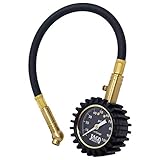
- Mechanic Recommended - performance tested, certified, & calibrated accurate within ANSI Standards (±1.5%) at our ANSI accredited calibration facility, ensuring precise tire pressure readings without relying on batteries
- Feels rugged in the hand & built to last from solid brass shielded by our durable shock-resistant gear-style protective guard; features our signature HybridFlex leak-proof air hose providing a soft feel with superior strength & flexibility
- Robust design is equipped with a built-in air bleeder valve to reduce pressure in overinflated tires, and the handy 360-degree swivel chuck allows for easy access to the tire valve from any angle
- Larger, 2" glow dial features easy-to-read 100 PSI single increment scale that glows in the dark, providing accurate readings that "lock" in place until the pressure reset button on the brass neck is pressed
- 100% Lifetime Warranty by JACO when you order today, so click buy with confidence and enjoy longer-lasting tires, improved gas mileage, and a smoother car driving experience with the help of properly inflated tires.
Pack for the distance between services
Carry enough water, food and required medicines for delays, and keep them accessible rather than buried under luggage. A charged phone and charger, maps and a flashlight help when a stop lasts longer than expected. Tailor quantities to the route, the number of occupants, the season and your vehicle.
Prevent cargo movement
Place heavy items low, distribute weight within the limits in the manual and secure every bag, cooler and tool so it cannot move, fall or separate from the vehicle. Keep emergency equipment reachable. If a trailer or roof carrier is used, follow its load and attachment instructions and verify that all lights and connections work.
Independent reader supportYour contribution helps us test, update, and keep practical guides available for everyone.Build a vehicle-specific roadside emergency kit
NHTSA’s general roadside-kit guidance includes the following items. Choose equipment that fits your vehicle and route rather than assuming every car uses the same jack, wheel hardware or tire-repair method.
| Item | Why it belongs in the kit |
|---|---|
| Cell phone and charger | Communication and navigation during a delay; keep both charged before departure. |
| First-aid kit | Basic treatment for minor injuries while waiting for help. |
| Flashlight | Inspection and signaling after dark; carry spare batteries if it uses them. |
| Flares and a white flag | Make a stopped vehicle more visible where their use is lawful and safe. |
| Jumper cables | Allow a compatible jump if the battery is discharged; they cannot repair a charging fault. |
| Tire-pressure gauge | Check pressure after a puncture or major temperature change. |
| Jack, lug wrench and ground mat | Enable a tire change only when the vehicle’s equipment and the surface make it safe. |
| Work gloves, basic tools and duct tape | Protect hands and handle minor, temporary tasks without pretending to replace a repair. |
| Water and paper towels | Hydration and cleanup; do not use drinking water as a substitute for the correct vehicle fluid. |
| Nonperishable food, drinking water and medicines | Support occupants during an extended delay. |
| Extra windshield-washer fluid | Restore visibility when the reservoir runs low. |
| Maps | Provide route information if a phone or vehicle display is unavailable. |
| Emergency blankets, towels or coats | Protection from exposure while waiting for assistance or managing a stop. |
Store the kit where it can be reached without unloading the entire vehicle. Check expiration dates, battery charge and the fit of the jack and lug wrench before departure.
Use a final departure sequence
- Complete the cold-tire, spare, fluid, leak, belt, hose, lighting, wiper, A/C and battery checks described above.
- Start the vehicle and confirm that no new warning light or message remains illuminated after the normal startup check.
- Run the engine long enough to notice abnormal smells, noises, visible leaks or temperature behavior before joining the highway.
- Confirm that the emergency kit, water, medicines, phone charger and maps are accessible.
- Secure all occupants, floor mats and cargo; verify that doors, hatch and any trailer or carrier are latched.
- Check the latest weather, traffic and road information, then leave enough time for breaks and an unhurried drive.
Know which symptoms mean “stop and get help”
Do not continue simply because the destination is close if the car develops a condition that can worsen quickly. Pull over in a safe location, make the vehicle visible and seek qualified assistance when you observe:
- An overheating gauge, temperature warning, steam or a sudden loss of coolant.
- A tire bulge, sidewall cut, puncture, repeated pressure loss, vibration or handling change.
- A battery or charging warning, repeated difficulty starting or electrical functions failing.
- Any fluid leak, a burning smell, smoke or a new mechanical noise.
- A brake warning, change in brake-pedal feel or a warning light that does not clear.
- Loss of air conditioning that coincides with overheating or another warning.
- A dashboard warning that you cannot identify or an unresolved problem noticed before departure.
The cited NHTSA material does not establish a universal temperature, mileage or symptom threshold for declaring a car desert-ready. When a warning or damage appears, the safe decision depends on the vehicle, the specific fault and the location; a qualified mechanic or tire professional can make that assessment.
Decide whether to go, service first or postpone
| What you find | Decision | Next action |
|---|---|---|
| Checks match the manual; tires are undamaged and correctly inflated; no leaks or warnings; cooling, A/C, lights and wipers work; cargo and emergency supplies are ready. | Proceed with normal monitoring. | Keep the manual and roadside kit accessible and continue checking conditions along the route. |
| A service interval is due, battery condition is uncertain, a belt or hose is deteriorated, A/C performance is poor, or a fluid level is falling without an identified cause. | Service before departure. | Ask a qualified mechanic to inspect the relevant system and document what was repaired or replaced. |
| Overheating, a warning light, a damaged or repeatedly deflating tire, an active leak, smoke, severe vibration or another unresolved safety problem. | Postpone the trip. | Do not use distance to a destination as a reason to continue; arrange professional diagnosis, towing or repair. |
What this inspection can—and cannot—tell you
This process verifies observable conditions and catches common reasons a hot-weather trip goes wrong. It cannot predict every electrical, mechanical or road hazard, and it cannot replace the manufacturer’s maintenance schedule. Desert routes also differ widely in pavement, traffic, services, weather and distance between help. Use the owner’s manual for vehicle-specific limits, NHTSA’s general safety guidance for preparation, and a qualified professional for any condition you cannot confidently evaluate.
What’s actually slowing this PC down?
Pick the symptom - the matching free tool is one click away.
In a May 31, 2018 advisory, Heidi King, then NHTSA Deputy Administrator, summarized the agency’s road-trip message: “We are encouraging all motorists to drive safely this summer and to make sure their vehicles are road trip ready.” For a desert journey, that means treating preparation as both a vehicle inspection and a route-and-emergency plan.
Quick Recap
Product prices and availability are accurate as of the date/time indicated and are subject to change. Any price and availability information displayed on Amazon at the time of purchase will apply.




