Recommended Free Tools
That strange net extending from the front of a police car is probably the Grappler Police Bumper. It captures a fleeing vehicle’s rear tire or axle with a tethered net, allowing the pursuing police vehicle to help bring the target to a stop—sometimes while badly damaging its tire, axle, or suspension.
That strange net extending from the front of a police car is probably the Grappler Police Bumper. It is a vehicle-mounted law-enforcement immobilization system that captures a fleeing vehicle’s rear tire, wheel, axle, or suspension area. The pursuing police vehicle then controls the tether and brakes, helping bring the target to a stop.
As an Amazon Associate I earn from qualifying purchases.
It can look as though the police car has hooked and dragged the fleeing vehicle. The more precise description is a close-range net-and-tether system. Its purpose is to end a dangerous pursuit or prevent one from continuing—not to provide a guaranteed, damage-free stop. Depending on the capture and the driver’s reaction, the result can include a ruined tire, bent or damaged suspension parts, or a damaged axle.
What the Grappler Police Bumper is
The Grappler is installed on the front of an authorized police vehicle. Its arresting net is released toward one of the target vehicle’s rear wheels. When the net catches the tire or associated wheel assembly, the two vehicles become connected through a tether.
#1 Best Overall

- Black / No Winch Mount / Center Only/Push Bars
- Item Package Dimension: 35.9L x 31.9W x 10.9H inches
- Item Package Weight - 69 Pounds
- Item Package Quantity - 1
- Product Type - VEHICLE BUMPER
The patrol vehicle is not simply ramming the target from behind. It is using the captured rotating assembly as an immobilizing connection point. By managing the tether and applying braking, the officer can interfere with the target vehicle’s ability to continue normally and guide the pursuit toward a stop.
Official agency policies describe the equipment as a tactical option for stopping a driver who refuses to stop. The policies also treat deployment as a serious use of police authority: officers need a lawful basis for the intervention, appropriate training, and a continuing assessment of whether the conditions make deployment reasonable.
How the device stops a fleeing car
Deployment requires the police vehicle to get close to the target. It is not a remote projectile that can be fired from a safe distance. The officer must control the patrol car, judge the changing position of the target, and bring the front-mounted device into the correct relationship with a rear tire.
What’s actually slowing this PC down?
Pick the symptom - the matching free tool is one click away.
- Approach: The police vehicle follows and closes the gap to the fleeing vehicle.
- Alignment: The officer positions the Grappler near the target’s rear tire or wheel path.
- Net deployment: The arresting net is released from the front bumper.
- Capture: The net entangles the tire, wheel, axle, or nearby suspension components.
- Controlled braking: The officer maintains control of the tether and brakes the police vehicle to help bring the target to a halt.
The exact mechanical result is not identical in every deployment. A net may catch different parts of the wheel assembly, and the target driver’s steering, acceleration, and braking can affect how the connection loads the vehicle.
Why it can make such a mess of tires and suspension
The Grappler is designed to immobilize a vehicle, not to preserve its tire and suspension components. If the captured wheel continues rotating while the driver accelerates away, the net and tether place forces on the tire, axle, hub, and suspension. A driver who keeps fighting the device can cause substantially more damage than a driver who stops.
That does not mean every use destroys a car. The outcome depends on factors including the speed of both vehicles, the point of capture, road surface, steering input, braking, vehicle design, and what the driver does after the net catches. The target may suffer anything from tire damage to serious damage involving the axle or suspension.
“Makes a mess of tires” is therefore a vivid shorthand, not a technical guarantee. The device’s intended outcome is controlled immobilization; mechanical damage is a possible—and sometimes significant—part of how that immobilization occurs.
Free tools Windows power users keep installed
One-click scans. No signup required.
Rank #2
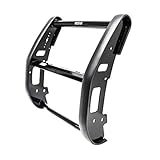
- Package Weight: 67.0 pounds
- Package Dimensions: 33.0 L x 12.0 H x 32.0 W (inches)
- Made in China
- Part Number: 36-2055
Grappler versus a PIT maneuver
A PIT maneuver uses contact from a pursuing vehicle to rotate a fleeing vehicle. The police car strikes or nudges the target in a way intended to make it turn, lose forward momentum, and stop. That can produce a rapid change in direction and carries its own risks, especially at higher speeds or in heavy traffic.
The Grappler uses a different mechanism. Instead of deliberately rotating the target with vehicle-to-vehicle contact, it captures a rear wheel or related assembly with a net and uses the tethered connection and braking to interfere with the vehicle’s movement.
It would be misleading to describe the Grappler as automatically safer than a PIT. Both are tactical interventions whose suitability depends on the circumstances. The meaningful distinction is how they affect the target: PIT relies on a controlled rotational contact, while the Grappler relies on wheel or axle entanglement.
Grappler versus spike strips
A spike strip, often called a tire-deflation device in police policies, is generally placed across a roadway or otherwise positioned in a vehicle’s path. Its purpose is to puncture tires as the vehicle passes over it.
Do these 3 things before closing this tab:
1Clear out junk files and repair common Windows errors2Scan for outdated or missing drivers - takes under a minute3Repair Windows errors before they cause bigger problemsThe Grappler is mounted to the pursuing police car and must be brought directly to the target’s rear wheel. It is not a spike strip attached to a bumper. It is a vehicle-borne entanglement and immobilization system with different deployment geometry, training requirements, and risks.
That difference also explains the unusual footage associated with the device. A spike strip waits for the target to reach it. A Grappler-equipped police vehicle has to approach, align, deploy, and manage the connection while both vehicles are moving.
Why a department might use it
Police agencies may consider the Grappler when allowing a fleeing vehicle to continue poses a greater danger than attempting an intervention. A successful deployment could end a pursuit without requiring officers to keep following the vehicle indefinitely.
Rank #3
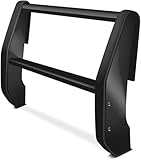
- Package Dimensions: 27.94 L x 67.818 W x 91.948 H (cm)
- Package Weight : 26.535 kg
- Country of Origin : China
- Product type : VEHICLE BUMPER
That is a tactical goal, not a promise. Agency policies commonly direct officers to weigh:
Quick wins for a faster PC:
Clear out junk files and repair common Windows errorsFree Scan →Fix the driver behind crashes, sound loss and screen glitchesFind Drivers →Repair Windows errors before they cause bigger problemsFix Now →- the seriousness of the suspected offense;
- whether the driver presents an immediate threat;
- the target vehicle’s speed and behavior;
- traffic, roadway, weather, and lighting conditions;
- the number and identity of occupants, when known;
- the possibility of apprehending the driver later;
- available backup and other intervention options; and
- the risk to the police vehicle, its occupants, and bystanders.
Policies from agencies such as Albuquerque, Missoula, and Boulder describe the Grappler as a trained and authorized tactical tool rather than an automatic response to every failure to stop. The decision remains dependent on local policy, legal authority, training, and the facts confronting the officer.
The biggest limitation: the police car has to get close
The system’s most obvious limitation is also the one that is easiest to miss in a short video clip: the police vehicle must approach the fleeing car closely enough to align the device with a rear tire.
That creates risk. A fleeing driver may brake, swerve, accelerate, or try to escape the approaching patrol car. The officer must make a close-range maneuver while accounting for traffic, road width, curves, intersections, weather, visibility, and the possibility of a collision. A target traveling at high speed or behaving erratically may be difficult or inappropriate to engage.
The Grappler also cannot guarantee that the target will stop smoothly. The net may capture the wheel assembly in an unfavorable way, or the driver’s reaction may increase the forces on the tether. A deployment can reduce the duration of a pursuit, but it does not eliminate the possibility of a crash or vehicle damage.
Is the Grappler available to ordinary drivers?
No—not as a normal consumer automotive accessory. Federal contracting documents and municipal procurement records describe complete Grappler bumper kits, installation, training, replacement arresting nets, and related equipment supplied to public-safety organizations. The manufacturer’s official materials direct interested parties toward agency contact rather than an ordinary retail checkout process.
In practical terms, this is equipment for police departments, sheriff’s offices, and potentially other qualified public-safety, security, or military organizations—not a product for private drivers to install on a pickup truck.
Rank #4

- 5000 Series
- Will not work with Front Park Sensors
- Transfer kit included
Private attempts to imitate the system with tow straps, nets, cables, or improvised bumper hardware would not reproduce the engineering, vehicle integration, training, or legal authority involved. Such an attempt could create a severe collision and entanglement hazard. The documented system should be understood in its law-enforcement context.
The bottom line on the “car-stopping net”
The Grappler Police Bumper is a front-mounted, tethered net system that gives a trained officer a way to capture a fleeing vehicle’s rear wheel or axle and help brake it to a stop. It is neither a PIT maneuver nor a spike strip, and it is not a magic button that safely stops every vehicle.
Its trade-off is straightforward: the device may offer an alternative to allowing a dangerous pursuit to continue, but it requires a risky close approach and can damage the target’s tire, axle, or suspension—especially if the driver keeps accelerating after capture. Whether it is appropriate depends on the officer’s training, agency policy, legal justification, and the conditions at the scene.
Frequently Asked Questions
Is the Grappler the same as a PIT maneuver?
No. A PIT maneuver uses vehicle contact to rotate a fleeing car, while the Grappler captures a rear tire or axle with a tethered net and uses controlled braking to help stop it.
Is the Grappler a spike strip on a police bumper?
No. Spike strips are generally placed across a roadway to puncture tires. The Grappler is mounted on a pursuing police vehicle and must be aligned directly with a target’s rear wheel.
Does the Grappler destroy the fleeing car’s tire or axle?
It can. Depending on the point of capture, speed, road conditions, and the driver’s response, the net may damage the tire, axle, hub, or suspension. Continuing to accelerate after capture can make the damage worse.
The Tool Desk
Outbyte Driver Updater FREEScan for outdated or missing drivers - takes under a minuteDriver Scan →Outbyte PC Repair FREERepair Windows errors before they cause bigger problemsFix Now →Can a private driver buy and install a Grappler?
It is not presented as a normal consumer product. Procurement records describe agency installation, training, replacement nets, and related equipment for law-enforcement or other qualified public-safety organizations.
The Bottom Line
The Grappler Police Bumper uses a tethered net to capture a fleeing vehicle’s rear wheel or axle, allowing a pursuing police car to help brake it to a stop. It can end a pursuit without a PIT-style spin, but it requires a close approach and may badly damage the target’s tire, axle, or suspension.
Quick Recap
Product prices and availability are accurate as of the date/time indicated and are subject to change. Any price and availability information displayed on Amazon at the time of purchase will apply.