Do these 3 things before closing this tab:
1Clear out junk files and repair common Windows errors2Fix the driver behind crashes, sound loss and screen glitches3Repair Windows errors before they cause bigger problemsEngine oil has no single expiration date that applies to every brand and storage history. ExxonMobil recommends a maximum shelf life of five years for its engine oils, including Mobil 1, while its broader guidance ties a typical five-year recommendation to oil kept in its original sealed container and stored properly. That is manufacturer guidance—not a universal rule. Opened oil, oil stored in poor conditions, and oil already in an engine need separate consideration.
How long does unopened engine oil last?
ExxonMobil recommends a five-year maximum shelf life for engine oils, including Mobil 1. That recommendation applies to its products; it should not be treated as a guaranteed expiration date for every brand. ExxonMobil’s Mobil FAQ gives the product-specific recommendation.
In its broader lubricant guidance, ExxonMobil describes five years as a typical recommendation for oils and greases stored in their original sealed containers under proper conditions, in sheltered storage and at typical ambient temperatures. Its storage and shelf-life guidance is conditional: the container and storage history matter.
Other manufacturers may give different guidance. Valvoline Japan says its motor oil does not carry an expiration date and recommends indoor storage away from direct sunlight. That is guidance from Valvoline Japan, not a blanket policy for every oil brand or market. See Valvoline Japan’s FAQ.
#1 Best Overall
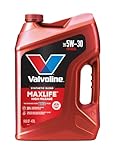
- Formulated for engines with 75,000 miles or more, Valvoline MaxLife High Mileage synthetic blend is formulated with seal conditioners to help prevent oil leaks and reduce oil consumption
- Delivers 20% better wear protection and 15% better sludge defense than industry standards to help prevent engine breakdown
- Extra detergents safeguard against friction, corrosion and deposits to keep high-mileage engines clean
- Advanced friction-fighting additives help maximize performance and improve fuel efficiency
- Provides performance benefits for high mileage, new and re-built engines alike
What changes if the bottle has been opened?
Do not automatically apply the sealed-container recommendation to an opened bottle. Mobil says unsealed engine oil can absorb moisture from the air and may become hazy; it does not give a universal time limit for using opened oil. If the cap was left off, the container may have been contaminated, or the storage conditions are unknown, ask the product maker or distributor for advice on that specific oil.
A little sediment is not, by itself, proof that oil is unusable. Mobil notes that slight sedimentation can occur in some oils over time and generally does not adversely affect performance. Avoid relying on a home visual check as a universal pass-or-fail test.
Rank #2
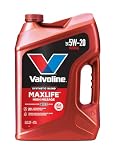
- Formulated for engines with 75,000 miles or more, Valvoline MaxLife High Mileage synthetic blend is formulated with seal conditioners to help prevent oil leaks and reduce oil consumption
- Delivers 20% better wear protection and 15% better sludge defense than industry standards to help prevent engine breakdown
- Extra detergents safeguard against friction, corrosion and deposits to keep high-mileage engines clean
- Advanced friction-fighting additives help maximize performance and improve fuel efficiency
- Provides performance benefits for high mileage, new and re-built engines alike
Is oil in an engine subject to the same shelf-life limit?
No. Shelf life describes oil stored in a container, not oil in service. In an engine, oil encounters contaminants, uses up additives, and can oxidize or thicken over time. Follow the vehicle manufacturer’s maintenance schedule for oil changes rather than using a bottle’s age to estimate an in-engine interval. Mobil explains this distinction in its motor oil service-life guidance.
Independent reader supportYour contribution helps us test, update, and keep practical guides available for everyone.How to decide whether old oil is suitable for your car
- Check the oil’s maker and product guidance. Use its shelf-life and storage recommendations; do not assume another brand’s policy applies.
- Consider the container and storage history. A sealed container kept sheltered at typical ambient temperatures is closer to ExxonMobil’s stated storage conditions than an opened or poorly stored bottle.
- Match the oil to the vehicle. Check the owner’s manual for the required viscosity and performance specification. Valvoline’s FAQ advises that the API rating on the oil label meet or exceed the vehicle manual’s requirement.
- Ask when key details are uncertain. If you do not know the product’s age or storage history, contact the manufacturer or distributor rather than guessing from appearance alone.
Without the vehicle’s specifications, it is not possible to recommend a viscosity grade or a particular replacement oil. Choose engine oil that meets the requirements in the owner’s manual.
Quick Recap
Best Value
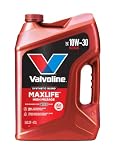
- Formulated for engines with 75,000 miles or more, Valvoline MaxLife High Mileage synthetic blend is formulated with seal conditioners to help prevent oil leaks and reduce oil consumption
- Delivers 20% better wear protection and 15% better sludge defense than industry standards to help prevent engine breakdown
- Extra detergents safeguard against friction, corrosion and deposits to keep high-mileage engines clean
- Advanced friction-fighting additives help maximize performance and improve fuel efficiency
- Provides performance benefits for high mileage, new and re-built engines alike
Rank #4

- Helps extend engine life, even in severe conditions
- Protects for 15,000 miles – guaranteed*
- Contains additives to help fight sludge
- Keeps your engine running like new
Rank #3

- Advanced protection against the four main causes of engine breakdown: wear friction heat and deposits
- Delivers 40% stronger wear protection than industry standards to reduce friction and improve fuel economy
- Provides 15% better deposit defense vs. industry standards, keeping engines cleaner for smoother performance and longer-lasting protection
- Up to 2.5X better heat protection vs. industry standards to fight harmful sludge formation and thermal breakdown
- Engineered for excellent low-temperature flow, reducing metal-to-metal contact during cold starts — when most engine wear typically occurs
Product prices and availability are accurate as of the date/time indicated and are subject to change. Any price and availability information displayed on Amazon at the time of purchase will apply.