Free tools Windows power users keep installed
One-click scans. No signup required.
For a U.S. fleet-wide reference, new vehicles averaged about 4,354 pounds in model year 2024, according to the EPA’s February 2026 report. That is not the curb weight of a typical car: the figure spans different vehicle types and is based on EPA inertia-weight classes. The weight of an individual vehicle depends on its category, model, configuration, and powertrain.
What does the average car weigh?
The latest official U.S. figure identified here is about 4,354 pounds per new vehicle in model year 2024. The EPA’s fleet average includes multiple vehicle categories, so it should not be read as the weight of a typical sedan—or as a direct average of curb-weight specifications. The report uses inertia-weight classes representing curb weight plus 300 pounds.
Vehicle type matters: the EPA reported about a 1,700-pound gap between the heaviest and lightest vehicle types in model year 2024. A single fleet average can provide context, but it cannot tell you what a particular car weighs.
Recommended Free Tools
#1 Best Overall
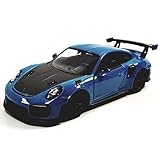
- Doors Open
- Pullback Action
- Die Cast Metal Body
- PULL BACK ACTION WITH FREE ROLLING WHEELS
How U.S. vehicle weight has changed
The EPA’s historical figures show that average new-vehicle weight has shifted substantially over time. These are fleet-level figures, not a record of how the weight of one particular model changed.
| Model year | Average weight per vehicle | What the EPA report says |
|---|---|---|
| 1975 | 4,060 pounds | The average fell to about 3,200 pounds by model year 1981, a 21% drop. The EPA says fuel-economy standards and higher gasoline prices likely both contributed. |
| 2004 | 4,111 pounds | Average new-vehicle weight had risen 28% from the 1981 level; the growing share of trucks was one contributing factor. |
| 2024 | About 4,354 pounds | About 6% above 2004 and just below the record high, according to the EPA. |
Source for all figures and descriptions: U.S. Environmental Protection Agency, February 2026. The report does not establish one cause for the full increase since 1981. It also describes preliminary model-year 2025 data as indicating a further increase; because those data are preliminary, they should not be treated as a final figure.
What do curb weight, EPA inertia weight, and GVWR mean?
Published vehicle weights are not all the same kind of number. Check the definition before comparing figures.
- Curb weight: The EPA defines this as the weight of an empty, unloaded vehicle.
- EPA inertia weight: The analytical weight classes in the EPA report represent curb weight plus 300 pounds. The classes are grouped in 250-pound increments below 3,000 pounds and 500-pound increments above 3,000 pounds. An EPA fleet figure based on these classes is therefore not a direct curb-weight average.
- GVWR (gross vehicle weight rating): A manufacturer-specified rating for the loaded weight of a single vehicle. It is a rating, not the vehicle’s measured weight.
- Actual scale weight: The weight of a particular vehicle in the condition in which it is weighed. It is neither its GVWR nor an EPA fleet-class average.
Terminology can vary: a historical NHTSA interpretation notes ambiguity around curb-weight conventions, including standard equipment and fluids. When using a published number, rely on the definition given by its source or the vehicle manufacturer rather than assuming every listing uses the same convention. NHTSA’s 1974 interpretation is useful here specifically for distinguishing a manufacturer’s rating from a scale measurement: NHTSA interpretation nht74-3.36, May 6, 1974.
Why do vehicles have different weights?
Vehicle category and size
The EPA compares categories including sedan/wagon, car SUV, truck SUV, minivan/van, and pickup. Their weights differ, and an SUV label alone does not establish a vehicle’s weight or regulatory category.
Powertrain
Battery-electric vehicles are likely to weigh more than comparable internal-combustion vehicles because of their battery packs, the EPA says. That is a general comparison, not a claim that every electric vehicle outweighs every combustion vehicle.
Rank #2

- Licensed product from Fast & Furious
- ICONIC BRANDING: Attention to detail and expert styling enhances this 2002 Nissan Skyline R-34 vehicle
- Detailed interior, engine compartments and chassis
- Quality heavy diecast metal body with highly detailed wheels and chrome accents
- Suitable for ages 8+
Model and configuration
Specific models and configurations differ. A fleet average cannot supply the curb weight of an individual car; look for a manufacturer specification that matches the model year and configuration, and check whether it gives curb weight or another measure.
Independent reader supportYour contribution helps us test, update, and keep practical guides available for everyone.How does vehicle mass affect energy use?
Mass is one factor in the energy required to move a vehicle. The EPA says heavier vehicles generally require more energy to move and, with other factors held equal, tend to have lower fuel economy. Added weight may also reduce electric-vehicle efficiency measured in MPGe. This relationship does not, by itself, determine which of two different vehicles will be more efficient; other vehicle characteristics matter too.
The EPA describes weight as “a fundamental vehicle attribute and an important metric for analysis because vehicles with a higher weight, other factors being equal, will require more energy to move.” Source: The 2025 EPA Automotive Trends Report, issued February 2026.
How to compare the weights of two vehicles
Make the comparison meaningful by matching the details that determine what each number represents:
- Category and size: Compare like with like, such as sedan/wagon with sedan/wagon or pickup with pickup.
- Model year and configuration: Note the year and equipment or trim; do not treat different configurations as identical.
- Powertrain: Identify whether each vehicle is combustion, hybrid, plug-in hybrid, or battery electric.
- Weight definition: Compare curb weight with curb weight, not with GVWR, an EPA inertia class, or a scale reading.
- Units and scope: State pounds or kilograms, and distinguish one vehicle’s specification from a fleet average.
For an individual vehicle, use its model-year- and configuration-specific manufacturer specification when you need a published curb weight. If you need the weight of that particular vehicle in its current condition, a specification or GVWR cannot substitute for an actual scale measurement.
Quick Recap
Product prices and availability are accurate as of the date/time indicated and are subject to change. Any price and availability information displayed on Amazon at the time of purchase will apply.
Quick wins for a faster PC:
Scan for outdated or missing drivers - takes under a minuteDriver Scan →Repair Windows errors before they cause bigger problemsFix Now →