AI is changing far more than autonomous driving. It is already improving driver-assistance systems, vehicle design, factory inspection, predictive maintenance, battery management, fleet operations, and the software delivered to vehicles after purchase. The automotive industry is moving from building largely fixed mechanical products to operating connected, software-defined platforms throughout a vehicle’s life.
Fully autonomous cars are not yet a normal consumer product. The strongest evidence today is for narrower applications—especially crash avoidance, manufacturing quality, diagnostics, and fleet efficiency—while higher levels of automated driving remain limited by edge cases, validation, regulation, cybersecurity, cost, and liability.
As an Amazon Associate I earn from qualifying purchases.
What “AI in automotive” actually means
Automotive AI is not one technology installed in every car. It is a collection of software techniques integrated with sensors, electronic control units, vehicle networks, cloud services, maps, safety controllers, and human-machine interfaces.
- Machine learning finds patterns in vehicle, sensor, manufacturing, or customer data.
- Deep learning uses neural networks extensively for computer vision, speech recognition, prediction, and perception.
- Computer vision identifies lanes, vehicles, pedestrians, signs, road edges, and obstacles.
- Sensor fusion combines cameras, radar, lidar, ultrasonic sensors, GPS, inertial measurements, maps, and vehicle odometry.
- Generative AI and large language models generate text, code, test cases, simulations, and conversational responses.
- Edge AI runs models inside the vehicle or factory, reducing dependence on a cloud connection.
- Digital twins and simulation represent vehicles, roads, factories, or components virtually for testing and optimization.
- Planning and reinforcement-learning techniques help systems select actions or trajectories under changing conditions.
In a safety-critical vehicle, AI is normally one layer in a larger system. A perception model may identify an object, but separate planning, control, monitoring, and fail-safe mechanisms determine what the vehicle is allowed to do.
#1 Best Overall

- CEL Doctor: The ANCEL AD310 is one of the best-selling OBD II scanners on the market and is recommended by Scotty Kilmer, a YouTuber and auto mechanic. It can easily determine the cause of the check engine light coming on. After repairing the vehicle's problems, it can quickly read and clear diagnostic trouble codes of emission system, read live data & hard memory data, view freeze frame, I/M monitor readiness and collect vehicle information
- Sturdy and Compact: Equipped with a 2.5 foot cable made of very thick, flexible insulation. It is important to have a sturdy scanner as it can easily fall to the ground when working in a car. The AD310 OBD2 scanner is a well-constructed mechanic tool with a sleek design. It weighs 12 ounces and measures 8.9 x 6.9 x 1.4 inches. Thanks to its compact design and light weight, transporting the device is not a problem. The buttons are clearly labelled and the screen is large and displays results clearly
- Accurate Fast and Easy to Use: The AD310 scanner can help you or your mechanic understand if your car is in good condition, provides exceptionally accurate and fast results, reads and clears engine trouble emission codes in seconds after you fixed the problem. This device will let you know immediately and fix the problem right away without any car knowledge. No need for batteries or a charger, get power directly from the OBDII Data Link Connector in your vehicle
- OBDII Protocols and Car Compatibility: Many cheap scan tools do not really support all OBD2 protocols. AD310 scanner as it can support all OBDII protocols such as KWP2000, J1850 VPW, ISO9141, J1850 PWM and CAN. This device also has extensive vehicle compatibility with 1996 US-based, 2000 EU-based and Asian cars, light trucks, SUVs, as well as newer OBD2 and CAN vehicles both domestic and foreign. Pls confirm with our customer service whether it is compatible with your vehicle before purchasing
- Home Necessity and Worthy to Own: This is an excellent code reader to travel or home with as it weighs less and it is compact in design. You can easily slide it in your backpack as you head to the garage, or put it on the dashboard, this will be a great fit for you. The AD310 is not only portable, but also accurate and fast in performance. Moreover, it covers various car brands and is suitable for people who just need a code reader to check their car
AI-powered safety and driver assistance
The most immediate consumer impact is in advanced driver-assistance systems, or ADAS. These systems use sensors and AI models to warn the driver, intervene, or help control speed and steering.
Common examples include:
- Forward-collision warning and automatic emergency braking
- Pedestrian and cyclist detection
- Blind-spot warning and steering intervention
- Lane-departure warning and lane-keeping assistance
- Adaptive cruise control and traffic-jam assistance
- Driver monitoring and attention detection
- Rear automatic braking and automated parking
- Night vision, hazard detection, and collision-risk prediction
The basic operating loop is straightforward:
- Sensors collect information about the vehicle’s surroundings and condition.
- AI models detect and classify objects, lanes, signs, and road surfaces.
- The system estimates movement, distance, and collision risk.
- A planner decides whether to warn, brake, steer, or request driver intervention.
- A safety controller limits the action according to programmed constraints.
- Events may be recorded for system validation, investigations, and future model improvement.
Independent evidence supports meaningful benefits for some specific systems. The Insurance Institute for Highway Safety reports that forward-collision warning combined with automatic braking reduced rear-end crashes by about 50% in one study, while forward-collision warning alone reduced them by 27%. Pedestrian-recognition automatic braking reduced pedestrian crashes by 27% in another IIHS study. These findings describe particular crash types and system combinations—not a guarantee that every AI feature reduces every kind of collision.
U.S. regulation is also pushing front-crash prevention into the mainstream. Under the finalized NHTSA rule, nearly all new light vehicles must have qualifying technology by September 2029. The rule specifies automatic braking for vehicles ahead at speeds up to 90 mph and pedestrian braking at speeds up to 45 mph, including operation in daylight and darkness.
Crashes, No Sound, or Screen Glitches?
Random freezes, missing sound and display glitches usually trace back to one bad driver. Find and replace yours safely.Free scan · under a minuteWindows Errors? Fix Them Before They Spread
Repair common Windows errors and clear accumulated junk for a smoother, more stable PC - no reinstall needed.Free scan · no reinstallADAS is not the same as autonomous driving
Marketing language often blurs the line between assistance and automation. The distinction matters because it determines who remains responsible for monitoring the road.
| Category | Who monitors the road? | Typical example |
|---|---|---|
| Driver assistance, generally SAE Levels 0–1 | The human driver | Automatic emergency braking or adaptive cruise control |
| Level 2 partial automation | The human driver continuously | Lane centering combined with adaptive cruise control |
| Level 3 conditional automation | The system within defined conditions; the driver may be required to take over | Limited highway or traffic applications |
| Level 4 high automation | The system within a defined operational design domain | A geofenced robotaxi or shuttle |
| Level 5 full automation | The system in all roadway conditions | Not broadly commercially available |
NHTSA describes Level 2 as providing both steering and speed input while requiring the human driver to remain fully engaged. A Level 2 car is not self-driving, even if it can maintain a lane and follow traffic without constant pedal or steering input. NHTSA specifically warns that “self-driving” terminology can mislead drivers about their responsibilities.
How AI enables automated driving
Higher-level automated driving requires a complete technical stack rather than a single impressive neural network.
Perception
AI models identify cars, trucks, motorcycles, bicycles, pedestrians, animals, debris, traffic signals, signs, construction barriers, lane boundaries, drivable space, and unusual events. They must also estimate the confidence of those detections when sensors disagree or visibility deteriorates.
Quick wins for a faster PC:
Scan for outdated or missing drivers - takes under a minuteDriver Scan →Repair Windows errors before they cause bigger problemsFix Now →Fix the driver behind crashes, sound loss and screen glitchesFind Drivers →Localization
The vehicle determines its position using combinations of GPS, inertial sensors, high-definition maps, camera or lidar landmarks, radar, and wheel-based odometry. Some systems attempt to operate with reduced reliance on detailed maps, but localization still has to remain reliable when roads change.
Prediction, planning, and control
The system predicts whether another road user may merge, brake, cross, turn, violate a rule, or behave unpredictably. It then selects speed, lane position, following distance, yielding behavior, lane changes, and emergency maneuvers. The final controller converts that plan into braking, steering, and power commands within strict safety limits.
Validation
Testing combines public-road driving, closed courses, simulation, synthetic edge cases, hardware-in-the-loop testing, software-in-the-loop testing, regression testing, and controlled procedures for safety drivers or remote operators where applicable. NVIDIA’s DRIVE platform illustrates the full-stack direction: training and data development, simulation and validation, and in-vehicle computing. Those are vendor-described platform capabilities, not independent proof that any particular vehicle is approved for universal autonomous driving.
Rank #2

- Understand Your Check Engine Light – The ANCEL AD410 OBD2 scanner helps everyday drivers quickly read and clear engine-related fault codes, view code definitions, and understand why the check engine light is on before visiting a repair shop. With 42,000+ built-in DTC lookups, this car code reader helps reduce guesswork and makes basic vehicle diagnostics easier for beginners and DIY users
- Full OBD2 Diagnostics Made Simple – More than a basic engine code reader, this OBD2 scanner diagnostic tool supports key OBDII functions including reading/clearing codes, live data, freeze frame, I/M readiness, O2 sensor test, EVAP test, vehicle information, and MIL status. It helps you check your car’s condition, verify repairs after the issue is fixed, and communicate with mechanics more confidently
- Live Date & Real-time Vehicle Insights – View real-time engine data such as RPM, coolant temperature, fuel trim, oxygen sensor readings, and other available OBD2 parameters directly on the screen. These live data readings help you better understand how your vehicle is running, spot abnormal patterns, and make more informed repair decisions instead of relying only on a warning light
- Smog Check Readiness At A Glance – Use the I/M readiness function before a smog check or emissions inspection to see whether your vehicle’s monitors are ready. This OBD2 code scanner helps you confirm if recent repairs have brought the system back to a ready state, reducing the chance of failed inspections, retests, wasted trips, and unnecessary inspection fees
- Works With Most OBD2 Vehicles – Compatible with most 1996 and newer U.S.-based OBD2 cars, SUVs, and light trucks, as well as many 2000 and newer EU/Asian OBD2 vehicles. Supports major OBDII protocols including CAN, ISO9141, KWP2000, J1850 VPW, and J1850 PWM. This automotive diagnostic scanner is designed for wide vehicle coverage; please check compatibility with your vehicle before purchase
Why autonomous driving remains difficult
Road driving is an open-ended problem. Rare events are difficult to collect and label, yet they can determine whether a system avoids a serious crash. A model may perform well on average while failing on a fallen object, an unusual vehicle, temporary roadwork, a confusing sign, or a pedestrian behaving unexpectedly.
What’s actually slowing this PC down?
Pick the symptom - the matching free tool is one click away.
Snow, fog, rain, glare, darkness, dirty sensors, faded markings, blocked cameras, and changing construction zones can degrade perception. Human road behavior is social and ambiguous; people sometimes ignore signs, make eye contact, hesitate, or act unlawfully. The vehicle must also respond safely when sensors disagree and when a software, map, hardware, or environmental change alters model performance.
Demonstrating successful examples is not the same as proving acceptable safety. As the SAE’s 2025 report on next-generation ADAS and ADS challenges explains, developers must balance cost, benefits, standards, testing, delivery, and public expectations—including the unrealistic expectation that these systems should work perfectly in every situation.
How to interpret automotive safety claims
Crash data requires a denominator. A useful hierarchy of evidence places independent crash-reduction studies and government investigations above demonstrations, promotional videos, and anecdotes.
- Crash counts are not crash rates.
- Miles driven, roadway types, weather, speeds, and system engagement affect comparisons.
- A highway-focused system cannot be assumed to have the same effect on urban or pedestrian crashes.
- More reported incidents may reflect better reporting rather than worse performance.
- “Safer than a human” requires a defined human comparator, exposure period, and population.
NHTSA cautions that its ADS and Level 2 incident data are not necessarily statistically representative. Manufacturers differ in telemetry, reporting access, recording practices, consumer reporting, and crash awareness; duplicate reports and multiple impacts can also affect totals. The agency’s displayed crash-reporting data page states that its current data run through July 15, 2026.
AI in vehicle design and engineering
AI is changing the work that happens before a vehicle reaches a factory. Engineers can use generative design and topology optimization to explore components, structures, aerodynamics, battery packaging, thermal systems, and materials. AI tools can also search engineering documentation, analyze requirements, generate test cases, assist with code, review code, and identify potential failure modes.
Simulation and synthetic data are particularly valuable for rare driving scenarios. A virtual environment can generate variations of weather, traffic, road layouts, and sensor conditions more quickly than collecting every example on public roads.
These tools do not remove engineering responsibility. Generated designs require structural, thermal, manufacturing, cybersecurity, functional-safety, and durability review. Generated code needs traceability, version control, testing, and security analysis. A model can optimize the wrong objective when requirements are incomplete, and a simulation can fail to represent real hardware or real-world behavior.
Smarter factories
Visual quality inspection
AI cameras can identify paint defects, panel-gap problems, weld issues, missing components, contamination, incorrect assembly, and label or connector errors. Unlike a simple fixed rule, a trained vision system can recognize more complex variations, although false positives and false negatives must be measured on the actual production line.
The Tool Desk
Outbyte PC Repair FREEClear out junk files and repair common Windows errorsFree Scan →Outbyte Driver Updater FREEFix the driver behind crashes, sound loss and screen glitchesFind Drivers →Predictive maintenance
Models analyze vibration, temperature, current, pressure, cycle time, and other equipment telemetry to detect abnormal behavior before a machine fails. The potential benefits include less unplanned downtime, improved spare-parts planning, longer equipment life, and better maintenance scheduling.
Rank #3
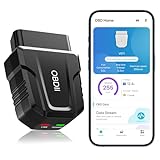
- 【Comprehensive Performance Testing】V011 OBD2 Scanner provides a complete diagnostic solution, giving you a thorough understanding of your vehicle's condition. It supports a variety of performance tests, support 9 protocols,👍automotive fault clearing,including fast reading of DTCs, access to electronic emission readiness, turning off CEL or MIL, resetting monitors, reading live data and retrieving the vehicle's VIN, freeze frame, sensor data, data streaming, diagnostic reports, onboard monitoring, live data streaming, and more. With these features, you can monitor your car's performance in real time and discover potential problems before they become major issues.
- 【Convenience and Savings for All Users】Designed with user-friendliness in mind, the V011 OBD2 Scanner is perfect for both novices and seasoned car enthusiasts. The intuitive app helps you interpret the check engine light, and suggests possible fixes. This can help you avoid unnecessary trips to the repair shop and prevent you from being overcharged for repairs. The product also includes helpful how-to guides and video tutorials, empowering you to clear the check engine light yourself and save significantly on repair bills.The fault code can only be cleared after the car is repaired. ⚠️ Notice:lf the car is not repaired,the fault code can only be cleared by the computer in the 4s shop.
- 【Intuitive Data Visualization】Understanding car diagnostics has never been easier. The V011 OBD2 Scanner displays detected data in clear, easy-to-read charts. Whether it's engine coolant temperature, engine speed, vehicle speed, or control module voltage, the visual representation helps you quickly grasp your car’s status. Even beginners can compare these readings against normal values to determine if their car needs any repairs.
- 【Broad Compatibility】The newly upgraded V011 OBD2 Scanner supports over 96% of car makes and models, making it one of the most versatile diagnostic tools on the market. It is compatible with a wide range of brands including Toyota, Honda, Chevrolet, Ford, Mercedes-Benz, Jeep, BMW, Porsche, Subaru, Nissan, Cadillac, Volkswagen, and Lexus, covering vehicles from 1996 to the present. This ensures that almost any vehicle owner can benefit from its extensive features. The device also supports multiple languages, including English, German, Spanish, Finnish, French, Italian, Dutch, Portuguese, and Chinese, ensuring accessibility for a global audience.
- 【Advanced Bluetooth 5.4 Connectivity】Say goodbye to the hassle of traditional wired connections. The V011 OBD2 Scanner features an upgraded Bluetooth 5.4 system, providing faster and more reliable connections. This seamless connectivity ensures you can start diagnosing your vehicle without any delays.Tips: 1. The car must be started (power on and ignition), 2. The mobile phone Bluetooth is turned on. Note that Apple phones only need to turn on Bluetooth, do not connect Bluetooth in the phone settings to turn on OBD Home, the APP will automatically connect (this product is only suitable for OBD home)
Robotics and factory optimization
AI can help robots adapt to component variation, optimize motion and cycle time, and respond to changing conditions around human workers. At the factory level, it can coordinate production scheduling, energy use, inventory, material flow, supplier risk, line balancing, and rework reduction.
Digital twins
A digital twin can connect engineering information, factory equipment, production results, quality data, and field telemetry. This makes it possible to trace a recurring defect from a vehicle back to a process or component, then test a proposed improvement virtually before changing the line.
Google Cloud’s automotive portfolio describes connected use cases spanning manufacturing data, high-performance computing, analytics, autonomous-vehicle development, and in-vehicle AI agents. As with other vendor material, the exact benefit depends on implementation, data quality, and the customer’s existing manufacturing systems.
AI in supply chains and logistics
Automotive supply chains can use AI for demand forecasting, supplier selection, semiconductor and component-risk monitoring, inventory planning, delivery-route optimization, port and warehouse planning, recall-parts allocation, fleet utilization, and driver or fuel-efficiency analysis.
The trade-off is greater dependence on data quality, cloud availability, model assumptions, and technology suppliers. A system trained on stable historical demand may react poorly to a sudden recall, geopolitical disruption, new regulation, or supplier failure. Human escalation and alternative plans remain necessary.
AI in electric vehicles and batteries
Battery-management systems can use AI to improve state-of-charge and state-of-health estimation, battery-degradation prediction, thermal management, range estimates, charging schedules, cell-level anomaly detection, warranty analysis, residual-value forecasts, and fleet energy management. Charging networks can use demand forecasts to place equipment and manage peak loads.
AI supplements rather than replaces electrochemical, electrical, and thermal safety systems. Hard limits, monitoring, isolation, and shutdown controls remain essential because a prediction model cannot be treated as the sole protection against battery faults.
Free tools Windows power users keep installed
One-click scans. No signup required.
The International Energy Agency links AI and EV development with software-defined vehicles, autonomy, cybersecurity, and semiconductor supply pressure. As vehicles gain more software and automated functions, cybersecurity and update management become part of the vehicle’s safety engineering.
The software-defined vehicle
A software-defined vehicle uses software to determine an increasing share of its functionality. Centralized or zonal electrical architectures can replace some distributed electronic control units, reduce wiring complexity, and provide computing capacity for vehicle-wide services.
This architecture allows automakers to fix defects, adjust performance, deploy security patches, and add features through over-the-air updates. The IEA notes that OTA updates can extend software support after sale and create new revenue opportunities through feature subscriptions.
Rank #4

- 【Diagnose Check Engine Light in Seconds – No Mechanic Needed】The FOXWELL NT301 OBD2 scanner instantly reads & clears engine fault codes (DTCs) with one click. Simply plug into the 16-pin DLC port, turn ignition on, and get accurate results within seconds—No prior car knowledge required. Save hundreds on dealership fees by knowing exactly what’s wrong before you visit a shop. The #1 choice car scanner for DIYers and car owners who want to take control of their vehicle’s health
- 【Clear & Reset CEL with Confidence】Unlike cheap code readers that just erase codes temporarily, NT301 works like all professional vehicle code readers: It clears the check engine light only after you’ve fixed the underlying issue. If the problem isn’t fully repaired, the fault code will reappear. So you’ll never get a false pass. Use the foxwell scanner to verify your repair work and drive with peace of mind
- 【Sm-og Check Helper – Know Your Pass/Fail Status Before the Test】With dedicated one-click I/M readiness hotkeys and a simple Red-Yellow-Green LED indicator, you’ll instantly know if your vehicle is ready for annual testing. Built-in speaker provides clear audio feedback. No guesswork—just confidence before you head to the test center. One less thing to worry about when inspection day comes
- 【Advanced OBDII Modes – O- 2 Sensor & EVAP Testing】NT301 go beyond basic code reading with enhanced OBD2 modes. Run an EVAP system check to assess fuel tank condition, and use the O- 2 sensor test to optimize air-fuel ratio, boosting fuel economy, cutting em- issions, and saving you money at the pump. The code reader for cars and trucks is like having a mini em-issions lab in your glove box
- 【Live Data Graphing – Spot Engine Issues in Real Time】View and log live sensor data in easy-to-read graphs with this OBD2 scanner diagnostic tool. Monitor ox- ygen sensors, fuel trims, coolant temperature, RPM, and more to spot suspicious values instantly. This obd scanner gives you professional-grade insight without the pro price tag—a feature you won’t find on basic $20 car code readers
The same shift changes the ownership relationship. A vehicle can improve after purchase, but a faulty update can introduce a new defect. Features may vary by region, trim, account, software version, or subscription. Repairs may require proprietary diagnostics, calibration, or software authorization. Consumers may also pay recurring fees for hardware already installed in the car.
Recommended Free Tools
Predictive maintenance and connected services
The connected-service lifecycle usually works like this:
- Vehicle sensors collect health and operating data.
- Data is filtered locally or transmitted to cloud infrastructure.
- AI detects anomalies or predicts component degradation.
- The system generates an alert or service recommendation.
- An owner, dealer, or fleet manager schedules maintenance.
- The repair outcome feeds back into future model development.
Potential benefits include fewer breakdowns, faster diagnosis, better fleet uptime, improved warranty management, and more targeted recalls. But false positives create unnecessary service costs, while false negatives create reliability or safety risks. Data can also be incomplete or biased toward newer, better-connected fleets, and models must be retrained as suppliers, components, and vehicle generations change.
Independent reader supportYour contribution helps us test, update, and keep practical guides available for everyone.In-car AI assistants
Natural-language assistants can control media and climate settings, explain dashboard warnings, answer questions from the owner’s manual, help with navigation, personalize settings, provide driver coaching, and improve accessibility. Multimodal systems may combine voice, cameras, vehicle data, and location context.
Safety boundaries are critical. An assistant should not distract the driver, and permissions for vehicle controls should be limited by safety policy. Cloud dependence can create latency and outage problems. Cabin audio, video, location, contacts, driving behavior, and driver-monitoring data require clear consent, retention limits, and access controls. A conversational model that invents an answer is inconvenient when discussing entertainment but unacceptable when giving safety-critical instructions.
Google Cloud describes automotive AI-agent use cases such as analyzing test-drive logs, answering vehicle questions, navigation, vehicle controls, and explaining dashboard warnings. These are advertised capabilities, not independent evidence of universal production deployment.
Cybersecurity and privacy
Connectivity expands the attack surface. Relevant entry points include infotainment systems, telematics, mobile apps, cloud APIs, wireless updates, charging infrastructure, supply-chain software, sensors, vehicle networks, and fleet-management platforms.
Potential threats include stolen credentials, account takeover, ransomware, denial-of-service, manipulated sensor or map data, unauthorized access to vehicle functions, and attacks on charging or fleet systems. NHTSA identifies cybersecurity as a critical issue because modern vehicles depend on electronics, sensors, and computing power. The IEA warns that attacks could expose data from microphones, cameras, and sensors or allow malicious actors to disable or remotely operate vehicles.
Privacy concerns go beyond a vehicle’s location history. They may include cabin audio and video, biometric or attention data, contacts, infotainment activity, driving behavior, and inferences about a person’s health, work, home, or habits. Whether a consumer controls vehicle data varies by jurisdiction, contract, data category, and service provider. Buyers should read the applicable privacy policy rather than assume that connected features are private.
Do these 3 things before closing this tab:
1Clear out junk files and repair common Windows errors2Scan for outdated or missing drivers - takes under a minute3Repair Windows errors before they cause bigger problemsRegulation, standards, and liability
AI raises questions that traditional vehicle rules were not designed to answer: Who is responsible after a crash? What constitutes a software safety defect? How should regulators evaluate a changing machine-learning system? How should a software recall work? What data and records must a manufacturer retain?
Best Value

- Multi-Functions - Practical Multi-Functions OBD2 code reader features built-in OBD2 DTC lookup library, which help you to determine the cause of the engine light, read code, erase code, view freeze frame, I/M ready, vehicle information, data flow, real-time curve, get vehicle speed information, calculate load value, engine coolant temperature, get engine speed.
- Wide Capability - Supports 9 protocols compatible with most 1996 US-Based, 2000 EU-Based and Asian cars, and newer OBD II & CAN domestic or import vehicles. Supports 6 languages - English,German, Dutch, Spanish, French, Italian.
- 2.8" LCD Display - Designed with a clear display 2.8" Large LCD screen - white backlight and contrast adjustment. No need any battery or charger, OBD reader gets the power directly from your vehicle through the OBDII Data Link Connector.
- Compact Design - Car diagnostic scanner is equipped with a 2.5 feet long cable and made of a very thick flexible insulator.There are 6 buttons on OBD2 Scanner:scroll up/down,enter/exit and buttons that quick query VIN vehicle number& the DTC fault code.
- ABS / Airbag codes NOT Supported - It is able to read and clear check engine information which is part of OBDII system, but it cannot work with non-OBDII systems, including ABS / Airbag / Oil Service Light, etc.
In the United States, NHTSA’s Standing General Order requires specified manufacturers and operators to report certain crashes involving ADS and Level 2 ADAS. The reporting framework was amended in 2025, including changes to reporting timelines, reportable events, and duplicate-report handling. In September 2025, NHTSA also announced rulemakings intended to modernize Federal Motor Vehicle Safety Standards for automated-driving vehicles, many of which were written around human drivers. Requirements differ internationally and may also vary by state, vehicle, and operational domain.
Regulation must account for software updates, imported systems, cross-border fleets, data retention, human-machine interfaces, cybersecurity, and evidence of safety before deployment. Vendor claims about “human-like reasoning,” “production readiness,” or “safer driving” should always be tied to a defined system, location, operating condition, and independent evidence.
Economic and workforce effects
AI may reduce or change manual visual inspection, routine documentation, basic diagnostic triage, repetitive data entry, some warehouse and production tasks, and certain driving or dispatch work. It may also create demand for AI safety engineers, data specialists, simulation engineers, cybersecurity professionals, robotics technicians, model-validation engineers, software-defined-vehicle architects, functional-safety experts, human-factors specialists, and AI governance staff.
What’s actually slowing this PC down?
Pick the symptom - the matching free tool is one click away.
The outcome is not predetermined. Companies may use AI to remove labor, increase productivity, improve job quality, or shift responsibility onto workers without adequate training. Reskilling, clear accountability, and practical human oversight matter as much as model capability.
What companies actually buy
Automotive AI is primarily a B2B technology market. The right purchase depends on the problem, data, safety requirements, and integration capacity.
- Vehicle telemetry: AWS IoT FleetWise provides vehicle-data collection infrastructure. Its published example pricing includes $0.60 per active vehicle per month for the first 10,000 vehicles and $0.45 for the next 40,000, with messaging and storage charged separately. AWS’s example totaling $8,681.40 annually for 1,000 vehicles is an illustrative estimate, not a universal quote. See the AWS pricing page.
- Cloud, factory, and engineering data: Google Cloud offers automotive tools covering manufacturing data, analytics, HPC, AI agents, and autonomous-vehicle and ADAS development. Enterprise costs depend on usage and implementation; its automotive page advertises pay-as-you-go pricing and a new-customer credit. See Google Cloud Automotive.
- Autonomous-vehicle development: NVIDIA markets DRIVE as an ecosystem spanning model training, simulation, validation, and in-vehicle computing. The public product page does not show a general list price, so program-specific evaluation is required. See NVIDIA DRIVE.
Build-versus-buy is strategic. In-house development provides more control over data, vehicle behavior, and user experience but costs more and can take longer. Partnerships provide technology and engineering scale sooner but increase supplier dependence, integration risk, and potential loss of control. The IEA describes automakers using mixed approaches, including internal development, software subsidiaries, partnerships, and joint ventures.
Practical checklists
For someone evaluating an AI-enabled car
- Is the feature a warning system, intervention system, Level 2 assistance, or higher-level automation?
- Must you keep your hands on the wheel and eyes on the road?
- What happens when cameras or radar are blocked?
- Does it work in darkness, rain, snow, construction zones, or poor lane markings?
- Is it included, optional, subscription-based, or trial-only?
- Does it require cellular connectivity?
- How are updates delivered, and can they be reversed after a fault?
- What cabin, location, driving, and vehicle-health data is collected?
- What are the calibration and repair costs after windshield, bumper, or sensor damage?
- Are the safety claims independently verified?
For an automaker or supplier
- Require safety traceability, update governance, cybersecurity controls, and defined operational limits.
- Evaluate compute, thermal capacity, sensor compatibility, model portability, and hardware lifecycle support.
- Measure cloud dependence, data ownership, supplier lock-in, and total cost per vehicle.
- Test integration with legacy ECUs, factory systems, OTA infrastructure, and regulatory documentation.
For a fleet or factory
Start with one measurable problem: a single inspection station, asset class, recurring failure, production bottleneck, or supplier-risk workflow. Track false positives, false negatives, downtime avoided, scrap, rework, labor hours, energy, throughput, connectivity, and payback. Escalation procedures are essential when the model is uncertain.
Outdated Drivers Are Slowing You Down
One free scan finds every outdated or missing driver and matches the right update for your exact hardware.Free scan · exact hardware matchWindows Errors? Fix Them Before They Spread
Repair common Windows errors and clear accumulated junk for a smoother, more stable PC - no reinstall needed.Free scan · no reinstallThe direction of travel
AI is revolutionizing automotive in five connected layers: the vehicle, the factory, the development process, the ownership lifecycle, and the business model. The immediate gains are most credible in targeted ADAS, quality control, diagnostics, engineering assistance, battery management, and operational efficiency. Software-defined architectures then connect those improvements through centralized computing, telemetry, and OTA updates.
Automated driving will continue to advance, but its progress should be judged by independently measured performance inside a clearly defined operating domain—not by the broad label “self-driving.” The automotive revolution is real, but it is incremental, software-led, and inseparable from safety engineering, privacy, cybersecurity, regulation, and the economics of long-term vehicle ownership.
Quick Recap
Product prices and availability are accurate as of the date/time indicated and are subject to change. Any price and availability information displayed on Amazon at the time of purchase will apply.




