PC Slower Than It Used to Be?
A free scan shows the junk files, broken settings and background clutter dragging Windows down - then fixes them in one click.Free scan · Windows 10 & 11Outdated Drivers Are Slowing You Down
One free scan finds every outdated or missing driver and matches the right update for your exact hardware.Free scan · exact hardware matchShort answer: A hybrid car does not automatically require full synthetic oil, and conventional oil is not automatically acceptable. The oil type, viscosity, performance certification and change interval are set by the exact vehicle’s owner’s manual. Some hybrid engines require full synthetic; others allow either conventional or synthetic oil when it meets the listed specification.
Why the word “hybrid” does not answer the oil question
A hybrid powertrain combines an internal-combustion engine with one or more electric motors and a high-voltage battery. That arrangement changes how often the engine starts, stops and reaches operating temperature, but it does not create one universal lubrication requirement. Automakers design different engines, use different emissions systems and certify different oil formulations. The hybrid badge therefore cannot tell you whether an oil must be synthetic.
As an Amazon Associate I earn from qualifying purchases.
The controlling document is the owner’s manual for your exact model year, engine and market. Check the oil specification in the maintenance or “Engine oil” section, not a generic chart for the model line. A trim with a different engine, a plug-in version, or a vehicle sold in another country can have a different requirement.
The Tool Desk
Outbyte Driver Updater FREEFix the driver behind crashes, sound loss and screen glitchesFind Drivers →Outbyte PC Repair FREERepair Windows errors before they cause bigger problemsFix Now →- Full synthetic required: use a product identified as full synthetic and carrying every viscosity and performance designation listed by the manual.
- Synthetic permitted: a synthetic product is acceptable, but the manual may also allow other oil that meets the same viscosity and certification.
- Conventional permitted: conventional oil can be used only when the manual permits it and the bottle still meets the required grade and certification.
If the manual is missing, use the automaker’s official digital manual for your vehicle identification number or contact a dealer service department. Do not infer the answer from advice for another hybrid.
#1 Best Overall

- 3X Stronger than the leading full synthetic*
- 10X Better high stress performance**
- 20,000 miles between oil changes***
- Viscosity breakdown as measured in Kurt Orbahn test on 5W-30 grade
- As measured in Seq IX test under high load/torque conditions vs. API SQ test limits
What “full synthetic” and “conventional” mean
Full synthetic oil
Full synthetic oil is formulated from highly engineered base oils and additive packages. The formulation is designed to maintain its intended flow and protective properties across the temperatures and operating conditions specified by the automaker. “Full synthetic” describes the formulation category; it does not, by itself, prove that the oil is suitable for your engine. A full synthetic product with the wrong viscosity or certification can still be the wrong choice.
Conventional oil
Conventional oil uses mineral-derived base oil refined to the required performance level. Modern conventional products can meet demanding industry classifications when the bottle carries the correct certification. They are not automatically unsuitable for a hybrid, but they cannot be substituted when the manual specifically requires full synthetic.
Synthetic-blend or semi-synthetic oil
A blend combines synthetic and conventional base oils. Treat it as a separate category. If a manual says “full synthetic required,” a blend does not satisfy that wording unless the automaker explicitly says it does. If the manual specifies only a performance category and viscosity, a blend may be acceptable when its label carries those exact approvals.
What current hybrid manuals actually specify
The following official-manual examples show why a universal answer fails. They apply only to the cited vehicle and engine applications; they are not recommendations for every hybrid.
| Vehicle and manual | Viscosity and certification | Synthetic wording | Important qualification |
|---|---|---|---|
| 2027 Hyundai Sonata Hybrid manual | SAE 0W-16; API SN PLUS or higher and/or ILSAC GF-6 | Full synthetic required for the cited engine | The manual says lower-grade mineral or semi-synthetic oil calls for oil and filter replacement under the severe-maintenance schedule. |
| 2025 Toyota Corolla Hybrid Owner’s Manual | ILSAC GF-6B multigrade oil; SAE 0W-16 recommended | The cited passage focuses on the specified grade rather than declaring a universal synthetic requirement | SAE 0W-20 may be used if 0W-16 is unavailable; return to 0W-16 at the next oil change. |
| 2024 Honda Accord Hybrid manual | Use the specified type and viscosity with the API Certification Seal | Synthetic may be used | The allowance applies only when the oil has the required seal and viscosity. |
| 2026 Hyundai Tucson Plug-in Hybrid manual | SAE 0W-20; API SN PLUS/SP or ILSAC GF-6 | Full synthetic required for the cited application | Plug-in-hybrid status does not create a general rule for other plug-in models. |
| 2024 Honda CR-V Hybrid manual | Use the specified viscosity and an oil carrying the API Certification Seal | Synthetic oil is permitted | This is a vehicle-specific allowance, not a blanket statement about all Honda or all hybrids. |
These examples also illustrate that viscosity and certification are separate checks. An oil can be synthetic yet fail the required API or ILSAC category, or carry the right category in the wrong viscosity.
How to read your owner’s manual correctly
- Confirm the vehicle identity. Match the model year, engine, drivetrain and market. A conventional hybrid and a plug-in hybrid may use different oils.
- Find the oil specification. Search the digital manual for “engine oil,” “lubricants,” “oil viscosity,” or “maintenance.” In a printed book, check the maintenance and technical-data sections.
- Record the viscosity exactly. Write down the complete SAE grade, including both numbers and the “W.” Do not reduce “0W-16” to “a thin oil” or replace it with a familiar grade.
- Record the performance category. Note API, ILSAC and any automaker approval or wording such as “SN PLUS or higher.” The bottle must show the required designation.
- Check whether “full synthetic” is mandatory. “Synthetic may be used” is permission, not a requirement. “Full synthetic required” is a requirement.
- Read temperature and availability notes. Some manuals describe a temporary alternative when the recommended grade cannot be obtained, then require a return to the preferred grade at the next oil change.
- Check the service schedule. Look for normal and severe-use intervals and any instruction that changes the interval when a different oil category is used.
Save a photograph or note of the specification in your maintenance records. It prevents a quick-lube visit or online purchase from turning into a guess.
Rank #2

- Advanced protection against the four main causes of engine breakdown: wear friction heat and deposits
- Delivers 40% stronger wear protection than industry standards to reduce friction and improve fuel economy
- Provides 15% better deposit defense vs. industry standards, keeping engines cleaner for smoother performance and longer-lasting protection
- Up to 2.5X better heat protection vs. industry standards to fight harmful sludge formation and thermal breakdown
- Engineered for excellent low-temperature flow, reducing metal-to-metal contact during cold starts — when most engine wear typically occurs
Viscosity: the number that must match
SAE grades describe how an oil flows at low temperature and at the engine’s high-temperature test condition. The first number, such as 0W, describes cold-start behavior; the second, such as 16 or 20, identifies the high-temperature viscosity grade. The lower “W” number does not mean “better” for every engine, and a higher second number is not a safe upgrade.
Recommended Free Tools
Modern hybrid engines may use very low-viscosity grades to reduce pumping losses and support efficient cold starts. That does not authorize a driver to choose the thinnest oil available. Bearing clearances, oil passages, seals, emissions equipment and calibration are engineered around the specified grade.
The 2025 Toyota Corolla Hybrid manual’s allowance for 0W-20 when 0W-16 is unavailable is a specific contingency. It should not be generalized to another Toyota, another model year or another brand. Follow any return-to-preferred-grade instruction at the next oil change.
- Never select oil solely because it is labeled “hybrid,” “fuel economy,” or “advanced.”
- Never change viscosity because a different grade is cheaper or more readily available unless the manual lists it as an option.
- In hot or cold climates, use the temperature chart supplied for your engine rather than a general internet recommendation.
API and ILSAC certifications are not optional details
The API Certification Seal and ILSAC category are shorthand for performance requirements established for engine oils. Your manual may require one, the other, or an automaker-specific approval in addition to the SAE grade. Read the back and front labels carefully; marketing language such as “premium protection” is not a substitute for a certification.
How to verify the bottle
- Match the complete SAE viscosity to the manual.
- Look for the API Certification Seal when the manual requests it.
- Check the API category or ILSAC designation, including suffixes such as “PLUS” or “SP.”
- Confirm that the product is identified as full synthetic when the manual requires that formulation.
- Keep the receipt and photograph the label if a warranty claim could depend on oil compliance.
“Higher” is not universally interchangeable. If a manual says “API SN PLUS or higher,” the bottle must clearly identify an accepted later category; do not assume that every modern-looking label qualifies. When the wording is unclear, ask the automaker or an authorized service provider before filling the engine.
When conventional oil is acceptable
Conventional oil is acceptable only in an application whose manual permits it and whose product meets the listed viscosity and certification. In that situation, the hybrid system itself does not make the oil invalid. The relevant question is compliance with the engine specification.
Rank #3

- Advanced protection against the four main causes of engine breakdown: wear friction heat and deposits
- Delivers 40% stronger wear protection than industry standards to reduce friction and improve fuel economy
- Provides 15% better deposit defense vs. industry standards, keeping engines cleaner for smoother performance and longer-lasting protection
- Up to 2.5X better heat protection vs. industry standards to fight harmful sludge formation and thermal breakdown
- Engineered for excellent low-temperature flow, reducing metal-to-metal contact during cold starts — when most engine wear typically occurs
Honda’s 2024 Accord Hybrid and 2024 CR-V Hybrid examples use permissive wording: suitable oil may be used, and synthetic oil is allowed when it bears the API Certification Seal and has the specified viscosity. That language does not say every conventional product is acceptable; it places the burden on the label and the exact grade.
If a manual allows more than one oil category, compare products on specification first, then consider price, availability and the service interval. A less expensive compliant oil is preferable to an expensive oil that lacks the required certification.
When full synthetic is mandatory
Some engines explicitly require full synthetic oil. The cited 2027 Hyundai Sonata Hybrid manual specifies full synthetic for its listed engine, and the cited 2026 Hyundai Tucson Plug-in Hybrid manual does the same for its application. In these cases, conventional or semi-synthetic oil does not meet the instruction, even if the SAE grade appears identical.
What’s actually slowing this PC down?
Pick the symptom - the matching free tool is one click away.
The Sonata manual also warns that using lower-grade mineral or semi-synthetic oil changes the maintenance requirement: oil and filter replacement follows the severe-maintenance schedule. That is not permission to use the lower-grade product; it is a maintenance consequence described by that manual. Follow the stricter instruction and correct the oil at the earliest practical opportunity if the wrong category was installed.
If the wrong oil was installed
- Identify what was added: brand, formulation, viscosity, quantity and certification.
- Compare those details with the manual’s exact requirement.
- Call the automaker’s service department if the formulation is unknown or the vehicle is under warranty.
- Arrange an oil and filter change using the specified product if the oil category or viscosity is noncompliant.
- Keep the invoice and explain the correction in your maintenance log.
Do not attempt to “convert” conventional oil into synthetic by adding an additive. Additives cannot change the base-oil category or supply a missing certification.
Does synthetic oil improve a hybrid’s fuel economy?
The reviewed official manuals do not establish a general, measured fuel-economy advantage for full synthetic oil over conventional oil across hybrid cars. Toyota’s 2025 Corolla Hybrid manual says, “SAE 0W-16 is the best choice for good fuel economy and good starting in cold weather.” That statement concerns the recommended viscosity; it is not a quantified synthetic-versus-conventional comparison.
Rank #4
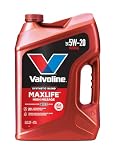
- Formulated for engines with 75,000 miles or more, Valvoline MaxLife High Mileage synthetic blend is formulated with seal conditioners to help prevent oil leaks and reduce oil consumption
- Delivers 20% better wear protection and 15% better sludge defense than industry standards to help prevent engine breakdown
- Extra detergents safeguard against friction, corrosion and deposits to keep high-mileage engines clean
- Advanced friction-fighting additives help maximize performance and improve fuel efficiency
- Provides performance benefits for high mileage, new and re-built engines alike
Oil viscosity can influence pumping resistance, especially during cold starts, but the effect depends on the complete engine design, temperature, oil condition and control strategy. A synthetic product in the wrong grade can be less appropriate than a conventional product in the correct grade when the manual permits both.
Choose synthetic for a documented requirement, a permitted formulation you prefer, or operating and maintenance considerations described by your automaker—not for an assumed percentage improvement. No universal fuel-economy number can be responsibly applied to every hybrid.
Independent reader supportYour contribution helps us test, update, and keep practical guides available for everyone.Service intervals and hybrid driving patterns
Hybrid engines may spend more time stopped, restart frequently and sometimes run brief cycles that do not fully warm the oil. Those conditions can matter to the manufacturer’s severe-service definition. The manual, not the hybrid label, determines whether your driving qualifies for a shorter interval.
Check the severe-use definition
- Frequent short trips or repeated cold starts
- Extended idling or very low-speed operation
- Dusty roads, towing or heavy loads
- Extreme temperatures or high-altitude operation
- Commercial, delivery or other stop-and-go use
Use the severe schedule when your manual says your conditions qualify. Do not extend an interval because the oil is full synthetic, and do not shorten it solely because the vehicle is a hybrid unless the automaker’s schedule calls for that change.
At every oil change, replace the filter with the correct part for the engine, verify the fill quantity, inspect for leaks and reset the maintenance monitor only after the work is complete. The exact filter part number and capacity are vehicle-specific.
A practical buying and oil-change checklist
- Gather the vehicle details: model year, engine, drivetrain, market and odometer reading.
- Open the correct manual: use the automaker’s official manual source or the book supplied with the vehicle.
- Write a specification card: formulation requirement, SAE grade, API or ILSAC category, any automaker approval, capacity and interval.
- Shop by the card: ignore products that miss even one required item. Do not treat “recommended for hybrids” as an approval.
- Verify the filter: confirm fitment by vehicle and engine; the examples above do not establish a universal filter part number.
- Tell the technician the specification: provide the exact grade and formulation rather than simply saying “hybrid oil.”
- Confirm the invoice: it should identify the oil grade and, when possible, the product or certification.
- Check the level correctly: park as directed by the manual, allow the stated drain-back time and read the dipstick or electronic gauge using the manufacturer’s procedure.
- Record the service: date, mileage, oil specification, filter and the next due point.
Common mistakes and how to avoid them
Assuming every hybrid needs synthetic
This can lead to unnecessary expense and still leave you with the wrong viscosity. Read the formulation wording in the manual.
Best Value

- 6X better wear protection on critical engine parts than industry standards**
- 1.3X better sludge protection than industry standards*
- 3X Stronger against viscosity breakdown than leading full synthetic^
- Protection for 10,000 miles between oil changes
- As measured in Sequence VH sludge test vs. API SP limits
Assuming any conventional oil is acceptable
Conventional oil is not a free choice when the engine requires full synthetic. Even where conventional is permitted, the viscosity and certification must match.
Choosing by viscosity alone
An SAE grade without the required API, ILSAC or automaker approval is incomplete. Check the whole specification.
Using a neighboring model’s recommendation
Two vehicles from the same manufacturer can use different grades or categories. Model year, engine and market matter.
Free tools Windows power users keep installed
One-click scans. No signup required.
Treating a temporary substitute as a permanent recommendation
A manual may list an emergency or availability alternative, such as a different grade until the next service. Follow the time limit and return instruction exactly.
Believing an oil additive can fix a mismatch
Additives do not change SAE viscosity labeling, base-oil category or certification. Drain and refill with the specified oil when a mismatch matters.
Decision guide: which oil should you buy?
| What the manual says | What to buy | What not to do |
|---|---|---|
| “Full synthetic required” | Full synthetic in the listed SAE grade and API/ILSAC category | Do not substitute conventional or semi-synthetic because the grade looks the same. |
| “Synthetic may be used” with a required API seal and viscosity | Either a permitted oil category that meets every listed requirement, or compliant synthetic oil | Do not read permission as a universal synthetic requirement. |
| Only a viscosity and performance category are listed | Any formulation explicitly allowed by the manual and carrying those specifications | Do not rely on marketing claims or the hybrid badge. |
| A temporary alternative grade is listed | Use it only under the stated availability or temperature condition, then return to the preferred grade as directed | Do not make the temporary option your permanent choice without authorization. |
| The manual is unavailable or contradictory | Obtain the correct official manual or confirm with the automaker | Do not guess from another model, a generic parts-store chart or an online forum. |
Bottom line for hybrid owners
There is no single “hybrid oil.” Full synthetic is mandatory in some engines, while other hybrid manuals permit synthetic—or another compliant formulation—when the viscosity and certification are correct. Start with the exact owner’s manual, copy its complete specification, and buy oil that matches every element. Synthetic oil should not be credited with a universal fuel-economy advantage that the cited manuals do not measure. Correct specification beats a broad label, a familiar viscosity or a claim made for a different vehicle.
Quick Recap
Product prices and availability are accurate as of the date/time indicated and are subject to change. Any price and availability information displayed on Amazon at the time of purchase will apply.




