Recommended Free Tools
Elvis Presley’s car collection was large and varied, but it was never a perfectly documented inventory. Its best-known centerpiece is the surviving 1955 Cadillac Fleetwood Series 60—the pink Cadillac—while the BMW 507, Stutz Blackhawk, Cadillac Eldorado, Dino Ferrari, Mercedes-Benz limousine, Rolls-Royce sedans, and other vehicles reveal how his taste changed from 1950s American luxury to European prestige and 1970s extravagance.
Several important examples are currently identified by Graceland as part of Presley Motors Automobile Museum. The museum display is a public selection, however, not proof that every car Elvis owned remains at Graceland.
As an Amazon Associate I earn from qualifying purchases.
Elvis Presley’s cars were not a neatly documented, fixed collection so much as a changing record of his success, taste, generosity, and public image. The best-documented vehicles associated with him include the surviving 1955 Cadillac Fleetwood Series 60 known as the pink Cadillac, a 1973 Stutz Blackhawk, a 1956 Cadillac Eldorado convertible, a 1975 Dino Ferrari, a Mercedes-Benz limousine, Rolls-Royce sedans, and the BMW 507 he bought while stationed in Germany. Several of these vehicles are displayed at Graceland’s Presley Motors Automobile Museum, but no authoritative source establishes the exact number of cars Elvis owned during his lifetime.
The Tool Desk
Outbyte Driver Updater FREEFix the driver behind crashes, sound loss and screen glitchesFind Drivers →Outbyte PC Repair FREERepair Windows errors before they cause bigger problemsFix Now →The collection’s strongest theme is Elvis’s affection for large American luxury cars, particularly Cadillacs. Yet the BMW 507, Dino Ferrari, Mercedes-Benz, and Rolls-Royce vehicles show that his taste also extended to European sports cars and prestige automobiles. Together, the cars tell a more interesting story than a simple list: they trace Elvis from rising 1950s star to international celebrity and, eventually, to the flamboyant luxury of the 1970s.
#1 Best Overall

- Doors Open
- Pullback Action
- Die Cast Metal Body
- PULL BACK ACTION WITH FREE ROLLING WHEELS
Why Elvis’s cars matter
Elvis’s automobiles mattered because they were unusually visible expressions of his changing circumstances. A large Cadillac suited the image of a young performer suddenly earning serious money in postwar America. A small European roadster reflected the cosmopolitan world he encountered during military service in Germany. A Stutz Blackhawk, with its dramatic proportions and low-volume luxury image, matched the extravagant style of his later career.
Cars also became part of Elvis’s mythology. The pink Cadillac is tied to his family and early fame. The BMW 507 carries a documented story involving military service, screaming fans, lipstick marks, and a color change. The Stutz Blackhawk belongs to the era when Elvis’s taste became more conspicuous and theatrical. Film-related vehicles add another layer, although a car seen in an Elvis movie should not automatically be described as a vehicle he personally owned.
That distinction is important. Elvis owned a large and varied collection over time, but the surviving museum display is a curated selection, not a complete lifetime inventory. Graceland’s public material confirms more than 20 automobiles and motorized vehicles in the Presley Motors display, while popular websites sometimes claim that Elvis owned more than 200 vehicles. Those larger figures are not reconciled by the official sources used here.
The 1955 pink Cadillac Fleetwood Series 60
The most famous car associated with Elvis is the 1955 Cadillac Fleetwood Series 60 displayed at Presley Motors. Graceland identifies this as the pink Cadillac and describes it as one of the most famous American-made cars. Its fame comes from the color, the timing, and its connection to Elvis’s family—not merely from the Cadillac badge.
According to Graceland’s archival material, the surviving 1955 Cadillac was originally blue with a black roof. Elvis had it repainted in a custom pink, creating the appearance that became permanently associated with him. The car is now housed at Presley Motors in Memphis. Graceland’s archival account of the pink Cadillac provides the clearest compact history of the vehicle.
The 1954 Cadillac is a different car
A common mistake is to describe the pink Cadillac as Elvis’s first Cadillac or to merge it with an earlier car. Elvis also owned a 1954 Cadillac, but that vehicle was destroyed in a roadside fire in June 1955 according to secondary historical accounts. The famous surviving car is the later 1955 Fleetwood Series 60.
That distinction changes the story. The pink Cadillac was not simply an untouched relic from the beginning of Elvis’s car ownership. It was a later car, originally finished in a conventional color, that acquired its distinctive identity through customization. The dramatic pink finish helped turn an already imposing American luxury car into a piece of pop-culture iconography.
Quick wins for a faster PC:
Clear out junk files and repair common Windows errorsFree Scan →Fix the driver behind crashes, sound loss and screen glitchesFind Drivers →Repair Windows errors before they cause bigger problemsFix Now →The Gladys Presley connection
The pink Cadillac is closely associated with Elvis’s mother, Gladys, and with the family-centered side of his early success. It is reasonable to say that the car became part of the story of Elvis’s rise and his desire to share that success with his family. It is not safe, however, to embellish that association into a claim that Gladys regularly drove the car herself. Graceland’s official material establishes the family connection, while popular retellings often add details that require more specific archival support.
The car’s importance therefore rests on several overlapping facts: it was a 1955 Cadillac Fleetwood Series 60; it was repainted pink after originally being blue with a black roof; it became associated with Gladys and the Presley family; and it survived to become the centerpiece of the public collection. The phrase pink Cadillac eventually became much larger than the individual car, but this particular Fleetwood is the physical object behind Elvis’s version of the legend.
Elvis’s BMW 507 in Germany
The BMW 507 shows a side of Elvis that can disappear behind the image of enormous American sedans. While serving with the U.S. Army in Germany, Elvis bought a used BMW 507 in December 1958. BMW’s official account says the roadster had previously served as a demonstrator and race car. Elvis had its engine exchanged and had the car repainted red after fans repeatedly left lipstick on its original white finish.
Rank #2
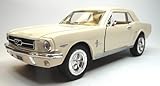
- Authentic 1:36 Scale: Meticulously crafted 1964 1/2 Ford Mustang model car with impressive 5-inch length.
- Realistic Details: Die-cast metal body with opening doors and eye-catching blue finish.
- Interactive Play: Engaging pull-back action for thrilling motion across smooth surfaces.
- Collectible Quality: Ideal for model car enthusiasts and collectors seeking miniature automotive replicas.
- Brand: KiNSMART, a trusted name in die-cast vehicle models and toys.
The lipstick story is unusually well documented because it explains the color change in a direct, human way: fans could reach the car, and the white paint made every kiss visible. Rather than treating the repaint as an unexplained celebrity customization, BMW’s account connects it to the daily attention Elvis received while stationed overseas.
What’s actually slowing this PC down?
Pick the symptom - the matching free tool is one click away.
When Elvis’s military service ended in 1960, he brought the BMW back to the United States. The car later passed through other owners and was eventually restored by BMW Classic. BMW’s history of Elvis’s 507 documents the car’s German-service period, repaint, return to America, later ownership, and restoration.
There is one point that should be reported carefully. Graceland has stated that Elvis bought a second-hand Volkswagen and two BMW 507s while serving in Germany, while BMW’s primary account focuses on the well-documented 507 that was later restored. Those accounts should not be casually merged into a single ownership history for two identical cars. The safe conclusion is that Elvis definitely owned the famous BMW 507 documented by BMW, and that Graceland separately reports two 507s connected with his German period.
Other notable cars in the Elvis Presley collection
Graceland’s official Presley Motors pages identify several other significant vehicles. The following list separates what the museum confirms from details that should not be guessed from informal collector lists.
| Vehicle | What is documented | Why it matters |
|---|---|---|
| 1956 Cadillac Eldorado convertible | Graceland lists the car among the vehicles displayed at Presley Motors. | It represents Elvis’s continuing preference for large, highly styled American luxury convertibles. |
| 1973 Stutz Blackhawk | Graceland identifies a 1973 Stutz Blackhawk in the museum. | It reflects the flamboyant, low-volume luxury style associated with Elvis in the 1970s. |
| 1975 Dino Ferrari | Graceland lists a 1975 Dino Ferrari among the highlighted automobiles. | It demonstrates that Elvis’s collection was not limited to American sedans and convertibles. |
| Mercedes-Benz limousine | Graceland identifies a Mercedes-Benz limousine, but the exact specification should be taken from the current exhibit label. | It represents European executive luxury and the chauffeur-oriented side of celebrity transportation. |
| Rolls-Royce sedans | Rolls-Royce sedans are represented in the museum, although model and ownership chronology should not be generalized without exhibit-level documentation. | They reinforce the collection’s shift from ordinary transportation to prestige and status. |
| Red MG from Blue Hawaii | Graceland identifies a red MG associated with the film. | It shows how movie vehicles became part of the public Elvis automobile story, even when personal ownership is not established. |
| Volkswagen | Graceland states that Elvis bought a second-hand Volkswagen while serving in Germany. | It adds an everyday European car to a collection otherwise dominated by luxury and performance vehicles. |
The Stutz Blackhawk: 1970s Elvis in automobile form
The Stutz Blackhawk is one of the clearest expressions of Elvis’s later taste. Graceland lists a 1973 example among the signature vehicles at Presley Motors. The model was a low-volume luxury car with a deliberately dramatic appearance, making it a natural fit for the stage persona Elvis had developed by the 1970s.
Elvis owned and prominently drove Stutz Blackhawks, and one is preserved at Graceland. Contemporary histories of the model often describe Elvis as the first customer for the production Blackhawk, but that more specific claim should be used only with a primary Stutz source or reliable archival documentation. The defensible point does not require it: the Blackhawk was one of the cars most visibly associated with Elvis during his later career.
Compared with the pink Cadillac, the Stutz tells a different story. The Cadillac’s significance comes from early fame, family association, and an unforgettable repaint. The Stutz was an intentional luxury statement. Its rarity and styling projected exclusivity at a time when Elvis no longer needed a single customized Cadillac to announce that he had arrived.
The Cadillac Eldorado and the American luxury tradition
The 1956 Cadillac Eldorado convertible belongs to the same broad American tradition as the pink Fleetwood but makes a different visual statement. The Eldorado was Cadillac’s glamorous, highly styled convertible line, and Graceland lists Elvis’s example among the vehicles displayed at Presley Motors.
It is tempting to treat every Cadillac in Elvis’s life as interchangeable, but the cars served different moments and meanings. The pink 1955 Fleetwood is a singular celebrity artifact. The Eldorado represents the broader appeal of Cadillac design during the 1950s: size, chrome, power, and open-air spectacle. It helps explain why Cadillacs appear so prominently in accounts of Elvis’s automotive taste without proving that every Cadillac attributed to him belonged to one continuous, fully documented fleet.
European prestige: the Dino Ferrari, Mercedes-Benz, and Rolls-Royce
The Dino Ferrari, listed by Graceland as a 1975 model, is important because it complicates the idea that Elvis only liked huge American cars. A Ferrari-associated sports car represents a different kind of prestige: European performance, lower production, and a more specialized driving experience. The museum’s identification is enough to establish its place in the public collection, but additional details about purchase date, specification, or ownership sequence should not be supplied without a vehicle-specific record.
Rank #3

- Highly detailed 1:24 scale diecast model kit of 1929 Ford Model A
- Comes with everything needed for assembly including screwdriver
- Features opening parts, rolling wheels and pre-painted metal body
- Easy to assemble, creates fully functional rolling replica model car
- Fun and educational STEM activity for kids to build realistic miniature vehicle
The same caution applies to the Mercedes-Benz limousine. Graceland confirms a Mercedes-Benz limousine in the display. Other accounts have identified it as a six-door Mercedes-Benz 600, but the exact specification should be confirmed from the museum label before being stated as definitive. Calling it a Mercedes-Benz limousine is accurate; expanding that description into an exact model claim without exhibit-level evidence is not.
Graceland also confirms that Rolls-Royce sedans are represented. That is useful evidence of Elvis’s interest in the highest level of European luxury, but it does not by itself establish which Rolls-Royce models he owned, when he acquired them, or whether every Rolls-Royce associated with him was retained. Collector lists frequently combine cars displayed at the museum with cars mentioned in older accounts, and those categories are not necessarily identical.
Movie cars are not automatically personally owned cars
Elvis’s films expanded the number of cars connected to his image. Graceland’s museum-history material identifies a red MG associated with Blue Hawaii. That makes it an important Elvis-related vehicle and a legitimate part of the Presley Motors story. It does not, by itself, prove that Elvis personally owned the MG outside the production.
The distinction matters whenever a list describes Elvis’s cars. A vehicle may have been:
- personally purchased or owned by Elvis;
- used by him during military service or private life;
- displayed because it was strongly associated with a film or public appearance; or
- included in a later exhibition because it helps tell the story of his automotive image.
Those are all meaningful connections, but they are not interchangeable. A careful account uses terms such as owned, drove, displayed, associated with, or used in a film according to the evidence available for that particular vehicle.
How many cars did Elvis Presley own?
There is no reliable, universally accepted lifetime total in the official material consulted for this article. Popular Elvis and collector websites sometimes claim more than 200 vehicles, while other lists offer much smaller or differently defined totals. The discrepancy may result from whether a source counts motorcycles, limousines, replacement cars, film vehicles, gifts, cars briefly owned, or vehicles merely associated with Elvis.
Graceland’s official release says Presley Motors displays more than 20 automobiles and motorized vehicles. That number describes the public exhibition, not the entire number of vehicles Elvis owned over several decades. Current visitor material describes a broader collection that includes cars, motorcycles, and other motorized vehicles.
Free tools Windows power users keep installed
One-click scans. No signup required.
The most accurate answer is therefore: Elvis owned a large and varied collection of vehicles, but an exact lifetime count should not be presented as settled fact without a dedicated archival inventory. A shorter list of well-documented cars is more useful than a longer list that quietly mixes personal ownership, movie props, gifts, temporary vehicles, and museum associations.
Independent reader supportYour contribution helps us test, update, and keep practical guides available for everyone.Where can you see Elvis’s cars today?
The principal public reference point is Presley Motors Automobile Museum, part of Elvis Presley’s Memphis, the entertainment complex located across from Graceland Mansion. Graceland’s current visitor material identifies the pink Cadillac, Stutz Blackhawk, Cadillac Eldorado, Dino Ferrari, Mercedes-Benz limousine, Rolls-Royce sedans, and additional motorized vehicles in the museum.
Presley Motors should not be confused with the former Graceland Plaza arrangement. Graceland’s history page explains that the older plaza closed when the newer entertainment complex opened in 2017. For a visit, use the official Elvis Presley’s Memphis visitor information and confirm current admission, operating hours, and attraction access before making travel plans. The museum display and visitor operations can change, and seeing one of the cars at Graceland does not mean that every vehicle Elvis ever owned is on site.
Rank #4
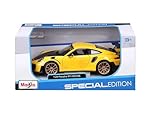
- Die-cast metal body with plastic parts
- Opening doors and engine compartment
- Detailed chassis
- Package Dimensions: 10.6 L x 23.5 H x 11.5 W (centimeters)
What the collection reveals about Elvis
1. Cadillac was the foundation
Cadillac appears to have been the emotional and visual foundation of Elvis’s automotive identity. The 1955 pink Fleetwood and 1956 Eldorado show both sides of that preference: the Fleetwood became a one-of-a-kind family and celebrity symbol, while the Eldorado represented the aspirational glamour of mid-century American luxury.
Do these 3 things before closing this tab:
1Repair Windows errors before they cause bigger problems2Scan for outdated or missing drivers - takes under a minute3Clear out junk files and repair common Windows errors2. Germany broadened his automotive world
The BMW 507 and the second-hand Volkswagen attributed to Elvis’s German period show that his experience overseas was not limited to American cars shipped abroad. The BMW in particular demonstrates that he appreciated a compact European roadster, even though his most famous cars were much larger.
3. Later success brought more theatrical choices
The Stutz Blackhawk, Mercedes-Benz limousine, Rolls-Royce sedans, and Dino Ferrari fit a later period of visible wealth and specialized luxury. These were not simply practical replacements for a Cadillac. They projected rarity, prestige, performance, or formal status in different ways.
4. The public image outlasted the paperwork
Elvis’s fame encouraged stories to circulate faster than ownership records could be checked. That is why careful wording matters. The strongest account is not the one with the longest list; it is the one that tells readers which vehicles are confirmed, which are displayed, which are film-associated, and which details remain uncertain.
Further reading for car-focused Elvis fans
If you want a physical reference after the historical overview, an Elvis Presley cars book can be a useful next step, provided it is understood as a broader Elvis reference rather than a definitive lifetime inventory. The publisher’s description of Pamela Clarke Keogh’s Elvis Presley says that it covers Presley’s car collection and includes Graceland-related research and photographs.
Readers looking for a more vehicle-centered title may also encounter Motorlegenden – Elvis Presley, a 240-page German hardcover focused substantially on Elvis’s relationship with cars. A broader luxury-car reference is Assouline’s The Impossible Collection of Cars, whose official description includes cars owned by Elvis Presley alongside other historically significant automobiles. Edition, language, price, and availability can vary, so check the publisher or specialist bookseller before buying.
- Motorlegenden – Elvis Presley at Bear Family
- The Impossible Collection of Cars at Assouline
Sources and documentation
The most dependable public documentation for the current display comes from Graceland’s Presley Motors and visitor pages. Graceland’s FAQ identifies the pink Cadillac as a 1955 Cadillac Fleetwood Series 60, while its Presley Motors page lists the Stutz Blackhawk and Dino Ferrari. Graceland’s museum-history material also supports the references to the red MG, Volkswagen, and two BMW 507s. BMW’s own BMW 507 account is the primary source for the best-documented individual ownership narrative in the collection.
Frequently Asked Questions
Was the pink Cadillac Elvis Presley’s first Cadillac?
No. The famous surviving pink Cadillac is a 1955 Cadillac Fleetwood Series 60. Elvis also owned a separate 1954 Cadillac, which historical accounts say was destroyed in a roadside fire in June 1955.
How many cars did Elvis Presley own?
No exact lifetime total is confirmed by the official sources used here. Graceland says Presley Motors displays more than 20 automobiles and motorized vehicles, but that is an exhibition count, not a total of every vehicle Elvis owned. Claims of more than 200 vehicles should be treated cautiously unless supported by a documented inventory.
PC Slower Than It Used to Be?
A free scan shows the junk files, broken settings and background clutter dragging Windows down - then fixes them in one click.Free scan · Windows 10 & 11Outdated Drivers Are Slowing You Down
One free scan finds every outdated or missing driver and matches the right update for your exact hardware.Free scan · exact hardware matchDid Elvis Presley own a BMW 507?
Yes. BMW documents that Elvis bought a used BMW 507 in Germany in December 1958, had its engine exchanged, and repainted it red after fans left lipstick on the original white finish. Graceland separately states that he bought two BMW 507s, so the two claims should not be merged into one unqualified ownership history.
Can visitors see Elvis Presley’s cars at Graceland?
Many important examples are displayed at Presley Motors Automobile Museum, part of Elvis Presley’s Memphis across from Graceland Mansion. The current official display information includes the pink Cadillac, Stutz Blackhawk, Cadillac Eldorado, Dino Ferrari, Mercedes-Benz limousine, Rolls-Royce sedans, and other motorized vehicles. Check Graceland’s official visitor information for current operations before traveling.
The Bottom Line
Bottom line: Elvis Presley’s cars are best understood as a changing portrait of the man behind the legend. The pink 1955 Cadillac Fleetwood remains the defining symbol, but the BMW 507, Stutz Blackhawk, Eldorado, Dino Ferrari, Mercedes-Benz, Rolls-Royce, and film-associated MG reveal a broader taste that moved between American excess, European sophistication, performance, and personal image. Presley Motors preserves important examples, not a complete inventory of every car Elvis ever owned.
Quick Recap
Product prices and availability are accurate as of the date/time indicated and are subject to change. Any price and availability information displayed on Amazon at the time of purchase will apply.
Recommended Free Tools




