Yes—but “special” usually means a few additional systems and safety procedures, not an entirely different service schedule. A hybrid still has a gasoline engine, so it needs oil changes, inspections, tires, alignment and other work listed in its owner’s manual. Regenerative braking can reduce friction-brake wear, while the high-voltage battery and its cooling equipment may require model-specific checks. The manual for your exact make, model year, powertrain and market is the authority for intervals, fluids and technician procedures.
What maintenance does a hybrid car need?
Hybrid maintenance has two overlapping parts: conventional vehicle service and checks for the electric-drive system. The gasoline engine does not disappear when a motor and battery are added. AAA describes a schedule broadly similar to that of a conventional car, with the manufacturer’s manual supplying the exact requirements (AAA Automotive guidance).



As an Amazon Associate I earn from qualifying purchases.
- Engine service: oil and filter changes, inspections and any belt, coolant, spark-plug or other work specified for that engine.
- Brakes: inspection, cleaning or lubrication where prescribed, and replacement of pads, rotors or other parts when wear requires it.
- Tires and alignment: pressure checks, rotation, balancing, alignment and replacement using the sizes and specifications listed for the vehicle.
- Hybrid-system checks: monitoring of battery condition and inspection or maintenance of cooling systems on models that require it.
- Fluids and filters: only the types and intervals approved for that vehicle; hybrids do not share one universal fluid schedule.
Because engines in hybrids can shut off while coasting or stopped, owners sometimes assume oil service can be skipped or automatically stretched. Do not change the interval on that assumption. Follow the mileage, time and severe-use schedule in the manual.
The Tool Desk
Outbyte Driver Updater FREEScan for outdated or missing drivers - takes under a minuteDriver Scan →Outbyte PC Repair FREERepair Windows errors before they cause bigger problemsFix Now →Which parts are genuinely different?
Regenerative braking changes wear, not the need for brakes
When a hybrid slows, its electric motor can operate as a generator and recover energy. That regenerative braking reduces how often the friction brakes are used. AAA says pads and rotors may therefore last longer than on a comparable conventional vehicle (AAA Automotive).
Less wear is not zero wear. Friction brakes still stop the vehicle in many situations, and the braking hardware can corrode, seize or lose lubrication even when pad thickness remains healthy. Have the system inspected at the intervals in the manual, and ask the technician to perform any specified cleaning or lubrication. Warning lights, pulling to one side, vibration, grinding or a changed pedal feel warrant prompt inspection rather than waiting for the next scheduled visit.
High-voltage battery service is model-specific
The traction battery is not normally a routine replacement item with one industry-wide interval. Guidance from AAA Club Alliance discusses monitoring battery condition and maintaining associated cooling systems, but it does not establish a universal service life, replacement mileage or price for every hybrid and plug-in hybrid (AAA Club Alliance, July 17, 2026).
Some vehicles use an air-cooling path that must remain clear; others use liquid cooling or have different inspection requirements. Because designs vary, do not buy a generic “hybrid battery service” or replacement pack based only on the vehicle being a hybrid. Use the maintenance section for your model and obtain a diagnosis before authorizing battery work.
Cooling systems can include more than engine coolant
A hybrid may have separate cooling circuits or airflow routes for the engine, power electronics, motor and battery. The manual may specify coolant type, level checks, filter cleaning or replacement, and inspection intervals. The fact that one model has a battery filter does not mean every hybrid does. A technician should identify the systems fitted to your vehicle before quoting a service.
What a typical service visit looks like
The exact checklist depends on mileage, time, driving conditions and model. Use this as a planning framework, then match every item to the manual.
- Confirm the maintenance schedule. Record the current mileage, months since the last visit and whether the vehicle is used for towing, short trips, extreme temperatures or other severe-service conditions.
- Perform engine-related work. Replace engine oil and the oil filter when due, and complete the plugs, belts, air filters, coolant or other operations listed for that interval.
- Inspect the electric-drive system. Review warning messages and diagnostic data. Check the battery and power-electronics cooling equipment only as the manufacturer directs.
- Inspect brakes completely. Measure pad and rotor condition, check calipers and hardware, and complete prescribed cleaning or lubrication. Do not judge condition from pad thickness alone.
- Check tires and steering. Set pressures to the vehicle’s specification, rotate if the schedule calls for it, inspect tread and sidewalls, and correct alignment or balance problems.
- Reset records and explain findings. Keep invoices and note mileage, date, parts and any deferred work. A logbook can organize this information, but it does not replace the manual or manufacturer recordkeeping requirements.
Do hybrid cars cost less to maintain?
There is no defensible single maintenance price for “a hybrid.” Cost changes with the vehicle and model year, mileage, region, labor rates, tire size, scheduled services, unscheduled repairs and warranty coverage. A fair comparison must use comparable vehicles and identical assumptions.
Regenerative braking can lower friction-brake replacement frequency, which may reduce one wear-item expense. Hybrids still have engine oil service, tires, suspension and other conventional costs. A battery or power-electronics repair, when needed, can be a significant model-specific event, but the available guidance does not support assigning one universal amount.
| Figure or assumption | What it actually represents | How to use it |
|---|---|---|
| $12,863 per year | AAA’s average 2026 cost to own and operate a new vehicle, covering broad ownership costs rather than hybrid maintenance alone (AAA Newsroom, September 15, 2026). | Do not present it as a hybrid service bill. AAA changed its methodology for 2026, so it is not directly comparable with the 2025 estimate. |
| Five years and 15,000 miles per year (75,000 miles total) | Assumptions in AAA’s 2024 limited EV/hybrid comparison (AAA Newsroom, September 2024). | Use these only as the study’s driver profile, not as a universal ownership pattern. Its categories included fuel, maintenance, repairs, tires, insurance, registration and taxes, depreciation and finance charges. |
| Maintenance costs treated as equal | Consumer Reports’ October 2023 savings analysis assumed hybrid and non-hybrid maintenance costs were the same, so it excluded any additional maintenance savings (Consumer Reports fact sheet). | This is an analysis assumption, not proof that every hybrid and gasoline vehicle has identical real-world costs. |
AAA’s methodology says its maintenance, repair and tire category includes manufacturer-specified scheduled maintenance, wear-item repairs during the five-year period and one replacement set of tires (AAA’s Your Driving Costs methodology). When building your own estimate, state whether you include tires, unscheduled repairs, fuel or electricity, warranty work, taxes, insurance and financing.
How to compare a hybrid with a gasoline car fairly
Start with a similar non-hybrid vehicle rather than an unrelated class or luxury trim. Then hold the following variables constant:
Rank #4

- Made in USA - Proudly produced in Ohio by a Veteran-owned business
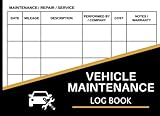
- This book will help you remember your last oil change /last service appointment. You can easily track all services, mileage and maintenance for multiple automobiles - great for business or personal use.
- The yearly expense summary is a very important part of this book. The yearly summary page is a perfect tool for your tax prep and your budget. After every month you should log your total business miles and personal miles in the “Annual Mileage Summary” page.
- This book comes in two convenient sizes, 8.5” x 11” - perfect to fit into any binder or clipboard that you may use for business and 5” x 7” which is the perfect size to fit into your glove compartment!
- Our unique cover is a semi-rigid transparent cover that leads to a sturdy book that resists stains and wrinkles. Reorder SKU: LOG-100-57CW-PP(Auto-Maintenance)
- Make, model class, trim level and model-year range.
- Annual mileage and the total ownership period.
- Geography, tax rules, fuel and electricity prices, and labor rates.
- Scheduled services, tires, wear items and likely unscheduled repairs included in both estimates.
- Warranty or extended-warranty coverage and the portion of work performed by a dealer or independent shop.
Separate three totals: scheduled maintenance, repairs and complete ownership cost. A five-year ownership calculation that includes depreciation, insurance and energy is not a maintenance comparison. Conversely, a maintenance-only estimate should not be described as the cost to own the vehicle.
Independent reader supportYour contribution helps us test, update, and keep practical guides available for everyone.Who should service a hybrid?
Routine work can be planned from the manufacturer’s schedule, but high-voltage procedures require appropriate training, equipment and isolation practices. The cited guidance does not establish one universal certification rule for every market. Before booking a shop, ask whether its technicians are trained for your specific hybrid system and whether it follows the manufacturer’s procedures.
Oil, tire and ordinary inspection work may be available from many competent repair shops. Battery, inverter, orange high-voltage cable or electrical-fault work is different: do not ask an unqualified person to probe, disconnect or repair those components. Verify the exact instructions and safety requirements for your vehicle before authorizing high-voltage work.
Best Value
Warning signs that need attention
- Hybrid-system, battery, powertrain or brake warning lights.
- Unexpected engine running, reduced electric operation or a sudden drop in fuel economy accompanied by a warning message.
- Brake grinding, vibration, pulling, unusual pedal travel or a change in regenerative-to-friction braking feel.
- Cooling-fan noise, blocked vents, overheating messages or visible fluid loss.
- Uneven tire wear, repeated pressure loss or steering that no longer tracks straight.
These symptoms do not identify a failed battery by themselves. Have the vehicle scanned and inspected using model-appropriate equipment rather than replacing parts on a guess.
Questions to ask before approving service
- Which maintenance interval is due by time and mileage?
- Which operations are required by the manual, and which are recommendations based on inspection?
- Does the quote include oil, filters, coolant, brake cleaning, tires or alignment, or are those separate?
- Is any work on the high-voltage system involved, and what training and procedure does the shop use?
- If battery or cooling-system work is proposed, what diagnostic result supports it?
- What warranty applies to the parts and labor?
How to keep useful records
Save invoices and record the date, mileage, service performed, fluid specification and any deferred repair. A vehicle maintenance logbook is optional but can make intervals easier to track when more than one driver or shop uses the car. The record should complement—not replace—the owner’s manual and any manufacturer-required digital or paper service history.
Bottom line for hybrid owners
A hybrid does not eliminate normal maintenance. Budget for engine oil service, tires, alignment, inspections and ordinary repairs; expect regenerative braking to potentially lengthen friction-brake intervals; and treat battery and cooling-system work as model-specific. The most reliable cost estimate is built from your vehicle’s manual, mileage, location, warranty status and clearly defined categories—not from a single industry-wide hybrid price.
Recommended Free Tools
Quick Recap
Product prices and availability are accurate as of the date/time indicated and are subject to change. Any price and availability information displayed on Amazon at the time of purchase will apply.




