Free tools Windows power users keep installed
One-click scans. No signup required.
The moose test is a controlled emergency-avoidance maneuver, not a crash rating: it measures whether a vehicle can leave its lane, avoid an obstacle, and return under rising speeds. The Citroën Xantia Activa is a historic benchmark, while the first-generation Mercedes-Benz A-Class rolled on October 21, 1997; modern results vary by tires, load, software, and course.
The biggest winner therefore depends on the test conditions. The Xantia Activa is the historically reported benchmark, the pre-redesign Mercedes-Benz A-Class is the defining historical loser, and a cited 2024 comparison placed the Tesla Model Y ahead of the Hyundai Ioniq 5 and Ford Mustang Mach-E. None of those results is a complete safety rating.

As an Amazon Associate I earn from qualifying purchases.
The moose test became influential because it exposed emergency-handling behavior in a way ordinary driving often does not. It also helped demonstrate why electronic stability control, appropriate tires, and transparent test conditions matter.
Key takeaways
- The moose test measures emergency handling and stability during a rapid lane change, not crash protection or a universal safety rating.
- The Citroën Xantia Activa is a historically reported benchmark, but different tires, loads, layouts, and pass criteria prevent a definitive all-time ranking.
- The first-generation Mercedes-Benz A-Class rolled during a Teknikens Värld test on October 21, 1997, prompting Mercedes-Benz to upgrade 18,000 delivered cars.
- In a 2024 outlet-reported comparison, the Tesla Model Y completed the maneuver at 75 km/h, the Hyundai Ioniq 5 at 72 km/h, and the Ford Mustang Mach-E clipped a gate at 68 km/h.
- Electronic stability control changed the consequences of poor emergency handling; NHTSA required ESC in 100 percent of U.S. light vehicles by model year 2012.
- A moose-test result applies to a precise vehicle configuration, including its tires, pressures, load, weather, software, and test layout.
What is the moose test?
The moose test is a controlled evasive-maneuver test that simulates a driver suddenly leaving a lane to avoid an obstacle and then returning to the lane. Cones or lane markers represent the obstacle and road boundaries, while the test driver increases entry speed until the vehicle becomes unstable or touches a cone or lane limit. Latin NCAP’s description of the Moose Test identifies stability, sideways displacement, and the vehicle’s ability to follow a straight path as important assessment dimensions.
#1 Best Overall
The name comes from Scandinavia, where a large animal entering the road is the classic emergency scenario. The maneuver is not a crash test, and it does not produce a universal safety score. The moose test asks a narrower but important question: can the vehicle make a sudden double lane change while remaining predictable, controllable, and inside the defined course?
That distinction explains why a car can perform well in crash-structure testing yet behave poorly in an evasive maneuver, or perform impressively in the moose test without offering complete protection in a collision. The two types of evaluation examine different risks.
How is the moose test performed?
A professional moose test uses a marked course with an initial lane, an avoidance section, and a return section. The driver enters at a measured speed, steers around the simulated obstacle, and makes a second rapid direction change to return to the original lane. The evaluator then repeats the maneuver at a higher speed until the vehicle fails the defined criteria.
- Prepare the vehicle: Testers check the vehicle configuration, tire pressures, load, and test conditions. Published reports do not always disclose every variable.
- Enter the course: The vehicle approaches the first gate at a controlled speed.
- Make the avoidance movement: The driver steers into the adjacent lane without hitting cones or crossing the marked boundary.
- Return to the lane: The driver makes the second direction change and attempts to recover a straight path.
- Increase speed: The test continues until the vehicle becomes unstable, spins, lifts a wheel, hits cones, crosses a boundary, or otherwise fails the outlet’s stated criteria.
Latin NCAP says some electronic-stability-control evaluations use a robot, but its visual-stimulus moose test requires a human driver because a robot cannot see the simulated obstacle. The organization’s Moose Test Testing Protocol provides the formal protocol context; independent outlets may use different layouts, drivers, speeds, and pass standards.
What does the moose test measure—and what does it not measure?
The moose test measures how the vehicle responds to a severe, repeatable direction change. Useful observations include whether the vehicle remains stable, how far it moves sideways, whether it follows a straight path after the second steering input, and how effectively the driver can recover control.
| The test can reveal | The test cannot establish by itself |
|---|---|
| Understeer, oversteer, yaw, body roll, wheel lift, or a spin | Crash-survival performance or occupant-protection results |
| Whether ESC intervenes early, late, smoothly, or abruptly | Braking distance in every road or weather condition |
| Whether the vehicle stays within the cones and lane limits | Pedestrian protection, child protection, or seat-belt performance |
| Whether the vehicle can return to a stable, straight path | Long-term reliability, visibility, comfort, or driver-assistance quality |
NHTSA’s electronic-stability-control regulation is an important reminder that a handling test is not a crash-risk conversion formula. A vehicle’s moose-test speed cannot be converted directly into a percentage chance of avoiding a real-world crash. The NHTSA final rule on electronic stability control addresses fleet-level safety benefits and equipment requirements, not a universal ranking based on one evasive maneuver.
Which car passed the moose test best historically?
The Citroën Xantia Activa is the historically reported benchmark most closely associated with the top of the moose-test rankings. Its active anti-roll suspension limited body movement during rapid direction changes and helped the car remain composed. The km77 historical evasive-maneuver archive treats the Xantia Activa as a landmark vehicle in this area.
Calling the Xantia Activa the unquestionable all-time world-record holder would be too broad. Tests from different eras may use different tires, pressures, loads, track surfaces, steering inputs, drivers, layouts, and pass criteria. “Historically reported benchmark” is the more defensible description because it recognizes the car’s significance without pretending that every published result is directly interchangeable.
| Vehicle | Historical significance | Handling characteristic highlighted in the cited material | Comparison limitation |
|---|---|---|---|
| Citroën Xantia Activa | Historically reported benchmark | Active anti-roll suspension limited body roll during rapid direction changes | Exact speed, tires, load, and test conditions are not established in the cited summary |
| Mercedes-Benz A-Class W 168, first generation | Defining historical failure | Rolled during a 1997 evasive maneuver | The rollover describes emergency-handling stability, not every aspect of crash safety |
Why did the Mercedes-Benz A-Class become the biggest moose-test loser?
The first-generation Mercedes-Benz A-Class became the defining moose-test failure because it rolled during a Teknikens Värld test on October 21, 1997. The incident was not merely a poor speed result: the vehicle experienced a dramatic loss of stability during the emergency maneuver, making the test and the car globally famous.
Mercedes-Benz’s official history records that the company upgraded 18,000 delivered A-Class vehicles after the incident at no cost. The Mercedes-Benz account of the A-Class response describes the episode and its engineering aftermath.
“In this way, the compact car and the so-called ‘moose test’, only known to the Scandinavian public at the time, helped the Electronic Stability Program ESP® to achieve a breakthrough, admittedly involuntarily.”
The Tool Desk
Outbyte PC Repair FREERepair Windows errors before they cause bigger problemsFix Now →Outbyte Driver Updater FREEScan for outdated or missing drivers - takes under a minuteDriver Scan →Special offer. See more information about Outbyte and uninstall instructions. Please review EULA and Privacy policy.Mercedes-Benz Group, corporate history
The A-Class episode should not be simplified into “the car was unsafe in every crash.” The documented problem was emergency-maneuver stability. The episode instead exposed a design trade-off: a tall, space-efficient vehicle can place greater demands on its center of gravity, suspension behavior, tire loading, and transient steering response.
Which modern cars performed best in the cited comparison?
There is no single universally comparable modern winner, but the Tesla Model Y was the strongest performer in the cited 2024 comparison, completing the maneuver at 75 km/h. The Hyundai Ioniq 5 completed it at 72 km/h, while the Ford Mustang Mach-E clipped the outside of the second gate at 68 km/h. These are outlet-specific results, not an all-time ranking.
| Vehicle and exact model year | Powertrain and drive layout | Tires and pressures | Test outlet and date | Maximum result reported | Failure behavior | Software or update status | Cross-test caveat |
|---|---|---|---|---|---|---|---|
| Tesla Model Y; model year not stated | Not stated in the cited comparison | Not stated in the cited comparison | CarThrottle report, 2024 | 75 km/h completed | No failure reported at the cited completed speed | Not stated in the cited comparison | Do not compare directly with another outlet’s test without matching conditions |
| Hyundai Ioniq 5; model year not stated | Not stated in the cited comparison | Not stated in the cited comparison | CarThrottle report, 2024 | 72 km/h completed | No failure reported at the cited completed speed | Not stated in the cited comparison | Same-outlet comparison is more useful than a cross-outlet league table |
| Ford Mustang Mach-E; model year not stated | Not stated in the cited comparison | Not stated in the cited comparison | CarThrottle report, 2024 | 68 km/h entry before gate contact | Clipped the outside of the second gate | Not stated in the cited comparison | A gate clip is not equivalent to a spin or rollover, but it is not a clean completion |
The practical conclusion from this comparison is narrower than “the Tesla is the safest car.” The Tesla Model Y was the strongest performer in that cited test grouping. The result does not settle crashworthiness, occupant protection, or performance in another tire, load, software, weather, or course configuration.
What other modern examples show the test’s limits?
The Mercedes-Benz GLA 250 e is a useful example of why a maximum speed alone does not tell the whole story. km77 reports that the GLA 250 e completed its evasive maneuver at 75 km/h, but the outlet criticized the abruptness of the stability-control intervention and compared its calibration with the related A-Class 250 e. The km77 GLA 250 e test report provides that context.
Quick wins for a faster PC:
Repair Windows errors before they cause bigger problemsFix Now →Scan for outdated or missing drivers - takes under a minuteDriver Scan →Clear out junk files and repair common Windows errorsFree Scan →A vehicle can therefore complete the course yet feel less progressive or predictable than another vehicle. A clean result matters, but the intervention quality, body motion, steering response, and path recovery also matter to a driver trying to avoid a real obstacle.
What car failed the modern moose test?
The 2019 Toyota RAV4 is a notable modern failure example because the cited km77 footage shows the vehicle losing control and spinning while its stability control was unable to prevent the rotation. The km77 RAV4 moose-test footage documents the pre-update result.
Separate km77 update-related RAV4 footage shows a RAV4 being tested after an update. The available research does not provide a like-for-like post-update speed, exact software version, tire specification, load, or complete pass comparison, so the responsible conclusion is not that every RAV4 is unsafe. The conclusion is that the result belongs to a particular vehicle configuration and software state, and a post-update vehicle cannot automatically be treated as identical to the pre-update vehicle.
Why do tires, software, and test conditions change the result?
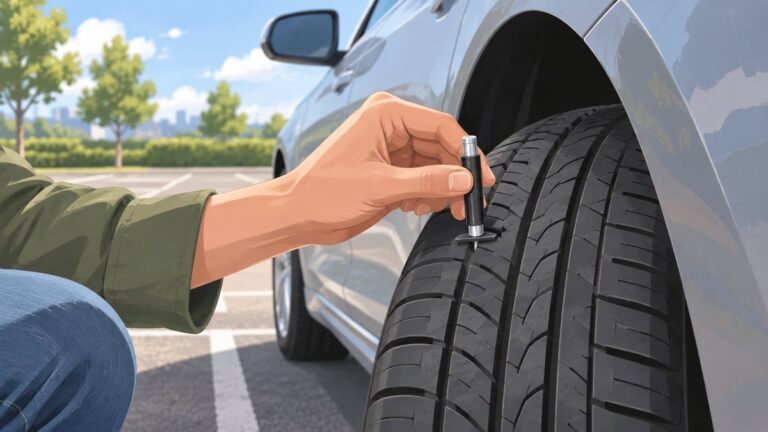
Tires are part of the vehicle’s emergency-handling system, not a minor detail. Tire compound, tread condition, temperature, pressure, size, and construction affect available grip and the way the vehicle responds to steering and load transfer. A vehicle that performs well on one tire specification may not behave identically on another.
Recommended Free Tools
Weather and track surface also matter. Wet or cold asphalt changes available grip, while tire temperature and wear can alter the consistency of repeated runs. Vehicle load and passenger configuration change mass distribution and suspension loading. Model year, electronic-control software, and technical updates can change how quickly or aggressively ESC intervenes.
According to Tire Reviews’ 2024 winter-tire test, the evaluation covered 18 tires and included moose-test performance among its evaluation areas. That result does not identify one universally best tire for every car. Tire selection must match the vehicle, tire size, climate, season, road conditions, pressure requirements, and intended use.
The same caution applies to electronic stability control. ESC can intervene early or late and can feel smooth or abrupt, while the underlying vehicle still has its own mass, steering, suspension, tire, and body-motion characteristics. Software can improve a vehicle’s response without turning every configuration into the same vehicle.
Independent reader supportYour contribution helps us test, update, and keep practical guides available for everyone.How did electronic stability control change the stakes?
Electronic stability control made it more difficult for a vehicle to depart from its intended path during an emergency maneuver, which is why the A-Class incident helped push ESC into the center of modern vehicle safety. The system can brake individual wheels and reduce engine torque to counter a developing skid, although its effectiveness depends on calibration and available tire grip.
Outdated Drivers Are Slowing You Down
One free scan finds every outdated or missing driver and matches the right update for your exact hardware.Free scan · exact hardware matchWindows Errors? Fix Them Before They Spread
Repair common Windows errors and clear accumulated junk for a smoother, more stable PC - no reinstall needed.Free scan · no reinstallAccording to NHTSA’s 2007 final-rule implementation schedule, “This rule requires installation of ESC in 100 percent of light vehicles by MY 2012.” The NHTSA electronic-stability-control rule makes clear that the U.S. requirement applied to light vehicles by model year 2012.
“This rule requires installation of ESC in 100 percent of light vehicles by MY 2012.”
NHTSA, Final Rule: Federal Motor Vehicle Safety Standards—Electronic Stability Control Systems
Mandatory ESC did not make all vehicles handle identically. ESC can contain a slide, but it cannot repeal physics. Tire grip, steering geometry, suspension design, vehicle mass, center-of-gravity height, and driver inputs still determine how quickly and predictably the vehicle responds.
Is the moose test still relevant?
Yes. The moose test remains relevant because drivers still sometimes need to make a sudden double lane change, and the maneuver exposes vehicle behavior that ordinary cornering may not reveal. The test is especially useful for showing wheel lift, excessive body roll, spin, abrupt ESC intervention, or an inability to return to a stable path.
The test is also more informative when modern results disclose their conditions. Today’s vehicles may receive software updates, use different tire specifications across markets, or offer multiple powertrains and drive layouts. A result from one build cannot automatically represent every vehicle carrying the same model name.
The test is not a replacement for crashworthiness, occupant-protection, pedestrian-protection, braking, visibility, reliability, or driver-assistance testing. It is one focused measurement of emergency handling, and its value comes from understanding exactly what that measurement does and does not include.
How should buyers compare moose-test winners and losers?
Compare the test conditions before comparing the headline speed. A careful buyer should look for the following information:
Do these 3 things before closing this tab:
1Fix the driver behind crashes, sound loss and screen glitches2Repair Windows errors before they cause bigger problems3Scan for outdated or missing drivers - takes under a minute- Exact vehicle: Confirm model year, body style, powertrain, battery or fuel configuration, and drive layout.
- Tires: Record tire brand, model, size, speed rating, wear, pressure, and whether the tires were summer, all-season, or winter designs.
- Load: Check whether the vehicle carried a driver only, passengers, ballast, luggage, or a specified test mass.
- Environment: Note weather, track surface, temperature, wind, and whether the surface was dry or wet.
- Software: Identify stability-control calibration, model-year software, recalls, and technical updates.
- Course and driver: Check the test layout, steering instructions, cone spacing, entry-speed method, and whether a human or robot performed the maneuver.
- Pass criteria: Determine whether “success” means no cone contact, no boundary crossing, no wheel lift, no spin, or simply recovery of control.
- Behavior: Watch for progressive understeer or oversteer, abrupt ESC intervention, wheel lift, path deviation, and how easily the vehicle returns to a straight line.
The most defensible wording is “strongest performer in this cited evasive-maneuver test” or “notable failure under this test configuration.” The least defensible wording is “the safest car” based solely on a single moose-test result.
Does a moose-test result mean a car is safe?
No. A moose-test result means that a specific vehicle, with a specific configuration and under stated conditions, showed a particular level of emergency-handling stability. A strong result is useful evidence of controllability, but it is not a complete safety rating.
A buyer should combine evasive-maneuver evidence with crash-test results, braking performance, active-safety evaluations, child and pedestrian protection, tire quality, visibility, seat-belt systems, and the vehicle’s maintenance and recall status. A poor moose-test result deserves attention because it may reveal a serious loss of control, but it should not be stretched into a claim about every possible crash scenario.
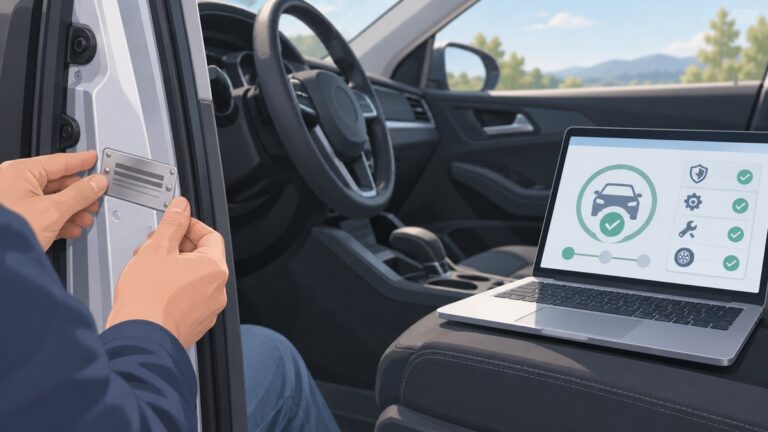
A consumer diagnostic scan tool can help identify ABS or ESC warning codes and may help confirm whether a vehicle has a stored fault or service issue. A scan tool cannot reproduce a professional moose test and cannot prove that a vehicle will pass one.
What should readers study to understand the result?
The most useful way to interpret the moose test is to connect the visible behavior to vehicle dynamics: lateral load transfer, yaw, roll, tire grip, steering response, and stability-control intervention. Readers who want a deeper educational reference can consider Vehicle Handling Dynamics, 2nd Edition as a vehicle-dynamics book rather than as evidence for any particular winner or loser in this article.
The book is best understood as background for learning why vehicles behave differently, not as a substitute for checking the exact test conditions behind a published result.
The Bottom Line
Bottom line: The Citroën Xantia Activa is the historically reported moose-test benchmark, while the first-generation Mercedes-Benz A-Class is the defining historical failure after its October 21, 1997 rollover. Modern results—including the Tesla Model Y, Hyundai Ioniq 5, Mustang Mach-E, Mercedes-Benz GLA 250 e, and Toyota RAV4—show that tires, load, weather, software, course design, and pass criteria matter as much as the headline speed. The moose test measures emergency stability; it does not certify that a car is safe in every crash.
Quick Recap
Product prices and availability are accurate as of the date/time indicated and are subject to change. Any price and availability information displayed on Amazon at the time of purchase will apply.
What’s actually slowing this PC down?
Pick the symptom - the matching free tool is one click away.