PC Slower Than It Used to Be?
A free scan shows the junk files, broken settings and background clutter dragging Windows down - then fixes them in one click.Free scan · Windows 10 & 11Outdated Drivers Are Slowing You Down
One free scan finds every outdated or missing driver and matches the right update for your exact hardware.Free scan · exact hardware matchThe Duramax years to avoid are not a universal blacklist: treat 2001–2004 LB7 trucks without documented injector repairs as the biggest red flag, inspect early 2004.5–2005 LLY trucks for towing-related overheating, and investigate LMM DPF and LML fuel-pump/DEF history. RPO code, records, modifications, VIN status, and condition can reverse the decision.
Duramax model-year transitions can overlap, so verify the engine RPO and VIN before applying any generation reputation. This guide explains the common problems that deserve inspection, what evidence changes the buying decision, and why a well-documented truck can be safer than a newer but neglected example.
As an Amazon Associate I earn from qualifying purchases.
Key takeaways
- 2001–2004 LB7 trucks are the clearest avoid-unless-documented cases because injector failure can dilute engine oil and injector replacement requires substantial labor.
- Early 2004.5–2005 LLY trucks deserve extra cooling-system scrutiny, particularly when the truck has a heavy-towing or overheating history.
- 2006–2007 LBZ trucks are popular pre-DPF choices, but age, corrosion, tuning, fuel delivery, cooling, transmission service, and maintenance records still determine whether a specific truck is a good buy.
- 2007.5–2010 LMM trucks should be judged by DPF regeneration and emissions-system history rather than rejected solely because they have a DPF.
- 2011–2016 LML trucks require the most careful fuel-system, DEF, NOx, and diagnostic review because an injection-pump failure can contaminate more than the pump itself.
- No Duramax generation is automatically worthless; the engine RPO code, VIN, records, modifications, and present condition matter more than the calendar year alone.
What Duramax years should you avoid?
The practical answer is to avoid specific conditions, not every truck from a particular year. The highest-risk purchase is usually an undocumented 2001–2004 LB7 with hard starting, rough running, fuel-smelling oil, or no proof that its injectors were replaced. Early LLY trucks with overheating history, LMM trucks with unresolved DPF problems, and LML trucks with unexplained hard-start, high-pressure fuel, DEF, or NOx faults also deserve a much more aggressive inspection.
Recommended Free Tools
There is no comparable, nationally representative failure-rate figure in the reviewed evidence that can honestly rank every Duramax generation by percentage of failures. A model-year reputation is therefore a screening tool, not a diagnosis. The following table describes what to investigate on a used pickup, not a universal failure verdict.
#1 Best Overall
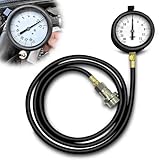
- REPLACE PART NUMBER: TU-32-6.Fuel Pressure Test Kit for Diesel fuel pressure and vacuum testing.
- COMPATIBILITY:Fuel System Test Kit Compatible with TU-32-6 Fuel Pressure Tester Compatible with GM 6.6L Duramax engines.
- ACCURATE VALUE READING: This Fuel Pressure gauge equipped with a 3-1/2" gauge reads from 30 inHg to 15 PSI, which can accurately measure fuel system pressure on diesel engines.
- HIGH QUALITY: TU-32-6 6.6 L Diesel Fuel System Test Kit hose is made of brass coubler and synthetic rubber with black coat finish , which gives good performance and ensures a long lasting service life.
- PACKAGE INCLUDES: TU-32-6 6.6 L Diesel Fuel System Test Kit Gauge assembly with 6-ft. hose and quick coupler.
| Approximate pickup application | Engine RPO | Main issue to investigate | Buying stance |
|---|---|---|---|
| 2001–2004 | LB7 | Injector failure, fuel dilution, difficult injector access, and air entering the fuel system | Avoid undocumented examples; documented injector replacement can make an LB7 worth considering |
| 2004.5–2005 early applications | LLY | Cooling capacity, water-pump and fan-clutch condition, dirty heat exchangers, and towing overheating | Inspect closely, especially after heavy towing; do not automatically reject every LLY |
| 2006–2007 | LBZ | Age-related wear, corrosion, modifications, cooling condition, and fuel delivery | Often desirable as a pre-DPF option, but condition and maintenance remain decisive |
| 2007.5–2010 | LMM | DPF restriction, failed or incomplete regenerations, emissions repairs, and fuel-delivery problems | Buy on emissions history and condition rather than avoiding every LMM |
| 2011–2016 | LML | High-pressure fuel-system or injection-pump contamination, DEF/SCR faults, and NOx components | Require records, full scanning, and careful fuel-system diagnosis before purchase |
| 2017 and later | L5P | Greater electronics, emissions, parts, and diagnostic complexity | Condition-dependent; complexity alone is not a reason to reject an L5P |
Why does the engine RPO matter more than the calendar year?
The engine RPO matters because Duramax applications can overlap model years, and a calendar year does not always identify the exact engine generation. GM service information lists the principal 6.6L Duramax RPO codes as LB7, LLY, LBZ, LMM, LML, and LGH in the relevant service population. Verify the engine RPO and VIN rather than assuming that every truck built in a particular year has identical hardware; the GM Duramax service bulletin covering the listed engine applications illustrates why application-specific service information matters.
Build timing, late-year production, engine swaps, tuning, and aftermarket modifications can make two trucks with the same registration year materially different. Ask for the VIN, confirm the engine code, and compare the truck’s actual equipment with the seller’s description before evaluating the generation’s reputation.
Why are 2001–2004 LB7 trucks risky?
The LB7’s headline concern is premature injector failure. LB7 injectors sit beneath the valve covers, so replacement is more labor-intensive than on designs with externally accessible injectors. A leaking injector can also put diesel fuel into the engine oil, reducing the oil’s protective properties and potentially causing secondary engine damage. The technical guide to common 6.6L Duramax problems documents the injector, fuel-dilution, harness, and fuel-starvation concerns associated with these engines.
An LB7 with documented replacement injectors is not automatically a bad purchase. A well-maintained truck with invoices showing complete injector work, correct-quality parts, oil service after a suspected fuel leak, and a clean inspection may be a better buy than a newer Duramax with no records. The important distinction is documented repair versus an unsupported seller statement that the injectors are fine.
What should you ask about an LB7?
- Were all eight injectors replaced, and when was the work performed?
- Do invoices identify revised or OE-quality components rather than only saying injector repair?
- Was the engine oil changed or tested after a suspected injector leak?
- Does the engine start cleanly from cold, maintain a stable idle, and avoid unexplained smoke?
- Has the fuel-filter housing or supply system allowed air into the fuel?
- Has the injector harness been inspected for chafing or intermittent electrical faults?
GM’s parts catalog lists a GM Genuine Parts Duramax injector fuel-feed pipe for 2001–2004 Silverado 2500HD and 3500 applications. The catalog’s application listing supports researching the correct OE part category, but a parts listing does not prove that a particular truck needs the component. Match every injector, fuel line, and related part to the exact VIN and engine application, and use a qualified diesel technician for injector work when the diagnosis is uncertain.
Rank #2
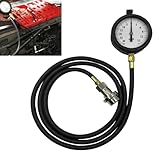
- 【Part Number】TU-32-6.
- 【Compatible With】This Diesel Fuel Pressure Tester Gauge Assembly Compatible with Duramax 6.6L engines.
- 【Easy To Install】Quick coupler allows for simple and secure attachment to the fuel system.
- 【Accurate Value Reading】 This Fuel Pressure gauge equipped with a 3-1/2" gauge reads from 30 inHg to 15 PSI, which can accurately measure fuel system pressure on diesel engines.
- 【Warranty And Service】We will provide you with a one-year return and exchange service.We Are Committed to Providing the Best Products and Services to Every Customer. If You Are Not Sure Whether Our Products Are Compatible with Your Model, Please Feel Free to Contact Us and We Will Answer You.
Should you avoid an early LLY because of overheating?
Early 2004.5–2005 LLY trucks should receive extra cooling-system scrutiny, but overheating is not a reason to reject every LLY. Heavy towing can expose inadequate cooling capacity or a neglected cooling system, while a weak fan clutch, dirty radiator and intercooler stack, or failing water pump can make temperature problems worse. The Duramax problem guide’s LLY discussion identifies these cooling and towing issues and notes that a larger radiator, fan, and water pump appeared beginning with the 2006 LLY application.
Ask whether the truck has overheated while towing, pushed coolant from the surge tank, lost coolant, or received head-gasket or water-pump work. Inspect the cooling stack for packed dirt and debris, verify coolant level only when the engine is cold, and watch temperature behavior during a thorough road test. A seller who describes repeated overheating as normal is describing a fault that needs diagnosis, not a normal LLY characteristic.
Coolant loss on a Duramax should be treated as a diagnostic event. GM’s 16-NA-204 cooling-system and head-gasket bulletin covers 2011–2016 LGH and LML applications and provides specific filling and surge-tank procedures. The bulletin is later-generation service evidence, but its central buying lesson is broader: do not dismiss unexplained coolant loss before purchase.
Is the 2006–2007 LBZ the safest Duramax to buy?
The LBZ is often the preferred starting point for buyers who want a popular pre-DPF Duramax, but the evidence does not support calling every LBZ the universally most reliable Duramax. An LBZ pickup is now old enough that corrosion, hard use, tuning, deferred maintenance, and previous repairs can outweigh its favorable engine reputation.
Inspect the frame and body for corrosion, the front end for wear, the cooling stack for blockage, and the fuel-filter and supply system for air or starvation symptoms. Review transmission service, especially if the truck spent its life towing. Look for aggressive tuning, oversized power modifications, evidence of commercial duty, and missing maintenance records. A low-mileage LBZ with a modified powertrain and poor documentation is not automatically safer than a higher-mileage stock truck with complete records.
Rank #3

- WIDE APPLICATION: The TU-32-6 diesel fuel pressure tester gauge kit is compatible with GM 6.6L Duramax engines 1994 to present. Designed specifically for accurate diesel fuel pressure and vacuum testing, ensuring optimal engine performance.
- SPEC: The 6.6 L diesel fuel system test kit is equipped with a precise 3-1/2" gauge, capable of reading from 30 inHg to 15 PSI, allowing for accurate monitoring of fuel pressure levels.
- PACKAGE INCLUDE: The TU-32-6 diesel fuel system test kit comes with a gauge assembly, featuring a 6-foot hose and a quick coupler, ensuring ease of use and compatible with GM 6.6L Duramax engines.
- DURABLE MATERIAL: Crafted from synthetic rubber, the diesel fuel test gauge is built to withstand extreme heat and low temperatures, providing long-lasting reliability and performance in diverse conditions.
- FUNCTION: Using the fuel pressure test kit can detect problems in time and avoid engine failure or performance degradation caused by improper fuel supply. When performing the test, it is recommended to follow the safety operating specifications to ensure the accuracy and safety of the test.
What goes wrong with 2007.5–2010 LMM trucks?
The LMM introduced diesel-particulate-filter complexity into the pickup discussion. DPF restriction, failed or incomplete regeneration, soot loading, and emissions-system faults can cause reduced performance, rough running, smoke, poor fuel economy, and warning or reduced-power events. The generation overview of LMM problems supports investigating DPF and emissions history rather than treating every LMM as an automatic avoid.
Do these 3 things before closing this tab:
1Repair Windows errors before they cause bigger problems2Scan for outdated or missing drivers - takes under a minute3Clear out junk files and repair common Windows errorsBefore buying an LMM, determine whether the DPF and related emissions equipment are still present and correctly configured, whether regeneration problems were repaired, and whether the truck has a history of warning lights or reduced power. Ask about short-trip use, towing duty, and tuning because operating pattern and modifications change the likelihood that emissions problems were ignored or repeatedly masked.
Do not recommend or rely on emissions tampering or illegal deletes. An apparently clean truck may have had its warning system or emissions equipment modified before sale, and a missing or altered system creates legal, inspection, diagnostic, and resale concerns. Buy a truck whose emissions equipment is intact and whose repair history can be explained.
Is the LML CP4 pump really a deal breaker?
The LML CP4 injection-pump risk is serious due diligence, not an automatic deal breaker and not an inevitable failure. The 2011–2016 LML combines high-pressure fuel-system complexity with SCR/DEF equipment and NOx sensors, so an unexplained hard-start, no-start, fuel-rail code, DEF fault, or emissions warning deserves professional diagnosis before purchase.
GM bulletin 16-NA-102 addresses LML and LGH hard-start, no-start, diagnostic-code, fuel-filter, fuel-line-cleaning, tank-cleaning, and injection-pump procedures. When pump replacement is indicated and contamination is present, the procedure calls for inspecting the pump and cleaning or flushing the fuel tank, sender, chassis lines, filter pipes, and other fuel-system pipes. That procedure is evidence that some pump failures can become system-wide contamination repairs; it is not a universal repair requirement or a basis for claiming that every LML pump will fail. See the GM 16-NA-102 fuel-system bulletin and the later GM procedure revision available through the NHTSA archive.
Quick wins for a faster PC:
Clear out junk files and repair common Windows errorsFree Scan →Fix the driver behind crashes, sound loss and screen glitchesFind Drivers →Repair Windows errors before they cause bigger problemsFix Now →Rank #4

- [Compatible With]: The Diesel Fuel Pressure Tester Gauge Assembly TU-32-6 is designed for testing GM Duramax 6.6L diesel fuel systems.
- [Range]: Measures pressure from 30 inHg to 15 PSI, providing accurate readings for comprehensive diagnostics.
- [High Quality]: Constructed from durable materials, ensuring long-lasting use and reliable performance in various testing conditions.
- [Function]: This fuel pressure tester gauge assembly helps diagnose fuel system issues, ensuring optimal engine performance and fuel efficiency.
- [Package Include]: The package includes one fuel pressure tester gauge assembly with a 6-foot hose and quick coupler for easy and secure connection.
What should you check on an LML?
- Scan for current and historical fuel-rail, hard-start, no-start, emissions, NOx, and DEF codes.
- Inspect the fuel filter and ask for dated filter-change records.
- Ask whether the high-pressure injection pump was replaced and whether metal or other contamination was found.
- Find out whether the truck has a lift-pump installation or other fuel-system modification. A modification is not proof that the truck is reliable.
- Review DEF pump, tank heater, fluid-level, and NOx-sensor repairs, particularly on early examples.
- Require professional diagnosis before purchase when the seller reports intermittent starting, rail-pressure faults, or unexplained reduced power.
For a shop or experienced diagnostician, a Duramax fuel pressure test kit can help confirm fuel-delivery problems before anyone replaces injectors or an injection pump. GM’s procedure uses a fuel-pressure gauge and includes a 10-psi minimum reference in its covered diagnostic context; that reference is not a universal operating specification for every Duramax generation, so the gauge, fittings, test location, and pressure range must match the truck’s RPO and service procedure. High-pressure fuel-system work should be handled by a qualified technician rather than improvised at home.
What problems affect several Duramax generations?
How can air in the fuel system mimic injector failure?
Air intrusion and fuel starvation can affect LB7, LLY, LBZ, LMM, and LML applications. These generations commonly rely on the fuel system to draw fuel through the filter rather than using an electric low-pressure lift pump, and fuel-filter housings or supply lines can admit air. A hard-start complaint should therefore trigger checks of the filter housing, supply lines, priming behavior, fuel pressure, and diagnostic codes before the buyer assumes that injectors have failed.
Can injector-harness chafing cause rough running?
Yes. Injector-harness chafing is especially associated with LB7 and LLY trucks, although later Duramax applications can also develop electrical faults. Rough running or a no-start condition can be caused by the harness rather than a mechanically failed injector, so a proper electrical and diagnostic inspection matters before negotiating a major injector repair.
How are EGR-cooler and coolant leaks diagnosed?
Coolant entering the combustion chamber requires a structured pressure-testing diagnosis rather than a guess based only on white exhaust or a low reservoir. GM’s 08-06-04-003C service bulletin describes an EGR-cooler pressure-test adapter used to diagnose coolant leaks on listed LB7, LLY, LBZ, LMM, LML, and LGH applications. Treat unexplained coolant loss, combustion-chamber concerns, or repeated coolant pressurization as reasons to involve a qualified diesel technician.
What’s actually slowing this PC down?
Pick the symptom - the matching free tool is one click away.
| Observed symptom | Possible areas to investigate | Buyer response |
|---|---|---|
| Hard starting or difficult bleeding | Fuel-filter housing, supply lines, air intrusion, fuel pressure, injectors, or high-pressure pump | Do not label the problem from the symptom alone; scan and test the fuel system |
| Rough running or intermittent no-start | Injector harness, injectors, air in fuel, rail-pressure faults, or pump contamination | Require a diagnostic report before buying |
| Coolant loss or unexplained white exhaust | Cooling-system leak, head-gasket concern, or EGR-cooler leak | Pressure-test with the correct procedure and adapters |
| Reduced power, DPF warnings, or poor regeneration | DPF restriction, emissions sensors, tuning, or a regeneration fault | Verify the emissions system and repair history; do not assume a deleted system is an upgrade |
How should you inspect a used Duramax before buying?
- Verify the identity. Record the VIN, engine RPO, model year, drivetrain, and emissions equipment. Do not rely on a seller’s statement that a truck is an LBZ, LLY, or LML.
- Read the maintenance file. Look for injector work on LB7 trucks, fuel-filter intervals, pump and fuel-system repairs on LML trucks, cooling repairs on LLY trucks, DPF and emissions repairs on LMM trucks, and DEF or NOx repairs on LML trucks.
- Start the truck cold. A warm engine can hide hard starting, excessive cranking, smoke, rough idle, or a seller’s attempt to mask a fault. Confirm that the engine starts cleanly and settles into a stable idle.
- Inspect the oil and fuel system. Check for an abnormal oil level or diesel odor, inspect the fuel filter, look for air-in-fuel symptoms, and ask why any filter or fuel-system parts were replaced.
- Scan beyond generic engine codes. Use a GM-compatible heavy-duty scan tool or a diesel shop that can retrieve manufacturer-specific fuel-rail, injector, DPF, DEF, NOx, and historical codes. A generic OBD2 reader may not reveal the full condition of a Duramax.
- Test the cooling system correctly. Check for debris in the cooling stack, coolant loss, overheating history, and abnormal temperature behavior under an appropriate road test. Test coolant or EGR-cooler concerns with vehicle-specific adapters and pressure limits.
- Evaluate the truck, not just the engine. Inspect corrosion, frame condition, front-end wear, transmission service, towing equipment, suspension, and evidence of commercial or overloaded use. A strong engine code cannot compensate for a neglected chassis or transmission.
- Look for modifications. Identify tuning, aftermarket fuel systems, altered emissions equipment, oversized power parts, and signs that modifications were removed before sale. Modifications can change engine, transmission, emissions, and diagnostic risk.
- Run the VIN through official resources. Use NHTSA’s recalls, investigations, complaints, and manufacturer-communications resources to check the VIN and recall status. NHTSA states that a recall does not expire, but recall completion does not prove injector health, pump condition, cooling-system integrity, transmission life, or the absence of an aftermarket tune.
- Pay for an independent inspection. Fuel contamination, coolant-in-combustion concerns, high-pressure fuel faults, and intermittent electrical problems can become expensive diagnostic projects. A pre-purchase diesel inspection is cheaper and more informative than guessing from a generation ranking.
Which Duramax is most reliable for your use?
There is no evidence-based single winner for every buyer. The best choice depends on whether the buyer values simpler emissions hardware, newer capability, towing history, repair documentation, or lower age-related risk. A documented truck from a generation with a known weakness can be the safer purchase than an undocumented truck from a favored generation.
Best Value

- Diesel fuel pressure and vacuum testing on GM 6.6L Duramax engines
- Gauge assembly with 6-ft. hose and quick coupler
- 3-1/2" gauge reads 30 inHg to 15 PSI
- Diesel fuel pressure and vacuum testing on GM 6.6L Duramax engines
- 3-1/2" gauge reads 30 inHg to 15 PSI
| Buyer priority | Reasonable starting point | Risk that can change the decision |
|---|---|---|
| Simpler pre-DPF emissions configuration | 2006–2007 LBZ | Rust, tuning, towing abuse, neglected transmission service, and age |
| Older truck with a repairable history | 2001–2004 LB7 with documented injector replacement | No invoices, fuel dilution, hard starting, rough running, or unresolved air-in-fuel symptoms |
| Heavy towing | A truck with verified cooling performance and towing history, regardless of generation | Early LLY overheating, coolant loss, dirty heat exchangers, weak fan clutch, or water-pump concerns |
| DPF-equipped truck | 2007.5–2010 LMM with intact, documented emissions equipment | Repeated regeneration failures, DPF restriction, reduced-power events, or tuning history |
| Later truck with modern emissions equipment | 2011–2016 LML only after fuel-system, DEF, and NOx diagnosis | Unexplained hard-start or no-start events, pump contamination, rail codes, or unresolved DEF faults |
| Newer capability | 2017-and-later L5P after a full vehicle inspection | Higher electronics, emissions, parts, and diagnostic complexity |
The L5P is not a blanket avoid generation. GM Powered Solutions’ current product page, which does not show a publication date, describes the L5P as a 6.6L high-pressure common-rail direct-injection engine and lists 470 hp and 975 lb-ft for the specification shown. Those are manufacturer capability figures, not reliability measurements or a guarantee about any used truck; the GM L5P specification page should be checked for the current application and specification.
Which tools help diagnose a Duramax before purchase?
Diagnostic tools can improve a pre-purchase inspection, but no tool replaces a qualified technician when fuel contamination, coolant intrusion, or high-pressure fuel faults are possible. Match every tool to the engine RPO, fittings, pressure range, adapter, and safe test procedure.
| Tool | Useful for | Important limitation |
|---|---|---|
| Duramax fuel pressure test kit | Checking fuel delivery and supporting hard-start or no-start diagnosis | Correct gauge range and fittings vary by application; it does not by itself diagnose injectors or pump contamination |
| GM-compatible heavy-duty scan tool | Reading manufacturer-specific fuel, emissions, DEF, NOx, DPF, and historical codes | Code retrieval is not the same as component confirmation or a repair estimate |
| Diesel cooling-system pressure tester | Investigating coolant loss and supporting cooling-system or EGR-cooler testing | Adapters, procedures, and safe pressure limits are vehicle-specific |
| Duramax repair manual | Understanding service intervals, component locations, and diagnostic sequences | It is a reference, not a substitute for current factory service information or professional diagnosis |
| OE LB7 injector parts | Researching documented 2001–2004 injector repairs and exact application fitment | A parts catalog cannot determine whether a truck’s injectors, harness, or fuel system actually failed |
Use tools to verify a specific concern, not to justify a purchase you already want to make. A seller who refuses a cold start, scan, inspection, or review of fuel-system records has created a condition risk regardless of the Duramax generation.
The Tool Desk
Outbyte PC Repair FREEClear out junk files and repair common Windows errorsFree Scan →Outbyte Driver Updater FREEFix the driver behind crashes, sound loss and screen glitchesFind Drivers →The Bottom Line
Bottom line: The Duramax years to avoid are best understood as trucks with unresolved or undocumented generation-specific problems. Be most cautious with an LB7 that lacks injector records, an early LLY with overheating history, an LMM with neglected DPF service, and an LML with unexplained high-pressure fuel, DEF, or NOx faults. A documented, unmodified, independently inspected truck can outweigh the reputation of its model year.
Quick Recap
Product prices and availability are accurate as of the date/time indicated and are subject to change. Any price and availability information displayed on Amazon at the time of purchase will apply.




