PC Slower Than It Used to Be?
A free scan shows the junk files, broken settings and background clutter dragging Windows down - then fixes them in one click.Free scan · Windows 10 & 11Crashes, No Sound, or Screen Glitches?
Random freezes, missing sound and display glitches usually trace back to one bad driver. Find and replace yours safely.Free scan · under a minuteThe Chevrolet Impala spans 10 commonly recognized generations and three production runs: 1958–1985, 1994–1996, and 2000–2020. Chevrolet stopped using the name twice—first from 1986 through 1993 and again from 1997 through 1999—so a complete model-year guide must include those gaps.
The most important modern caveat is the 2014–2016 Impala Limited. It retained the previous-generation body for fleet customers while the all-new tenth-generation Impala was sold at retail. The final Impala was produced on February 27, 2020.
![GreenLight 1:24 1967 Chevro&let Impala Sport Sedan - Tuxedo Black 84035 [Shipping from Canada]](https://m.media-amazon.com/images/I/31M3ywB5ptL._SL160_.jpg)
As an Amazon Associate I earn from qualifying purchases.
Chevrolet Impala generations at a glance
There are 10 commonly recognized Chevrolet Impala generations, spread across three separate production runs: 1958–1985, 1994–1996, and 2000–2020. The nameplate was absent for 1986–1993 and again for 1997–1999.
Quick wins for a faster PC:
Repair Windows errors before they cause bigger problemsFix Now →Scan for outdated or missing drivers - takes under a minuteDriver Scan →| Generation | Model years | What distinguishes it |
|---|---|---|
| First | 1958 | One-year launch generation; distinctive triple taillights. |
| Second | 1959–1960 | Radical 1959 redesign with wing-like tail fins; 1960 equipment updates. |
| Third | 1961–1964 | Introduced the Impala Super Sport package in 1961. |
| Fourth | 1965–1970 | High-volume era; more than one million Impalas sold in 1965; SS-427 arrived in 1966. |
| Fifth | 1971–1976 | Large full-size cars offered as coupes, convertibles, sedans, and wagons. |
| Sixth | 1977–1985 | Downsized exterior, lighter construction, more usable interior; final coupe and wagon year was 1982. |
| No Impala | 1986–1993 | The nameplate was discontinued after 1985. |
| Seventh | 1994–1996 | Short revival best known for the black Impala SS. |
| No Impala | 1997–1999 | The name disappeared again after 1996. |
| Eighth | 2000–2005 | All-new front-wheel-drive Impala; SS returned in 2004 with a supercharged V6. |
| Ninth | 2006–2013 | Major redesign; an SS model with a 5.3-liter V8 was offered from 2006 through 2009. |
| Impala Limited overlap | 2014–2016 | The previous-generation body continued for fleet customers beside the new Impala. |
| Tenth | 2014–2020 | New full-size sedan generation; final Impala production ended February 27, 2020. |
The 2014–2016 overlap is the source of much of the confusion in Impala generation charts. The regular retail Impala entered its tenth generation in 2014, while the previous body remained available as the fleet-oriented Impala Limited through 2016. That does not make 2006–2016 one uninterrupted body generation.
#1 Best Overall

- 1/24 Scale Diecast Model Car
- Opening doors, hood & trunk
- Size 8x3x3 inches
- Window box measures: 9.75"L x 4.5"W x 4"H
First generation: 1958
Chevrolet introduced the Impala for the 1958 model year as a high-style, top-of-the-line full-size Chevrolet. It was a one-model-year generation, so a 1958 Impala is not simply an early version of the 1959 car—the two belong to visibly different designs.
The easiest identifying feature is the use of triple taillights, a styling cue that became closely associated with the Impala name. The 1958 car represents the beginning of the nameplate’s long history, but it is also one of the shortest-lived Impala designs because Chevrolet completely redesigned the car for 1959.
Second generation: 1959–1960
The 1959 Impala was dramatically restyled. Its large, wing-like rear fins made it visually unlike the upright, heavily ornamented 1958 model. The 1960 car retained the same basic generation classification but received different front and rear styling details, so year-specific identification matters when buying trim, sheet metal, lighting, or restoration literature.
Chevrolet’s historical summary identifies new options for 1960, including cruise control. For generation purposes, 1959 and 1960 are grouped together; for parts and restoration, they should be treated as separate model years.
Third generation: 1961–1964
The 1961 redesign began the third generation and introduced the Impala Super Sport package. That was the beginning of the SS name’s recurring role as an Impala performance and appearance designation.
The cars became increasingly important to Chevrolet’s full-size lineup during this period, and the 1963 and 1964 models are especially prominent in the Impala’s cultural history. The 1964 restyle is easily recognized and is strongly associated with lowrider and custom-car culture. A 1961, 1962, 1963, and 1964 may all be called a third-generation Impala, but their exterior parts, interiors, trim, and service information are not automatically interchangeable.
Fourth generation: 1965–1970
The 1965 redesign opened the Impala’s highest-volume era. Chevrolet reports that annual Impala sales exceeded one million in 1965, making it America’s best-selling car that year.
What’s actually slowing this PC down?
Pick the symptom - the matching free tool is one click away.
The generation ran through 1970, with annual styling and equipment changes rather than one identical configuration. The Impala SS-427 debuted in 1966 and offered up to 425 horsepower, giving the full-size Chevrolet a particularly notable performance variant.
For buyers and restorers, the 1965–1970 range covers several distinct yearly designs. A manual or parts catalog labeled broadly for a “1965–1970 Impala” may still require a year, body style, engine, or trim check before purchase. A two-door hardtop, sedan, convertible, and station wagon can also require different information even when they share the same generation.
Fifth generation: 1971–1976
Chevrolet redesigned the Impala for 1971 as the market moved toward greater emphasis on safety, comfort, and full-size practicality. The lineup included coupe, convertible, sedan, and station wagon body styles.
Rank #2

- Accurate Scale Model Kit
- Retro Packaging
- Full Colour Decals
Large five-mile-per-hour front bumpers appeared beginning in 1972. Chevrolet also notes that an early airbag system was tested in approximately 1,000 Impala cars in 1973. That test should not be confused with a universal production-airbag feature across the generation.
The Spirit of America special edition appeared in 1974. As with the earlier generations, annual changes mean that a 1971 Impala and a 1976 Impala are best researched by exact model year rather than by generation name alone.
Sixth generation: 1977–1985
The 1977 Impala was redesigned and downsized on the outside. Despite the smaller exterior dimensions, Chevrolet reported increased usable interior space, and sedans were nearly 650 pounds lighter than the preceding models.
The coupe has a useful visual identifier: a distinctive bent-glass, sloping rear window used for the 1977–1979 model years. A police-oriented 9C1 special-equipment package was also available during this era, making certain sixth-generation cars particularly interesting to law-enforcement and fleet-vehicle enthusiasts.
Body-style availability changed during the run. 1982 was the final model year for the Impala coupe and station wagon. The Impala name continued in sedan form through 1985. Consequently, a 1983–1985 Impala is not evidence that the coupe or wagon body continued; those later cars were sedans.
Do these 3 things before closing this tab:
1Fix the driver behind crashes, sound loss and screen glitches2Repair Windows errors before they cause bigger problems3Scan for outdated or missing drivers - takes under a minuteFirst production gap: 1986–1993
There was no Chevrolet Impala model year from 1986 through 1993. Chevrolet’s full-size sedans from those years may have occupied a similar market position, but they should not be relabeled as Impalas in a vehicle history, parts listing, registration record, or buying guide.
Seventh generation: 1994–1996
The Impala returned for 1994 after its hiatus. This short generation is best known for the black Impala SS, which Chevrolet describes as the first Impala SS since 1969.
The 1994–1996 SS was based on the police-car model and used a Corvette-derived engine producing 260 horsepower. Nearly 68,000 Impala SS cars were sold during the three-year production run.
The 1996 model has several details that distinguish it within this already short generation, including a floor shifter and analog gauges. A 1994, 1995, or 1996 Impala SS is therefore not just a generic “1990s Impala” for parts or valuation purposes. Confirm the exact year and whether the car is an SS before ordering interior, drivetrain, suspension, or electrical components.
Second production gap: 1997–1999
The Impala name disappeared again for the 1997, 1998, and 1999 model years. The next production Impala was the all-new 2000 model.
Rank #3
Eighth generation: 2000–2005
The Impala returned for the 2000 model year as an all-new, front-wheel-drive full-size car. This was the first front-wheel-drive Impala. The model replaced the previous Lumina-era full-size Chevrolet in the market transition documented for the 2000 model year.
The 2000–2005 car was offered as a mainstream front-wheel-drive sedan rather than as a continuation of the rear-wheel-drive classic Impalas. That mechanical change is one of the most important dividing lines in the entire nameplate: classic Impala restoration practices and late-model Impala service procedures are not interchangeable.
The Impala SS returned for 2004 with a supercharged V6. Because the SS was a performance version within the front-wheel-drive generation, it should not be confused with the rear-wheel-drive 1994–1996 SS or with the V8-powered SS that followed.
The Tool Desk
Outbyte Driver Updater FREEScan for outdated or missing drivers - takes under a minuteDriver Scan →Outbyte PC Repair FREEClear out junk files and repair common Windows errorsFree Scan →Ninth generation: 2006–2013 regular Impala
A major redesign for 2006 began the ninth-generation regular retail Impala. The car remained a front-wheel-drive full-size sedan and continued through the 2013 model year.
The 2006–2009 Impala SS used a 5.3-liter V8. This creates an important year-and-trim distinction: an ordinary ninth-generation Impala is not automatically V8-powered, and the SS engine information applies to the 2006–2009 SS model rather than every car in the 2006–2013 range.
For identification, start with the model year and then confirm trim, engine, and whether the vehicle is a regular retail Impala or a fleet derivative. That information is more reliable for repair work than the broad label “ninth generation.”
The Impala Limited overlap: 2014–2016
When Chevrolet launched the new tenth-generation Impala for 2014, it continued the previous body for fleet customers under the name Impala Limited. The Limited remained available through 2016.
Free tools Windows power users keep installed
One-click scans. No signup required.
This means two materially different Impala bodies can be associated with the same 2014, 2015, or 2016 model year:
- 2014–2016 Impala Limited: the previous-generation body retained for fleet use.
- 2014–2016 Impala: the new tenth-generation retail sedan.
A listing that says only “2014 Impala” is incomplete when body-specific parts, repair information, exterior panels, glass, interior components, or electronics are involved. Verify whether the vehicle is an Impala or Impala Limited before ordering anything.
Tenth generation: 2014–2020
The tenth-generation Impala debuted for the 2014 model year as a substantially redesigned full-size sedan. It was the final major redesign of the nameplate.
Rank #4
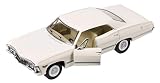
- Die-cast metal with plastic parts & rubber tyres
- Openable doors
- Length of the vehicle : 5 Inches Approx
- Officially licensed by Chevrolet
Chevrolet identifies the first Impala hybrid as a 2014 development. Wireless charging technology was noted for the 2016 model year. These features belong to the modern tenth-generation era, not to the earlier 2000–2013 front-wheel-drive cars as a whole.
The final Impala rolled off the assembly line on February 27, 2020, ending Chevrolet’s 62-year Impala production history. There was no 2021 Impala model year.
Complete Chevrolet Impala model-year index
This is the full model-year sequence, including the years when Chevrolet did not sell an Impala:
| Model years | Status | Generation or explanation |
|---|---|---|
| 1958 | Impala | First generation |
| 1959–1960 | Impala | Second generation |
| 1961–1964 | Impala | Third generation |
| 1965–1970 | Impala | Fourth generation |
| 1971–1976 | Impala | Fifth generation |
| 1977–1985 | Impala | Sixth generation |
| 1986–1993 | No Impala | First production gap |
| 1994–1996 | Impala | Seventh generation; Impala SS revival |
| 1997–1999 | No Impala | Second production gap |
| 2000–2005 | Impala | Eighth generation; first front-wheel-drive Impala |
| 2006–2013 | Impala | Ninth-generation regular retail model |
| 2014–2016 | Impala Limited | Previous-generation body continued for fleet customers |
| 2014–2020 | Impala | Tenth-generation retail model |
How to identify the right Impala generation before buying parts or manuals
- Start with the model year. Do not rely on the vehicle’s general appearance or the seller’s generation label.
- Check whether the year falls in a production gap. A Chevrolet cannot be an Impala if it is a 1986–1993 or 1997–1999 model year.
- Separate body style from generation. Classic Impalas were sold as coupes, convertibles, sedans, and wagons, and the sixth-generation coupe and wagon ended after 1982.
- Confirm the trim. SS versions can have different engines, interiors, transmissions, suspension components, and exterior trim from regular Impalas.
- For 2014–2016, check for the Impala Limited name. The Limited uses the previous-generation body even though the new tenth-generation Impala was also sold in those years.
- Match the engine and equipment. A parts catalog may require engine, trim, body style, police-package status, or other configuration details in addition to the year.
Choosing a Chevrolet Impala repair manual
There is no single repair book that covers every Impala from 1958 through 2020. A Chevrolet Impala repair manual should be selected by exact model-year range first, then checked against the engine, transmission, trim, and body style.
Manual-matching checklist
- 1958–1985: Look for year-specific factory service manuals, Fisher Body manuals, assembly manuals, wiring references, and restoration literature. Classic-car documentation often separates the body, chassis, and service information.
- 1963 example: A 1963 Impala shop manual or supplement is more useful than a generic classic Chevrolet book that does not identify its coverage.
- 1985 example: Verify that a shop manual covers the 1985 sedan configuration if that is the vehicle being repaired.
- 1995–2005: A documented Haynes manual covers Impala-inclusive vehicles in this range, but the exact edition and included models should be confirmed before purchase.
- 2006–2011: A separate documented Haynes Impala manual exists for this range; it should not be assumed to cover the 2012–2013 or 2014–2020 cars.
- 2014–2020: Confirm whether the book covers the tenth-generation Impala or the fleet-oriented Impala Limited. The shared model-year dates do not mean shared body or service coverage.
For a restoration, Impala restoration literature may include several different publications rather than one all-purpose manual. A factory service manual can address mechanical systems, a Fisher Body manual can cover body construction and adjustment, an assembly manual can help decode factory installation details, and wiring references can be especially valuable on heavily modified classic cars.
Before ordering, compare the manual’s stated coverage with the car’s VIN, model year, body style, engine, and trim. Chevrolet parts catalog fitment is also year-specific even within the 2014–2019 period, so a late-model part labeled “Impala” should not be treated as universally compatible.
Restoring a classic Impala
The 1958–1985 cars are often restoration projects, but “classic Impala” covers several radically different bodies and mechanical eras. A useful restoration plan begins by identifying the exact year and body style, then separating originality-critical items from acceptable upgrades.
- 1958–1960: Verify the distinctive year-specific front and rear styling, especially when sourcing trim and exterior panels.
- 1961–1964: Confirm whether the car is an SS and account for the differences among the four model years.
- 1965–1970: Identify the body style and powertrain before buying SS-related parts or literature; the SS-427 belongs specifically to the 1966 performance story.
- 1971–1976: Account for the large full-size body, bumper changes beginning in 1972, and the specific equipment of the vehicle being restored.
- 1977–1985: Confirm whether the car is a sedan, coupe, or wagon. Coupe and wagon parts are not a safe assumption for later sedan-only years.
Year-specific classic Impala restoration parts can include reproduction trim, body components, weatherstripping, interior pieces, technical literature, and mechanical parts. Match every component to the exact model year and body style; even cars within one generation may use different parts.
Independent reader supportYour contribution helps us test, update, and keep practical guides available for everyone.Maintenance products for later Impalas
Oil, filters, belts, ignition components, suspension parts, and other maintenance products can be useful for 1994–2020 Impalas, but they are not nameplate-wide recommendations. A 2004 supercharged-V6 SS, a 2006–2009 V8 SS, a regular 2014 Impala, and a 2015 Impala Limited can require different parts.
Recommended Free Tools
Use the vehicle’s model year, engine, trim, and—where required—VIN to check fitment. The same caution applies to fluids and filters: an item that fits one front-wheel-drive Impala generation should not automatically be recommended for a classic rear-wheel-drive car or for the tenth-generation sedan.
Best Value

- Authentically licensed product from the Fast & Furious Saga
- As seen in Fate of The Furious, the 1961 Chevy Impala has been taken directly from the big screen and brought to you in a 1:32 scale die - cast model
- Crafted from durable materials such as 100% die - cast metal and premium rubber tires
- Our high - end casting method allows for feature rich details, such as an opening hood, doors , detailed interior, and trunk
- This premium die - cast model is a must have for any Fast & Furious collection
For collectors: notable Impala years
The Impala’s history also makes it a natural subject for automotive collectibles. When the goal is display rather than repair, collectors can look for a 1958 Chevy Impala die-cast, a 1964 Chevrolet Impala model car, or a 1996 Impala SS die-cast when a suitably accurate item is available. Those years represent especially recognizable design or performance milestones, but scale, body style, trim accuracy, and product availability should be checked before buying.
Why Impala generation charts disagree
Generation numbering varies slightly by reference because some historical summaries group broad redesign eras differently. Chevrolet’s own historical presentation describes the 2000 car as the eighth generation, the 2006 car as the ninth, and the 2014 car as the tenth.
The most important point is not whether every source uses identical numbering. It is whether the guide clearly identifies the model-year boundaries and the two production gaps. The 2006–2016 range sometimes appears in broad historical summaries because the previous body continued as the fleet-only Impala Limited. It should not be presented as one body style spanning all those years.
Impala milestones in order
- 1958: Chevrolet launches the Impala as a top-of-the-line full-size model.
- 1959: The car receives its dramatic wing-like tail-fin redesign.
- 1961: The Impala SS package is introduced.
- 1965: Annual sales exceed one million.
- 1966: The SS-427 arrives with up to 425 horsepower.
- 1972: Larger five-mile-per-hour front bumpers appear.
- 1973: An early airbag system is tested in approximately 1,000 Impalas.
- 1977: The downsized sixth generation begins.
- 1982: The coupe and wagon reach their final Impala model year.
- 1986–1993: The Impala name is absent.
- 1994: The Impala returns, including the new SS revival.
- 1996: The Impala SS receives a floor shifter and analog gauges.
- 1997–1999: The nameplate disappears again.
- 2000: The front-wheel-drive Impala returns.
- 2004: The SS returns with a supercharged V6.
- 2006: A new generation begins; the SS uses a 5.3-liter V8 through 2009.
- 2014: The tenth-generation retail Impala debuts while the previous body continues as Impala Limited.
- 2016: Wireless charging technology is noted for the new-generation Impala; Impala Limited production ends after this overlap period.
- February 27, 2020: The final Impala leaves the assembly line.
Frequently Asked Questions
How many Chevrolet Impala generations are there?
Chevrolet built 10 commonly recognized Impala generations. They cover 1958, 1959–1960, 1961–1964, 1965–1970, 1971–1976, 1977–1985, 1994–1996, 2000–2005, 2006–2013, and 2014–2020. Some references group the years slightly differently, especially because the previous body continued as the fleet-only Impala Limited from 2014 through 2016.
Was there a 1986 Chevrolet Impala?
No. Chevrolet did not sell an Impala for the 1986–1993 model years. The nameplate returned for 1994.
What is the difference between a 2014 Impala and an Impala Limited?
The Impala Limited was the previous-generation Impala body retained for fleet customers from 2014 through 2016. The new tenth-generation retail Impala also began in 2014, so both body styles can be associated with 2014–2016 model years.
What year did the Impala become front-wheel drive?
The first front-wheel-drive Impala arrived for 2000. The classic 1958–1985 cars and the 1994–1996 SS revival used a very different historical and mechanical context, so parts and manuals should be selected by exact year and configuration.
What was the last year of the Chevrolet Impala?
The final Chevrolet Impala was produced on February 27, 2020. There was no 2021 Impala model year.
The Bottom Line
Bottom line: The Chevrolet Impala was built in 10 commonly recognized generations from 1958 through 2020, but not continuously. The two gaps—1986–1993 and 1997–1999—and the separate 2014–2016 Impala Limited are essential to identifying the correct car, parts, and repair information.
Quick Recap
Product prices and availability are accurate as of the date/time indicated and are subject to change. Any price and availability information displayed on Amazon at the time of purchase will apply.




