The Tool Desk
Outbyte Driver Updater FREEScan for outdated or missing drivers - takes under a minuteDriver Scan →Outbyte PC Repair FREEClear out junk files and repair common Windows errorsFree Scan →Some cars sound memorable because they are loud. The great ones go further: their engine note has a recognizable shape, changing from a purposeful idle to a rising intake howl, metallic scream, deep V8 thunder, or mechanical race-car shriek as the revs climb.
This list considers engine character, induction, exhaust tuning, rev range, and how directly the sound reaches the driver. It includes road cars from different eras and one deliberate exception: the Mazda 787B, a Le Mans racing car whose four-rotor engine is too extraordinary to leave out.
As an Amazon Associate I earn from qualifying purchases.
What makes a car sound good?
There is no objective winner in a contest this subjective. A naturally aspirated engine often has a more linear, unfiltered crescendo, while turbochargers tend to soften exhaust volume but add distinctive intake, compressor, and wastegate sounds. Exhaust valves, catalytic converters, particulate filters, cabin insulation, and microphone position also change the result.
What’s actually slowing this PC down?
Pick the symptom - the matching free tool is one click away.
That is why engine layout alone is not enough. Two cars can share major engine architecture and sound completely different because of their exhaust systems, intake routing, software calibration, and cabin acoustics.
#1 Best Overall

- [High quality material]: The exhaust muffler pipe flute is made of high-quality aluminum alloy, which has the characteristics of rust prevention, corrosion prevention and durability.
- [Use Instructions]:XL is suitable for the displacement of more than 2.4,(the sound level of the acoustic turbine whistle of the exhaust pipe is related to the exhaust thrust. The exhaust thrust of the original vehicle of some models is small or the modified tailbone may lead to low or no sound.)
- [Working principle]: XL Size Aluminum Alloy Universal Turbo Sound Exhaust Muffler Pipe Whistle Car Roar Make,This is a whistle, which simulates the sound of turbine pressure relief, and the air flow through the exhaust pipe makes sound.
- [Easy to install]:Without drilling, loosen the bolts on the turbine sound whistle, place the turbine sound whistle body inside the exhaust muffler, with the larger opening facing inside the muffler, Tighten the bolts to avoid falling off when driving.
- [Turbo Whistle Muffler]:The Car Turbo Whistle is sleek and beautiful in appearance Suitable for most cars and trucks, making it the first choice for decorating cars.
1. Lexus LFA
Engine: 4.8-liter naturally aspirated V10
Output: 552 hp; 562 hp with the Nürburgring Package
Redline: 9,000 rpm
The Lexus LFA has one of the most identifiable sounds in the supercar world. Its V10 starts with a relatively controlled mechanical note, then climbs into a thin, urgent howl as the tachometer sweeps toward 9,000 rpm. The rapid rise in pitch makes the engine feel almost like a musical instrument rather than a conventional road-car V10.
Lexus worked with Yamaha on the engine’s acoustic character, including the intake and exhaust presentation. The result is not merely loud; it is exceptionally immediate and high-pitched. The standard car makes 552 hp, so the Nürburgring Package’s 562-hp figure should not be applied to every LFA.
Recommended Free Tools
2. Porsche Carrera GT
Engine: 5.7-liter naturally aspirated V10
Output: 612 PS at 8,000 rpm
Transmission: Six-speed manual
Production: 1,270 cars
The Carrera GT sounds more exposed and mechanical than the LFA. Its V10 originated in Porsche’s LMP 2000 racing-engine program, and that lineage comes through in the hard-edged bark at lower revs and the ferocious metallic scream near the top of the range.
The six-speed manual gearbox adds another layer to the experience. Every upshift, downshift, and blip is part of the soundtrack because the driver is directly involved rather than insulated by an automatic transmission. The production engine is 5.7 liters; the 5.5-liter figure belongs to an earlier development and racing version.
3. Ferrari 458 Italia
Engine: 4.5-liter naturally aspirated 90-degree V8
Output: 570 CV at 9,000 rpm
Torque: 540 Nm
Do these 3 things before closing this tab:
1Scan for outdated or missing drivers - takes under a minute2Repair Windows errors before they cause bigger problems3Fix the driver behind crashes, sound loss and screen glitchesThe Ferrari 458 Italia delivers the classic high-revving exotic V8 sound: sharp, clear, and increasingly intense as it approaches its limiter. It does not have the low-frequency rumble of a large American V8. Instead, the note is dominated by a bright upper register that turns dramatic during a full-throttle gear change.
That naturally aspirated character is important. The later 488 used a twin-turbocharged V8 and was considerably faster in many measures, but it does not produce the same clean, uninterrupted crescendo. Ferrari’s 458 engine also won International Engine of the Year awards for performance and engines above four liters.
4. Ferrari F12tdf
Engine: 6.262-liter naturally aspirated 65-degree V12
Output: 780 CV at 8,500 rpm
Limiter: 8,900 rpm
Top speed: More than 340 km/h
Rank #2

- Used Book in Good Condition
The F12tdf combines two sounds that do not always appear together: the deep, physical pulse of a large-displacement V12 and the metallic, escalating wail of a high-revving Ferrari engine. It has considerably more authority at low revs than the 458, but it still becomes frantic and exotic as the tachometer rises.
Free tools Windows power users keep installed
One-click scans. No signup required.
Ferrari did much more than add badges and aerodynamic parts to the F12berlinetta. The tdf received meaningful engine, chassis, and aerodynamic revisions, with output rising from the regular car’s 740 CV to 780 CV. That extra edge is audible in the engine’s more urgent delivery.
5. Lamborghini Aventador LP 780-4 Ultimae
Engine: 6.5-liter naturally aspirated V12
Output: 780 hp
0–60 mph: Under 2.8 seconds, claimed
The Aventador’s V12 is theatrical in a way few modern engines are. It delivers a deep, aggressive opening note, then hardens into a sharp scream as the revs build. The exhaust can sound almost oversized for the car, which is precisely the appeal: the engine announces itself before the Aventador is fully in view.
The LP 780-4 Ultimae was the final Aventador. It is no longer in production, and Lamborghini’s replacement is the Revuelto, which retains a naturally aspirated 6.5-liter V12 but adds hybrid assistance and an eight-speed dual-clutch transmission. The two cars should not be treated as acoustically identical.
6. 2022 Aston Martin V12 Vantage
Engine: 5.2-liter twin-turbocharged V12
Output: 700 PS and 753 Nm
Top speed: 200 mph
Production: 333 coupes globally
The 2022 V12 Vantage does not chase the high, naturally aspirated shriek of the Ferrari F12tdf or Lamborghini Aventador. Its voice is heavier and more muscular, with turbocharged thrust underneath a forceful V12 exhaust note.
Aston Martin fitted a lightweight stainless-steel exhaust system and deliberately developed its sound to match the car’s performance. The result is a broad, aggressive soundtrack with a substantial low-frequency punch. Be specific about the year: earlier V12 Vantage models used different 6.0-liter naturally aspirated engines and sound different.
7. Lamborghini Huracán STO
Engine: 5.2-liter naturally aspirated V10
Output: 631 bhp
Torque: 565 Nm
Redline: 8,000 rpm
The Huracán STO gives its V10 a particularly close and raw presentation. Its mid-mounted engine sits close to the cabin, while the aggressive exhaust and intake calibration help the driver hear the engine working rather than merely hearing a soundtrack layered over the experience.
Rank #3

- 【High Quality】:This car exhaust muffler is made of high-quality aluminum alloy material, which is lightweight, sturdy, and reliable as a whole, with excellent wear resistance, corrosion resistance, and rust prevention performance. It is not easy to deform, crack, or fade, and can be used for a long time. Even in harsh environments, it can maintain its excellent performance and is not easy to fall off.
- 【Universal Size】:This car sound whistle adopts a universal design, with an overall size of 3.09 × 1.32 inches. It is suitable for most vehicles and can be perfectly matched with trucks, motorcycles, vehicles, off-road bicycles, or scooters. Attention: The whistle is not suitable for extremely curved tailpipes. Please carefully check if the size of the whistle meets your needs.
- 【Features】:This exhaust muffler pipe whistle features a horn-shaped design with strong functionality and is very practical. The pipe whistle can make the pressure sound emitted by the car stronger, which can effectively remind pedestrians and other drivers around the car to avoid it in a timely manner, ensuring your driving safety.
- 【Easy to Install】:This whistle for exhaust pipe is equipped with an L-shaped wrench for easy installation. You just need to loosen the bolts on the whistle muffler, insert the car whistle into the exhaust pipe with the larger opening facing the inside of the muffler, and then tighten the bolts. After installation, it is very sturdy and will not easily fall off while driving.
- 【Package Include】:This package includes 1 XL-size exhaust sound booster, 1 L-shaped wrench, and 1 nut. The packaging contains sufficient installation tools, so you don't need to purchase other tools during the installation process, saving you money and time.
Compared with the related Audi R8 V10, the STO generally comes across as louder and more confrontational. Shared engine architecture does not guarantee the same voice: exhaust routing, insulation, valve programming, and calibration make a significant difference.
8. Porsche 911 GT3
Engine: 4.0-liter naturally aspirated flat-six
Output: 510 PS and 450 Nm
Redline: 9,000 rpm
Gearboxes: Six-speed manual or seven-speed PDK
The 911 GT3 offers a different kind of drama. Its flat-six has a distinctive, slightly mechanical timbre and a rising air-cooled-era echo, even though the modern engine is heavily engineered and emissions-compliant. The noise builds progressively rather than arriving as a single burst.
Windows Errors? Fix Them Before They Spread
Repair common Windows errors and clear accumulated junk for a smoother, more stable PC - no reinstall needed.Free scan · no reinstallCrashes, No Sound, or Screen Glitches?
Random freezes, missing sound and display glitches usually trace back to one bad driver. Find and replace yours safely.Free scan · under a minuteSix individual throttle valves help sharpen the response and the sound. Porsche has also managed to preserve much of the character despite four catalytic converters and two gasoline particulate filters. The current 992-generation GT3, introduced for the 2025 model year, makes 510 PS; older GT3 versions have different specifications.
9. Jaguar F-Type R
Engine: 5.0-liter supercharged V8
Output: 575 PS and 700 Nm in the F-Type R 75
0–60 mph: 3.5 seconds, claimed
The F-Type R is a specialist in theatrical noise. Its supercharger whine sits above a deep V8 pulse, while the active exhaust adds a hard-edged bark and the familiar crackle on overrun. It can sound deliberately unruly, particularly in its more aggressive drive modes.
Jaguar tuned the exhaust specifically for that crackle and pop, and V8 models received the switchable active system as standard. The F-Type ended after the 2024 model year, so it is now a used-car choice rather than a new-car recommendation. Also note that the 450-PS and 575-PS V8 versions are not the same specification; the R normally denotes the higher-output model.
Quick wins for a faster PC:
Fix the driver behind crashes, sound loss and screen glitchesFind Drivers →Clear out junk files and repair common Windows errorsFree Scan →Scan for outdated or missing drivers - takes under a minuteDriver Scan →10. Chevrolet Corvette C8 Z06
Engine: 5.5-liter naturally aspirated flat-plane-crank V8
Redline: 8,600 rpm
The C8 Z06 is the Corvette that most clearly breaks with the traditional American V8 soundtrack. Its flat-plane crankshaft allows the engine to rev higher and gives it a sharper, more exotic note than the familiar low-frequency burble of a cross-plane V8.
It sounds closer to a European naturally aspirated sports-car engine than to a conventional big-cube muscle car. Do not confuse it with the C7 Z06: that earlier car used a 6.2-liter supercharged cross-plane V8, so its sound and power delivery are fundamentally different.
Rank #4
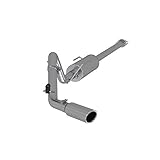
- Material: Aluminized Steel, Single exhaust
- Tubing diameter: 2.5 inch, Tip diameter: 3.5 inch
- Exit: Single Side, Muffler: Straight-Through
- Improved Torque And Horsepower, Lower Exhaust Gas Temperatures, Bolt On Design
11. Ford Mustang Shelby GT350
Engine: 5.2-liter naturally aspirated “Voodoo” flat-plane-crank V8
Output: 526 hp and 429 lb-ft
Redline: 8,250 rpm
The Shelby GT350’s Voodoo V8 sounds unlike the usual Mustang. Instead of a thick, traditional cross-plane burble, it produces a metallic rasp and high-pitched howl that becomes increasingly intense near its 8,250-rpm redline.
That unusual character comes from the flat-plane crankshaft and the engine’s ability to rev far beyond most American V8s. Ford described it as its highest-revving production V8 at launch. The GT350 ended after the 2020 model year and should not be confused with the current Mustang Dark Horse, whose 5.0-liter V8 uses a different crankshaft design.
12. Mazda 787B
Engine: Naturally aspirated four-rotor R26B rotary
Output: Approximately 700 hp
Type: Group C racing car
The Mazda 787B does not sound like a piston-engine car because it is not one. Its four-rotor engine produces a smooth, escalating shriek that rises in intensity without the familiar firing pulses of a V8, V10, or V12. At full song, it sounds more like an aircraft turbine or an enormous mechanical siren than a conventional racing engine.
The No. 55 Mazda won the 1991 24 Hours of Le Mans, becoming the first Japanese car to win the race overall. It is a competition car built for endurance racing, not a street-legal sports car, but its sound is too distinctive to exclude from a list of the best engine notes ever produced.
How to compare car sounds fairly
- Compare similar recordings. A stationary rev, an interior pull, and a fly-by reveal different parts of the soundtrack.
- Check the exhaust-valve mode. Quiet and Sport or Track settings can make the same car sound like two different vehicles.
- Account for the microphone. Phone compression, wind noise, microphone placement, and editing can exaggerate or suppress certain frequencies.
- Listen for character, not just volume. A car that is loud at idle may be less interesting than one that builds a complex note through its rev range.
- Remember the conditions. Engine temperature, road surface, surrounding buildings, and whether the recording is made inside or outside all affect what reaches your ears.
Quick comparison
| Car | Engine character | Standout sound |
|---|---|---|
| Lexus LFA | High-revving naturally aspirated V10 | Rapid, piercing crescendo |
| Porsche Carrera GT | Race-derived naturally aspirated V10 | Exposed mechanical scream |
| Ferrari 458 Italia | Naturally aspirated V8 | Bright, exotic upper register |
| Ferrari F12tdf | Large naturally aspirated V12 | Deep pulse into metallic wail |
| Aventador Ultimae | Naturally aspirated V12 | Theatrical, aggressive howl |
| 2022 V12 Vantage | Twin-turbo V12 | Muscular, forceful exhaust note |
| Huracán STO | Naturally aspirated V10 | Raw, close-range howl |
| 911 GT3 | Naturally aspirated flat-six | Mechanical motorsport-inspired wail |
| F-Type R | Supercharged V8 | V8 thunder, whine, and overrun crackle |
| C8 Corvette Z06 | Flat-plane naturally aspirated V8 | Exotic high-rpm rasp |
| Shelby GT350 | Flat-plane naturally aspirated V8 | Metallic American V8 howl |
| Mazda 787B | Four-rotor racing engine | Unmistakable rotary shriek |
FAQ
Which car on this list sounds the best?
The Lexus LFA is the safest choice if you want a universally recognizable high-pitched engine note, but the answer depends on taste. The Porsche Carrera GT offers a rawer V10 sound, while the F-Type R delivers a deeper and more theatrical V8 soundtrack.
Is the Lexus LFA a 10,000-rpm car?
No. The LFA’s redline is 9,000 rpm. The Nürburgring Package increased output from 552 hp to 562 hp but did not give the car a 10,000-rpm redline.
Does the C8 Corvette Z06 have the same engine as the C7 Z06?
No. The C8 Z06 uses a 5.5-liter naturally aspirated flat-plane-crank V8. The C7 Z06 used a 6.2-liter supercharged cross-plane-crank V8, and the two cars sound very different.
Which car here is not road legal?
The Mazda 787B is the exception. It is a Group C endurance racing car built for the 1991 24 Hours of Le Mans, not a street-legal production model.
The Bottom Line
The best-sounding car is not necessarily the loudest one. The Lexus LFA and Porsche Carrera GT provide two exceptional V10 interpretations, Ferrari’s 458 Italia and F12tdf show how differently a V8 and V12 can build intensity, and the 911 GT3 proves that a flat-six can be every bit as memorable. For a deeper, more physical soundtrack, the Jaguar F-Type R and 2022 Aston Martin V12 Vantage are strong alternatives.
The common thread is involvement: engines that rev freely, respond immediately, and send a distinct note into the cabin. Listen to recordings with caution, then hear the car in person before treating any ranking as definitive.
Quick Recap
Product prices and availability are accurate as of the date/time indicated and are subject to change. Any price and availability information displayed on Amazon at the time of purchase will apply.
Free tools Windows power users keep installed
One-click scans. No signup required.




