Consumer Reports’ current guidance does not identify a named conventional motor oil as a top pick. To choose the right oil, follow your owner’s manual: the required viscosity grade and performance specifications matter more than a general brand ranking.
Does Consumer Reports name a best conventional motor oil?
No current Consumer Reports material cited here names a conventional-oil winner or provides a ranked list. CR describes its CR Recommended program as based on product testing and recommendation criteria; it says it selects products to test and buys them at retail rather than accepting manufacturer payments to rate them. That general methodology does not establish that any particular motor oil is currently recommended.
So a specific brand cannot responsibly be called Consumer Reports’ best conventional motor oil on this evidence. The useful starting point is your vehicle’s requirements, not a category-wide ranking.
How to choose the right oil for your car
- Check the owner’s manual. Find the specified viscosity grade and required performance standards. Consumer Reports advises using the grade listed for your vehicle in its engine-oil checking guide.
- Match the complete specification. Read the oil container for the required grade and applicable certification claims, such as API, ILSAC, or Dexos, as relevant to your vehicle. The manufacturer’s specified standard controls; a certification example is not a substitute for checking the manual.
- Choose the required oil type. Use conventional oil only if your vehicle’s requirements permit it. If the manual calls for synthetic oil, do not switch to conventional simply because it is cheaper or easier to find.
- Compare price only among suitable oils. Once grade, specifications, and oil type match, compare price per volume and package size. A lower-priced bottle is not a suitable alternative if it lacks a required specification.
Grades such as 0W-20 and 5W-30 are examples, not universal recommendations. Consumer Reports uses them to illustrate the labeling readers may encounter; your vehicle’s manual determines which grade applies.
What’s actually slowing this PC down?
Pick the symptom - the matching free tool is one click away.
#1 Best Overall

- Advanced protection against viscosity and thermal breakdown
- Superior protection against engine sludge
- Premium quality base oils and anti-wear additives to help extend the life of your engine
- Helps minimize oil consumption
- Meets or exceeds the following specifications: API SP/SN PLUS/SN/SM | ILSAC GF-6
Conventional versus synthetic oil
Consumer Reports describes conventional oil as petroleum pumped from the ground and refined, while synthetic oil is chemically modified petroleum produced in a factory. It says most new cars use synthetic oil, though some use conventional oil or blends; older cars are more likely to call for conventional oil or blends. These are broad tendencies, not a rule for an individual vehicle.
CR says synthetic oil tends to last longer between changes and perform better in extreme temperatures. That does not make it automatically right for every car, nor does it make conventional oil an acceptable substitute where the manufacturer specifies another type. As John Ibbotson, chief mechanic at CR’s Auto Test Center, puts it: “But depending on the model you own and the conditions you drive in, some oils will perform and protect your engine much better than others.”
Rank #2

- Advanced protection against viscosity and thermal breakdown
- Superior protection against engine sludge
- Premium quality base oils and anti-wear additives to help extend the life of your engine
- Helps minimize oil consumption
- Meets or exceeds the following specifications: API SP/SN PLUS/SN/SM | ILSAC GF-6
When to check oil and change it
Use the vehicle’s service reminders and maintenance instructions rather than assuming one oil-change interval applies to every car. Consumer Reports’ oil-change guide notes that some cars have service monitors that signal when maintenance is due. Follow your manual or vehicle monitor for the applicable schedule, and use the manual’s procedure to check oil level.
Independent reader supportYour contribution helps us test, update, and keep practical guides available for everyone.What to look for when shopping
After identifying the oil your vehicle requires, select a conventional motor oil whose label matches both the specified viscosity and the required performance claims. If no suitable conventional option meets those requirements—or the manual calls for synthetic—choose the oil type and specification the manufacturer lists instead. A product’s brand name alone does not show that it meets your vehicle’s needs.
Quick wins for a faster PC:
Scan for outdated or missing drivers - takes under a minuteDriver Scan →Repair Windows errors before they cause bigger problemsFix Now →Fix the driver behind crashes, sound loss and screen glitchesFind Drivers →Quick Recap
Best Value

- 10W-30 motor oil formulated to keep engines clean and responsive
- Provides proven wear protection (based on Sequence IVA wear test using SAE 5W-30)
- Helps prevent dirt and contaminants from turning into performance-robbing deposits
- Compatible with engine seals and all conventional oils
- Suitable for all car, SUV, light van, and truck gasoline engines under all driving conditions
Rank #4
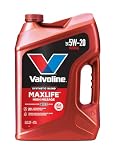
- Formulated for engines with 75,000 miles or more, Valvoline MaxLife High Mileage synthetic blend is formulated with seal conditioners to help prevent oil leaks and reduce oil consumption
- Delivers 20% better wear protection and 15% better sludge defense than industry standards to help prevent engine breakdown
- Extra detergents safeguard against friction, corrosion and deposits to keep high-mileage engines clean
- Advanced friction-fighting additives help maximize performance and improve fuel efficiency
- Provides performance benefits for high mileage, new and re-built engines alike
Rank #3
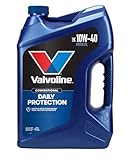
- Conventional formula provides everyday protection against wear, deposits and sludge – key causes of engine failure
- Delivers high-temperature protection to resist breakdown in severe engine environments
- Flows easily in low temps, minimizing wear during cold starts for lasting engine protection and smoother performance
- Low friction technology ensures consistent lubrication to help optimize power and fuel efficiency
- Added detergents prevent oil breakdown and sludge formation, helping keep engines clean
Product prices and availability are accurate as of the date/time indicated and are subject to change. Any price and availability information displayed on Amazon at the time of purchase will apply.