The short answer: The most credible futuristic cars approaching public roads are the BMW i3, Jaguar Type 01, and Volkswagen ID. Polo. They are joined by production-intent sports cars such as the Polestar 6 and Toyota GR GT, while the Porsche Mission X, Hyundai N Vision 74, Nissan Hyper Force, and other dramatic concepts remain uncertain experiments.
That distinction is essential. Some vehicles below have factory plans, prototype-validation programmes, or scheduled launch windows. Others are rolling laboratories or design studies that may never be sold. They all matter because each explores a real change in how cars could be powered, built, controlled, or experienced.
How to read this list
“Futuristic” does not have to mean autonomous, airborne, or shaped like a spaceship. A car earns a place here by making a meaningful change in propulsion, charging, software, materials, aerodynamics, packaging, human-machine interaction, or performance. That is why this list includes both a potentially affordable European hatchback and million-dollar-level hypercar studies.
Status matters just as much as styling. A camouflaged prototype being tested on public roads, a road-legal show car, a pre-series vehicle, and a homologated customer car are four different things. Manufacturer output, range, charging, and acceleration claims are also not automatically certified specifications.
Windows Errors? Fix Them Before They Spread
Repair common Windows errors and clear accumulated junk for a smoother, more stable PC - no reinstall needed.Free scan · no reinstallOutdated Drivers Are Slowing You Down
One free scan finds every outdated or missing driver and matches the right update for your exact hardware.Free scan · exact hardware match#1 Best Overall

- Pullback Action: Experience realistic racing with the pullback action feature.
- Opening Doors: Explore the intricate interior details with the opening door feature.
- 1:38 Scale: Enjoy a detailed 1:38 scale die-cast model (approx. 5 inches long).
- Authentic Design: Modeled after the iconic 1967 Ford Shelby Mustang GT500.
- Display Piece: A must-have collectible for car enthusiasts and model collectors.
Editorial cutoff: August 10, 2026. Timing, availability, pricing, and specifications below are identified as confirmed, provisional, targeted, estimated, or unknown. A European launch is not evidence of a U.S. launch, and WLTP, EPA, CLTC, and manufacturer estimates should not be compared as though they were the same test.
Status guide
| Status | What it means |
|---|---|
| Confirmed production / imminent | A named customer model has a confirmed production plan or factory timing. |
| Production-bound prototype | Development and validation are underway, but final reveal or customer timing may remain ahead. |
| Production planned | The manufacturer has announced a future model, but specifications, timing, or market availability may still change. |
| Production intent | The company is targeting production, without a firm public delivery schedule. |
| Concept preview | The vehicle previews a future production model, but the displayed car is not itself for sale. |
| Technology or design study | The car demonstrates an idea or engineering direction without a series-production commitment. |
Closest to the road
1. BMW i3: the Neue Klasse sedan
Status: Series production scheduled for August 2026; first deliveries expected in autumn 2026.
Expected market: BMW has published U.S.-market information, although exact trim availability and final certification remain relevant.
The new BMW i3 is unrelated to the discontinued first-generation carbon-fiber city car beyond sharing its name. This time, the i3 is a fully electric sedan built on BMW’s Neue Klasse architecture and positioned as the electric counterpart to the 3 Series.
BMW says the car will use an 800-volt electrical system, sixth-generation BMW eDrive technology, and up to 400 kW of DC charging capability. The company has also described a projected EPA-based range of up to 440 miles for the U.S. specification, along with BMW Panoramic iDrive, the centralized “Heart of Joy” control computer, available Level 2+ driver assistance, and bidirectional Vehicle-to-Load, Vehicle-to-Home, and Vehicle-to-Grid functions. See BMW’s U.S. i3 announcement and its production information.
What is confirmed: Series production is scheduled to begin at BMW’s Munich plant in August 2026, with first deliveries from autumn 2026.
What remains uncertain: The 440-mile figure is a projection, not a final EPA rating for a specified U.S. trim. Final range will depend on testing, wheels, tires, equipment, and market configuration.
Why it matters: The new i3 may be the most consequential car on this list because its futuristic technology is packaged in a recognizable sedan. Its zonal electronics, high computing capacity, over-the-air functions, bidirectional charging, and new driver-assistance architecture could become normal rather than exotic.
2. Jaguar Type 01: the new electric grand tourer
Status: Production-bound development prototype; reveal scheduled for September 2026.
Expected market: Jaguar has not yet published a complete market-by-market launch plan.
Do these 3 things before closing this tab:
1Clear out junk files and repair common Windows errors2Fix the driver behind crashes, sound loss and screen glitches3Repair Windows errors before they cause bigger problemsJaguar’s Type 00 concept previewed a dramatic new design language. The production vehicle is now named Type 01, and Jaguar is testing prototypes in Arctic conditions and on public roads. The company describes a 150-prototype validation programme covering hundreds of thousands of miles.
The four-door electric grand tourer is expected to use a tri-motor all-wheel-drive system with intelligent torque vectoring, more than 1,000 horsepower, more than 1,300 Nm of torque, dynamic air suspension, twin-valve active dampers, and a dedicated Jaguar Electric Architecture. Jaguar’s development update confirms the engineering programme, while the company’s Type 00 announcement explains the design vision.
What is confirmed: Prototype validation is underway and the production-bound car is scheduled to be revealed in September 2026.
What remains uncertain: Final output, range, charging performance, price, production volume, and regional availability. Earlier Type 00 projections of up to 430 miles of EPA range and 200 miles of added range in 15 minutes were estimates, not final Type 01 specifications.
Why it matters: Type 01 is an unusually clear test of whether a striking concept can survive the compromises of crash certification, manufacturing, cooling, suspension, visibility, and everyday usability.
3. Volkswagen ID. Polo: the affordable futuristic EV
Status: Production version of the ID. 2all; launch planned from 2026, primarily for Europe.
Expected market: Europe. Volkswagen has not announced the ID. Polo for the United States.
The ID. Polo is the production name for Volkswagen’s ID. 2all concept. It aims to place electric propulsion, modern software, and a clean-sheet design in a smaller, more accessible segment rather than reserving future-facing technology for luxury cars.
The original ID. 2all concept was shown with front-wheel drive, the MEB Entry architecture, a projected range of up to 450 km, Travel Assist, IQ.LIGHT, and an Electric Vehicle Route Planner. Volkswagen originally targeted a price below €25,000. The company later confirmed the production name in its ID. Polo announcement; the original ID. 2all material provides the early technical and pricing context.
What is confirmed: Volkswagen says the ID. Polo will enter series production as part of its small electric-car programme from 2026.
What remains uncertain: The €25,000 figure is an original European target, not a confirmed U.S. MSRP. The 450-km range is a projected concept figure and should not be presented as a final homologated rating.
Why it matters: The future becomes meaningful when it reaches ordinary city streets. A relatively affordable EV with a distinctive design, useful driver assistance, and modern route planning could influence far more people than an exotic concept ever will.
4. Polestar 6: the electric hardtop roadster
Status: Production-intent model; timing uncertain. An earlier company projection pointed to early 2027.
Expected market: Polestar has shown strong North American intent, but final availability and delivery timing remain unconfirmed.
Quick wins for a faster PC:
Fix the driver behind crashes, sound loss and screen glitchesFind Drivers →Repair Windows errors before they cause bigger problemsFix Now →The Polestar 6 began life as the O2 concept and was formally announced for production in 2022. It is a two-door electric roadster with a hardtop convertible roof, dual-motor all-wheel drive, and a bonded-aluminum platform.
Rank #2
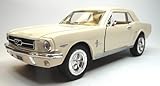
- Authentic 1:36 Scale: Meticulously crafted 1964 1/2 Ford Mustang model car with impressive 5-inch length.
- Realistic Details: Die-cast metal body with opening doors and eye-catching blue finish.
- Interactive Play: Engaging pull-back action for thrilling motion across smooth surfaces.
- Collectible Quality: Ideal for model car enthusiasts and collectors seeking miniature automotive replicas.
- Brand: KiNSMART, a trusted name in die-cast vehicle models and toys.
Polestar has targeted up to 650 kW, or 884 horsepower, 900 Nm of torque, 0–100 km/h in 3.2 seconds, a 250-km/h top speed, and an 800-volt electrical architecture. The limited 500-car LA Concept Edition sold out or was reserved within a week. The company’s production announcement and current Polestar 6 page describe the programme, while an earlier company filing provides the early-2027 projection.
What is confirmed: Polestar intends to build the car and has accepted reservations for a limited launch edition.
What remains uncertain: The power, acceleration, range, price, production timing, and final design are targets or forward-looking plans.
Free tools Windows power users keep installed
One-click scans. No signup required.
Why it matters: Many electric performance cars are heavy, sealed-off grand tourers. The Polestar 6 tries to preserve the low seating position, open-air appeal, and mechanical drama of a traditional roadster while replacing its engine with an electric powertrain.
5. Tesla Roadster: the long-delayed performance promise
Status: Production remains planned, but no firm customer-delivery date is established in the cited current material.
Expected market: Tesla has presented the Roadster as a global product, but exact launch markets and final specifications remain unconfirmed.
Tesla’s second-generation Roadster remains one of the most recognizable future-car projects. The company’s current product page advertises 0–60 mph in 1.9 seconds, a top speed above 250 mph, more than 620 miles of claimed range, seating for four, and a removable glass roof that stores in the trunk.
Tesla’s January 2026 SEC filing lists the Roadster under “design development” and says preparations continue for production of the next-generation car. That supports the existence of an ongoing programme, not the conclusion that deliveries are imminent. The relevant references are Tesla’s official Roadster page and its January 2026 SEC filing.
Recommended Free Tools
What is confirmed: Tesla continues to advertise the vehicle and has described production preparation as ongoing.
What remains uncertain: The launch date, final engineering, homologation, pricing, battery specification, and whether the headline performance claims survive production testing.
Why it matters: The Roadster is a useful reality check. A 1.9-second acceleration claim is easy to print on a webpage; designing, cooling, certifying, manufacturing, and delivering a four-seat electric sports car with that performance is much harder.
6. Caterham Project V: lightweight electric sports-car engineering
Status: Production-intent prototype; no firm public customer-launch date verified.
Expected market: Unknown; Caterham has not published a complete sales-market plan.
Caterham’s Project V is a compact electric sports coupe developed with Yamaha Motor, XING Mobility, and TOKYO R&D. Rather than chasing the largest battery and the highest straight-line output, the project emphasizes lightness, compact dimensions, and driver involvement.
The concept has been described with a two-seat or 2+1 layout, electric propulsion, and a construction philosophy intended to keep the car recognizably Caterham. Caterham says it is continuing work with its technical partners while targeting full-scale production. Its official Project V update does not provide a definitive customer-delivery schedule.
What is confirmed: The project has moved beyond a single styling exercise into a continuing production-development programme.
What remains uncertain: Final weight, battery size, motor output, price, production volume, factory arrangements, and launch date.
What’s actually slowing this PC down?
Pick the symptom - the matching free tool is one click away.
Why it matters: Project V could be the most important electric sports-car idea here without being the fastest. It asks whether electrification can make a small, light, playful sports car viable instead of making every performance vehicle larger and heavier.
Production previews and credible technology studies
7. Audi Concept C: radical simplicity in an electric roadster
Status: Street-legal concept previewing a future production sports car; the displayed vehicle is not available to buy.
Expected market: A future production model is intended, but Audi has not published final market timing or pricing.
Audi’s Concept C is an all-electric, two-seat roadster built around a surprisingly simple idea: future technology does not have to produce a more complicated visual or physical experience. The concept uses a retractable electric hardtop, rear-wheel drive, a central-battery layout, a minimalist cabin, physical haptic controls, and a foldable 10.4-inch display.
Its new vertical front frame and four-element lighting signature preview Audi’s design direction. Audi’s fact sheet lists dimensions of 4,520 mm long, 1,970 mm wide, and 1,285 mm high, with a stated gross weight of 1,690 kg. Audi describes the concept as street legal while also making clear that it is not a production car. Read the Concept C announcement and official fact sheet.
The Tool Desk
Outbyte PC Repair FREERepair Windows errors before they cause bigger problemsFix Now →Outbyte Driver Updater FREEFix the driver behind crashes, sound loss and screen glitchesFind Drivers →What is confirmed: Audi says Concept C previews a future production model.
What remains uncertain: Production name, battery capacity, output, range, price, final roof mechanism, and which visual details will survive manufacturing.
Rank #3

- Highly detailed 1:24 scale diecast model kit of 1929 Ford Model A
- Comes with everything needed for assembly including screwdriver
- Features opening parts, rolling wheels and pre-painted metal body
- Easy to assemble, creates fully functional rolling replica model car
- Fun and educational STEM activity for kids to build realistic miniature vehicle
Why it matters: This is a concept about interaction as much as propulsion. Physical controls, a disappearing screen, and a restrained interior suggest that the next stage of automotive technology may involve less screen clutter, not more.
8. Lamborghini Lanzador: the Ultra GT
Status: Concept preview of Lamborghini’s planned fourth model; the company has scheduled its first fully electric production model for 2028.
Expected market: Lamborghini has not yet published final regional availability or pricing.
Do these 3 things before closing this tab:
1Clear out junk files and repair common Windows errors2Scan for outdated or missing drivers - takes under a minute3Repair Windows errors before they cause bigger problemsThe Lanzador is a 2+2 electric grand tourer that Lamborghini calls an “Ultra GT.” It is intended to combine more usable space and a slightly raised grand-touring stance with the performance identity associated with the brand’s supercars.
The concept previews Lamborghini’s first fully electric production model and a new performance segment for the company. Lamborghini’s wider product strategy places the first full-electric model in 2028, followed by a full-electric Super SUV planned for 2029. The company’s Lanzador announcement should be treated as the primary reference.
What is confirmed: Lamborghini has publicly committed to a first fully electric model and has positioned Lanzador as its preview.
What remains uncertain: Final body style, production name, output, battery, range, price, and the extent to which the show car’s proportions and interior remain intact.
Windows Errors? Fix Them Before They Spread
Repair common Windows errors and clear accumulated junk for a smoother, more stable PC - no reinstall needed.Free scan · no reinstallCrashes, No Sound, or Screen Glitches?
Random freezes, missing sound and display glitches usually trace back to one bad driver. Find and replace yours safely.Free scan · under a minuteWhy it matters: The difficult challenge is not making an electric GT fast. It is making one feel unmistakably like a Lamborghini while giving it the comfort, packaging, and quietness expected of an electric grand tourer.
9. Toyota GR GT: a road-legal race car with a V8 hybrid
Status: Under-development road car; no public customer-delivery date verified.
Expected market: Unknown; Toyota has not published final production volume, price, or market allocation.
Toyota Gazoo Racing describes the GR GT as a flagship sports car developed as a road-legal race car. It is being developed alongside the GR GT3 racing car and the Lexus LFA Concept.
Toyota has confirmed a 4.0-liter twin-turbo V8 with hybrid assistance, an aluminum body frame, a low center of gravity, and chassis and aerodynamic development informed by motorsport. Production-car test drivers and racing drivers are both involved in the programme. Toyota’s GR GT announcement is the key source, and the related corporate update provides additional context.
What’s actually slowing this PC down?
Pick the symptom - the matching free tool is one click away.
What is confirmed: Toyota is developing the GR GT as a road-going performance car.
What remains uncertain: Whether it will reach customers, how closely the production car will resemble the prototype, final output, price, production volume, and delivery timing.
Why it matters: The GR GT represents a different interpretation of the future. Instead of assuming every exciting car must become battery-electric, Toyota is exploring hybridization, high-efficiency combustion, and motorsport-derived engineering as a way to preserve long-distance and emotional performance.
10. Lexus LFA Concept: an electric successor in spirit
Status: Battery-electric sports-car concept; no series-production commitment verified.
Expected market: None announced.
The Lexus LFA Concept is a two-seat battery-electric sports-car study developed alongside Toyota’s GR GT and GR GT3. Lexus presents it as a way to preserve and evolve sports-car engineering knowledge for the electric era, not as a confirmed second-generation LFA.
Official dimensions are 4,690 mm long, 2,040 mm wide, and 1,195 mm high, with a 2,725-mm wheelbase. Lexus emphasizes an all-aluminum body frame, low center of gravity, high rigidity, aerodynamic efficiency, a driver-focused cockpit, and an ideal driving position. Those details appear in Lexus’s official LFA Concept announcement.
What is confirmed: Lexus is using the concept to explore electric sports-car engineering and design.
What remains uncertain: Production approval, name, powertrain specification, battery, performance, price, and whether it will ever be sold as an LFA-branded car.
Why it matters: The original LFA became famous for its V10 engine, sound, craftsmanship, and balance. This concept asks whether an electric car can create a comparable emotional identity through low mass, steering feel, seating position, aerodynamics, and software rather than engine noise.
Dream machines and technology laboratories
11. Hyundai N Vision 74: hydrogen-electric performance
Status: Rolling-laboratory concept; commercial production has not been confirmed.
Expected market: None announced.
The Hyundai N Vision 74 combines a battery-electric drivetrain with a hydrogen fuel-cell system. Hyundai describes it as a high-performance rolling laboratory, not a production sports car.
Rank #4

- AUTHENTIC REPLICA: Highly detailed 1:40 scale model of the iconic 1957 Chevrolet Bel Air Coupe, measuring 5 inches in length with classic finish
- WORKING FEATURES: Functioning doors that open and close, plus pull-back motor action for interactive play value
- QUALITY CONSTRUCTION: Die-cast metal body construction provides durability and authentic feel, enhanced with detailed plastic components
- REALISTIC DETAILS: Features rubber tires for enhanced realism and smooth rolling action on various surfaces
- DISPLAY WORTHY: Perfect size for collectors and enthusiasts, combining playability with showcase appeal
The concept uses a 62-kWh battery, hydrogen fuel-cell technology, dual charging capability, rear-mounted hydrogen tanks, and a design inspired by Hyundai’s 1974 Pony Coupe concept. Its hybrid energy system is intended to combine the high-power response of a battery with sustained energy production and rapid hydrogen refueling. Hyundai’s official rolling-lab announcement explicitly says commercial production was not confirmed.
Free tools Windows power users keep installed
One-click scans. No signup required.
What is confirmed: Hyundai has built and demonstrated the concept as an engineering and design study.
What remains uncertain: There is no confirmed road-going production version, price, range, refueling network, or launch market.
Why it matters: Hydrogen fuel-cell performance cars could offer fast refueling and sustained output, but their future depends on hydrogen-station availability, production cost, tank packaging, regional infrastructure, and the source of the hydrogen. N Vision 74 is evidence of serious experimentation, not evidence that hydrogen sports cars are about to become common.
12. Porsche Mission X: the electric hypercar benchmark
Status: Design study, not offered for sale; production remains undecided.
Expected market: None announced.
Porsche’s Mission X is an electric hypercar concept built around a conditional question: what should a future Porsche hypercar be capable of if it enters production?
Porsche says that, if produced, Mission X should aim to become the fastest road-legal vehicle around the Nürburgring Nordschleife, achieve a power-to-weight ratio of approximately one horsepower per 2.2 pounds, generate more downforce than a 911 GT3 RS, and charge roughly twice as quickly as a Taycan Turbo S. The concept uses a 900-volt architecture and places the battery centrally behind the seats in an “e-core” layout. Porsche’s official announcement makes clear that these are conditional goals rather than tested production specifications.
What is confirmed: The Mission X exists as a design and technology study.
What remains uncertain: Whether Porsche will approve production, and if it does, the final battery, power, weight, downforce, charging speed, price, and Nürburgring performance.
Why it matters: Mission X treats electrification as a way to pursue lower lap times and more serious aerodynamics, not merely as a quiet substitute for a combustion engine.
13. Mercedes-Benz Vision One-Eleven: the electric C 111 revival
Status: Design and technology study; no production model announced.
Expected market: None announced.
The Vision One-Eleven reinterprets Mercedes-Benz’s experimental C 111 cars from the 1960s and 1970s. Its defining visual feature is a highly aerodynamic “One-Bow” body with gullwing doors, but the more interesting story is the technology underneath.
Mercedes-Benz uses the concept to explore all-electric propulsion, YASA axial-flux motors, a lounge-style cabin, digital exterior displays, and an interior that could support different modes of use when the car is being driven or operating with advanced automation. Mercedes says the axial-flux motors offer high power and torque density and are being developed toward large-scale production for future performance applications. That does not mean the Vision One-Eleven itself will be built. The manufacturer’s official technology-study page is explicit about its status.
Recommended Free Tools
What is confirmed: Mercedes-Benz is using the vehicle as a design and technology demonstrator.
What remains uncertain: There is no production announcement, customer model, launch date, price, or regulatory approval for its autonomous-driving ideas.
Why it matters: Vision One-Eleven imagines a performance car that can become a lounge when the driver is not actively driving. It is a reminder that future-car design is about the cabin’s use of time, not only the drivetrain’s use of energy.
14. Nissan Hyper Force: the solid-state-battery supercar vision
Status: Concept car; no production confirmation verified.
Expected market: None announced.
Quick wins for a faster PC:
Clear out junk files and repair common Windows errorsFree Scan →Scan for outdated or missing drivers - takes under a minuteDriver Scan →Repair Windows errors before they cause bigger problemsFix Now →Nissan’s Hyper Force is a high-performance electric supercar concept aimed at both driving enthusiasts and gamers. Nissan says it combines an all-electric powertrain with an all-solid-state battery concept, up to 1,000 kW of output, advanced e-4ORCE all-wheel control, high-downforce aerodynamics, Hyper LiDAR, sensor-based driver assistance, and augmented- and virtual-reality interfaces.
The concept includes separate R, or racing, and GT driving modes. Its official Nissan technology page presents the battery and output as part of the concept vision, not as production specifications.
What is confirmed: Nissan has revealed Hyper Force as a technology and design concept.
What remains uncertain: Nissan has not announced a production version, and the solid-state battery, 1,000-kW output, displays, exterior aero, and driver-assistance functions are not confirmed for a showroom car.
Best Value

- Doors Open
- Pullback Action
- Die Cast Metal Body
- PULL BACK ACTION WITH FREE ROLLING WHEELS
Why it matters: Hyper Force is a useful lens through which to view solid-state batteries. They may eventually offer advantages in energy density, packaging, or charging, but a concept claim is not the same as a qualified, durable, mass-produced battery system.
15. Toyota FT-Se: the software-defined electric sports car
Status: Battery-electric concept; production not confirmed.
Expected market: None announced.
Toyota introduced the FT-Se as a high-performance sports BEV concept exploring how electric power, motorsport experience, and software updates could reshape the sports-car formula.
The concept emphasizes wide, low proportions, aerodynamic efficiency, high-performance battery-electric propulsion, motorsport-derived handling, and a digital cockpit. Toyota also says the vehicle is intended to evolve with its driver through software updates and shares major components with the FT-3e concept. These are concept intentions, not a confirmed production feature list. Toyota’s FT-Se announcement is the primary source.
The Tool Desk
Outbyte PC Repair FREEClear out junk files and repair common Windows errorsFree Scan →Outbyte Driver Updater FREEScan for outdated or missing drivers - takes under a minuteDriver Scan →What is confirmed: Toyota is exploring the FT-Se idea as part of its future electric performance-car work.
What remains uncertain: Production approval, output, battery capacity, range, price, software functions, and delivery timing.
Why it matters: FT-Se may be more influential than a spectacular hypercar if its central idea survives: a sports car whose controls, performance character, and capabilities can evolve through software over its lifetime.
Independent reader supportYour contribution helps us test, update, and keep practical guides available for everyone.Which futuristic cars are most likely to reach public roads?
The clearest near-term candidates are the BMW i3, Jaguar Type 01, and Volkswagen ID. Polo. BMW has published a production month and delivery season. Jaguar is running a substantial prototype-validation programme and has a scheduled reveal. Volkswagen has assigned a series-production name and a launch window, although its initial target is primarily Europe.
Quick wins for a faster PC:
Repair Windows errors before they cause bigger problemsFix Now →Fix the driver behind crashes, sound loss and screen glitchesFind Drivers →Clear out junk files and repair common Windows errorsFree Scan →The strongest specialty-car prospects are the Polestar 6, Lamborghini Lanzador, and Toyota GR GT. Their programmes have meaningful manufacturer backing, but Polestar’s launch timing is no longer a firm current promise, Lamborghini’s production car may differ significantly from the concept, and Toyota has not published a customer-delivery date.
Audi Concept C occupies an important middle ground. It is a road-approved concept and a direct preview of a future production sports car, but it is not a car buyers can order. The remaining concepts—Lexus LFA Concept, Hyundai N Vision 74, Porsche Mission X, Mercedes-Benz Vision One-Eleven, Nissan Hyper Force, and Toyota FT-Se—are fascinating even if they never reach a showroom because they demonstrate technologies and design directions that may appear in other vehicles.
What is genuinely futuristic here?
Several technologies on this list are already moving from show cars into production. BMW’s Neue Klasse points toward 800-volt systems, faster DC charging, centralized vehicle computers, over-the-air functions, bidirectional charging, and more advanced driver assistance. Polestar’s bonded-aluminum platform, Jaguar’s torque-vectoring tri-motor GT, Audi’s physical-and-digital interface, and the GR GT’s motorsport-derived hybrid system all represent engineering ideas that can be evaluated in real development programmes.
Other ideas still require major qualification. Solid-state batteries remain a development technology in the Nissan Hyper Force application. Hydrogen-electric performance depends on infrastructure and operating cost as much as vehicle engineering. Lounge-style autonomous interiors require regulatory approval and reliable automation in defined operating conditions. Oversized wheels, camera mirrors, ultra-thin lighting, exterior displays, and very low rooflines are also common concept-car features that may be reduced or removed before production.
Windows Errors? Fix Them Before They Spread
Repair common Windows errors and clear accumulated junk for a smoother, more stable PC - no reinstall needed.Free scan · no reinstallCrashes, No Sound, or Screen Glitches?
Random freezes, missing sound and display glitches usually trace back to one bad driver. Find and replace yours safely.Free scan · under a minuteThe practical future of the car will probably arrive incrementally: faster charging, lighter structures, better thermal management, more capable software, improved driver assistance, smarter energy use, and a small number of improbable sports cars that survive the transition. It is unlikely to arrive as one spectacular machine that changes everything overnight.
Important projects that disappeared
Future-car lists become misleading when they recycle old launch promises after a programme has been canceled.
Honda 0 Saloon and Honda 0 SUV
Honda announced on March 12, 2026 that it was canceling development and the planned U.S. market launch of the Honda 0 SUV, Honda 0 Saloon, and Acura RSX. Earlier announcements had pointed to a North American 0 Saloon launch in 2026 and a 0 SUV arrival in the first half of 2026. Those vehicles should not be described as upcoming road cars unless the cancellation is explicitly acknowledged. Honda’s cancellation announcement supersedes the earlier launch announcement.
Sony Honda Mobility AFEELA 1
AFEELA 1 had been announced for California deliveries in 2026 and had reached trial production. On March 25, 2026, Sony, Honda, and Sony Honda Mobility announced that development and launch of AFEELA 1 and the second model would be discontinued. It belongs in a history or cancellation sidebar, not among the 15 upcoming cars. See the joint cancellation announcement.
Free tools Windows power users keep installed
One-click scans. No signup required.
Lexus LF-ZC
Older articles may still describe the Lexus LF-ZC as a 2026 production vehicle. Current Lexus material says the 2026 ES draws design inspiration from LF-ZC, but that does not establish that an LF-ZC-branded production car is still coming. It is safer to use LF-ZC as background to Lexus’s newer electric sports-car work than to present it as a confirmed upcoming model. Lexus’s current year-in-review material provides that context.
Frequently Asked Questions
Which futuristic car is most likely to reach the road first?
The BMW i3, Jaguar Type 01, and Volkswagen ID. Polo have the clearest near-term paths. BMW has scheduled i3 production for August 2026, Jaguar is validating Type 01 prototypes ahead of its September 2026 reveal, and Volkswagen plans to launch the ID. Polo from 2026, primarily in Europe.
Does “road legal” mean I can buy the car?
No. A road-legal prototype can be approved to operate on public roads without being available for customer purchase. Audi describes Concept C as street legal and as a preview of a future production sports car, but the displayed concept is not itself a production vehicle.
Can concept-car range and performance figures be trusted?
Not necessarily. Manufacturer figures may be EPA ratings, WLTP or CLTC results, estimates, engineering targets, or conditional goals. For example, Tesla’s Roadster figures are advertised claims, while Porsche’s Mission X performance goals are explicitly conditional on production.
What’s actually slowing this PC down?
Pick the symptom - the matching free tool is one click away.
Is the Hyundai N Vision 74 going into production?
The Hyundai N Vision 74 uses a battery-electric system alongside hydrogen fuel-cell technology. Hyundai describes it as a rolling laboratory and has not confirmed commercial production. Its future depends not only on vehicle engineering but also on hydrogen infrastructure, cost, tank packaging, and regional availability.
Which highly publicized future cars were canceled?
Honda canceled the planned 0 SUV, 0 Saloon, and Acura RSX EV development and U.S. launch in March 2026. Sony Honda Mobility also discontinued AFEELA 1 and its second model later that month. Neither programme should be listed as an upcoming car without clearly explaining the cancellation.
The Bottom Line
The BMW i3, Jaguar Type 01, and Volkswagen ID. Polo are the closest to becoming ordinary road cars. The Polestar 6, Lamborghini Lanzador, Toyota GR GT, and Audi Concept C are more specialized production-bound bets. The rest are valuable as technology laboratories and design provocations, not guaranteed future purchases. That distinction is the real story: the future of the automobile is arriving through a mixture of confirmed architecture, cautious production programmes, and ambitious ideas that may never leave the motor show.
Quick Recap
Product prices and availability are accurate as of the date/time indicated and are subject to change. Any price and availability information displayed on Amazon at the time of purchase will apply.