What’s actually slowing this PC down?
Pick the symptom - the matching free tool is one click away.
If you regularly drive in sustained cold, snow, or ice, a vehicle-compatible set of four winter tires with the Three-Peak Mountain Snowflake (3PMSF) symbol is the stronger winter-traction choice. NHTSA says winter tires are more effective than all-season tires in deep snow. All-season tires suit a broader range of year-round conditions, but do not offer the same severe-snow performance.
Winter tires vs. all-season tires: the key differences
| Decision | Winter tires | All-season tires |
|---|---|---|
| Deep snow | NHTSA says winter tires are more effective than all-season tires in deep snow. NHTSA TireWise | Offer some mud-and-snow capability, but are less effective than winter tires in deep snow. NHTSA TireWise |
| Sustained cold | Transport Canada says winter tires retain elasticity at lower temperatures. Transport Canada’s 2011 winter-driving guide | Transport Canada says all-season and summer tires begin to lose elasticity below 7°C, reducing traction. This is guidance from its 2011 guide, not a universal changeover point for every tire. Transport Canada |
| Year-round use | A dedicated winter set generally means seasonal changes and storage; the logistics and cost vary by driver and market. | Designed for a broader range of conditions and may suit drivers in milder winters or areas with little snow. NHTSA TireWise |
| Severe-snow qualification | Look for the mountain-and-snowflake 3PMSF symbol, which Transport Canada says identifies tires meeting specific snow-traction requirements for severe snow. Transport Canada | The “all-season” label alone does not establish the same severe-snow qualification. An M+S marking alone is not equivalent evidence of 3PMSF qualification. Transport Canada |
Are winter tires worth it if it gets cold but barely snows?
It depends on how often you drive in sustained cold and on the roads you use. Transport Canada’s 2011 guide says all-season and summer tires begin to lose elasticity below 7°C, while winter tires retain elasticity at lower temperatures. That temperature is a rule of thumb from the guide, not an exact point at which every tire suddenly changes performance.
If your winters are mostly mild and snow is rare, all-season tires may be the more convenient year-round compromise. If cold weather is prolonged, or you regularly encounter snow-covered roads, a dedicated winter set is more compelling. The decision also depends on your vehicle’s approved fitment and whether seasonal tire changes and storage work for you.
Are all-season tires safe in snow, and do winter tires help on ice?
All-season tires provide some mud-and-snow capability, but the category is a compromise; it does not mean the tire is equally suited to every winter surface. NHTSA specifically says winter tires are more effective than all-season tires in deep snow. For severe-snow qualification, check for the 3PMSF symbol rather than relying on the all-season name or an M+S marking alone.
Quick wins for a faster PC:
Fix the driver behind crashes, sound loss and screen glitchesFind Drivers →Repair Windows errors before they cause bigger problemsFix Now →#1 Best Overall
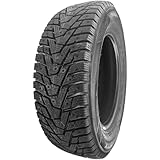
- Hankook Winter i Pike RS2 W429 is a Premium Touring studded winter tyre with directional tread pattern, designed for Passenger cars.
- Three Peak Mountain Snowflake certified
- Can be pinned with TSMI #11 studs, where permitted, for extra traction in severe ice and snow
- Wide block in the center of the tread provides improved snow and ice traction
- Built with a new rubber compound that boosts strength and durability for a longer tread life
Winter tires are designed for cold-weather conditions, but the official sources cited here do not establish a universal stopping-distance advantage on ice or a single performance result across all tires, vehicles, temperatures, and surfaces. No tire makes icy roads safe by itself: slow down and allow more stopping distance. NHTSA reported an estimated 101,390 police-reported crashes in snow or sleet conditions in 2023, including 320 fatal crashes and an estimated 22,293 injury crashes. Those figures describe crash conditions; they do not compare tire categories or prove that one type caused or prevented a crash. NHTSA winter-driving guidance
Can I use winter tires on just two wheels?
Transport Canada advises installing winter tires at all wheel positions. Use a matched set of four vehicle-compatible tires rather than putting winter tires on only two wheels. Mixing winter and other tires can leave the vehicle with different traction at each end, so follow the vehicle maker’s requirements and have an installer confirm fitment if needed.
Rank #2
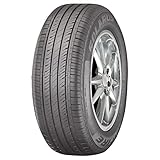
- 50,000 mile warranty
- All-Season Touring Tire
- Ideal for consumers looking for plenty of miles, good traction and fuel economy
- M+S Rated (mud and snow)
- Manufactured by Cooper Tire & Rubber Company
How to choose and maintain winter tires
Confirm the right size and qualification
- Check the owner’s manual and the driver-side tire and loading label for the approved tire size. NHTSA advises using the original size or another size recommended by the vehicle manufacturer. NHTSA TireWise
- If you regularly drive in severe snow, select a compatible set of four winter tires bearing the 3PMSF mountain-and-snowflake symbol. Have all four installed.
Check pressure, tread, and condition
- Cold weather lowers tire pressure. NHTSA recommends checking pressure at least monthly when tires are cold and inflating to the vehicle maker’s recommendation—not the maximum pressure printed on the tire sidewall. NHTSA TireWise
- Inspect the tread and tires for damage. NHTSA says tires should be replaced at 2/32 inch of tread. Separately, Transport Canada’s 2011 winter guide advises not using tires worn close to 4 mm (5/32 inch) on snow-covered roads. These are different recommendations for different contexts. NHTSA; Transport Canada
- Do not reduce tire pressure to seek more snow traction. USTMA says underinflation does not improve snow traction. USTMA seasonal tips
Winter tires, all-wheel drive, and safe driving
Four-wheel drive can help a vehicle move through snow, but it does not help it stop better or prevent skidding, according to USTMA. Tires, speed, road conditions, and following distance all matter. Slow down on slick or snow-covered roads and leave extra room to stop; drivetrain capability is not a substitute for winter-appropriate tires or careful braking. USTMA seasonal tips; NHTSA winter-driving guidance
Quick Recap
Rank #4

- Product Overview: The Armstrong Ski-Trac PC is a 205/55R16 91H SL-Standard Load, 4 Ply Rated Touring Tire Manufactured For Passengers
- Driving Conditions: Studless Winter Traction
- Styling and Construction: One Black Sidewall, Radial Construction, 16 Inch Tire
- Load Index and Speed Rating: Load Index 91 Supports up to 1356 lbs Per Tire and Speed Rating H Certified to 130 mph
- Additional Note: Tire Only - Rim/Wheel Not Included
Rank #3

- Product Overview: The Fullway HP108 are 205/55R16 91V SL-Standard Load, 4 Ply Rated Performance Tires Manufactured For Passengers
- Driving Conditions: All Season Traction, UTQG 380AA
- Styling and Construction: Four Black Sidewall, Radial Construction, 16 Inch Tires
- Load Index and Speed Rating: Load Index 91 Supports up to 1356 lbs Per Tire and Speed Rating V Certified to 149 mph
- Additional Note: Tires Only - Rims/Wheels Not Included
Product prices and availability are accurate as of the date/time indicated and are subject to change. Any price and availability information displayed on Amazon at the time of purchase will apply.
The Tool Desk
Outbyte PC Repair FREERepair Windows errors before they cause bigger problemsFix Now →Outbyte Driver Updater FREEScan for outdated or missing drivers - takes under a minuteDriver Scan →



