Recommended Free Tools
Your EV’s range estimate falls in cold weather because the battery temporarily delivers less usable energy, and heating the battery and cabin consumes additional electricity. The size of the reduction depends on temperature, speed, snow, climate settings, trip length and your vehicle’s battery and HVAC design. It usually reflects winter operating conditions—not permanent battery damage.
What cold weather does to an EV battery
An EV battery relies on electrochemical reactions to release energy. Lower temperatures slow those reactions, reduce output voltage and make less of the stored energy available for driving. The effect becomes more pronounced as temperatures approach 0°F (-18°C) and below.
As an Amazon Associate I earn from qualifying purchases.
This is an operating-temperature effect, not a simple change in the amount of energy chemically stored in the cells. A cold pack can show a normal state-of-charge percentage while delivering less usable power until it warms. The battery-management system monitors cell temperature and may reserve more energy, limit output or adjust charging behavior to protect the cells.
The Tool Desk
Outbyte PC Repair FREEClear out junk files and repair common Windows errorsFree Scan →Outbyte Driver Updater FREEScan for outdated or missing drivers - takes under a minuteDriver Scan →Cold weather also changes the conditions around the car. Dense air increases aerodynamic demand, snow or slush raises rolling resistance, and winter tires can consume more energy than the tires used for efficiency testing. Headwinds, wet pavement, hills, traffic and repeated defrosting can all compound the battery’s temperature-related loss. That is why two trips at the same outside temperature can produce different estimates.
#1 Best Overall

- Vinyl covered for resistance against oil and acid for longer life
- Fast and easy to install
- Extends the life of the battery
- Wraps around battery to reduce the strain on cold-weather starts
- Various sizes to fit most batteries
Battery heating takes energy from the pack
Many EVs use a battery heater or other thermal-management equipment to bring the pack toward a useful operating temperature. Electricity used for that warming is not available to move the car. A vehicle with more effective thermal management may therefore retain more usable energy than another model at the same outdoor temperature.
The battery-management system can limit power or charging speed while the pack warms. That protection helps keep the cells within their operating range, but it can make the car feel less responsive and can delay a fast-charge session. The same vehicle may accept substantially more power later in the stop, after conditioning has raised the pack temperature.
Cabin heat is another electrical load
In a gasoline car, waste engine heat can warm the cabin. An EV must create cabin heat with a heat pump, an electric resistance heater, or a combination of both. That demand comes from the traction battery, reducing the energy left for propulsion.
Do these 3 things before closing this tab:
1Scan for outdated or missing drivers - takes under a minute2Repair Windows errors before they cause bigger problems3Fix the driver behind crashes, sound loss and screen glitches“A heat pump draws in heat from the outside air to warm the car’s cabin much more efficiently than an electric resistance heater in most conditions.” — U.S. Department of Energy, “Winterizing Your Electric Vehicle,” January 30, 2024.
DOE notes that some EVs use both heating technologies. A heat pump is generally more efficient, but its performance and the point at which the vehicle supplements it with resistance heat vary by design and temperature. A heat pump does not make winter energy use disappear; it changes how much electricity is needed to provide a given amount of cabin heat.
Why a short trip can look especially inefficient
Heating loads are most noticeable on short journeys. The battery and cabin may start cold, so a large share of the electricity used during the first few miles goes to warming rather than propulsion. On a longer trip, that initial energy is spread over more miles, although highway speed, wind and continued cabin heating can still reduce total range.
How much range can an EV lose in the cold?
There is no single winter-loss percentage that applies to every EV. The figures below use different measurements and methods, so they should not be combined into one universal prediction.
Quick wins for a faster PC:
Scan for outdated or missing drivers - takes under a minuteDriver Scan →Clear out junk files and repair common Windows errorsFree Scan →| Source and date | What was measured | Cold condition and sample | Reported result | How to use it |
|---|---|---|---|---|
| U.S. Department of Energy and U.S. Environmental Protection Agency, 2020 | Fuel economy in controlled laboratory testing | All-electric vehicles in cold temperatures | Nearly 40% decrease in fuel economy | This is a laboratory fuel-economy finding, not a promise that every EV loses 40% of its rated range. |
| Recurrent, November 19, 2025 | Real-world range retention from anonymized telematics and energy-use data | 32°F (0°C); 34 popular models and more than 30,000 U.S. vehicles | 78% average range retention | The average compares winter performance with the study’s ideal-temperature baseline; model and driver results vary. |
| Recurrent, November 19, 2025 | Real-world range retention from the same study | 20°F (-7°C); same 34-model sample | 70% average range retention | Use it as a broad real-world reference, not as a guarantee for a particular car, route or weather event. |
The DOE and EPA figure is a controlled laboratory fuel-economy result, while the Recurrent figures are averages from anonymized on-road data. Fuel economy and range retention are related but not interchangeable measures. Neither set of numbers tells you exactly how far a particular vehicle will travel on a specific snowy commute.
Your displayed estimate can move more or less than these figures because it reflects the vehicle, recent driving, speed, heating use, terrain and weather encountered. A car parked outside overnight can show a larger immediate change than the same car kept in a garage, and a calm city trip can use less energy than a fast highway trip in the same temperature.
Why the dashboard estimate changes
The number on the instrument panel is an estimate of how far the car may travel under current conditions. When the battery is cold, the vehicle’s available energy changes and its recent energy consumption may rise because of heating, snow or higher rolling resistance. The software incorporates those conditions into the prediction.
Rank #2

- Thinsulate thermal insulation helps maintain battery temperature in warm or cold weather
- 36" (91cm) length, 5" (12. 7cm) height, 1/2" (1. 1cm) width, complete with 30" (76cm) ground cord for ease of use
- CSA approved blanket warms battery core to 60 Degree - 70 Degree above ambient temperature for quick starts
- Volts: 120 AC, Watts: 80, Plug type: 120 volt, 15 amp
- Fits batteries: Series 24, 24F, 24H, 24R, 24T, 25, 27, 27F, 27H, 31, 34, 34R, 35, 38, 74
Most range displays also respond to recent driving history. If the last trip involved high speed, a steep climb, heavy defrosting or stop-and-go traffic, the estimate may be conservative even after conditions improve. Conversely, a gentle low-speed trip can make the displayed range look optimistic for a later highway journey. Treat the number as a live planning aid, not a laboratory measurement of battery health.
A lower estimate does not directly measure permanent loss of battery capacity. Seasonal cold can reduce available range temporarily; when temperatures moderate and the pack returns to its normal operating window, usable energy can recover. DOE’s technical guidance also says a battery heater can partly mitigate the reduction in usable energy at low temperatures.
Temporary winter loss versus a battery problem
A drop that appears with a clear change in temperature and returns as conditions improve is consistent with normal cold-weather operation. A persistent decline in mild weather, or a warning message, deserves attention from the vehicle manufacturer or a qualified service provider. Do not infer battery damage from one cold-weather estimate alone.
For a useful comparison, repeat a similar route at similar speeds and climate settings, and note the outside temperature and whether the vehicle began cold-soaked or preconditioned. Looking only at the percentage shown after one unusually cold trip can confuse temporary energy use with long-term capacity loss.
What to do before leaving
1. Precondition while the EV is plugged in
- Connect the vehicle to its charger.
- Use the vehicle’s app, scheduled-departure menu or climate controls to start cabin preconditioning. If the model supports battery preconditioning, enable that function as well.
- Set the departure time early enough for the vehicle to complete the warm-up according to the owner’s manual.
- Confirm that the charging connection remains active until departure.
Warming while connected lets the car use grid electricity for at least part of the preparation instead of drawing the same energy from the battery during the trip. The exact controls and whether battery heating is included are model-specific. Some systems preheat only the cabin unless a separate battery-conditioning setting is selected, so check the vehicle’s menus and manual rather than assuming both occur.
If you cancel a scheduled departure or unplug early, the pack may remain cold even though the cabin feels warm. In very low temperatures, allow additional preparation time and verify that the app reports the vehicle is connected and conditioning.
2. Start with a realistic state of charge
Use the expected temperature, speed, route and heating demand when deciding how much charge you need. A warm-weather range figure is not a winter-trip guarantee. Leave enough energy for a charger detour or slower-than-planned progress if snow, traffic or a cold soak increases consumption.
Plan around the energy you need to reach a reliable charger, not around arriving with the battery nearly empty. A practical reserve is especially important on rural routes where the next station may be far away or where a cold battery could make the first charging minutes slow.
3. Plan a fast-charge stop with battery conditioning in mind
Cold batteries can charge more slowly. On many newer EVs, entering a fast charger as the destination in the vehicle’s built-in navigation can trigger battery conditioning before arrival. Verify that behavior for your specific model and allow extra time if the pack is cold.
Outdated Drivers Are Slowing You Down
One free scan finds every outdated or missing driver and matches the right update for your exact hardware.Free scan · exact hardware matchPC Slower Than It Used to Be?
A free scan shows the junk files, broken settings and background clutter dragging Windows down - then fixes them in one click.Free scan · Windows 10 & 11Do not assume that selecting a charger in a third-party navigation app will activate the car’s conditioning routine. If the vehicle requires its own navigation system, enter the station there and watch for a conditioning notification. If the stop is added at the last minute, the pack may not have enough time to warm before you plug in.
Rank #3
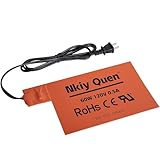
- Efficient Heating:Features built-in precision heating wires that quickly generate uniform heat, directly acting on the bottom of the battery to effectively enhance battery activity in low-temperature environments, ensuring stable cold start current and preventing vehicle start-up difficulties caused by severe cold weather.
- Constant Temperature:Built-in thermostat automatically cuts off power when the overall temperature reaches approximately 122°F, preventing overheating and potential battery damage. Temperature may rise briefly during the heating process due to rapid heat transfer, and requires 15-20 minutes of continuous heating for the most accurate temperature. Due to the difference in the distribution of the heating wire, there may be a slight temperature difference between different locations. The thermostat is constructed with secondary insulation, resulting in a delay in heat transfer.
- Safety Specifications:The silicone heating pad measures 8.2 inches × 5.5 inches. Its ultra-thin design allows it to seamlessly integrate into the bottom of most battery trays or battery boxes without occupying additional space. No modifications to the installation structure are required—simply place it and use it.
- Quality Material:The outer layer is made of high-quality orange silicone, which is soft, wear-resistant, and resistant to battery acid corrosion. It also has excellent insulation properties to prevent electrical leakage hazards and is suitable for a variety of complex working conditions.
- Easy Installation:Simply place it directly under the battery, connect it to a 120V AC power source, and it will start working. Be sure to unplug it promptly after use. Please note: This product is not suitable for lithium-ion batteries, nickel-cadmium batteries, ABS battery cases, or insulated battery boxes.
How to reduce energy use while driving
Use efficient heat without sacrificing safety
- Choose the vehicle’s efficient or automatic climate mode when available.
- Set a reasonable cabin temperature rather than repeatedly raising it to maximum.
- Use heated seats and a heated steering wheel, if fitted and comfortable, so you can reduce whole-cabin heat.
- Keep windows clear and maintain a safe, comfortable temperature; efficiency should never override visibility or driver alertness.
Heated-seat and steering-wheel energy use differs by vehicle, so treat them as targeted comfort options rather than a guaranteed consumption figure. Defrosting may demand more energy than steady cabin heat because it can operate heating, ventilation and air-conditioning functions together.
Turning the climate system completely off is not a safe universal strategy. Use the lowest comfortable setting that keeps occupants warm and the windshield clear, and follow the vehicle’s guidance for defrost and recirculation modes.
Drive smoothly
- Use moderate speeds, especially on highways where aerodynamic demand rises quickly.
- Accelerate and decelerate gradually.
- Avoid unnecessary high-power bursts while the battery is cold.
Cold air, snow, highway speed and cabin climate demands can combine. A route that is easy in mild weather may require a charging stop in winter even when the distance is unchanged. Smooth driving also makes the car’s live consumption estimate more informative because it avoids sudden swings caused by repeated hard acceleration.
Use the car’s trip estimate as a live planning tool
Watch how the projected arrival state of charge changes during the first part of the trip. If the estimate falls faster than expected, reduce speed where safe, moderate climate demand and select a charger before the remaining buffer becomes small.
Make adjustments early rather than waiting until the battery warning appears. A modest speed reduction or an earlier charging stop is easier to manage than discovering that a cold, snowy route requires more energy than the original plan allowed.
Charging an EV in freezing conditions
Charging may be slower until the battery warms. If you need a rapid-charge session, begin conditioning early and expect the initial charging power to be lower than it would be with a warm pack.
Slower charging does not automatically indicate a failed charger or degraded battery. Temperature, state of charge and the vehicle’s protection strategy all influence charging power. Once the pack reaches its intended temperature range, power may rise; the exact pattern depends on the model and charger.
Protect an outdoor charging connection
DOE warns that connectors can freeze in heavy snow or sleet. A magnetic charging-inlet cover or bag may help shield the connection, but it is an accessory for keeping the connector usable—not a device that restores driving range. Check the vehicle and accessory instructions for fit, safe use and storage.
Never force a frozen connector or improvise a cover that interferes with the electrical contacts. Clear snow and ice according to the vehicle maker’s instructions before connecting. Keep any cover or bag away from exposed contacts and remove it as directed when charging begins.
Parking and overnight habits
Choose shelter when practical
Covered parking can reduce exposure to freezing conditions and make morning preparation easier. It does not eliminate winter energy use, but it may reduce the severity of a cold soak compared with an unsheltered space.
Rank #4

- Keep Your Battery Ready for Freezing Weather: When temperatures drop, this heating pad maintains your battery’s cold cranking amps – so your vehicle still starts on the coldest mornings. Just place it under the battery, and it delivers consistent, efficient warmth before you turn the key.
- Simple Plug‑In Operation with Auto Shut‑Off: Plug the 72‑inch cord into any standard 120V AC outlet. In 10–30 minutes, the pad warms your battery to around 68°F. The built‑in thermostat then turns itself off automatically. Unplug and drive – no need to watch or guess.
- Durable, Slim & Easy to Install: At only 1.8mm thin, this 8.5" x 5.5" pad slides right under your battery in the tray or box – no tools or extra hardware required. The waterproof silicone coating resists oil, battery acid, and wear, while the 60W heating element transfers warmth efficiently.
- Specs You Can Rely On: Runs on 120V AC, 60W power with a 2‑prong plug. The 72‑inch cord gives you flexibility to reach nearby outlets. Designed for high heat transfer and built to last under tough under‑hood or under‑battery conditions.
- Important Compatibility Note: This battery warmer is designed for standard lead‑acid and AGM batteries. It is not intended for use with lithium‑ion, Ni‑Cd, batteries that have an ABS plastic case, or inside an insulated battery box. Please check your battery type before use.
A sheltered space is most useful when combined with scheduled preconditioning. Parking indoors without connecting the vehicle does not automatically warm the battery, and a plugged-in vehicle still needs enough time and power for the selected conditioning routine.
Free tools Windows power users keep installed
One-click scans. No signup required.
Charge for the trip you actually have
Keep the vehicle at a charge level appropriate for the next journey and follow the manufacturer’s charging guidance. A short urban commute and a long rural drive require different winter margins; plan around charger availability, not only the percentage shown on the screen.
How to compare EVs for a cold climate
Range ratings measured in moderate conditions do not reveal how a vehicle behaves at 32°F or 20°F. When evaluating models, ask for a stated temperature, test method and comparison baseline.
| Comparison point | Questions to ask | Why it matters in winter |
|---|---|---|
| Cold-weather range retention | Is the result measured at a specific temperature? Is it laboratory or real-world data, and what is the baseline? | “Winter range” is not a single standardized percentage across all sources. |
| Heat pump | Is a heat pump standard, optional or unavailable in the version sold in your market? | DOE says heat pumps are more efficient than resistance heaters in most conditions, but performance remains vehicle- and temperature-dependent. |
| Battery heating and thermal management | How is the pack warmed, and can the system limit charging or power when cold? | Thermal strategy affects usable energy and charging speed. |
| Cabin-heating choices | Does the vehicle combine a heat pump with resistance heat? Are heated seats and a heated wheel available? | Targeted heat can reduce the need to warm the entire cabin. |
| Scheduled preconditioning | Can cabin and battery conditioning be scheduled while plugged in? | Preconditioning can shift some warming energy from the battery to the grid. |
| Charger navigation | Does routing to a fast charger automatically condition the battery? | Automatic preparation can improve cold-weather charging readiness, but behavior must be confirmed for the specific model. |
These factors are more useful than naming one universally “best” winter EV. Equipment, software and regional specifications can differ even within the same model line. Ask whether the advertised heat pump and battery-conditioning features are included in the exact trim and market you are considering.
Independent reader supportYour contribution helps us test, update, and keep practical guides available for everyone.Common winter-range mistakes
- Treating the EPA or dashboard number as a fixed distance. Those figures are reference points; current weather and recent driving can change the estimate.
- Combining unrelated percentages. The DOE’s nearly 40% laboratory fuel-economy decrease cannot be added to or averaged with Recurrent’s 78% and 70% range-retention figures.
- Waiting until arrival to think about charging. A cold pack may need conditioning time, so select the stop early and use the vehicle’s navigation when required.
- Assuming every heat pump behaves alike. Hardware, software and the use of resistance backup differ by model and temperature.
- Using an inlet cover as a range product. A magnetic cover or bag only helps protect an outdoor connector from snow or sleet; it cannot increase battery energy.
When a winter range drop needs investigation
First compare like with like: similar temperature, route, speed, terrain, traffic and climate settings. A cold-weather estimate after a long highway drive is not comparable with a mild-weather city trip.
What’s actually slowing this PC down?
Pick the symptom - the matching free tool is one click away.
Normal explanations
- The temperature is near freezing or below, especially after the vehicle sat outside.
- The cabin was heated continuously or the windshield required frequent defrosting.
- Snow, slush, headwinds or higher highway speeds increased energy demand.
- The battery was cold and charging power was temporarily limited.
When to contact the manufacturer
Seek professional guidance if reduced range continues in mild conditions, does not improve after the vehicle warms, or appears with a battery, charging or power-system warning. Provide the service team with temperatures, charge levels, trip distance, climate settings and charging behavior so they can distinguish normal seasonal variation from a fault.
A simple winter-trip planning method
- Record the forecast temperature at departure and arrival, not just the daily high.
- Identify whether the route includes highway speeds, snow or steep terrain.
- Schedule cabin and battery preconditioning while plugged in when supported.
- Choose a charging stop before departure and verify whether navigation will condition the battery.
- Start with a charge level that leaves a practical reserve for slower progress or a detour.
- Monitor the live arrival estimate and adjust speed, climate use or the charging plan early.
This approach avoids treating the dashboard’s warm-weather estimate as a fixed promise. It also gives you a decision point before the remaining charge becomes critical.
Frequently asked questions
Does cold weather permanently damage an EV battery?
Ordinary winter conditions usually cause a temporary reduction in usable energy, not a permanent loss of capacity. If range remains unusually low after temperatures moderate, or a warning appears, have the vehicle evaluated.
Is the 40% figure a guarantee that my EV will lose 40% of its range?
No. The U.S. Department of Energy and Environmental Protection Agency reported a nearly 40% decrease in fuel economy for all-electric vehicles in controlled laboratory cold-temperature testing in 2020. That is not a universal range-loss promise and should not be combined with real-world range-retention averages.
What do the 78% and 70% figures mean?
Recurrent reported average range retention of 78% at 32°F and 70% at 20°F in its November 19, 2025 analysis of more than 30,000 U.S. vehicles across 34 popular models. They are averages against that analysis’s ideal-temperature baseline, not predictions for every model, driver or trip.
Best Value
- Vinyl covered for resistance against oil and acid for longer life
- Fast and easy to install
- Extends the life of the battery
- Wraps around battery to reduce the strain on cold-weather starts
- Various sizes to fit most batteries
Should I always buy an EV with a heat pump?
A heat pump is generally more efficient than electric resistance heat in most conditions, according to DOE, but the vehicle may also use resistance heat and performance varies with temperature and design. Confirm the equipment on the exact trim and consider the vehicle’s battery heating and preconditioning features as well.
How early should I precondition?
Use the scheduled-departure guidance in the owner’s manual and allow enough time for the system to complete. The required time depends on outdoor temperature, the vehicle and whether the battery as well as the cabin is being conditioned. Keep the car connected until departure.
Will routing to a fast charger warm the battery?
Many newer EVs can start battery conditioning when a fast charger is entered as the destination in the built-in navigation. The behavior is model-specific, so verify it in the manual or vehicle settings and allow extra time if the pack is cold.
Can heated seats really improve winter range?
They can let you reduce whole-cabin heat while keeping occupants comfortable, which may lower climate demand. Their actual electricity use and effectiveness vary by vehicle, so use them as a comfort and efficiency option rather than a guaranteed percentage saving.
What should I do if the charging connector is frozen?
Do not force it. Follow the vehicle maker’s instructions for clearing ice and snow. DOE suggests considering a magnetic inlet cover or bag for outdoor exposure to heavy snow or sleet; use only a compatible accessory and keep it clear of electrical contacts.
Bottom line
Cold weather lowers an EV’s available energy and adds battery- and cabin-heating loads, so the range estimate can fall without indicating permanent damage. The most effective countermeasures are preconditioning while plugged in, efficient and targeted cabin heat, moderate driving, realistic trip planning and extra attention to cold-weather charging. For a vehicle purchase, compare measured range retention, thermal-management hardware and preconditioning features at a stated temperature rather than relying on one average winter percentage.
Frequently Asked Questions
Does cold weather permanently damage an EV battery?
Ordinary winter conditions usually cause a temporary reduction in usable energy, not a permanent loss of capacity. Persistent low range in mild weather or a warning message warrants professional evaluation.
Recommended Free Tools
How much range can I expect at 32°F or 20°F?
Recurrent reported average range retention of 78% at 32°F and 70% at 20°F in its November 19, 2025 analysis of more than 30,000 U.S. vehicles across 34 popular models. Actual results vary by vehicle, route, speed and heating use.
Is a heat pump worth having?
DOE says a heat pump warms the cabin much more efficiently than electric resistance heat in most conditions. Check the exact trim because some vehicles combine both systems and performance varies with temperature.
Will fast-charger navigation precondition my battery?
Many newer EVs can condition the battery when a fast charger is entered in the vehicle’s built-in navigation. Confirm the feature for your model and allow extra time if the battery is cold.
What is the safest way to protect an outdoor charging connector?
DOE suggests considering a compatible magnetic inlet cover or bag in heavy snow or sleet. Follow the vehicle and accessory instructions, and never force a frozen connector or cover electrical contacts.
Windows Errors? Fix Them Before They Spread
Repair common Windows errors and clear accumulated junk for a smoother, more stable PC - no reinstall needed.Free scan · no reinstallCrashes, No Sound, or Screen Glitches?
Random freezes, missing sound and display glitches usually trace back to one bad driver. Find and replace yours safely.Free scan · under a minuteThe Bottom Line
Cold temperatures temporarily reduce usable battery energy and add heating demand. Precondition while plugged in, use efficient targeted heat, drive smoothly, plan extra charging margin and compare EVs using temperature-specific winter data.
Quick Recap
Product prices and availability are accurate as of the date/time indicated and are subject to change. Any price and availability information displayed on Amazon at the time of purchase will apply.




