The Tool Desk
Outbyte Driver Updater FREEScan for outdated or missing drivers - takes under a minuteDriver Scan →Outbyte PC Repair FREERepair Windows errors before they cause bigger problemsFix Now →The Toyota HiAce is sold in Japan, Asia, the Middle East, Africa, Oceania, and Latin America. It is also absent from Toyota’s current U.S. lineup. That absence is not because American buyers cannot use a van, or because every foreign-market van is banned. The problem is that the HiAce sold overseas is not certified for ordinary new-vehicle sale in the United States.
A Toyota dealer cannot simply order one, install red turn signals, and put a temporary tag on it. A new HiAce would need to satisfy U.S. crash, safety, emissions, labeling, recall, and distribution requirements before Toyota could sell it as a normal new vehicle.
As an Amazon Associate I earn from qualifying purchases.
The HiAce is a global Toyota, but not a U.S.-market Toyota
Toyota still produces the HiAce and lists it on its global website. However, Toyota USA’s current vehicle lineup does not include it. The version sold in Japan or Australia is designed, tested, and certified for the regulations of those markets—not for sale through Toyota’s American dealer network.
That distinction matters. A vehicle can be perfectly legal in its home country and still be ineligible for normal importation into the United States. Before a new vehicle can be sold here, it must comply with the Federal Motor Vehicle Safety Standards administered by NHTSA, meet EPA emissions requirements, carry the required certification labels, and be supported by a manufacturer prepared to handle U.S. recalls and compliance obligations.
#1 Best Overall

- 1/43 scale car
- Metal
- Detailed and faithful reproduction of the original vehicle
- Car screwed to base and presented in a display box
Why Toyota cannot simply ship a HiAce to a U.S. dealer
Bringing a new HiAce to the United States would require a substantial certification and business program. The work would involve much more than moving the steering wheel or changing the speedometer.
| Area | What would have to be addressed |
|---|---|
| Crash safety | Crash testing and compliance with applicable FMVSS requirements for occupant protection, seats, belts, airbags, and child restraints. |
| Exterior equipment | U.S.-compliant lighting, mirrors, glazing, reflectors, lamps, and visibility equipment. |
| Emissions | EPA certification for the engine, fuel system, emissions controls, diagnostics, and evaporative emissions. |
| Labels and identification | U.S.-required certification labels, VIN information, tire labels, and other documentation. |
| Manufacturer obligations | Recall reporting, defect investigations, warranty support, parts supply, and recordkeeping. |
| State compliance | State emissions, inspection, title, registration, and insurance requirements, including California’s more restrictive rules. |
Those obligations cost money before Toyota sells a single van. Toyota would also need to establish a U.S. parts and service strategy, train dealers, stock collision and mechanical components, and support a model that might sell in relatively small numbers. For Toyota, the HiAce’s global success does not automatically make a U.S. launch commercially worthwhile.
Federal safety rules block an ordinary import
NHTSA’s basic rule is straightforward: a vehicle less than 25 years old can generally be imported without restriction only if it was originally manufactured to comply with all applicable U.S. safety standards and has the original manufacturer’s permanent certification label.
PC Slower Than It Used to Be?
A free scan shows the junk files, broken settings and background clutter dragging Windows down - then fixes them in one click.Free scan · Windows 10 & 11Crashes, No Sound, or Screen Glitches?
Random freezes, missing sound and display glitches usually trace back to one bad driver. Find and replace yours safely.Free scan · under a minuteAn overseas HiAce normally does not have that U.S. certification label because it was not manufactured as a U.S.-certified vehicle. A nonconforming vehicle under 25 years old needs a valid import path. That may involve a specific NHTSA eligibility determination, a Registered Importer (RI), modifications, testing, certification, and a bond equal to 150% of the vehicle’s declared value.
This is not a guaranteed conversion service. Eligibility depends on the precise make, model, model year, and configuration. An RI can refuse the job, and a model that has never been approved may not have a practical compliance pathway at all. Even when a pathway exists, the engineering and certification bill can make the van economically unrealistic.
EPA rules are a separate problem
Safety approval does not establish emissions compliance. The EPA requires imported vehicles and engines to conform to U.S. emissions standards. A nonconforming vehicle generally needs to be modified, tested, and certified by an EPA-recognized Independent Commercial Importer (ICI), unless a specific exemption applies.
The importer must arrange the emissions path before the vehicle ships. Sending a van to a U.S. port and hoping to solve the problem afterward can lead to Customs or EPA refusing entry, requiring export, or taking other enforcement action.
Do these 3 things before closing this tab:
1Scan for outdated or missing drivers - takes under a minute2Clear out junk files and repair common Windows errors3Fix the driver behind crashes, sound loss and screen glitchesInstalling U.S.-specification lights, replacing the instrument cluster, or changing a few exhaust components does not make a new HiAce legal. The importer needs a recognized compliance method for that exact vehicle and model year.
The 25-year rule does not make a new HiAce legal
The federal 25-year exemption is often described as a way to import any foreign vehicle. It is more limited than that description suggests.
Rank #2
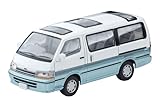
- Synonymous with luxury one box! Introducing a new specification for the popular 100 series HiAce Wagon
- Striking two-tone colors
- Licensed by copyrights
Once a vehicle is at least 25 years old, it may generally be imported without meeting current FMVSS requirements. The age is calculated from the vehicle’s date of manufacture, not simply the model year. A vehicle built late in a calendar year may therefore qualify later than another vehicle carrying the same model-year designation.
For example, on August 9, 2026, a vehicle manufactured on or before August 9, 2001, would generally satisfy the federal safety-age threshold. A 2001-model vehicle manufactured after that date would not yet qualify under the date-of-manufacture test.
The exemption applies to an old used vehicle. It does not provide a way to buy a current-generation HiAce new from Japan and import it as a 25-year-old vehicle. The vehicle must also be properly declared to NHTSA using the HS-7 Declaration, declared to EPA, cleared through Customs, and accepted by the state where it will be titled.
EPA’s 21-year rule is different
EPA has a separate age-based emissions treatment that begins at 21 original-production years, provided the vehicle remains in its original, unmodified configuration. The engine generally must be the same type originally installed.
That does not replace the federal safety exemption. A foreign vehicle might receive EPA age treatment at 21 years and still need to wait until 25 years to avoid FMVSS requirements.
| Vehicle age | What the age may address | What it does not automatically solve |
|---|---|---|
| 21 years | Potential EPA emissions age treatment if the vehicle remains in its original configuration. | NHTSA safety compliance, Customs entry, state registration, or insurance. |
| 25 years | Potential federal FMVSS exemption based on date of manufacture. | EPA declarations, state emissions rules, title requirements, duties, or registration. |
Therefore, “wait 21 years” is incomplete advice. For normal road use, the federal safety side is often the more important deadline.
What’s actually slowing this PC down?
Pick the symptom - the matching free tool is one click away.
Is right-hand drive the reason?
No. Many HiAce versions are right-hand drive, but the steering-wheel position is not the central federal obstacle. A left-hand-drive HiAce built for a foreign market would still face the same safety and emissions certification problems if it lacked U.S. compliance documentation.
Right-hand drive can create practical concerns—such as visibility when using a drive-through or reaching a roadside mailbox—but it does not by itself explain why Toyota does not sell the van here. The key question is whether that specific vehicle was manufactured and certified for U.S. standards.
What about the Chicken Tax?
The 25% tariff commonly called the Chicken Tax can make imported light trucks and cargo vans more expensive. It is not the primary reason a new HiAce is unavailable at U.S. Toyota dealers.
Rank #3

- Condition: New
- Placement on Vehicle: Tailgate
- Compatible with Toyota HIACE 1989-2004
- Item include:1x Rear BACK DOOR HANDLE
Tariff classification depends on the vehicle’s design and its Harmonized Tariff Schedule classification. A van is not automatically subject to the 25% truck rate merely because it carries cargo. Historically published rates have included 2.5% for passenger automobiles and 25% for trucks, but the actual result depends on classification and current trade rules.
Free tools Windows power users keep installed
One-click scans. No signup required.
Even if Toyota solved the tariff issue, it would still need to solve the separate requirements in this order:
- U.S. crash and safety certification.
- EPA emissions certification.
- Federal labels, VIN, recall, and manufacturer obligations.
- State emissions and registration requirements.
- Parts, warranty, dealer, and service support.
Tariffs affect the business case. They do not create the legal barrier by themselves.
California can add another obstacle
Federal import approval does not guarantee registration in every state. California generally requires a direct foreign import to demonstrate compliance with U.S. FMVSS and EPA rules as well as California emissions requirements. The California DMV warns that some direct-import vehicles cannot be registered and that conversion may be expensive or impossible.
California is particularly difficult for a new HiAce. Its DMV states that a new direct-import vehicle generally cannot be registered unless it qualifies for an exemption, and California does not offer a conversion program for new vehicles under two years old. Other states may be less restrictive, but buyers still need to check local title, inspection, emissions, insurance, and registration rules before purchasing or shipping a van.
How an American can legally encounter a HiAce
There are legal routes, but none is the normal new-car buying experience.
1. Import a HiAce that is at least 25 years old
This is the most familiar route for enthusiasts. The vehicle may qualify for the federal safety-age exemption if it is at least 25 years old from its actual manufacture date. It still needs proper Customs and EPA declarations, documentation, a valid title path, and state approval.
2. Use an RI and ICI for an eligible newer vehicle
A specialized importer may be able to handle a particular nonconforming HiAce if NHTSA eligibility exists and the vehicle can be modified and certified. Get written confirmation of the exact make, model, year, and compliance process before buying. A verbal promise that “it can be legalized” is not enough.
3. Import temporarily
Temporary importation can apply to narrow situations such as nonresident personal use, testing, demonstration, racing, or display. A nonresident may be able to bring a nonconforming vehicle for personal use for up to one year, but it cannot be sold and must leave the country afterward. NHTSA’s show-and-display route also limits qualifying vehicles to 2,500 miles per year.
Recommended Free Tools
Rank #4

- 1/43 scale car
- Metal
- Detailed and faithful reproduction of the original vehicle
- Car screwed to base and presented in a display box
4. Import parts or an incomplete vehicle
Removing the engine and drivetrain can change how Customs treats an import, but it does not automatically produce a road-legal vehicle. Reassembling a vehicle from parts can create additional safety, title, emissions, and inspection problems.
What to check before paying for an overseas HiAce
- Identify the exact vehicle. Record the VIN or chassis number, manufacture date, model year, engine, body style, and country of origin.
- Ask NHTSA about eligibility. Do not assume that another HiAce variant, year, or body configuration has the same status.
- Confirm the emissions route with EPA or an ICI. This must be resolved before shipping.
- Check the destination state. Ask the DMV about title, registration, emissions inspection, and any foreign-import restrictions.
- Price the complete process. Include shipping, duties, port fees, RI and ICI charges, modifications, testing, storage, bonds, registration, and possible re-export.
- Get documents in writing. Keep the bill of sale, foreign title, export documents, compliance records, HS-7 declaration, EPA paperwork, and any RI certification.
Buying first and investigating legality later is the expensive version of this project. A van can arrive at a U.S. port and still be impossible to title or register.
FAQ
Can I order a new Toyota HiAce from a Toyota dealer in the United States?
No. Toyota USA does not currently offer the HiAce as a U.S.-certified model, so a dealer cannot order and sell a new overseas-market HiAce through the ordinary Toyota distribution system.
Can I import a brand-new HiAce under the 25-year rule?
No. The federal safety exemption applies to vehicles at least 25 years old from their date of manufacture. It does not make a current HiAce eligible simply because you import it privately.
Is right-hand drive illegal in the United States?
Right-hand drive is not, by itself, the main federal problem. The vehicle still must have a valid safety and emissions import path, and it must satisfy the registration rules of the state where you intend to use it.
What is the easiest way to own a HiAce in America?
For most buyers, the practical choices are an already legal and titled HiAce, an imported vehicle that has reached the 25-year safety threshold, or a specific newer vehicle handled by qualified compliance professionals. Confirm eligibility before sending money or shipping the van.
The Bottom Line
You cannot buy a new Toyota HiAce from a U.S. Toyota dealer because Toyota does not currently certify or distribute the HiAce for the American market. The main barrier is the combined cost and complexity of U.S. safety and emissions compliance, not merely right-hand drive and not solely the Chicken Tax.
A newer HiAce may enter through a specialized RI/ICI process if the exact vehicle is eligible, while older examples may qualify under the 25-year safety exemption. For most shoppers, a U.S.-market van or an already legalized, titled HiAce is the realistic option.
Quick Recap
Product prices and availability are accurate as of the date/time indicated and are subject to change. Any price and availability information displayed on Amazon at the time of purchase will apply.




