The Tool Desk
Outbyte PC Repair FREERepair Windows errors before they cause bigger problemsFix Now →Outbyte Driver Updater FREEScan for outdated or missing drivers - takes under a minuteDriver Scan →Yes—the overnight honking was real, but the cars were not “talking” to one another. In the summer of 2024, driverless Waymo vehicles repeatedly sounded their horns while maneuvering in a tightly packed San Francisco parking lot. A proximity-warning feature intended to prevent low-speed collisions was triggered again and again as multiple robotaxis tried to reverse, turn, leave, or return at the same time.
Yes—the overnight honking was real, but the cars were not “talking” to one another. In the summer of 2024, driverless Waymo vehicles repeatedly sounded their horns while maneuvering in a tightly packed San Francisco parking lot. A proximity-warning feature intended to prevent low-speed collisions was triggered again and again as multiple robotaxis tried to reverse, turn, leave, or return at the same time.
The result was an unusually visible example of a broader technology problem: a safety behavior that made sense on a normal street became a persistent nuisance when many autonomous vehicles interacted inside a constrained overnight staging area.
Where and when the Waymo honking happened
The incident centered on a parking lot in San Francisco’s SoMa neighborhood, near Second and Harrison streets. Waymo vehicles began filling the lot in late July 2024. Residents reported that the cars became especially active during the early-morning hours, with groups of vehicles attempting to leave or return at roughly 2 a.m. and 4 a.m.
#1 Best Overall

- Vehicle air vent cell phone holding mount, fits most air vents.
- Designed with spring tab and sturdy lower legs to provide extra support to holder.
- Adjustable mount with 360-degree rotation capability with double turn-lock knobs for added security.
- Rubberized padded protective grips ensure a firm grip on your device. Quick phone release button.
- For max compatibility, phone cradle expands up to 3.5 inches in width.
According to local reporting, dozens of vehicles could become congested as they tried to angle into position. Residents described hearing short pairs or bursts of honks from the apartment building beside the lot, including reports of noise around 4:30 a.m. and, even after an initial software fix was announced, around 5 a.m. on August 18.
The problem became difficult to ignore because it was not a single malfunctioning car. It was a fleet repeatedly performing similar maneuvers in the same confined space.
Why were the self-driving cars honking?
Waymo said the vehicles were using a safety feature designed to sound the horn when another vehicle came too close while the Waymo car was reversing. The intended situation was similar to a human driver slowly backing out of a parking space and using the horn to warn a nearby vehicle.
That explanation matters. The robotaxis were not deliberately exchanging messages or engaging in a kind of conversational “robot car” behavior. They were repeatedly applying a low-speed collision-warning rule while maneuvering near one another.
On an ordinary city street, the warning might activate occasionally and serve its intended purpose. In the SoMa lot, multiple autonomous vehicles were making tightly coordinated or competing movements in a small area. One vehicle’s maneuver could place it near another vehicle that was also reversing or repositioning, causing more warnings and more noise.
The mismatch was environmental: the horn feature was designed for occasional proximity warnings, but the parking lot created repeated vehicle-to-vehicle interactions at a density Waymo said it had not anticipated.
A resident turned the nuisance into a livestream
Sophia Tung, a resident and software engineer, began documenting the activity with a 24-hour YouTube livestream after being repeatedly disturbed. She gave it the tongue-in-cheek title “LoFi Waymo Hip Hop Radio Self Driving Taxi Depot Shenanigans to Relax/Study To.”
Rank #2
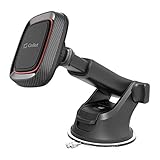
- Powerful Magnetic Force: This windshield magnetic car mount built in 4 magnets produces an intensive force of attraction that hold your phone tightly and stably even on a rugged road. Magnetic head sticking to phone is padded with soft rubber to avoid scratches to your smartphone or other device. Metal plates may affect wireless charging
- Ultra Sticky Suction Pad: This windshield magnetic car mount with secure suction pad sticks tightly on the windshield and most smooth surfaces. Remove easily by pulling the suction pad without leaving any nasty mark on your windshield. Car phone holder will be as sticky as new one every time after you wash it off. Please note this car mount only for windshield, not for dashboard
- Thicker Gooseneck Design: You can easily adjust angle as you like by rotating 360 degree ball head and folding arm, which is thicker than others to make holder stabilizer, no worry for swing. Comes with 2 cable clips to secure your charger cable close to your device
- Effortless Operation and Driving Safer: Complete the overall installation with one-hand in a few minutes, easier operate than grip phone mount. Simplify operation make you driving safer. Durable car mount holder made with the highest quality ABS plastic that offers flexibility and durability. Permanent adhesive base for maximum use
- Wide Device Compatibility: Compatible with iPhone 11 Pro 11 Xr Xs Max Xs X 10 SE 8 Plus 8 7 Plus 7 6S Plus 6S 6 Plus 6 Galaxy Note 10 10+ 10 plus 5G 9 8 5 S20 S20+ S20 Ultra Z Flip S10 5G S10 S10e S10+ S9 S9+ S9 Plus J3 V 3rd Gen Fold S8 S8 Plus S8+ S8Plus S8 Google Pixel 4 4XL 3a 3a XL 3 3XL 2 2 XL Pixel Pixel XL and most smartphones
The stream transformed a local complaint into a technology spectacle. A neighbor’s viral social-media video and Tung’s footage helped demonstrate that the honking was recurring, rather than an isolated sound someone happened to hear once. The livestream also gave viewers an unusual look at how a driverless fleet behaved when parked and staged outside normal passenger service.
What’s actually slowing this PC down?
Pick the symptom - the matching free tool is one click away.
Coverage eventually reached an international audience. A Waymo executive visited Tung, explained the issue, and apologized to neighbors, according to reporting from the San Francisco Chronicle.
Waymo announced a software fix—but the noise did not stop instantly
On August 13, 2024, Waymo said it had updated the vehicles’ software so they should reduce the noise affecting nearby residents. The company’s announcement was an important step, but it should not be described as an instant, perfect resolution.
Residents told the San Francisco Standard that some honking continued after the initial fix. That could reflect vehicles that had not yet received the change, remaining edge cases, or other parking-lot interactions; the available reporting does not establish exactly why every later sound occurred.
The later outcome was more positive. Chronicle reporting published in September 2024 said that the recurring late-night honking had stopped after a software update and direct engagement between Waymo and residents.
| Date | What happened |
|---|---|
| Late July 2024 | Waymo vehicles began filling the SoMa lot near Tung’s building. |
| Early August 2024 | Residents reported repeated overnight honking; Tung began the livestream. |
| August 13–14 | Waymo explained the reversing-proximity warning and announced a software adjustment. |
| August 18–19 | Neighbors said some noise continued despite the initial fix. |
| September 15 | Later reporting said the recurring late-night honking had stopped. |
Was this evidence that Waymo’s cars were unsafe?
It was evidence of a deployment and design problem in a specific setting. It was not, by itself, evidence that Waymo’s entire driving system was unsafe or that the vehicles were randomly malfunctioning.
The affected behavior involved parking-lot maneuvering and neighborhood noise, not a reported high-speed road collision. The horn was also connected to a safety objective: warning of a possible low-speed collision. The failure was that the warning activated too often in a dense, repetitive environment.
Rank #3

- Sturdy & Durable Construction: Crafted from premium abs plastic, aluminum alloy, and scratch-resistant acrylic, this Various Mushrooms car phone holder is built to withstand daily use. Its robust design prevents phone collisions, scratches, and annoying sways while driving—keeping your device secure on bumpy roads or sharp turns
- Universal Compatibility: Various Mushrooms Windshield phone mount is perfect for most cars, trucks, suvs, and cabs! This cell phone car mount fits most smartphones from 4.0 to 6.0 inches. Note: Only compatible with horizontal and vertical vents—not round vents. Also can be used on bedstand and desk. Check your car's air vents before purchase
- 360° Rotation & Adjustable Arm: Enjoy full flexibility with a 360° rotating ball joint—easily switch between portrait and landscape modes for navigation, calls, or music. The telescopic arm lets you adjust the distance to your perfect viewing angle, while a reserved charging port at the bottom keeps your phone powered up without removing it
- One-Hand Operation for Safe Driving: With a quick-release button and adjustable clamp arms, inserting or removing your phone takes just seconds—no need to fumble with both hands. This hands-free design ensures safer driving whether you’re following gps, taking calls, or streaming music
- Multi-surface Versatility: Use Various Mushrooms phone stand for car on your car dashboard, air vent, or windshield—this air vent phone mount works seamlessly in most position. Its strong grip keeps your phone stable even on rough terrain, making it ideal for daily commutes, road trips, or rideshare drivers
That distinction does not make the disturbance trivial. A feature can be safety-motivated and still be badly suited to a particular facility. Residents were entitled to expect a commercial fleet operating beside homes to account for predictable overnight noise.
Waymo separately publishes company-reported safety analyses for road operations, including a rider-only crash comparison covering 7.14 million miles through October 2023. Those analyses should not be treated as a direct measurement of the parking-lot incident. They address a different operating question.
Recommended Free Tools
Were the vehicles truly driverless?
There was no human driver inside the vehicles during the observed parking behavior, which is why residents experienced the scene as a fleet of empty cars moving and honking on its own.
That does not mean the vehicles operated without any human oversight anywhere in the system. Waymo describes a driverless service while also maintaining operational personnel and community-response processes. “Driverless” refers to the absence of a human driver in the vehicle; it should not be expanded into a claim that no people monitored, managed, or responded to the fleet.
Was Waymo allowed to operate in San Francisco?
Waymo’s San Francisco passenger service operated under California regulatory authorization. The California Public Utilities Commission approved the company’s authority to offer fared driverless passenger service throughout San Francisco at any time in August 2023, subject to the applicable regulatory framework.
That operating authorization provides context, but it does not establish that the parking-lot honking violated a particular local noise rule. The available reporting supports describing the event as a neighborhood nuisance and software-environment mismatch—not as a confirmed legal violation.
What happened after 2024?
The recurring late-night honking described in this incident should be treated as a resolved 2024 episode based on the later reporting available in this research. It should not be presented as an uninterrupted three-year noise event.
Rank #4

- Dual 2.5K+1080P Dash Cam: This dash cam front and inside features up to 2560 x 1440P 30fps pixels, simultaneously capturing crystal clear details of the road ahead (170° viewing angle covering 6-8 lanes) and inside the passenger compartment (150° viewing angle). With this level of detail, license plates and road signs are clearly visible, making the dashcam the perfect choice for Uber, Lyft, and other rideshare drivers who require video evidence in case of damage caused by unruly passengers
- Super IR Night Vision Dash Camera: The interior camera is equipped with 4 IR lights and features an F1.8 aperture, which enhances low-light sensitivity and provides exceptional video clarity. Additionally, the dash cam front and rear (inside) IR lights can be turned off to disable the black and white night mode. The front camera for car boasts a F1.8 6-glass lens and a unique WDR video system that automatically balances light and dark areas in the video, ensuring vivid color footage at all times
- New APP [COOAUDash]: In order to improve COOAU's clients user experience, we launched our exclusive customized APP: COOAUDash (Warm Tips: not COOAU Cam). Welcome all new and loyal customers to download and use it (Please note that Ficam and Aoni CarDVR still can be continue to used). With 1.5" mini display and compact size which does not bother your view while you are driving, improving your driving safety
- Built-in GPS: This dual dash cam comes with built-in GPS, eliminating the need for additional devices. You can view your driving speed in KM/H or MPH, and the video will save your driving route, speed, and location to provide important evidence in case of an accident
- Built-in WiFi: Via exclusive App [COOAUDash], you can connect the 2 way dash cam to your phone, so it allows you to view, record, download, and share recordings to social media directly from your phone without the need to insert the Mi-cro SD card into your computer (Important: COOAUDash is compatible with both Android and iOS devices; And when your phone is connected to the dashcam via the app, it cannot use Android Auto or CarPlay at the same time)
There were, however, later complaints involving Waymo vehicles in the same broader SoMa area. Reporting from June 11, 2026, discussed vehicles occupying garage space, blocking or slowing resident access, and creating parking-related friction at a SoMa condominium. That coverage referenced the 2024 honking as an earlier neighborhood issue, but it did not establish that the same all-night honking pattern continued into 2026.
These are related in the broad sense that both involve autonomous-vehicle fleets and neighborhood operations. They should not be described as the same software failure unless a source specifically connects them.
Independent reader supportYour contribution helps us test, update, and keep practical guides available for everyone.The larger lesson for autonomous fleets
The SoMa episode shows why testing an autonomous vehicle only on public roads is not enough. Fleets also have to handle depots, charging areas, apartment garages, loading zones, and other facilities where many vehicles may converge with little room to maneuver.
A warning designed for a human driver may have different consequences when it is deployed across dozens of networked vehicles. Humans generally do not reverse and reposition an entire fleet of nearly identical cars in a tightly timed overnight cycle. Autonomous systems can do exactly that, making a small interaction repeat hundreds of times.
The engineering response is therefore not necessarily to remove every safety warning. It may involve better context awareness: recognizing a managed staging lot, coordinating vehicle movements, reducing redundant alerts, changing horn behavior at very low speeds, or routing vehicles so they do not repeatedly trigger one another.
Quick wins for a faster PC:
Fix the driver behind crashes, sound loss and screen glitchesFind Drivers →Repair Windows errors before they cause bigger problemsFix Now →Scan for outdated or missing drivers - takes under a minuteDriver Scan →Best Value

- Universal Compatibility: Phone Holder fits iPhone and Samsung Galaxy Note. Compatible with current and future releases.
- Secure Grip Technology: Protection from phone slippage or accidents with a heavy-duty grip, ensuring your device stays safe and secure through every twist and turn of the road!
- Flexible Gooseneck Design: Take control of your viewing experience with unparalleled flexibility, allowing you to effortlessly adjust the mount to find the perfect angle for optimal visibility and comfort!
- Effortless Setup: Say goodbye to installation headaches as the included floor brackets streamline the process, making setup a breeze and elevating your driving experience with unparalleled ease and efficiency!
- Sturdy Construction: Rely on durable materials and robust design, ensuring longevity and stability even during the most demanding journeys, providing you with peace of mind and confidence in your device's safety!
For neighbors, the lesson is equally practical. “Autonomous” does not mean “impact-free.” The cars may drive without a person in the seat, but their sounds, parking patterns, access demands, and operating schedules still affect the surrounding community. Those effects need to be tested and managed as part of the service—not discovered by residents at 4 a.m.
Frequently Asked Questions
Were the Waymo cars honking at each other on purpose?
No. Waymo said the vehicles were sounding a proximity warning when another vehicle came too close while reversing. The repeated noise made the cars sound as if they were communicating, but the behavior was a safety alert, not a conversation.
Did Waymo fix the overnight honking problem?
Waymo announced a software update on August 13, 2024. Residents initially said some noise continued, but later reporting said the recurring late-night honking had stopped after a further software update and direct engagement with neighbors.
Where did the Waymo honking happen?
The reported incident took place in a SoMa parking lot near Second and Harrison streets in San Francisco, where multiple Waymo vehicles were staging, leaving, and returning overnight.
Did the honking prove that Waymo’s self-driving technology was unsafe?
The incident supports a narrower conclusion: a safety behavior performed poorly in a crowded parking-lot environment. It does not by itself prove that Waymo’s entire autonomous-driving system was unsafe on public roads.
The Bottom Line
Bottom line: Waymo’s cars honked because a proximity-warning feature repeatedly activated while multiple vehicles reversed and maneuvered in a crowded SoMa lot. Waymo announced a software change on August 13, 2024; residents initially reported lingering noise, but later reporting said the recurring late-night honking stopped. The incident was a localized parking-lot design and deployment problem—not proof that the cars were communicating, or that Waymo’s entire driving system was unsafe.
Quick Recap
Product prices and availability are accurate as of the date/time indicated and are subject to change. Any price and availability information displayed on Amazon at the time of purchase will apply.