Recommended Free Tools
Yes—an individual older muscle car can sell for more than a new luxury SUV, but that is a statement about exceptional, collectible examples, not the average old car. Collector markets price scarcity, condition, originality, documented history and enthusiast demand. New SUVs are manufactured products whose prices are anchored by current equipment, warranty coverage and depreciation. A rare, exceptionally preserved muscle car can therefore command a higher transaction price than a newly built luxury SUV, even though the comparison is not a typical one.
No published matched transaction in the available evidence compares a named muscle car with a named new luxury SUV on the same date and in the same market. The useful question is not whether all old muscle cars beat all new SUVs, but what makes a particular collectible car valuable and how to test that value responsibly.

As an Amazon Associate I earn from qualifying purchases.
What “outsell” means in this comparison
“Outsell” should mean a completed sale price, not a seller’s asking price, an insurance number or a valuation-guide estimate. It also does not mean that the average older muscle car costs more than the average new luxury SUV. Those are different populations, with different equipment, condition and supply.
Windows Errors? Fix Them Before They Spread
Repair common Windows errors and clear accumulated junk for a smoother, more stable PC - no reinstall needed.Free scan · no reinstallOutdated Drivers Are Slowing You Down
One free scan finds every outdated or missing driver and matches the right update for your exact hardware.Free scan · exact hardware matchA fair comparison would identify the exact muscle-car year, engine, transmission, body style, options, mileage, condition, title, restoration history, location and sale venue. It would then identify the SUV’s trim, equipment, taxes or fees, mileage and geography on the same date. Without those controls, a headline number can create a false equivalence. A concours-quality, documented car sold at a major auction is not comparable with an ordinary driver-quality example advertised privately.
#1 Best Overall

- Authentically licensed product from Chevy
- A true American muscle car, this 1969 Chevy Corvette Stingray has been brought to you in a 1:24 die - cast model
- Crafted from durable materials such as 100% die - cast metal and premium rubber tires
- Our high - end casting method allows for feature rich details, such as an opening hood, doors, detailed interior, and trunk
- This premium die - cast model is a must have for any Chevy collection
Why collector-car pricing works differently
New-car pricing starts with a manufacturer’s product plan, dealer pricing and current features. Collector-car pricing is assembled from evidence about a limited population of surviving vehicles. Hagerty says its valuation process monitors auction results, asking prices and private sales, and may include in-person inspection. It also considers inventory, demand, similar vehicles and the wider market. That makes a collector value an evidence-based estimate of a specific vehicle, not a universal price for a model.
Scarcity creates a ceiling that production cars do not have
A current SUV can usually be replaced by another vehicle from a dealer or factory order. A desirable muscle car may have no equivalent replacement. Production ended decades ago, many cars were modified or dismantled, and the remaining examples are divided sharply by engine, transmission, options and condition. A rare combination can attract several determined buyers at once. That competition can lift one car far above the price of a more common example wearing the same badge.
Condition separates the market into different products
“A 1960s muscle car” is not one product. A rusted project, a usable driver, a professionally restored car and an unrestored survivor may all carry the same model name while appealing to different buyers. Black Book’s May 2025 collectible-car update reported that exceptional examples could continue to bring top dollar, while average or worse-condition cars struggled to find buyers at sellers’ expected prices. The average therefore hides a wide spread rather than describing a typical transaction.
Originality and modifications appeal to different buyers
Original paint, matching components, factory documentation and an unaltered interior can increase confidence for a collector seeking authenticity. A carefully executed restomod—modern brakes, suspension, cooling or fuel injection integrated without careless workmanship—can attract an enthusiast who prioritizes driving. Black Book treats restomod and traditional collector segments separately because buyers do not value every improvement in the same way. A modification that helps one audience can reduce the price for another if it removes desirable factory equipment or lacks documentation.
Provenance reduces uncertainty
Receipts, ownership records, factory paperwork, restoration photographs and a consistent vehicle identification number history give a buyer evidence of what the car is and how it reached its present condition. Provenance cannot turn a poor car into a rare one, but it can reduce the risk of hidden repairs, substituted parts or an inaccurate specification. At auction, that lower uncertainty can matter as much as a cosmetic detail.
Enthusiast demand is emotional but measurable
Collectors compete for cars tied to formative memories, motorsport history, film culture or a particular generation. Hagerty Vice President of Automotive Intelligence Brian Rabold said in December 2024 that younger enthusiasts were increasingly entering the collector market and that vehicles from their eras were appreciating; that is Hagerty’s assessment while announcing its 2025 list, not a guarantee for every model. The practical effect is that demand can migrate between generations and body styles, changing which cars receive attention.
Rank #2
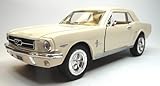
- Authentic 1:36 Scale: Meticulously crafted 1964 1/2 Ford Mustang model car with impressive 5-inch length.
- Realistic Details: Die-cast metal body with opening doors and eye-catching blue finish.
- Interactive Play: Engaging pull-back action for thrilling motion across smooth surfaces.
- Collectible Quality: Ideal for model car enthusiasts and collectors seeking miniature automotive replicas.
- Brand: KiNSMART, a trusted name in die-cast vehicle models and toys.
What counts as a vintage muscle car?
Muscle car is a market segment, not a single uniform specification. Black Book’s May 2025 definition covers high-performance vehicles from American Motors, Ford, Chevrolet, Pontiac, Buick, Oldsmobile, Dodge and Plymouth, produced mainly from the mid-1960s through the early 1970s. Its examples include the Dodge Charger R/T, Chevrolet Chevelle SS, Ford Torino Cobra, Oldsmobile 4-4-2 and Pontiac GTO.
That definition includes substantial variation. A six-cylinder or low-output version may share a body shell with a high-performance model but have a very different market. Engine code, factory options, transmission, axle ratio, body style and documentation must be checked before using a price for a better-known version.
A dated example: 1968 Dodge Charger guide values
Hagerty’s vehicle valuation report published August 25, 2025 gives a useful illustration of how condition changes value. The figures below apply only to a 1968 Dodge Charger hardtop with a 318-cubic-inch, 230-horsepower engine. They are guide values for that configuration on that date, not guaranteed sale prices and not values for every Charger.
| Condition | Guide value (August 25, 2025) | What the label implies |
|---|---|---|
| Fair | $22,100 | Usable or restorable, with substantial cosmetic or mechanical limitations |
| Good | $31,800 | Presentable condition with ordinary age-related flaws |
| Excellent | $46,700 | High-quality example with strong presentation and fewer defects |
| Concours | $63,800 | Exceptional presentation and correctness for demanding judging or collection use |
The same report lists a 4-speed adjustment of plus 20 percent and an automatic-transmission adjustment of minus 10 percent. Those adjustments must not be applied to a different engine, year or body style. The spread from fair to concours demonstrates why a single model average is a poor substitute for inspecting an individual car.
Which details move a muscle car’s price?
Model, year and body style
Small specification changes can create a large market difference. A fastback, hardtop and convertible may have separate buyer pools. A high-output package, factory performance trim or limited-production body can be worth more than a visually similar base car. Confirm the factory specification with a build sheet, data plate, recognized registry or other credible documentation rather than relying on badges.
Powertrain and factory options
Engine displacement, horsepower rating, transmission, axle, brakes and cooling equipment affect desirability. A documented manual transmission may command a premium in one segment, while an automatic suits another buyer. The Charger report’s transmission adjustments show why drivetrain details must travel with every quoted number.
Rank #3
Rust, structural repairs and restoration quality
Surface paint defects are usually easier to price than corrosion in frame rails, floors, suspension mounts or roof structures. A high-quality restoration should show repair photographs, invoices and a clear explanation of replaced panels. Thick filler, mismatched seams, bubbling paint or an underbody that cannot be inspected are reasons to discount a claim of top condition.
Originality versus usable upgrades
Retaining factory components can matter more than adding modern performance parts when the buyer is building a historically correct collection. Conversely, reversible upgrades with documented original parts may broaden the driving audience. Ask whether the work is reversible, who performed it, what safety issue it addresses and whether the modification is accepted by the buyer segment that sets prices for that model.
History and paperwork
Look for a continuous title trail, service invoices, restoration images, factory records, prior appraisals and records of major accidents. A famous previous owner or period competition history can add value only when independently documented. An attractive story without evidence should not be priced as provenance.
Quick wins for a faster PC:
Repair Windows errors before they cause bigger problemsFix Now →Fix the driver behind crashes, sound loss and screen glitchesFind Drivers →Clear out junk files and repair common Windows errorsFree Scan →How the wider market affects an individual sale
Collector demand is cyclical. Black Book’s May 2025 update described mixed year-over-year movement among collectible-car categories rather than one gain or loss figure for all vintage muscle cars. Hagerty UK’s December 2025 analysis found that nearly 80 percent of values in its UK guide had fallen or stayed static during 2025. That guide covers more than 3,000 classic and collectible models and is updated quarterly; it is UK-market evidence, not a U.S.-only muscle-car statistic.
These observations should not be merged into one global market number. Geography, currency, guide coverage and vehicle mix differ. The practical lesson is to check recent comparable sales in the market where the car will actually be sold. John Mayhead, editor of the UK guide, summarized the environment this way: “The very best cars still seem to be in demand, at almost every price point in the market, but uncertainty (both domestic and international) seems to have impacted on both sales and exports.”
How to check a classic muscle car’s value
- Define the exact car. Record year, body style, engine, transmission, factory options, vehicle identification number, mileage and title status.
- Classify condition honestly. Separate mechanical roadworthiness from cosmetic quality, originality and structural integrity. Photograph the underside, engine bay, interior, paint and identification plates.
- Verify the specification. Compare casting numbers, trim codes and factory records with the seller’s description. Treat a replacement engine or reproduction tag as a material fact, not a minor detail.
- Gather provenance. Organize invoices, restoration images, ownership records, inspection reports and any period documentation in date order.
- Collect comparable sales. Prefer completed transactions for cars with similar specification and condition. Keep auction hammer prices, buyer’s premiums, private-sale prices, asking prices and valuation-guide figures in separate columns.
- Adjust for venue and geography. A national auction with specialist bidders may produce a different result from a local classified sale. Note the sale date, location, fees and whether the car was offered in person or online.
- Obtain an independent inspection. Use a mechanic or marque specialist who is not representing the seller. A compression test, leak check, lift inspection and verification of structural repairs can prevent an expensive misclassification.
- Set a purchase ceiling. Include transport, taxes, storage, insurance, immediate repairs and a contingency for hidden defects before deciding what the car is worth to you.
Why the comparison with a new luxury SUV can mislead
A new SUV generally delivers predictable equipment, warranty protection, financing access, safety systems and daily usability. Its price is also exposed to rapid depreciation, incentives and model updates. A collectible muscle car may have no warranty, require specialist repairs and be unusable in poor weather, yet its limited supply can protect the price of a truly desirable example during periods when ordinary cars soften.
Rank #4

- Crafted from durable materials such as 100% die - cast metal and premium rubber tires
- ur high - end casting method allows for feature rich details, such as an opening hood, doors , detailed interior, and trunk
- Scale is 1:24
- Collect them all
- Suitable for ages 8+
Ownership cost is a separate question from sale price. Insurance, enclosed storage, restoration, maintenance, taxes, fuel and transport can materially change the financial result. The available evidence does not provide comparable cost figures for a particular muscle car and a particular luxury SUV, so a higher purchase price for the classic should not be presented as a lower total cost or a safer investment.
The Tool Desk
Outbyte PC Repair FREERepair Windows errors before they cause bigger problemsFix Now →Outbyte Driver Updater FREEScan for outdated or missing drivers - takes under a minuteDriver Scan →Common mistakes when reading a headline sale
- Using an auction record as a normal price: a record may reflect unusual provenance, a rare specification, two motivated bidders or an exceptional venue.
- Applying a guide value to the wrong car: engine, transmission, body style, condition and date must match.
- Confusing asking price with market value: an unsold advertisement shows what a seller wants, not what a buyer paid.
- Assuming age creates value: scarcity and demand matter; an old, common or poorly repaired car may remain difficult to sell.
- Ignoring market direction: a strong result in one year does not establish a permanent trend.
- Treating a restomod as equivalent to an original car: modifications can widen appeal or eliminate buyers depending on the segment.
Does every older muscle car appreciate?
No. Values vary by model, specification, condition, provenance and market cycle. Hagerty Senior Vice President of Media and Editorial Larry Webster called it “a common misconception that fun cars have to be expensive.” Affordable enthusiast cars can be enjoyable without becoming high-value collectibles, while expensive examples can lose value if demand weakens or defects are discovered.
The defensible conclusion is narrower: a standout older muscle car can outsell a new luxury SUV because collector buyers are paying for a scarce, well-documented and desirable object, not simply for transportation. Whether a particular car deserves that premium must be established from its exact specification, condition and recent comparable transactions.
Frequently Asked Questions
Can a classic muscle car really cost more than a new luxury SUV?
Yes, an exceptional individual car can, especially when it is rare, highly original or exceptionally restored and attracts competing collectors. The evidence does not show that older muscle cars generally sell for more than new luxury SUVs.
Does originality always matter more than a restomod?
No. Originality tends to matter to buyers seeking factory correctness, while a well-documented, reversible restomod may appeal to drivers. The preferred configuration depends on the specific model and buyer segment.
Do these 3 things before closing this tab:
1Clear out junk files and repair common Windows errors2Fix the driver behind crashes, sound loss and screen glitches3Repair Windows errors before they cause bigger problemsAre classic cars a reliable investment?
No. Values fluctuate with condition, provenance, demand, geography and market cycles. A guide value or auction result is not a guarantee of future returns.
Quick Recap
Product prices and availability are accurate as of the date/time indicated and are subject to change. Any price and availability information displayed on Amazon at the time of purchase will apply.




