Outdated Drivers Are Slowing You Down
One free scan finds every outdated or missing driver and matches the right update for your exact hardware.Free scan · exact hardware matchWindows Errors? Fix Them Before They Spread
Repair common Windows errors and clear accumulated junk for a smoother, more stable PC - no reinstall needed.Free scan · no reinstallLuxury cars use two-tone paint primarily to shape the way the body is seen and to give a bespoke commission a distinctive identity. A second color can separate the roof, pillars, hood or lower body from the main shell, emphasizing proportions that a single color might hide. It is a styling and personalization decision—not evidence of better performance, safety, durability or resale value.
The exact application depends on the design. A conventional horizontal two-tone treatment and a blended gradient are different finishes. Rolls-Royce has published unusually specific details for its Gradient Two-Tone treatment: a black base, specialized masking, eight paint layers and a crystal clear coat containing fine glass flakes, with the work taking up to four days for one car.
As an Amazon Associate I earn from qualifying purchases.
Why do luxury cars have two-tone paint?
To emphasize the car’s form
Two contrasting colors create a visual boundary across the body. Designers can use that boundary to make a roof appear lower, distinguish an upper cabin from the fenders, or visually lengthen a hood and rear deck. Rolls-Royce’s Wraith material says two-tone combinations “add even more definition” to the design. That is a statement about visual effect: the colors help the eye read the car’s sections and surfaces.
The result is different from simply choosing a dark or light paint. A single color lets reflections flow continuously over the whole body. Two colors interrupt that flow at a deliberate line or transition, making the shoulder, roofline or lower body more noticeable. On a gradient finish, the transition is gradual rather than a sharp dividing stripe, so the surface appears to change depth as the viewer moves around the car.
#1 Best Overall

- Delivers Sharp Paint Lines: Adhesive Resists Lifting And Curling, Prevents Bleed Through, Helping To Maintain Sharp Paint Lines
- Hugs Auto Curves And Contours: Flexible, Conformable Backing Resists Breaking For Faster And More Consistent Masking
- Leaves No Residue, No Damage: Quick And Easy Removal, Helping Reduce Scraping And Scrubbing Of Residue
- Use Indoors And Outdoors: Uv And Light Resistant
- Super Strong: Excellent Tape Strength End-To-End, Resists Breaking
To make a commission individual
Luxury manufacturers sell extensive customization, and two-tone paint gives a client a visible way to specify a car that is not identical to another example of the same model. Rolls-Royce says clients can choose from a palette of 44,000 exterior colors and can request a new Bespoke color if the desired hue is not already in that palette. The number refers to the manufacturer’s stated color library, not to the number of possible two-tone combinations.
A client can therefore select complementary shades, a high-contrast roof, a subtle tonal difference or a one-off color developed for that commission. The value is expressive and visual: the owner is choosing how the car should look and how recognizable the specification should be.
To display handwork and craftsmanship
Some two-tone specifications are paired with a hand-painted coachline or another motif. A coachline is a narrow accent painted along a body contour; it is not the same thing as painting the entire body in two colors. The line can make the boundary between sections look more deliberate and adds a small, visibly hand-made detail to an otherwise industrial surface.
Do these 3 things before closing this tab:
1Scan for outdated or missing drivers - takes under a minute2Repair Windows errors before they cause bigger problems3Fix the driver behind crashes, sound loss and screen glitchesRolls-Royce describes bespoke coachlines and motifs as hand-applied artwork. That association with craft is part of the appeal of a highly customized car, but it should not be confused with a measurable mechanical benefit.
What two-tone paint does not establish
The available manufacturer descriptions support an aesthetic and personalization explanation. They do not establish that two-tone paint improves aerodynamics, crash safety, weather resistance, paint durability, maintenance intervals or resale value. A two-tone car may be more distinctive, but distinctiveness is not the same as a documented financial or engineering advantage.
Rank #2
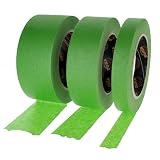
- Professional-Grade Performance: This versatile, high-performance green automotive masking tape is made in Italy and built for the toughest jobs. It is designed for the collision repair industry, but is also suitable as a workhorse masking tape for a wide range of industries and applications. Ideal for use in body shops for auto refinishing and car detailing, for industrial metalworking and woodworking shops, DIY projects, and as a household painter's tape.
- Extreme Heat & Solvent Resistance: Designed to excel in demanding environments, this tape withstands extreme temperatures up to 230°F (110°C) for 30 minutes, making it ideal for paint baking cycles in spray booths and the use of infrared heat lamps. Its natural rubber adhesive and waterproof green backing also provide exceptional solvent resistance to resist paint bleed-through. The tape is moisture-resistant to water-based paint and offers 3 days of UV resistance.
- Precise Lines & Clean Removal: Achieve consistently sharp, professional paint lines thanks to its strong adhesion and resistance to lifting or edge curl. The flexible, waterproof green crepe-paper backing conforms easily to curves, and it removes cleanly without residue, saving you time on cleanup. The vibrant green color also enhances visibility for accurate placement and easy removal.
- Versatile and Reliable: This pressure-sensitive tape provides exceptional surface adhesion on a wide range of materials. Its durability means you can trust it for critical masking tasks, ensuring your projects always look their best.
- Available in Multiple Sizes: Dura-Gold offers a comprehensive range of green automotive masking tape widths, from 1/2", 3/4", 1", 1-1/2", to 2", available in multi-roll packs and full cases. Pair with Dura-Gold's professional line of sandpaper and tools for a complete, high-quality solution that helps you achieve superior results and save time.
Horizontal two-tone, gradient paint and a coachline: what is the difference?
These terms describe different visual treatments. The documented manufacturing detail is strongest for Rolls-Royce’s gradient example, while the sources describe conventional two-tone work more generally.
| Finish | What you see | Documented application detail | How to describe it accurately |
|---|---|---|---|
| Horizontal two-tone body | Two distinct color regions separated by a defined boundary, such as a different roof and lower body | Rolls-Royce describes complementary two-tone treatments, but the cited material does not publish a universal layer-by-layer production sequence | A styling option whose masking, order and paint specification vary with the design and manufacturer |
| Gradient two-tone | One color transitions progressively into another across the body | Rolls-Royce’s published example uses a black base, specialized masking, eight paint layers and a crystal clear coat with fine glass flakes | A specific bespoke process, not a generic recipe for every two-color car |
| Coachline | A narrow hand-painted accent following a body line | Applied by hand with a fine brush made from natural materials; 3 mm on Phantom, Cullinan and Ghost, and 4 mm on Spectre in Rolls-Royce’s 2025 description | An accent detail, not a full two-tone body treatment |
The distinction matters when looking at photographs or a specification sheet. A dark roof over a light body is a two-tone body treatment even if the colors meet at a crisp line. A fading transition is a gradient. A thin line following the shoulder or waist of the car is a coachline, whether or not the rest of the body is one color.
How is a luxury-car gradient finish applied?
Rolls-Royce has published a source-bounded description of its Gradient Two-Tone finish for a Black Badge Spectre Series II. The following sequence explains that example only. It should not be treated as an industry-wide factory formula.
- The client specifies the visual effect. The bespoke process begins with the intended relationship between the colors: where the transition should begin, how quickly it should change and what impression the finished surface should give. Rolls-Royce presents the treatment as a client-selected design choice.
- A black base is established. In the published Gradient Two-Tone example, the selected gradient color is applied over a black base. The base provides the dark foundation through which the transition is perceived.
- The transition is controlled with specialized masking. Rolls-Royce says the finish requires a specialized masking process. Masking defines where the selected color is allowed to build and how its edge evolves across the body. The manufacturer does not publish a universal mask pattern or a complete layer-by-layer production formula.
- The paint system is built to eight layers. Rolls-Royce reports that each Gradient Two-Tone finish requires eight layers of paint. That figure belongs to this named treatment; it should not be presented as the standard count for every luxury-car two-tone job.
- A crystal clear coat is added. The published example uses a crystal clear coat infused with fine glass flakes. The clear layer protects and optically finishes the color system while the flakes contribute to the specified visual effect.
- The surface is refined and inspected. Rolls-Royce says the complete Gradient Two-Tone work can take up to four days for one car. That schedule covers the specialized finish as described by the manufacturer, rather than a guaranteed time for every bespoke paint order.
The important point is control of the transition. A gradient cannot be produced by simply spraying a second color over an arbitrary masking line; the boundary must evolve consistently across large, curved panels so that the color change looks intentional from different viewing angles.
How is a conventional horizontal two-tone finish applied?
A horizontal two-tone treatment has a defined division between two color regions, but the available published material does not establish one universal manufacturing sequence. The order of operations, panel disassembly, masking geometry, number of coats and polishing method can change with the model, paint chemistry and location of the boundary.
Rank #3

- VARIOUS APPLICATION: KREFINISH Paint tape is a green crepe paper designed specifically for excelling at all general painting applications in the collision repair industry (cars, trucks, motorcycles, other autobody vehicles and machinery) for auto paint, spray paint.
- HEAT RESISTANCE: With a temperature use range of 120°C in the paint booth, this painter tape enjoys a flexible design and is easy to use and remove, ideal for professional auto body painting work. Its robust paper backing resists solvents and moisture while being flexible enough to fit most curves and contours.
- SHARP PAINT LINES: Our green tape is available for auto body paint surfaces and covers you to create sharp lines with the edge-lock paint line protector, preventing smearing, spatters, or drips.
- APPLICATION TIPS: For stronger adhesion and no penetration from the edge, you can press along the tape properly with your hand after the tape is affixed. After the paint is dry to the touch, lift the masking tape up slowly to remove it at a 45-degree angle.
- NO RESIDUE: This painting tape can be easily removed with no residue left behind, don't worry about cleaning up sticky spots on walls after painting or on items you have labeled.
For that reason, a careful description is limited to the design logic: the body is prepared for the chosen color system, one region is protected while another is coated, the dividing line is controlled with masking, and the complete surface is clear-coated and finished to the manufacturer’s standard. Those are broad process categories, not a claim that every luxury automaker follows identical steps or uses identical materials.
The Tool Desk
Outbyte Driver Updater FREEFix the driver behind crashes, sound loss and screen glitchesFind Drivers →Outbyte PC Repair FREERepair Windows errors before they cause bigger problemsFix Now →A sharp division also creates different practical demands from a gradient. The edge must remain straight and consistent along doors, pillars and curved panels. A gradient instead requires the color density to change smoothly over distance. Neither approach is inherently superior; each creates a different visual effect and calls for different process control.
What is a car coachline?
A coachline is a fine painted stripe that follows a vehicle’s contour, often around the shoulder, beltline or upper body. It can be used with a single-color car or alongside a two-tone specification. Because it is narrow, it should not be described as a second body color.
In its 2025 craftsmanship account, Rolls-Royce says a coachline is applied by hand using a fine brush made from natural materials. The same account gives widths of 3 mm on Phantom, Cullinan and Ghost, and 4 mm on Spectre. Those measurements are model-specific figures from that manufacturer’s description, not a universal coachline standard.
Hand application also explains why a coachline is treated as artwork rather than ordinary masking tape. The painter has to maintain a steady width and an even path over changing panel shapes. If a client chooses a motif or contrasting line, the detail becomes part of the car’s bespoke identity without covering the body in a second large color field.
What’s actually slowing this PC down?
Pick the symptom - the matching free tool is one click away.
Rank #4
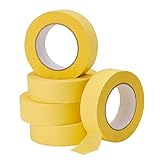
- Lichamp Automotive Refinish Masking Tape is a yellow crepe paper masking tape designed specifically for excelling at all general masking applications in the collision repair industry (cars, trucks, other specialty vehicles) for general paint masking
- Its robust paper backing resists solvents and moisture while being flexible enough to fit most curves and contours; The proprietary rubber-based adhesive formula allows the tape to stick and say on a variety of surfaces
- Easy to tear and remove with no residue left behind, no need to worry about cleaning up sticky spots on walls after painting or on items that you have labeled, good holding power to help resist lifting or curling, special backside treatment provides easy to use controlled unwind
- General purpose masking tape provides excellent adhesion to a wide variety of surfaces in a number of fields, light bundling, packaging and closing, and light duty masking and sealing etc.
- Stick quickly and hold reliably, can be easily removed without leaving a sticky residue behind, no color transfer can be widely used in various applications, such as decorative painting, color separation, masking, tile seam, label mark and art painting
How long does a bespoke luxury-car paint job take?
Time depends on the finish, the amount of color development and the level of surface refinement. The clearest published timing is for Rolls-Royce’s Gradient Two-Tone example.
| Published figure | What it applies to | Qualification |
|---|---|---|
| Up to four days | One Rolls-Royce Gradient Two-Tone car | Reported by Rolls-Royce for the gradient treatment; not a promise for every two-tone specification |
| Eight paint layers | Each Rolls-Royce Gradient Two-Tone finish | Includes the named gradient process; not an industry-wide layer count |
| Up to 20 individual lacquer layers | Rolls-Royce bespoke finishes generally | Rolls-Royce’s 2025 craftsmanship account says the number depends on paint complexity |
| More than four hours of hand-polishing | Rolls-Royce signature piano finish | A separate 2025 craftsmanship example, not part of the eight-layer Gradient Two-Tone recipe |
The eight-layer and four-day figures should therefore remain together as the documented gradient example. The “up to 20” lacquer layers and four-plus hours of polishing describe other levels of bespoke finishing. Combining them would imply a single recipe that Rolls-Royce has not published.
Independent reader supportYour contribution helps us test, update, and keep practical guides available for everyone.How are colors selected for a two-tone commission?
Selection starts with the relationship between the two areas, not just with isolated color names. A client may want a high-contrast roof that makes the cabin stand out, closely related shades that reveal the body’s sculpting, or a gradient whose transition is visible only at certain angles.
Rolls-Royce’s stated palette of 44,000 exterior colors gives clients a large range of existing choices. If a desired hue is absent, the Rolls-Royce Bespoke Collective can develop a new Bespoke color and reserve it for that client’s exclusive use, according to the manufacturer’s 2025 press material. That is a claim about its own commissioning service, not a general promise made by every luxury automaker.
Recommended Free Tools
Color selection also has to account for the intended finish. A crisp horizontal boundary and a continuously changing gradient place different demands on how the colors meet. A coachline adds another decision: whether the narrow stripe should blend with one of the body colors or provide a separate accent.
Best Value

- TOUGH: Durable crepe paper backing helps resist solvents and moisture while minimizing bleed through
- STRONG ADHESIVE: Tape sticks and stays on moldings; plastic; glass; metal; rubber and painted surfaces due to a proprietary rubber-based adhesive
- DEPENDABLE USABILITY: Fits contours and curves for great usability and tear resistance
- HEAT RESISTANT: Resists temperatures up to 250 °F (121 °C) for up to 30 minutes
- For industrial/occupational use only; Not for consumer sale or use
Can a consumer reproduce a factory two-tone finish?
Masking is one of the controls used in the documented Rolls-Royce gradient process, but consumer masking tape is not equivalent to a factory bespoke system. Rolls-Royce’s example involves a defined paint system, specialized masking, multiple layers and a crystal clear coat with fine glass flakes. The manufacturer does not publish a consumer procedure that reproduces that result.
For a road car, an owner considering a color change should treat a two-tone or gradient conversion as professional refinishing work. The visible boundary has to remain consistent over moving panels, and the finished colors must be compatible with the existing paint system. A tape product may help define an edge in a small refinishing project, but it cannot by itself deliver the materials, surface preparation, spray control, inspection and polishing associated with a factory bespoke finish.
What the finish means for ownership
A two-tone specification is best understood as an appearance choice with a craftsmanship story. The cited manufacturer material does not quantify differences in durability, repair cost, insurance, fuel economy or resale performance between two-tone and single-color cars. Those outcomes can depend on the specific paint, vehicle, repair history and market, so they should not be inferred from the presence of a second color.
If a panel is repaired later, matching the correct region and transition will matter visually, especially on a gradient. The sources do not provide repair times, paint codes or a universal touch-up method; an owner should obtain the original manufacturer specification for the particular commission rather than assume that a generic color name is sufficient.
Sources and documented examples
Rolls-Royce’s official Gradient Two-Tone post describes the black base, specialized masking, eight layers and crystal clear coat with fine glass flakes: Gradient Two-Tone for Black Badge Spectre Series II.
Its 2025 craftsmanship account covers the 44,000-color palette, bespoke color development, coachline technique and model-specific widths, as well as separate examples of lacquer layering and polishing: The Pursuit of Perfection: Craftsmanship at the Home of Rolls-Royce.
The manufacturer’s Bespoke Craft page explains the role of complementary two-tone treatments and hand-applied details: Rolls-Royce Bespoke: Craft. The older Wraith paint section describes two-tone combinations as adding definition to the design: Wraith brand book paint section.
Free tools Windows power users keep installed
One-click scans. No signup required.
Quick Recap
Product prices and availability are accurate as of the date/time indicated and are subject to change. Any price and availability information displayed on Amazon at the time of purchase will apply.




