Do these 3 things before closing this tab:
1Clear out junk files and repair common Windows errors2Fix the driver behind crashes, sound loss and screen glitches3Repair Windows errors before they cause bigger problemsJapanese cars have earned a real, but qualified, reputation for dependability. Some Japanese brands have scored well in owner surveys, yet results differ by brand, model, year, market and type of problem. Country of origin alone cannot tell you whether a particular car—or used example—is reliable.
Are Japanese cars really more reliable?
There is evidence behind the reputation, but it does not support a blanket rule that every Japanese car is more dependable than every car from elsewhere. In J.D. Power’s Japan Vehicle Dependability Study (VDS), several Japanese brands recorded relatively low problem counts in the years cited. In recent U.S. VDS results, however, Toyota did not lead its category, and Buick ranked ahead of it.
These studies measure reported problems, not a car’s entire lifespan. Their findings are useful for comparing groups of owners in a defined market and period, but they cannot guarantee how an individual vehicle will perform.
What J.D. Power’s dependability scores measure
The Japan VDS figures below count owner-reported problems per 100 vehicles, or PP100. A lower score means fewer reported problems. The cited Japan studies surveyed original owners after roughly three years of ownership, so they do not directly measure lifetime durability or the condition of a used car today.
The Tool Desk
Outbyte Driver Updater FREEScan for outdated or missing drivers - takes under a minuteDriver Scan →Outbyte PC Repair FREERepair Windows errors before they cause bigger problemsFix Now →#1 Best Overall

- 1: 24 scale
- Glue and Paint sold separately
- Plastic Model Kit-Assembly Required
- TAM24123
The U.S. studies use different markets and vehicle cohorts. Japan and U.S. results should not be combined into a single trend line or treated as direct head-to-head comparisons.
What the studies found
| Study | Market and cohort | Selected results |
|---|---|---|
| 2015 Japan VDS | Original owners at 37–54 months | Overall: 72 PP100. Lexus: 54; Daihatsu: 66; Honda, Mitsubishi and Toyota: 69 each. J.D. Power |
| 2019 Japan VDS | Japan study; vehicles at roughly three years of ownership | Overall: 72 PP100. Lexus: 42; Toyota: 60. The study reported rising connectivity problems and more diesel-transmission problems. J.D. Power |
| 2021 Japan VDS | 19,327 original owners of new vehicles at 36–53 months; surveyed June–July 2021 | Domestic brands: 56 PP100; import brands: 75. Lexus: 34 overall; Toyota: 51 among mass-market brands. J.D. Power |
| 2025 U.S. VDS | 34,175 original owners of 2022 model-year vehicles after three years | Among mass-market brands, Buick: 143 PP100, Mazda: 161, Toyota: 162. J.D. Power |
| 2026 U.S. VDS | 33,268 original owners of 2023 model-year vehicles after three years | Overall: 204 PP100, the highest problem count since the study redesign in 2022. Lexus ranked highest overall; Buick led mass-market brands. J.D. Power |
The figures show why “Japanese cars are reliable” is too broad to serve as a buying rule. In the 2025 U.S. study, Toyota placed third among mass-market brands behind Buick and Mazda. In 2026, Lexus ranked highest overall while Buick led the mass-market category. Rankings can change with the cohort and year.
Rank #2

- Plastic model kit-assembly required
- Glue and paint sold separately
- Manufacturer item #: 24116
Why the reputation seems plausible
One relevant example is Toyota’s production system. Toyota describes it as combining jidoka—stopping when an abnormality occurs—with just-in-time production and ongoing kaizen, or continuous improvement. That is useful context for understanding Toyota’s stated approach to quality, but it is Toyota’s account of its own system. It does not establish that every Japanese automaker works the same way or prove that manufacturing practices alone cause better dependability. Toyota Production System
After the 2015 Japan study, J.D. Power’s Atsushi Kawahashi, then senior director of the Japan automotive practice, said Japanese automakers had long focused on building dependable vehicles and that this was evident in owners’ reported problem counts. That is an interpretation of that study’s results, not proof of a universal rule. J.D. Power
Free tools Windows power users keep installed
One-click scans. No signup required.
Rank #3

- BRE RACING HERITAGE INSPIRED DESIGN – Build a 1975 Datsun Pickup inspired by BRE’s legendary Datsun race cars, featuring aggressive wide-body flares and track-ready stance.
- BUILD IT RACE OR STOCK – Choose a full BRE-style wide-body racer with wide tires, side pipes, and roll bar, or create a factory-style stock pickup with standard wheels and tires.
- HIGHLY DETAILED PERFORMANCE PARTS – Includes detailed L20B engine with Weber intakes, custom seats, and optional tonneau cover for a realistic, performance-focused build.
- PREMIUM PARTS & ALL-NEW DECALS – Comes with chrome-plated rims, vinyl tires, clear and transparent red parts, plus an expanded water slide decal sheet with authentic BRE graphics in two color options.
- FOR EXPERIENCED MODELERS & COLLECTORS – Skill Level 2 kit with 129 parts, detailed instructions, and stunning box art by Ethan Kreiger. Recommended for ages 10+.
What a dependability score can—and cannot—tell you
It counts problems, not years of survival
PP100 is a count of reported problems in the study’s specified ownership window. It is not a percentage of cars that failed, a measure of how long every car lasts, or a prediction for a specific vehicle.
The kind of problem matters
A score may reflect different experiences, including connectivity, infotainment, exterior, powertrain or transmission issues. A problem that disrupts a daily commute is not necessarily equivalent to one that affects a vehicle’s core operation. The 2019 Japan study, for example, noted increasing connectivity problems and more diesel-transmission problems; the headline score alone does not describe every owner’s experience.
Rank #4
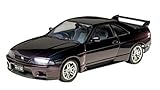
- Plastic Model Kit-Assembly Required
- Glue and Paint sold separately
- Manufacturer Item #: 24145
Brand averages are not model verdicts
A manufacturer’s position aggregates vehicles and owners represented in a particular study. It cannot establish that every model from that brand is equally dependable, or that an individual used car has been maintained well.
How to use the reputation when choosing a car
- Compare within the same market and period. Use studies that cover the same country and, where possible, similar model years and ownership ages. Do not compare a Japan result directly with a U.S. result as if the samples were interchangeable.
- Look beyond the brand. Find evidence for the exact model and year you are considering rather than relying on a national or manufacturer-wide reputation.
- Check what the score counts. Confirm the ownership window and problem categories, and consider whether the reported issues matter for your use.
- Assess the individual vehicle. For a used car, consider its service history and present condition. An aggregate survey cannot certify a particular vehicle.
Where the reputation’s origins remain unclear
The evidence cited here supports the narrower claim that some Japanese brands have performed well in particular dependability studies. It does not establish when or how the broader international reputation first formed. Toyota’s production-system description offers context about Toyota’s stated practices, not a complete history of the reputation across Japanese automakers.
Quick wins for a faster PC:
Scan for outdated or missing drivers - takes under a minuteDriver Scan →Repair Windows errors before they cause bigger problemsFix Now →Quick Recap
Product prices and availability are accurate as of the date/time indicated and are subject to change. Any price and availability information displayed on Amazon at the time of purchase will apply.




