PC Slower Than It Used to Be?
A free scan shows the junk files, broken settings and background clutter dragging Windows down - then fixes them in one click.Free scan · Windows 10 & 11Outdated Drivers Are Slowing You Down
One free scan finds every outdated or missing driver and matches the right update for your exact hardware.Free scan · exact hardware matchThe Dakar Rally exists to make the landscape—not a circuit, stadium, or single machine—the main opponent. Thierry Sabine created it after getting lost in the Libyan desert in 1977. He wanted to turn the fear, isolation, navigation, and wonder of that experience into an event that competitors and spectators could share.
That is also why the rally has survived changes of continent, tragedy, political instability, and major changes in technology. Dakar is no longer a literal Paris-to-Dakar race, and its distance is not always 5,000 miles. Its enduring identity is a moving rally raid: a multi-day test of speed, navigation, durability, logistics, judgment, and human endurance in remote terrain.
The short answer: Dakar is an adventure format, not just a route
The name “Dakar Rally” suggests a race between two cities. Historically, that was the idea: start in Europe, cross North Africa, and finish in Dakar, Senegal. But the city of Dakar was never the whole point. It was the destination that gave Sabine’s imagined adventure a clear shape.
The deeper purpose was to put people into an environment where the usual boundaries of motorsport became unreliable. A competitor could be fast but lose time through a navigation error. A powerful vehicle could fail because of heat, dust, rocks, dunes, or poor mechanical preparation. A private entrant could share the route with a factory team, while mechanics, navigators, journalists, helicopter crews, and support staff all faced their own version of the same remoteness.
Recommended Free Tools
#1 Best Overall

- Snell SA2025 Certified, made of Fiber Reinforce Plastic(FRP) shell, Double D-ring equipped, more lightweight and higher safety.
- Compatible with HANS/HNR M6 Threaded Inserts(not included), convenient for you to install Head&Neck Support devices to protect head and neck from getting hurt in auto racing sports.
- 40 MM sunshade film on the top of the visor helps to reduce giddiness caused by the sun/light while doing car racing acclivities.
- High density Expanded Polystyrene (EPS) fire retardant inner pads enhances comfort and safety.
- Tear-off posts button on the visor allows to install tear-off posts on the visor so as to ensure a clear view.
In other words, Dakar was designed as a long-form expedition with a competitive result—not merely a very long race.
Thierry Sabine’s 1977 disappearance created the idea
The rally’s origin is unusually personal. In 1977, French adventurer and motorcycle competitor Thierry Sabine became lost in the Libyan desert during the Abidjan–Nice Rally. After he was rescued, he returned to France convinced that the desert’s scale and danger should not remain a private experience.
Sabine imagined a route beginning in Europe and crossing North Africa through places such as Algiers and Agadez before reaching Dakar. The official Dakar history describes the founding concept as both a challenge for participants and a dream for spectators. That combination matters: the event was intended to be difficult enough to feel genuinely uncertain, but dramatic enough to become a shared story beyond the competitors themselves.
Sabine’s vision was not limited to elite drivers. The first Dakar was open to people who wanted to attempt the unknown, alongside more experienced competitors. This mix became part of the event’s character. Dakar could contain professional teams, private entrants, celebrities, improvised machinery, navigators, and support crews in the same broad adventure.
That founding story is documented in the Dakar’s official historical account and in the organizer’s profile of Thierry Sabine, the all-terrain adventurer.
The first Paris–Dakar was deliberately bigger than a normal race
The inaugural Paris–Dakar began on December 26, 1978. Official Dakar pages give slightly different contemporary figures: one describes 170 adventurers, while another refers to 182 vehicles assembled at the Trocadéro. The difference likely reflects whether the page is counting people or vehicles, but the important facts are consistent.
The competitors faced approximately 10,000 kilometres across unfamiliar terrain, and only 74 vehicles reached the finish. Cyril Neveu won the first edition on a Yamaha 500 XT.
The scale immediately separated Dakar from ordinary circuit racing:
- There was no single venue. The event moved through multiple countries and environments.
- Navigation was part of the competition. Finding the correct route mattered alongside driving or riding quickly.
- Mechanical survival mattered. Vehicles had to endure repeated long stages rather than one short burst.
- Outside support was limited by the nature of the route. A mistake or breakdown could become a major problem before help arrived.
- The field was socially mixed. Factory-backed competitors competed alongside private adventurers and unusual entries.
Early Dakars even included memorable machines such as a Rolls-Royce and celebrity-led cars. Those entries reinforced the rally’s unusual blend of serious competition and personal adventure. The event could be aspirational without being completely inaccessible in spirit.
That is why the first Dakar became culturally distinctive. It was not simply asking, “Who can drive fastest?” It was asking, “Who can keep moving when the route is uncertain, the vehicle is deteriorating, fatigue is accumulating, and the finish is still far away?”
What makes Dakar a rally raid?
Dakar belongs to the rally raid category. A rally raid is an endurance event held across open or remote terrain, generally over many days, combining timed competition with navigation and logistical survival.
What’s actually slowing this PC down?
Pick the symptom - the matching free tool is one click away.
The modern event normally includes a stage each day, with a timed special that can run for several hundred kilometres. The total route covers several thousand kilometres over approximately 10 to 15 days. According to the event’s official race explanation, competitors receive a roadbook at the start of each stage, while the course remains secret until then.
This structure produces a different kind of competition from a sprint race. The fastest possible line is not always the best line. Competitors must constantly balance several risks:
Rank #2

- Snell SA2025 Certified, made of Fiber Reinforce Plastic(GFRP) composite shell, Double D-ring equipped, more lightweight, and higher safety.
- Compatible with HANS/HNR M6 Threaded Inserts(not included), convenient for you to install Head&Neck Support devices to protect your head and neck from getting hurt when participating in auto racing sports.
- 40 MM sunshade film on the top of the visor helps to reduce giddiness and dizziness caused by the sun/light while doing car racing acclivities.
- High-density Expanded Polystyrene (EPS) fire retardant inner pads enhance comfort and safety when it happens to an accident.
- Tear-off posts button on the visor allows installing tear-off posts on the visor so to ensure a clear view according to the racer’s needs.
| Challenge | Why it matters |
|---|---|
| Navigation | A wrong turn can cost more time than a small difference in driving speed can recover. |
| Distance | Every component, tire, joint, filter, and cooling system must survive repeated punishment. |
| Terrain | Dunes, rocky tracks, sand, heat, and changing surfaces demand different techniques and vehicle setups. |
| Fatigue | Decision-making deteriorates when competitors must drive or ride for long periods over many consecutive days. |
| Resource management | Fuel, tires, tools, water, spare parts, and mechanical sympathy can determine whether a competitor finishes. |
| Judgment | Driving at maximum speed is pointless if it produces a crash or a failure that ends the rally. |
The desert is therefore not decorative scenery. It is the mechanism that creates the event’s sporting problem. The terrain supplies uncertainty, while the length of the rally gives every decision consequences later in the route.
Are Dakar competitors really on their own?
Not all of them. One of the common myths about Dakar is that every competitor races without assistance. Most competitors have support crews, and the scale of a modern factory or professional operation depends on mechanics, logistics, spare parts, medical planning, and communications.
Quick wins for a faster PC:
Repair Windows errors before they cause bigger problemsFix Now →Scan for outdated or missing drivers - takes under a minuteDriver Scan →The Original by Motul category is the notable exception. It is specifically built around competing without outside assistance. That category preserves a more literal version of the self-reliant adventure associated with the early Dakar, but it should not be confused with the operating model of the entire field.
This distinction actually strengthens the answer to why Dakar exists. The event has always combined different levels of participation. It offers a professional technological contest, a privateer challenge, and—through categories such as Original by Motul—a severe test of individual self-sufficiency.
Why did the race leave Africa?
The Paris-to-Dakar route was not abandoned because the original idea stopped working. It ended as a permanent template because the security situation made the African itinerary untenable.
The 2008 edition was canceled immediately before its start. The decision followed the deaths of four French citizens and three Mauritanian soldiers, along with strong advice from France’s foreign ministry against travel to Mauritania. Organizers said terrorist threats directly targeted the rally. The cancellation demonstrated a fundamental reality of Dakar: the event’s remoteness creates its appeal, but that same remoteness makes security, rescue, border crossings, communications, and logistics unusually difficult.
The Tool Desk
Outbyte PC Repair FREEClear out junk files and repair common Windows errorsFree Scan →Outbyte Driver Updater FREEFix the driver behind crashes, sound loss and screen glitchesFind Drivers →The cancellation is recorded in the rally’s official history of the early Dakar years. It was a decisive break, but not the end of the format.
South America preserved the Dakar idea
In 2009, Dakar moved across the Atlantic to Argentina and Chile. This was more than a replacement venue. The Andes introduced altitude, while the Atacama and other South American deserts preserved the crucial ingredients of the original event: dunes, remoteness, navigation, difficult access, and long-distance endurance.
The organizers estimated that the 2009 event attracted four million spectators. That figure is an organizer-reported audience estimate, not an independently established attendance measurement, but it illustrates how successfully the rally was presented as an international event rather than a race tied only to its old African route.
South America also showed that the Dakar concept could be transferred without becoming meaningless. The landscape changed, but the basic sporting question remained: can crews move quickly and safely through terrain they cannot treat like a familiar road network?
The official account of that transition is covered in Dakar’s South American history.
Why Saudi Arabia became the next chapter
In 2020, Dakar moved again, this time to Saudi Arabia and the Middle East. The organizer presented Saudi Arabia as a new landscape in which competitors would face unfamiliar terrain while retaining the rally’s central test of driving, navigation, and endurance.
That move makes the modern meaning of the name clearer. “Dakar” now functions less as a precise geographical description than as the name of a format and tradition. The finish city remains embedded in the event’s identity, but the rally can relocate when safety, politics, or logistics make one route impossible.
The organizer’s announcement of the Saudi chapter is available in its official Dakar Chapter III announcement.
Do these 3 things before closing this tab:
1Clear out junk files and repair common Windows errors2Scan for outdated or missing drivers - takes under a minute3Repair Windows errors before they cause bigger problemsRank #3
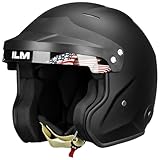
- Snell SA2025: Meets Snell SA2025 safety standards, this auto racing helmet which has Fiber Reinforce Plastic(GFRP) composite shell is not only lightweight, but also provides better protection during races or daily training.
- Compatible with HANS/HNR M6 Threaded Inserts(not included), convenient for you to install Head&Neck Support devices to protect your head and neck from getting hurt when participating in auto racing sports.
- Sunshade Strap: The 40MM sunshade film on the top of the helmet helps to reduce giddiness and dizziness caused by the sun/light while doing car racing acclivities. You can remove or install it as needed.
- Ventilation: This open face auto racing helmet has vents at the front and back to quickly dissipate excess heat for a cooler, more comfortable racing experience. Fire retardant liner further enhances comfort and safety.
- IMPORTANT: This helmet is manufactured for automobile racing and is not designed for use on public streets, roads or highways. This helmet meets all requirements of DOT and FMVSS 218 Federal Motor Vehicle Safety Standard.
Saudi Arabia has allowed the rally to keep exploring different types of desert and open terrain. It has also made the event easier to understand as a global endurance platform: the destination can change, but the demands of navigation, mechanical durability, and sustained concentration remain.
The human cost is part of the honest explanation
Dakar’s attraction has always been inseparable from risk. The event was founded on the idea of confronting a landscape capable of confusing, exhausting, and isolating people. That makes the rally compelling, but it also means the human cost cannot be treated as a footnote.
In 1986, Thierry Sabine died in a helicopter crash in Mali along with singer Daniel Balavoine, journalist Nathalie Odent, helicopter pilot François-Xavier Bagnoud, and radio technician Jean-Paul Lefur. The loss affected the event at every level. Dakar continued under new leadership, and its official history treats the crash as a defining rupture rather than an endpoint.
The tragedy also exposed how broad the risk envelope was. Competitors were not the only people operating in dangerous, remote conditions. Organizers, journalists, pilots, radio technicians, medical teams, and support crews were all part of the logistical system that made the rally possible.
Free tools Windows power users keep installed
One-click scans. No signup required.
A credible explanation of Dakar therefore cannot reduce its appeal to “brutal conditions” as if danger were merely a marketing feature. The event has had to continually adapt its organization and safety practices because the same environment that creates the adventure can produce serious consequences.
What the modern Dakar adds beyond the original adventure
The contemporary rally remains an endurance competition, but it is now also a technical platform. Manufacturers and suppliers can expose tires, lubricants, filters, clothing, powertrains, navigation systems, and alternative-energy concepts to a highly demanding environment.
The official partner listings identify BFGoodrich as the 2026 official tire supplier. They also describe Motul’s technical relationship with the rally, including oil analysis and support at service centers, and identify Diverse Extreme Team as an official technical partner for Dakar apparel. These partnerships demonstrate the commercial and engineering importance of the event, but they do not mean that every competitor uses the same equipment or that race technology automatically transfers to ordinary road cars.
Dakar is useful as a proving ground because it concentrates several engineering problems at once:
- heat management;
- dust and filtration;
- tire and suspension durability;
- lubrication under sustained load;
- fuel or energy efficiency;
- repairability in remote conditions;
- navigation and communications; and
- the ability to keep a vehicle operational after repeated impacts.
Those lessons can be valuable without making a race vehicle a direct consumer-product test. A component that survives Dakar may have demonstrated durability in an extreme application, but ordinary road use involves different priorities, regulations, costs, comfort requirements, and maintenance schedules.
Mission 1000 and the search for what comes next
The rally is also being used to explore alternative propulsion. Mission 1000 is a challenge for vehicles powered by alternative fuels or energy sources, while broader Dakar Future initiatives examine possible directions for rally raid.
For the 2026 event, the official figures listed seven Mission 1000 vehicles: six motorcycles and one truck. That is a small group compared with the main field, but its importance is not measured only by vehicle count. Extreme endurance competition can reveal practical problems in thermal management, range, charging or refueling, energy use, serviceability, and reliability that are difficult to expose in a short demonstration.
The appropriate claim is not that Dakar will automatically determine the future of consumer vehicles. Rather, it provides a visible, demanding environment in which new concepts can be challenged publicly.
The 2026 Dakar shows how large the event has become
The 2026 event was announced as the 48th Dakar, scheduled for January 3–17, 2026. Its approximately 8,000-kilometre loop began and ended in Yanbu, with about 4,900 kilometres against the clock.
Its design also included a new “Bivouac Refuge” stage, combining marathon-stage rules with minimalist overnight camps. Competitors receive basic sleeping and food provisions, while outside assistance is restricted. Trucks can reach the bivouac to help in defined circumstances. The concept deliberately tests crews’ ability to function with fewer of the normal comforts and services of a large rally camp.
Rank #4

- DOT Certified: This motorcycle helmet is DOT approved, meeting U.S. regulatory standards. It features a sturdy ABS shell, combined with soft EPS foam and a skin-friendly liner
- Wide-Angle Clear Vision: Our adult dirt bike helmet is equipped with a large clear visor that effectively blocks wind and flying debris. It also delivers a high-definition wide field of view, keeping your vision open and reducing blind spots
- Detachable & Washable Liner: The interior of this motocross helmet is easy to detach and wash, ensuring a clean environment. It keeps microbes and odors from building up, extends the helmet's lifespan, and keeps your rides healthier
- Breathable & Comfortable: Designed with aerodynamics in mind, this dirt bike helmet features multiple vents at the front and top to reduce wind noise and drag. It keeps cool and comfortable on long rides
- Protection Meets Comfort: The soft inner liner of our black dirt bike helmet fits snugly, while its balanced weight distribution avoids discomfort or shoulder strain. Even during long hours of riding, you'll enjoy both protection and comfort
The official figures published after scrutineering show how the Dakar has expanded beyond one simple race. The main 48th edition approved 317 vehicles and involved 564 riders, drivers, and navigators representing 49 nationalities. Alongside it were 97 Dakar Classic vehicles, seven Mission 1000 vehicles, and five Saudi Next Gen crews.
That collection of categories helps explain the Dakar’s continuing relevance. It is simultaneously an elite competition, a privateer challenge, a historic-vehicle showcase, a technology laboratory, and a national or regional development platform.
What’s actually slowing this PC down?
Pick the symptom - the matching free tool is one click away.
Dakar is also a public and social project
The organizers have historically presented Dakar as more than sport. Its solidarity program describes work involving clean-water filtration, emergency housing, community facilities, blood donation, fire-service equipment, and guided bivouac visits for children.
For the 2019 South American edition, the organization reported that a Waves For Water project delivered 100 water-filtration systems and two rain-catchment systems, providing access to clean water for up to 10,000 people. That is an organizer-reported result and should be understood in that context, but it shows how the rally has tried to use its logistical presence and public attention for community projects.
The organizer also reports environmental initiatives, including financial offsetting of the rally’s direct carbon footprint since 2010, habitat protection through the Madre de Dios Amazon REDD project, and route planning in Saudi Arabia intended to protect cultural and environmental heritage.
These claims should be attributed to the organizer rather than presented as independent proof that the rally has no environmental impact. A large international motorsport event necessarily consumes fuel, moves people and equipment over long distances, and affects the places through which it travels. The more accurate point is that Dakar now acknowledges those impacts and promotes mitigation and solidarity work as part of its public mission. Its solidarity program and responsible-Dakar information explain the organizer’s stated approach.
Recommended Free Tools
Why people still care about it
Dakar remains compelling because it combines several forms of achievement that are usually separated in motorsport.
- It rewards speed, but punishes impatience. A competitor must go quickly without treating every kilometre as a qualifying lap.
- It makes navigation visible. The route is not simply painted onto a circuit; crews must interpret a roadbook and terrain.
- It turns reliability into drama. The winner is not necessarily the fastest on one day, but the competitor who can remain competitive across the entire event.
- It includes the whole team. Drivers and riders receive the attention, but navigators, mechanics, engineers, medical crews, and logistics staff are essential to finishing.
- It keeps the possibility of failure alive. Even a well-funded operation cannot remove every hazard created by distance, terrain, weather, and fatigue.
- It makes exploration into a spectator sport. Viewers can follow not only who is leading, but who is lost, recovering, repairing, conserving tires, or surviving a difficult stage.
For readers who want to go deeper into the event’s people, machines, routes, and visual history, a Dakar Rally history book is a useful next step. Check the edition, seller, and availability at the time of purchase; an annual photographic review and a general history serve different purposes.
So, why does the Dakar Rally exist?
It exists because Thierry Sabine believed the desert could become the protagonist of a new kind of competition. The first Paris–Dakar turned that belief into a race that mixed professionals and private adventurers across roughly 10,000 kilometres of uncertainty. Its survival after Sabine’s death, its move to South America after the 2008 security cancellation, and its relocation to Saudi Arabia in 2020 all show that the essential idea is more durable than the original map.
The Dakar’s real destination is the experience of the unknown. Dakar, Senegal, gave the event its name and its original finish line. The rally’s continuing purpose is to test whether people and machines can navigate, endure, repair, adapt, and keep moving when the landscape refuses to make the task easy.
Frequently Asked Questions
Is the Dakar Rally still held in Dakar, Senegal?
No. The original Paris–Dakar route ended after the 2008 edition was canceled because of security threats. The event moved to South America in 2009 and to Saudi Arabia in 2020. “Dakar” is now primarily the name and tradition of the rally raid, not a description of its current finish line.
Is the Dakar Rally always 5,000 miles long?
No. Distances vary by edition and should be checked against the official route. For example, the 2024 route included 5,000 kilometres of special stages, while the announced 2026 route covered approximately 8,000 kilometres overall and 4,900 kilometres against the clock.
Do all Dakar competitors race without support crews?
No. Most competitors have support teams. The Original by Motul category is specifically for competitors without outside assistance, making it the clearest modern version of the self-supported adventure.
Why is Dakar different from a normal car or motorcycle race?
It is a multi-day rally raid rather than a short circuit event. Competitors must combine speed with navigation, vehicle durability, fatigue management, route choice, fuel and tire management, and the ability to deal with remote terrain.
The Bottom Line
The Dakar Rally exists to turn remote terrain and uncertainty into a shared test of human endurance and engineering. Its route has moved from Africa to South America and then Saudi Arabia, but its central idea has remained: navigate the unknown, survive the distance, and keep moving.
Quick Recap
Product prices and availability are accurate as of the date/time indicated and are subject to change. Any price and availability information displayed on Amazon at the time of purchase will apply.




