Quick wins for a faster PC:
Scan for outdated or missing drivers - takes under a minuteDriver Scan →Repair Windows errors before they cause bigger problemsFix Now →Fix the driver behind crashes, sound loss and screen glitchesFind Drivers →Yes—Buick has one of the strongest claims to the coolest hidden headlights ever, but “coolest” is an opinion, not an official ranking. The case rests on a remarkable design lineage: the experimental 1938 Buick Y-Job previewed concealed lamps, and the production Riviera turned the idea into several different mechanisms. The 1965 Riviera is the standout because its ribbed fender clamshells created an exceptionally clean face and opened with a single electric motor when the headlights were switched on.
That visual drama came with real mechanical compromises. Linkages needed lubrication, motors could fail, and Buick changed the system repeatedly before abandoning hidden headlights on the 1970 Riviera. The result is less a permanently perfect design than a fascinating sequence of solutions that made Buick’s claim unusually persuasive.

As an Amazon Associate I earn from qualifying purchases.
What makes Buick’s hidden headlights a contender?
Hidden headlights were never judged by one measurable standard. A serious comparison has to balance at least four qualities:
- Visual integration: how completely the lamps disappear when switched off.
- Mechanical novelty: whether the opening system is clever, distinctive and theatrically satisfying.
- Historical importance: whether the design influenced later cars or brought a concept into regular production.
- Ownership practicality: how much maintenance, electrical work or adjustment the mechanism demands decades later.
Buick scores highly on all four, although not equally with every model year. The 1938 Y-Job is historically important but was an experimental concept, not a production Buick. The 1965 Riviera has the strongest visual argument. The 1966–67 and 1968–69 Rivieras show Buick refining the idea with different hardware. Their maintenance drawbacks are part of the story rather than a footnote.
#1 Best Overall

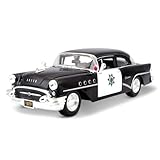
- Detailed in black, the Buick Riviera presents itself in the collector's edition of Maisto
- DECORATIVE COLLECTIBLE The miniature model is a gorgeous piece for the collector's display case and a must have for any Buick fan
- Faithful replica: the collector's car is made of metal injection moulded with plastic parts and has a length of approx. 19 cm
- Finished model to collect: the Buick Riviera with black finish can be placed directly on the shelf and admired
- Loving details: the collector's car impresses with detailed interior, movable doors and bonnet
There is no authoritative award or comparative test declaring Buick’s system the coolest ever. The defensible conclusion is an argued one: if your definition combines a smooth nose, a memorable reveal and a genuine design lineage, Buick belongs near the top.
The Buick hidden-headlight timeline
1938 Buick Y-Job: the concept-car beginning
Harley Earl’s design team developed the Y-Job as an experimental car on a 1937 Buick chassis. GM Heritage identifies concealed headlights as one of several features that later found their way into production automobiles. It is important to call the Y-Job what it was: a concept, not a showroom model sold to ordinary Buick buyers.
The Y-Job’s significance is broader than its headlamps. It established the idea that a “dream car” could serve as a working laboratory for styling. A 1956 GM press release described the dream car as a design-research tool, and GM design executive Andrew Smith later called the Y-Job “the first concept car ever.” Concealed lamps fit that mission because they allowed designers to experiment with an uninterrupted front surface long before such a treatment reached a production Riviera.
Do these 3 things before closing this tab:
1Clear out junk files and repair common Windows errors2Fix the driver behind crashes, sound loss and screen glitches3Repair Windows errors before they cause bigger problems1965 Riviera: ribbed clamshells and one electric motor
The 1965 Riviera is Buick’s signature hidden-headlight design. With the lamps off, ribbed clamshell doors blended into the front fenders, giving the car an unusually clean, almost uninterrupted face. The headlights were arranged vertically behind those covers.
Rank #2
The opening action was as satisfying as the closed appearance. One electric motor mounted behind the front bumper operated the doors as the driver switched the headlights on or off. Instead of two unrelated pop-up units, the Riviera used a coordinated mechanism that made both sides move as one visual event. That combination of sculpted bodywork and synchronized motion is why the 1965 car usually wins the “coolest” argument.
The design was not maintenance-free. The Riviera Owners Association notes that the linkage arms required lubrication and that neglected lubrication could contribute to motor failure. On a modern survivor, a dramatic non-opening headlight may therefore indicate a service problem rather than a styling defect.
1966–67 Riviera: rotating grille sections
Buick did not simply carry the 1965 mechanism forward. For 1966 and 1967, the lamps were hidden behind grille sections that rotated into position. The front-end treatment looked related when viewed from a distance, but the doors and their movement were a different engineering solution.
What’s actually slowing this PC down?
Pick the symptom - the matching free tool is one click away.
The 1967 Riviera owner’s manual confirms the operating logic: when the lights were switched off, the lamps returned to their hidden position. It also documents a manual fallback for an electrical failure that prevents the lamps from rotating forward. That provision matters to owners because it acknowledges that the theatrical mechanism can become an operational problem, not merely a cosmetic one.
Rank #3

- 𝗔 𝗣𝗶𝗲𝗰𝗲 𝗼𝗳 𝗛𝗶𝘀𝘁𝗼𝗿𝘆 𝗬𝗼𝘂 𝗖𝗮𝗻 𝗛𝗼𝗹𝗱 - There’s something magical about classic cars their sound, their shape, This 1:43 die-cast collectible captures that same feeling in your hands. Every detail, from the headlights to the paint finish, takes you back to the golden era of real driving.
- 𝗕𝘂𝗶𝗹𝘁 𝘄𝗶𝘁𝗵 𝗣𝗮𝘀𝘀𝗶𝗼𝗻 𝗮𝗻𝗱 𝗣𝗿𝗲𝗰𝗶𝘀𝗶𝗼𝗻 - This model isn’t just made it’s crafted. The metal body feels solid and true, the details are sharp, and the colors shine with life. It’s designed for people who see cars not just as machines, but as pieces of art and emotion.
- 𝗗𝗶𝘀𝗽𝗹𝗮𝘆 𝗜𝘁 𝘄𝗶𝘁𝗵 𝗣𝗿𝗶𝗱𝗲 - Your collectible comes in a clear display case with a black base clean, elegant, and made to last. It protects your car from dust while letting every angle shine through, whether you keep it on a shelf, desk, or display cabinet.
- 𝗙𝗼𝗿 𝗖𝗼𝗹𝗹𝗲𝗰𝘁𝗼𝗿𝘀 𝗪𝗵𝗼 𝗙𝗲𝗲𝗹 𝘁𝗵𝗲 𝗦𝘁𝗼𝗿𝘆 - Every car has a story, and this one tells it beautifully. It speaks to those who remember the smell of gasoline, the sound of an engine warming up, and the pride of owning something truly powerful. It’s nostalgia, crafted in metal.
- 𝗔 𝗚𝗶𝗳𝘁 𝗧𝗵𝗮𝘁 𝗙𝗲𝗲𝗹𝘀 𝗣𝗲𝗿𝘀𝗼𝗻𝗮𝗹 - Perfect for birthdays, holidays, or “just because” moments. Whether it’s for yourself or someone who loves vintage cars, this collectible brings joy, connection, and a touch of that old-school charm we all miss.
1968–69 Riviera: vacuum-operated doors
The 1968 and 1969 Riviera retained hidden headlights in a revised front treatment. The lamps again flipped up in the general style of the 1966–67 arrangement, but the Riviera Owners Association identifies a crucial change: the doors were vacuum-operated rather than driven by the earlier electric motor. A 1968 Buick brochure lists hidden headlamps as regular Riviera equipment, and the 1969 model-year history says the front bumper and concealed headlights carried over.
That change means “the Buick hidden-headlight system” is not one unchanged mechanism. A restorer diagnosing a 1965 car should not assume the parts, failure modes or adjustment procedures of a 1969 vacuum system apply to it.
1970 Riviera: the experiment ends
Buick dropped the hidden-headlight treatment on the 1970 Riviera. The owners’ association’s 1970 history describes the often-troublesome hidden headlights as gone. The decision gives the earlier cars an important boundary: do not describe the 1970 Riviera as another hidden-headlight model simply because it follows the same Riviera generations.
Free tools Windows power users keep installed
One-click scans. No signup required.
How the Riviera systems differed
| Model year | What the driver saw with lamps off | Operating method | Key ownership point |
|---|---|---|---|
| 1938 Y-Job | Concealed headlights in an experimental concept car | Concept-car design; production operating details are not established here | Not a production Buick |
| 1965 Riviera | Ribbed clamshell covers integrated into the fenders; vertically arranged lamps behind them | One electric motor behind the front bumper operated the covers with the headlight switch | Linkage lubrication was important; neglected lubrication could contribute to motor failure |
| 1966–67 Riviera | Lamps concealed behind rotating grille sections | Rotating doors brought the lamps forward when switched on | The 1967 manual documents a manual fallback for an electrical failure |
| 1968–69 Riviera | Revised front treatment with concealed lamps | Vacuum-operated doors, rather than the earlier electric-motor arrangement | Do not apply 1965 electric-system assumptions to these cars |
| 1970 Riviera | No hidden-headlight treatment | Not applicable | Hidden headlights were discontinued |
Why the 1965 Riviera is usually the coolest
The closed face is exceptionally integrated
Many concealed-headlight designs hide lamps behind a flat panel or a simple grille. The 1965 Riviera made the covers part of the body’s sculpture. The ribbing gave the fender doors a deliberate texture, so the front did not look like a blank panel waiting to open. When closed, the car’s face appeared smooth and purposeful; when open, the same surface became a mechanical reveal.
Rank #4

- Authentically licensed product from the Fast & Furious Saga.
- As seen in Fast & Furious, Dom's 1987 Buick Grand National has been taken directly from the big screen and brought to you in a 1:32 scale die - cast model
- Crafted from durable materials such as 100% die - cast metal and premium rubber tires.
- Our superior casting method allows us to capture the feature rich details of the Dom's 1987 Buick Grand National, regardless of size!
- This premium die - cast model is a must have for any Fast & Furious collection
That visual integration matches former GM stylist and vice president Chuck Jordan’s explanation of concealed headlights: designers wanted “a smooth, clean surface for sportiness and aerodynamics.” The 1965 Riviera expresses that idea especially clearly because the covers preserve the fender’s form instead of interrupting it with obvious hardware.
The mechanism creates a genuine reveal
The single-motor arrangement behind the bumper gave the driver a unified action. Switching on the lights did not merely expose two bulbs; it activated a coordinated pair of clamshells. The movement made the car seem to wake up, which is a major part of why hidden headlights became an emblem of mid-century performance styling.
It connects concept-car thinking to a real production car
The Y-Job supplied the design-history prelude, but the Riviera made concealed headlights something a customer could order from a Buick dealer. That transition gives Buick a stronger historical story than a single isolated styling flourish. The concept established the ambition; the Riviera demonstrated how the idea could be packaged, operated and serviced in a production automobile.
What ownership gives back—and takes away
The same hardware that creates the visual payoff can create a repair bill or an inconvenient failure. A realistic ownership assessment should include these points:
Best Value
- Lubrication: On the 1965 system, linkage arms need proper lubrication. The Riviera Owners Association reports that poor lubrication could contribute to motor failure.
- Electrical dependence: The 1965 motor and the later 1966–67 rotating arrangement depend on electrical operation. The 1967 owner’s manual provides a manual fallback when an electrical failure prevents the lamps from rotating forward.
- Vacuum-system differences: The 1968–69 doors use vacuum operation, so a diagnosis based on the 1965 electric motor can send a restorer in the wrong direction.
- Age-related service: These are decades-old mechanisms. A car that opens and closes correctly at a show still deserves inspection of movement, lubrication and the relevant electrical or vacuum components.
- Parts and documentation: A 1965 Riviera service manual is documented and is particularly useful because the headlight mechanism has model-specific maintenance and failure considerations. Current seller, edition and availability details are not established here, so verify them before buying.
What to check when evaluating a Riviera
Identify the model year before diagnosing anything
Start with the year and front-end design. A 1965 car has ribbed fender clamshells and the single electric-motor arrangement. A 1966 or 1967 car uses rotating grille sections. A 1968 or 1969 car uses vacuum-operated doors. The 1970 Riviera does not have this hidden-headlight treatment.
Cycle the lights and watch the complete movement
Operate the headlight switch and observe whether both sides move fully, together and smoothly. Listen for a motor that runs without completing the movement, a door that stops partway or a side that lags behind the other. Those symptoms tell you the problem is in the mechanism or its actuation, not in the styling concept itself.
Look for maintenance evidence
On a 1965 car, ask whether the linkage has been lubricated as part of regular servicing. On a 1968–69 car, establish that the vacuum-operated system has been maintained rather than assuming an electric motor is responsible. A service manual for the correct model year is more useful than a generic hidden-headlight guide because Buick changed the hardware during the Riviera run.
Understand the emergency procedure
If an electrical failure leaves a 1967 Riviera’s lamps in the hidden position, consult the owner’s manual for its manual-rotation procedure rather than forcing the doors. The manual documents the fallback specifically for that situation; the exact method should be followed as written for the car’s model year.
So, did Buick have the coolest hidden headlights ever?
Buick deserves a strong “yes” if coolest means the best blend of styling, mechanical theater and historical continuity. The 1938 Y-Job shows Buick and GM using concealed lamps as advanced design research. The 1965 Riviera turns that idea into the most visually integrated production example, with ribbed clamshells and a single electric motor. The 1966–67 and 1968–69 cars prove that Buick kept reworking the idea rather than repeating one design unchanged.
The qualification is essential: there is no researched authority that ranks Buick above every other manufacturer, and the systems were not trouble-free. Lubrication, motor failure, electrical fallbacks and vacuum operation all matter to anyone who owns or restores one. Those compromises do not erase the achievement; they explain why the 1965 Riviera remains so memorable. Its headlights do more than hide—they transform the entire face of the car when they appear.
Quick Recap
Product prices and availability are accurate as of the date/time indicated and are subject to change. Any price and availability information displayed on Amazon at the time of purchase will apply.




